REVIEW · COLOSSEUM TOURS
Colosseum & Ancient Rome by Night Guided Walking Tour
Book on Viator →Operated by Tours of the Colosseum · Bookable on Viator
Rome looks different after dark.
This guided walk through ancient Rome at night turns familiar monuments into a readable story, not just a photo stop. I like how the tour pairs dramatic nighttime views with explanations from a professional archaeologist, so the stones start making sense fast. I also love that it’s all outside and designed around great sightlines, so you’re not burning time on entrances or lines. One thing to consider: you do not enter the big sites, so if you want to go inside the Colosseum or the Roman Forum, plan separate tickets.
What makes this tour especially satisfying is the rhythm of the route. You begin with quieter, more intimate ruins, then shift up to the forum zone and end at the Colosseum area, where the city feels loud and alive again. The night setting helps you notice architectural details you might miss in daylight, and the guide’s answers make those details click. The only real drawback is that the tour depends on good weather, since it’s outdoors the whole time.
In This Review
- Key highlights
- Why Rome at Night Works So Well for This Route
- Meeting Thomas and Getting Your Roman Game Plan
- Teatro di Marcello: The Night Theatre You Can Still Feel
- Piazza del Campidoglio: Michelangelo’s Square With Forum Views
- Mercati di Traiano and Museo dei Fori Imperiali: Trajan’s Big-Think Era
- Colonna Traiana: Read the War Relief Like a Comic Strip
- Roman Forum at Night: The Center of Power (Even From Outside)
- Colosseum Exterior: Gladiators Without Ticket Hassle
- Arch of Constantine: A Monument Built for Memory
- Value and Practicalities: Is $272.83 Worth It?
- Who This Tour Fits Best
- Final Call: Should You Book Colosseum & Ancient Rome by Night?
- FAQ
- How long is the Colosseum & Ancient Rome by Night guided walking tour?
- Is this tour private?
- Is the tour all outside?
- Are admission tickets included?
- What stops are included on the route?
- Where does the tour start and end?
- What language is the tour offered in?
- Is a mobile ticket provided?
- Is good weather required?
- Can I change or get a refund if I cancel?
Key highlights
- Professional archaeologist-led storytelling that connects monuments to everyday Roman life
- All outdoor viewing, including the Colosseum and Roman Forum without entry tickets
- Night atmosphere across iconic sites like Campidoglio and the Arch of Constantine
- Forum-focused route built around Trajan-era highlights and war relief at the Column
- Private format that keeps the pace personal for your group
- Guide Thomas impressed with fast, fluent English and detailed answers
Why Rome at Night Works So Well for This Route
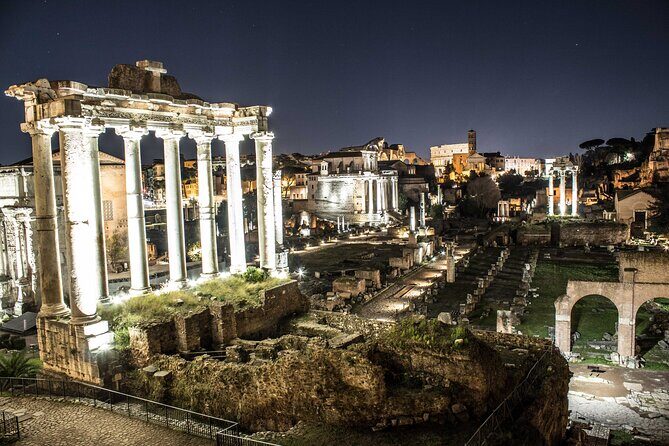
Rome after dark has a different pace. Daytime crowds can flatten the experience into a blur of “seen it, next.” At night, the monuments feel more intentional, and the streets sound closer, like you’re standing inside the city’s own soundtrack.
This tour uses that advantage well. You’re not rushing from ticket desk to ticket desk. Instead, you move at walking speed from one landmark to the next, with stops built around what you can actually see in low light. The result is a route that feels both cinematic and practical: you get atmosphere, but you also get context.
I also appreciate the private setup. You’re not stuck waiting for a large group to catch up, and questions don’t get swallowed. Reviews point strongly to guide Thomas’s ability to answer on the spot, and that matters on a history-heavy walk, where the fun is in the details.
You can also read our reviews of more walking tours in Rome

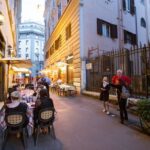
Meeting Thomas and Getting Your Roman Game Plan
The tour is led by an official guide, and on this experience the guide is Thomas. What stands out is the way he uses clear, strong English and keeps a tight grip on history, so you don’t need to guess what you’re looking at.
Before you reach the major monuments, you’re effectively given a lens. That’s the big value of a night guided walk: you learn how to read the city quickly, then you apply that skill immediately as the route gets more dramatic.
This is especially true because the tour is designed as a walking route of observations. There’s no museum time and no monument entrances. The guide’s job is to turn each stop into something you can interpret with your own eyes—Teatro di Marcello, Campidoglio, Trajan’s area, the Forum zone, the Colosseum exterior, and the Arch.
Teatro di Marcello: The Night Theatre You Can Still Feel
You start at Teatro di Marcello, a stop built around one key idea: Roman public entertainment wasn’t background noise. It was a major part of civic life.
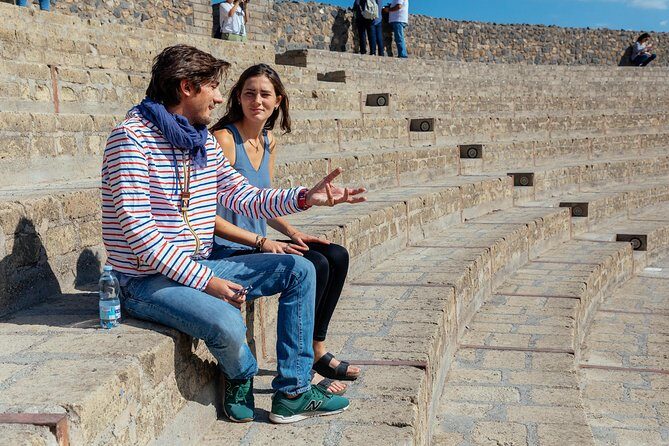
Even without entering anything, the setting works. The Teatro di Marcello is one of the best-preserved ancient theatres in Rome, and at night you can better sense how it would have framed performances and crowds. You learn about Roman shows here, which helps later when the tour connects entertainment to broader Roman power and spectacle.
Practical note: this is a shorter stop (about 15 minutes). Use that time to look outward as well as straight ahead—Roman buildings often reward you for stepping back and seeing how different levels relate.
Piazza del Campidoglio: Michelangelo’s Square With Forum Views
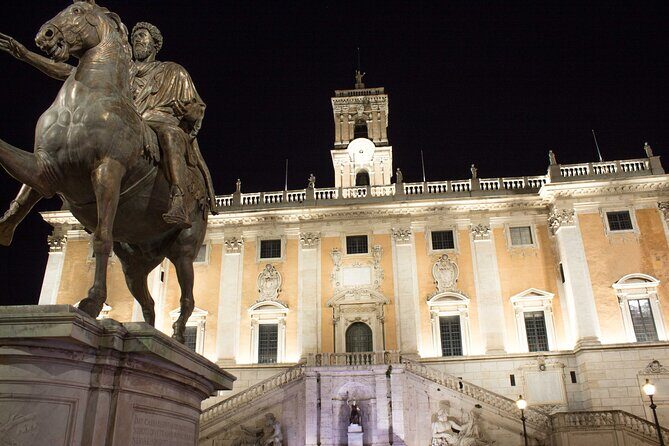
Next is Piazza del Campidoglio, designed by Michelangelo. This is one of those places where modern planning deliberately hugs ancient meaning. You’ll see the town hall area and the statue of Marcus Aurelius, plus you get a valuable view over the Roman Forums.
What I like about this stop is the contrast. The square is Renaissance-era, but it’s built on the same landscape that shaped Roman rule. In a night setting, the viewpoint feels especially useful, because the lights make the urban layers easier to separate.
You don’t just get a pretty photo angle. You get orientation. That matters because the rest of the tour becomes clearer once you understand where the forum zone lies in relation to your position.
Mercati di Traiano and Museo dei Fori Imperiali: Trajan’s Big-Think Era
Then you move into the story of Mercati di Traiano and Museo dei Fori Imperiali, which is tied directly to Emperor Trajan. This stop focuses on the grand scale of the forum complex and why Trajan’s building projects mattered.
Here’s the interpretive payoff: you’re not only seeing structures; you’re seeing political messaging in stone. Roman emperors used construction to signal control, order, and legitimacy. A night walk helps because you tend to notice form—lines, spacing, and the way a complex dominates the space—before you worry about fine-grain details.
This stop is brief (about 15 minutes), so aim to absorb the “why this was built” piece rather than trying to memorize every element. Let the guide’s narrative give you the map.
You can also read our reviews of more guided tours in Rome




Colonna Traiana: Read the War Relief Like a Comic Strip
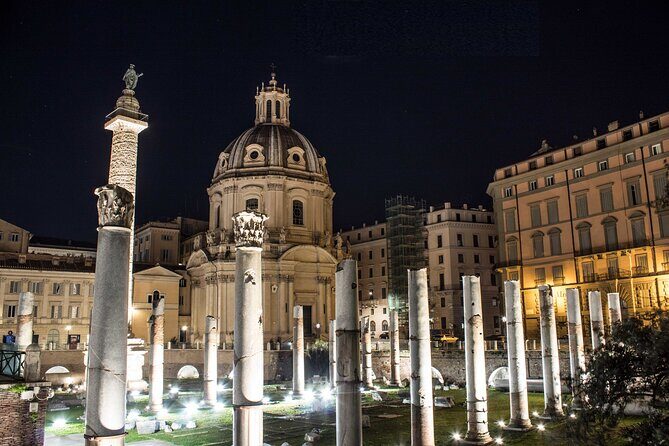
One of the most fun stops on the route is Colonna Traiana. The column is famous for reliefs that show Trajan’s military campaign, including the part tied to Romania. The tour highlights it as a standout example of Roman art, and that description is spot on.
At first glance, a column can feel like a vertical monument with too much going on. But the guide’s approach helps you treat the reliefs like a sequence. Think of it as a story told panel by panel—less “random carvings,” more “narrative art.”
The stop is short (about 10 minutes), so come ready to look slowly. Even in the dark, you can still track the idea of progression in the scenes, and that makes the column feel readable instead of overwhelming.
Roman Forum at Night: The Center of Power (Even From Outside)
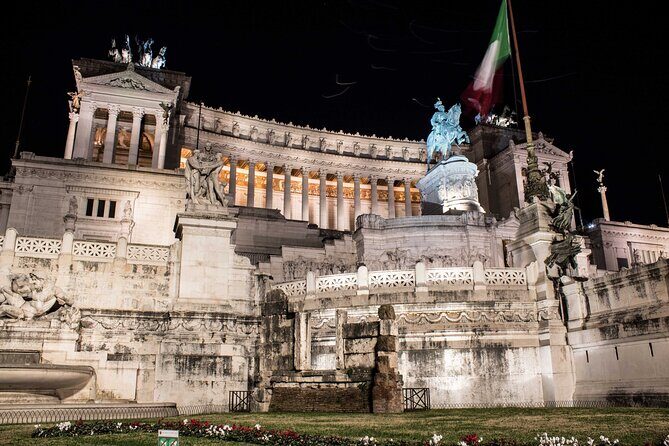
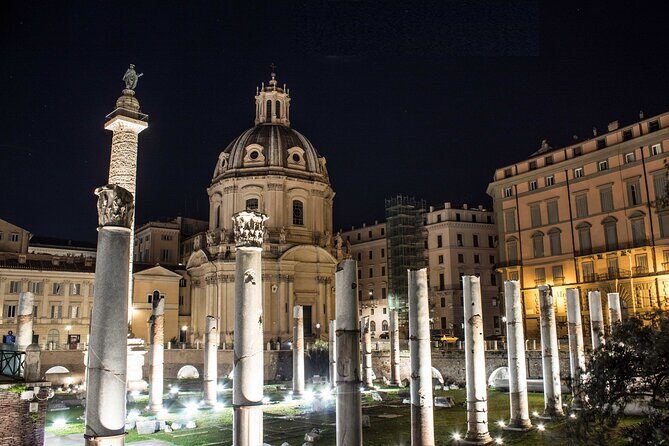
Next up is the Roman Forum (around 30 minutes). This is the heart of what people picture when they say ancient Rome, and it’s also the place where the tour earns its keep.
You learn about the Forum as more than ruins. It was the center of Rome and the Roman Empire—where judicial courts operated, trade happened, and temples sat in the same zone as daily political life. That’s the key context that turns piles of stone into a functioning city system.
A drawback, stated clearly by how the tour is set up: the Forum admission ticket is not included. In other words, you’ll see it from the outside. Still, even exterior viewing can be powerful if you know what to look for, and the guide gives you that framing.
Tip: at night, your eyes may try to focus only on the biggest shapes. Push yourself to look for how the space would work. Where would people gather? Where would decision-making happen? Those mental questions make the Forum feel less like a relic and more like a place that ran the empire.
Colosseum Exterior: Gladiators Without Ticket Hassle
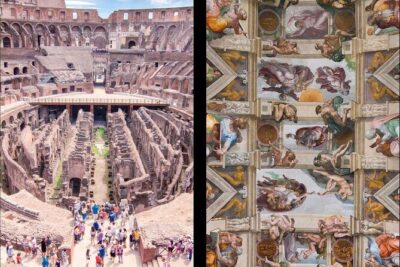
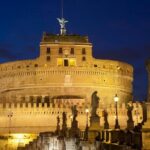
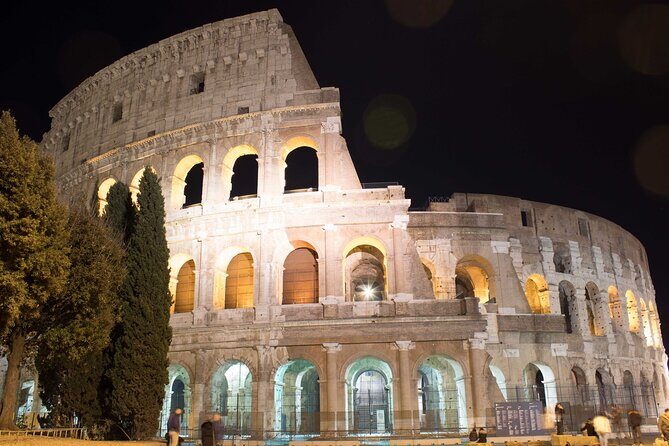
You finish the main monument stretch at the Colosseum, but you’ll view it from outside. The stop is about 30 minutes, and the focus is on gladiators and Roman shows—what the games meant, and why the spectacle mattered.
This is where the tour’s format is both a plus and a compromise. It’s a plus because you don’t lose time entering sites. You get a smoother, less stressful flow through the district at night, and you still get to end near the most famous landmark on the route.
It’s a compromise because you won’t step inside. If you care about the full interior experience—the arena and layered levels—you’ll need extra tickets on a separate plan. But if your main goal is understanding and atmosphere, the outside approach works well. Night lighting helps the Colosseum read as a monument of power, not just a set of arches.
Also, the route ends near Piazza del Colosseo, which makes it easy to keep your evening going with public transit or a taxi.
Arch of Constantine: A Monument Built for Memory
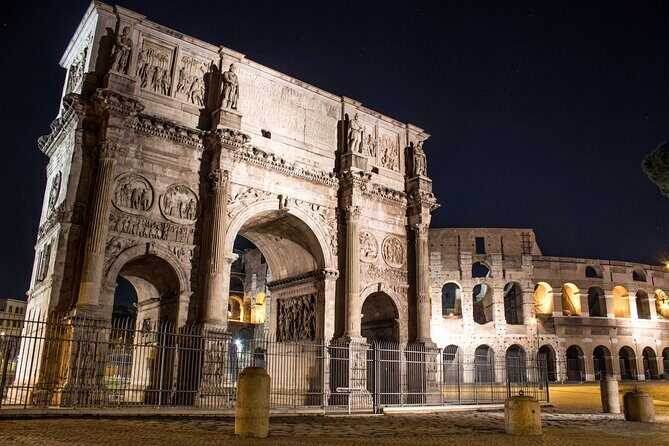
You also stop at the Arch of Constantine, described as one of the best-preserved ancient arches in Rome. This is a great “final punctuation mark” for the route.
The Arch’s broader legacy is part of why it’s included: the tour notes it served as a model for later famous arches, including the Arch of Triumph in Paris and Marble Arch in London. That comparison does more than sound impressive. It helps you see that Rome exported ideas about celebration and authority far beyond its own borders.
The stop is about 20 minutes, and that’s enough time to walk around, spot key features, and connect the Arch to the larger theme of imperial storytelling across Rome.
Value and Practicalities: Is $272.83 Worth It?
At $272.83 per person for a tour around 2 hours 30 minutes, the value depends on what you want out of a night experience.
Here’s what you get that justifies the price for the right traveler:
- A private tour, so you’re not competing with a crowd for attention
- An official guide who can answer questions quickly and clearly
- A history-heavy route built around major Roman landmarks
- A format that’s efficient at night because it’s all outdoors
What you don’t get:
- No monument entries. Roman Forum and Colosseum admission tickets are not included, and the tour is explicitly outside the monuments.
So I’d call this a smart buy if you want guided context, strong explanation, and night atmosphere without the hassle of entrances. It’s less ideal if you want a ticketed, inside-the-monument itinerary.
Also keep in mind the weather factor. The tour requires good weather, and if it’s canceled due to poor conditions, you’ll be offered a different date or a full refund. On nights that cooperate, the outdoor route is exactly the point.
Who This Tour Fits Best
This is best for you if you:
- Want a guided night walk rather than a daytime monument checklist
- Like history that connects buildings to politics, courts, trade, entertainment, and imperial messaging
- Prefer smaller, more responsive interaction with your guide
- Don’t mind that the Colosseum and Forum are outside viewing only
It’s also a good fit if you’re visiting once and you want a concentrated route with the major “Roman power” landmarks lined up in a logical sequence.
If your priority is climbing inside major sites or spending long hours inside museums, you may feel held back by the outdoor-only approach. In that case, pair this tour with separate entry plans.
Final Call: Should You Book Colosseum & Ancient Rome by Night?
I think you should book this if you’re aiming for a Rome evening that feels alive but still grounded in real context. The route is built for nighttime reading: Campidoglio for orientation, Trajan’s zone for empire scale, the Column for story art, the Forum for civic function, then the Colosseum and Constantine’s Arch to close the loop.
The strongest signal for me is the guide experience—Thomas’s fast, in-depth explanations and the way he answers questions without making you wait. When the guide is that good, an outside-only itinerary stops feeling like a limitation and starts feeling like a deliberate strategy.
FAQ
How long is the Colosseum & Ancient Rome by Night guided walking tour?
It runs about 2 hours 30 minutes.
Is this tour private?
Yes. It’s private, and only your group participates.
Is the tour all outside?
Yes. You won’t enter any monument, and you view everything from the outside.
Are admission tickets included?
No. The tour notes that admission tickets are not included because the tour is from outside. Roman Forum and Colosseum admission tickets are specifically listed as not included.
What stops are included on the route?
You’ll see Teatro di Marcello, Piazza del Campidoglio, Mercati di Traiano – Museo dei Fori Imperiali, Colonna Traiana, the Roman Forum, the Colosseum (from outside), and the Arch of Constantine.
Where does the tour start and end?
The start is Chiesa di Santa Maria in Portico in Campitelli, Piazza di Campitelli 9, 00186 Roma RM, Italy. The tour ends at Piazza del Colosseo, 00184 Roma RM, Italy.
What language is the tour offered in?
It’s offered in English.
Is a mobile ticket provided?
Yes, it includes a mobile ticket.
Is good weather required?
Yes. The experience requires good weather. If canceled due to poor weather, you’ll be offered a different date or a full refund.
Can I change or get a refund if I cancel?
This experience is non-refundable and cannot be changed for any reason. If you cancel, the amount you paid is not refunded.