REVIEW · CASTEL SANTANGELO TOURS
Castel Sant’Angelo Skip-the-Line ticket
Book on GetYourGuide →Operated by Explore Rome Tours · Bookable on GetYourGuide
Rome has a secret riverside fortress. I like how this visit pairs skip-the-line entry with a fast, focused 1 to 1.5 hour route. You also get the kind of terrace view that makes you pause and re-check the whole map of Rome. The main catch: it is not set up for wheelchair users or people with mobility impairments, so plan on stairs and uneven spots.
What makes Castel Sant’Angelo worth your time is the mix of eras packed into one place. You are walking through Hadrian’s ancient monument, then watching it change into a papal refuge—complete with the dramatic idea of the Passetto di Borgo escape route. You are also there for the spooky side, with prison cells like the ones called Sammalò and San Marocco, plus the legend of Archangel Michael tied to a plague story.
The last consideration is simply timing: you’ll want to match your ticket start time to your day around St. Peter’s Basilica and the Vatican Museums. Go in with a clear plan so you do not end up zig-zagging Rome in circles.
In This Review
- Key highlights you should care about
- Skip-the-Line Entry: getting in fast at Castel Sant’Angelo
- Where Castel Sant’Angelo sits—and why the location helps
- Mausoleum of Hadrian: the big “Roman core” you’ll walk through
- The terrace views and photos toward Sant’Angelo Bridge
- Passetto di Borgo: the escape story that changes how you see the walls
- Popes, fortress life, and why the building reads like defense
- The supernatural legend of Archangel Michael and the plague story
- Prison cells: the frightening side with Sammalò and San Marocco
- Audio guide option: getting more out without hiring a guide
- Price and value: is $17 a smart deal for Rome?
- Duration and pacing: how to make 1–1.5 hours feel satisfying
- Small group: why it can feel better than a big rush
- Practical do’s and don’ts for your visit
- Who this Castel Sant’Angelo skip-the-line ticket suits best
- Should you book? My take on whether this is the right move
- FAQ
- FAQ
- How long is the Castel Sant’Angelo skip-the-line visit?
- What does the skip-the-line ticket include?
- Is a guide tour included?
- Where will I get my tickets?
- What should I bring to enter?
- Is there free cancellation?
- Is there reserve now and pay later?
- Are there any items I can’t bring?
- Is this visit suitable for wheelchair users or mobility impairments?
- What about children under 18?
- Who is the activity provider?
Key highlights you should care about
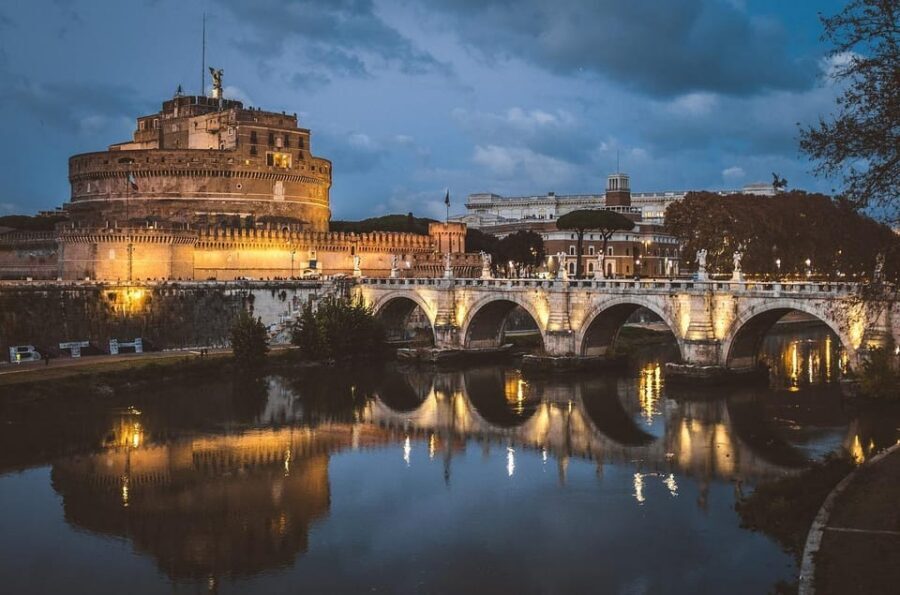
- Skip-the-line entrance so you can start without wasting your Rome morning in a line
- Terrace viewpoints built for clear photos over the Tiber
- Hadrian’s Mausoleum to papal fortress story in one compact visit
- Passetto di Borgo escape history gives the walls an urgent, human context
- Photo stop potential near Sant’Angelo Bridge for classic river shots
- Prison-era rooms including cells named Sammalò and San Marocco
Skip-the-Line Entry: getting in fast at Castel Sant’Angelo
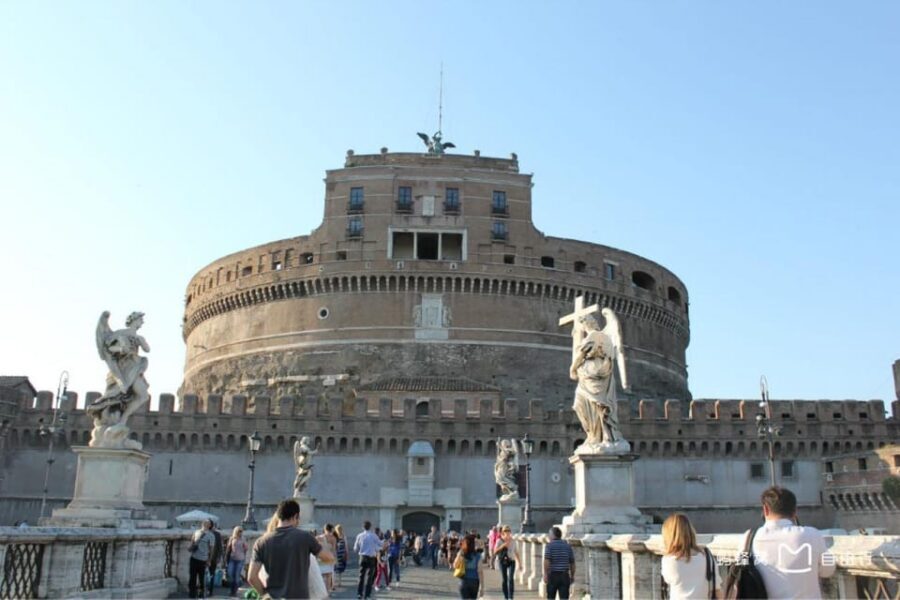
This ticket is designed for people who do not want Rome to eat their time. Instead of standing around waiting for your turn, you get skip-the-line entry, and that matters here because Castel Sant’Angelo can get busy, especially when it overlaps with Vatican-area crowd peaks.
Your ticket is sent to you in advance by email and/or WhatsApp the day before your activity. The idea is simple: download the PDF, keep it ready on your phone, and walk straight to the entrance with less friction.
Timing-wise, you’re looking at about 1 to 1.5 hours total. That is a good length for this kind of stop. It is long enough to feel like you truly visited, but short enough that you can pair it with a Vatican-area day without burning the whole afternoon.
You can also read our reviews of more tours and experiences in Rome



Where Castel Sant’Angelo sits—and why the location helps
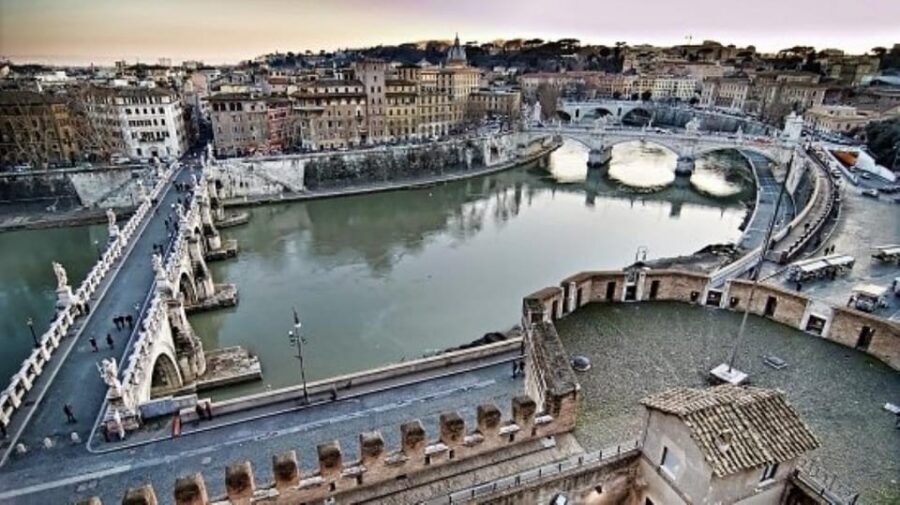
Castel Sant’Angelo is right by the Tiber River, and it is close to major Vatican sights. The practical benefit: you can build an efficient day around St. Peter’s Basilica and the Vatican Museums, then add Castel Sant’Angelo as the riverside bookend.
I like that this keeps your travel legs short. You are not hopping buses or changing neighborhoods. You are basically staying in the same zone and letting Rome unfold in layers—ancient monument, papal fortress, prison, and museum.
And because the building is tied to the river, the views tend to feel different than what you get from up-close church squares. You get that Rome-in-motion feeling, with water, bridges, and skyline all playing together.
Mausoleum of Hadrian: the big “Roman core” you’ll walk through
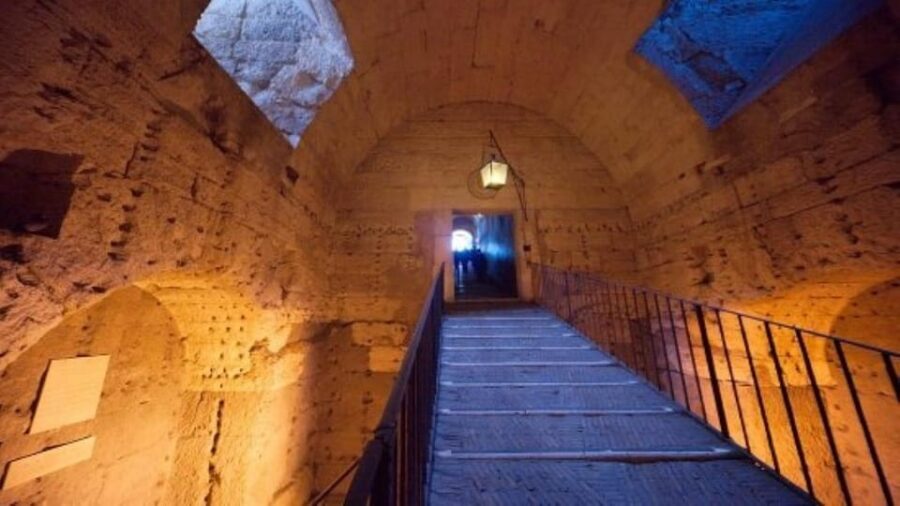
Castel Sant’Angelo is also known as the Mausoleum of Hadrian, and this is the heart of why the place feels so distinct. Even if you do not come in with a textbook in your head, the structure’s purpose is visible in how it reads as a monumental tomb-then-fortress.
This matters for your experience because it turns a visit into more than sightseeing. You are seeing how a single building shape gets reused again and again. The monument was transformed later into a papal fortress, and the shift from mausoleum to defense changes how the rooms and corridors feel.
You’ll learn that in 1925 it was transformed into a museum, so the building has a public-facing role again today. That museum shift affects your visit style: you are not trapped in a reenactment. You are walking through real spaces that have been reinterpreted for visitors.
The terrace views and photos toward Sant’Angelo Bridge
One of the simplest reasons this ticket is worth it: the terrace viewpoint. The experience includes getting to enjoy the view from the terrace, and that is where Castel Sant’Angelo does its best work.
From up there, the city suddenly makes sense. The Tiber becomes a guide. You can spot how the bridge line and river bend set the rhythm for this side of Rome. If you like photos, this is the moment you’ll want to slow down rather than rush through.
The experience also specifically highlights taking pictures of the Sant’Angelo Bridge. Even if you are not the type who photographs everything, this is a photo that usually looks good from multiple angles. It also gives you a memorable visual anchor for your whole day.
Tip from my perspective: plan your pace. You do not need to sprint for every room. Give yourself a few minutes at the terrace so you can actually notice what you’re seeing before your phone fills up.
Passetto di Borgo: the escape story that changes how you see the walls
The Passetto di Borgo detail is the kind of fact that makes old buildings feel urgent instead of dusty. You’ll learn about it as a passage that helped facilitate escape from the Vatican to the castle during invasions of Rome.
That single idea does a lot for your understanding. It reframes Castel Sant’Angelo from a landmark into a tool used in high-stakes moments. Instead of thinking only about beauty or age, you start thinking about movement: how people would travel, hide, and get out under threat.
And because you are visiting near the Vatican zone, the story lands better. You can mentally connect the castle to the Vatican area without having to imagine it from scratch. It is one of those “oh, that is why it matters” moments that makes a shorter visit feel richer.
You can also read our reviews of more tours and experiences in Rome
- Skip-the-Line Group Tour of the Vatican, Sistine Chapel & St. Peter’s Basilica
★ 4.5 · 12,779 reviews



Popes, fortress life, and why the building reads like defense
After Hadrian’s mausoleum period, the structure was transformed into a papal fortress, and the popes used it as a refuge. That refuge concept is worth holding onto as you move through the site, because it helps explain everything from how enclosed areas feel to why certain spaces seem made for security rather than comfort.
I also like that the experience leans into multiple layers of use over time. It is not just ancient Rome. It’s ancient Rome then medieval power, then later institutional use as a museum.
That layered approach is practical for you as a visitor, too. You do not have to remember one linear story perfectly. You just need to notice the building changing role as you go.
The supernatural legend of Archangel Michael and the plague story
Castel Sant’Angelo is tied to a legend about Archangel Michael saving Rome at the end of the 6th century during a plague. This is included as part of the experience, and it adds a human-and-myth angle to what might otherwise be only architecture and history.
Why this matters for you: legends are often the fastest way to understand why people cared about a place. Even if you take the story with a grain of salt, it shows you how the site was emotionally meaningful, not just strategically useful.
So if you like cultural context—how beliefs attach to buildings—this stop gives you that in a compact way. You do not need to sit through a long program. You get a story cue you can carry into the rest of your day.
Prison cells: the frightening side with Sammalò and San Marocco
Another highlight you should expect: the monument was used as a prison starting in the mid-fourteenth century. The experience points to frightening cells, including ones called Sammalò and San Marocco.
Even if you are not seeking horror, prison-era rooms change your physical experience. The spaces can feel tighter. The mood becomes heavier. And that shift makes the whole building feel more complicated—in a good way.
Practical tip: if you do not like darker themes, you can still enjoy the visit. Just go in with the expectation that this is not a purely beautiful stop. It includes the grim parts of how power worked.
Also, because this is a short visit overall, focus on how the prison use fits into the fortress story. That connection is what makes it memorable, not any single cell name on its own.
Audio guide option: getting more out without hiring a guide
The ticket includes skip-the-line entry, and you may have an audio guide ticket if you select that option. There is no guide tour included in the base description you provided, so an audio guide is the main way you’ll get guided context inside.
This works well if you like learning at your pace. You can stop where you want, skip ahead when you feel caught up, and reread a point when the building finally clicks.
If you are someone who likes a more personal narrative, this is where the small-group format can matter—because even without a live guide tour, the visit structure still keeps you moving through key areas efficiently.
If you do opt for any guided component through the provider, note that some past customers have praised the guides when available. Still, your safest bet is to rely on the materials included with your ticket, especially the skip-the-line access and any audio option.
Price and value: is $17 a smart deal for Rome?
The price you listed is $17 per person, with the actual start times varying by availability. For a Rome site near St. Peter’s Basilica and the Vatican Museums, that pricing can make sense if two things line up:
1) You want to reduce waiting. Skip-the-line is the biggest value driver here.
2) You only have about 1 to 1.5 hours to spend and you still want the story beats: mausoleum, papal fortress, escape concept, plague legend, prison era, and museum transformation.
That is a lot of content for a short visit, and it’s exactly the kind of “time-saving with meaning” purchase I like in busy cities. If your schedule is tight, you will likely feel the value immediately when you walk past lines.
One caution: if you already plan to spend a long time inside multiple Vatican-related sites, double-check you’re not turning Castel Sant’Angelo into a rushed checkbox. The value comes from using that time well—especially the terrace and photo moments.
Duration and pacing: how to make 1–1.5 hours feel satisfying
With a 1 to 1.5 hour window, your best strategy is mental triage. Pick what you care about most before you enter.
From the highlights, you know the experience centers on:
- key areas connected to Hadrian and the fortress transformation
- the Passetto di Borgo escape story
- the supernatural Archangel Michael-plague legend
- prison cells like Sammalò and San Marocco
- terrace views and pictures of Sant’Angelo Bridge
If you like photos, spend the time at the terrace. If you like stories, focus on the fortress and escape threads. If you like the darker chapter, give your attention to the prison-era sections rather than skimming.
The biggest mistake with a timed visit is letting the terrace become a five-second stop. If you do that, the experience can feel like you visited the building, but not the view.
Small group: why it can feel better than a big rush
This activity is described as small group available. In practice, small groups tend to feel easier to manage at busy attractions. You also usually get a clearer sense of the path and what to do next.
You should still expect crowd energy, especially because Castel Sant’Angelo sits near the Vatican zone. But a smaller group often helps you avoid the “stampede effect” that happens when you’re constantly being pulled along.
If you are traveling in a way that values control—making your own stops and timing rather than being swept along—small group setups are usually a good fit.
Practical do’s and don’ts for your visit
This type of ticketed entry is usually straightforward, but it helps to know what you can’t bring.
Not allowed:
- pets
- weapons or sharp objects
- baby strollers
- luggage or large bags
So travel light. If you’re coming from another stop, think about how you’ll store your stuff before and after.
Know before you go:
- the ticket is sent via email and/or WhatsApp the day before
- you’ll need full participant names collected in English
- under 18 gets a free ticket, and the price you pay is only for the service fee
Also, keep your ID handy. The experience requests a passport or ID card for adults and children.
Who this Castel Sant’Angelo skip-the-line ticket suits best
I think this ticket is a strong fit if:
- you want skip-the-line entry near the Vatican without a long commitment
- you like viewpoint time, especially terrace views and river/bridge photos
- you enjoy multi-era stories, not just one period of history
- you want an audio guide option rather than a full guided tour
It is less of a fit if:
- you have mobility concerns or use a wheelchair, since it is not suitable for wheelchair users
- you need to bring strollers or large bags
If your priority is a long, hands-on guided deep dive, this setup may feel short. But if your priority is smart timing and key story points, it’s well aligned.
Should you book? My take on whether this is the right move
Book it if you’re doing a Vatican-area day and you want a Rome stop that feels cinematic from the terrace, with real-world stories that tie ancient, medieval, and museum eras together.
Skip it if you hate stairs, need wheelchair access, or if you would rather spend your limited time on one sight with longer, slower immersion. Castel Sant’Angelo is best used as a focused, efficient visit with a payoff in views.
If you do book, do one thing that makes the biggest difference: plan your start time so you arrive when your energy is high. With a 1 to 1.5 hour window, the value is in your attention, not just your entry.
FAQ
FAQ
How long is the Castel Sant’Angelo skip-the-line visit?
The duration is listed as 1 to 1.5 hours, with starting times depending on availability.
What does the skip-the-line ticket include?
It includes skip-the-line entrance ticket. An audio guide ticket is included only if you select that option.
Is a guide tour included?
No guide tour is included based on the information provided.
Where will I get my tickets?
You’ll receive the tickets directly to your email and WhatsApp. You can use them to go straight to the entrance.
What should I bring to enter?
Bring a passport or ID card. The same applies for children.
Is there free cancellation?
Yes, the listing states free cancellation up to 24 hours in advance for a full refund.
Is there reserve now and pay later?
Yes. The activity supports reserve now and pay later, so you can book your spot and pay nothing today.
Are there any items I can’t bring?
Yes. Pets, weapons or sharp objects, baby strollers, and luggage or large bags are not allowed.
Is this visit suitable for wheelchair users or mobility impairments?
No. It is not suitable for people with mobility impairments or wheelchair users.
What about children under 18?
Under 18 years ticket is free. You only pay the service fee.
Who is the activity provider?
The experience provider listed is Explore Rome Tours.
You Might Also Enjoy

More Skip the Line in Rome
- Skip-the-Line Group Tour of the Vatican, Sistine Chapel & St. Peter’s Basilica
★ 4.5 · 12,779 reviews