REVIEW · CYCLING TOURS
Ancient Appian Way PRIVATE Bike Tour
Book on Viator →Operated by Roma STARBIKE · Bookable on Viator
Rome has a side you can pedal to.
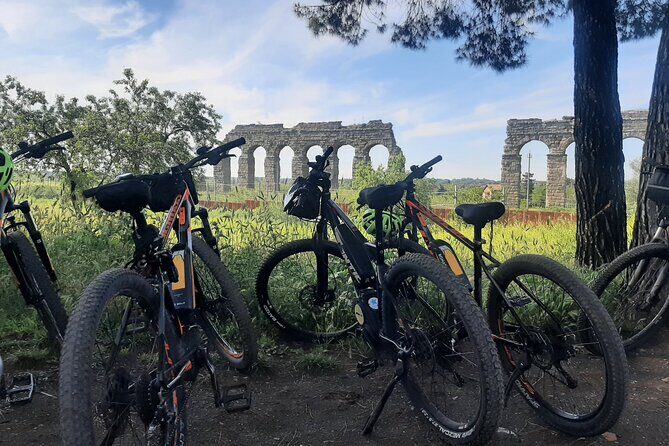
This private Ancient Appian Way e-bike tour trades downtown crowds for long Roman roads and big open green spaces. I like that you get a proper dose of scenery and stonework in a short time, plus stop by stop explanations that make places like Porta San Sebastiano feel less like ruins and more like a lived-in route. Two big wins for me: the e-bike makes the distance doable and the route mixes monuments with parks, so the ride never feels like one long museum line.
You’ll also get the kind of attention that only works on a private tour. People like Chris, Alex, Valerio, Nico, Claudio, Sara, and Marco show up in the guide stories with the same theme: they can connect what you’re seeing to how Rome actually worked, from water systems to imperial power. The only real drawback to plan around is that you’re not 100% off-road. Expect some city-street riding, and one review even flags about 20% of the route in traffic, plus the bikes are pedal assisted (not throttle), so your legs still do some work.
In This Review
- Key highlights at a glance
- Pedaling out through Porta San Sebastiano’s southern gateway
- Parco della Caffarella: Rome’s big green pause
- Ninfeo di Egeria: a love story you can stand in
- Parco degli Acquedotti and the Via Latina water network
- Villa dei Quintili and Santa Maria Nova: power that ended up confiscated
- Cecilia Metella and Castrum Caetani: a tomb that kept its shape
- Circus of Maxentius: Roman entertainment, minus the crowd
- Baths of Caracalla: massive public Rome, still holding together
- E-bikes, traffic, and how to know if this fits you
- Family value: child seats and the height rule
- Price and value: $147.54 for a private, story-led half-day
- Should you book it? The practical call
- FAQ
- How long is the Ancient Appian Way private bike tour?
- Where is the meeting point and where do we finish?
- Is this a private tour?
- Do I need to know how to ride a bike?
- Are admission tickets required for the stops?
- Is the tour good for children?
Key highlights at a glance
- Porta San Sebastiano at the start of the Via Appia Antica, inside the Aurelian Walls (built around 275 AD)
- Parco della Caffarella: a huge green break in Rome with walking paths and ancient remains
- Ninfeo di Egeria: the myth of Egeria and Numa Pompilius tied to a sacred spring
- Parco degli Acquedotti and the Via Latina water network, including aqueduct remains and some still in operation
- Cecilia Metella and Castrum Caetani: one of the best-preserved Appia mausoleums plus medieval remnants
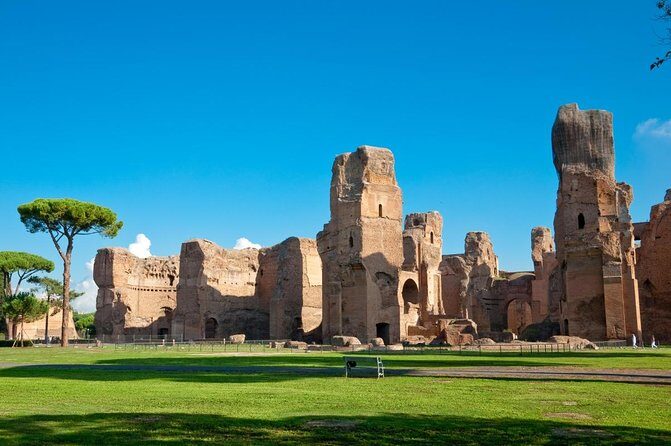
- Caracalla’s Baths and Maxentius Circus: major Roman scale in broken-but-impressive stone
Pedaling out through Porta San Sebastiano’s southern gateway
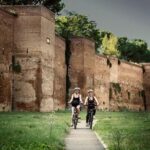
The tour begins at Via dei SS. Quattro, 58, right by the southern edge of the action you want to reach. The first stop is Porta San Sebastiano, an imposing gateway that sits within the Aurelian Walls, built around 275 AD. Even if you’ve seen other Roman gates, this one hits differently because it marks the start of the historic Via Appia Antica.
I love this opening because it gives you context before you roll. Your guide sets the stage: the Appian Way wasn’t just a road, it was a system. From here, you start seeing how Romans moved people, goods, and power across distances.
A small bonus: there’s mention of medieval graffiti on the gate, which gives the stone a human layer. You’re not only looking at something old; you’re seeing proof people used it centuries after it first mattered.
Practical tip: this stop is short (about 20 minutes), so if you’re the type who wants photos from every angle, come ready with good light timing and don’t get too stuck at the first viewpoint.
You can also read our reviews of more cycling tours in Rome
Parco della Caffarella: Rome’s big green pause
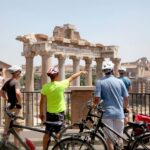
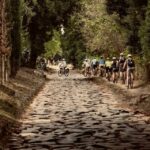
From the gate, the ride moves into Parco della Caffarella, part of the Appia Antica Regional Park. This is one of the biggest green areas not only in Rome but also across Europe. Translation: your brain finally stops counting traffic lanes and starts noticing birds, trees, and the feel of space.
This stop is special because the park doesn’t erase the past—it blends into it. You can see remains of ancient buildings hidden among paths and groves. The effect is less like a fenced-off ruin and more like Rome’s history showing up in the middle of everyday walking territory.
The main drawback here is not the park itself—it’s time. At roughly 20 minutes on this stop, you’ll get a guided walkthrough and a few key sights, but you won’t have the freedom to wander for hours. If you’re the independent type who wants to roam, plan to return later on your own.
Ninfeo di Egeria: a love story you can stand in
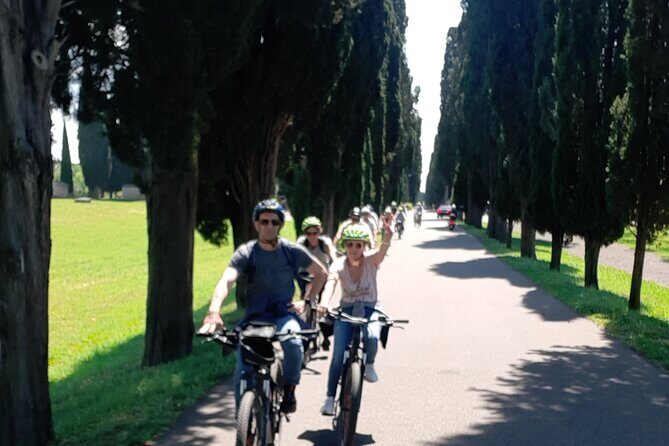
Next up is the Ninfeo di Egeria, described as a sacred place tied to a love story between the nymph Egeria and Numa Pompilius, the second king of Rome. The myth goes that Egeria learned of her beloved’s death and burst into tears—giving life to a spring.
Even if myths aren’t your thing, this stop works because it’s short and atmospheric. You pause, learn the story, and then connect it to why water mattered so much on the Appia side. You start to feel a theme forming: Romans built with stone, but they lived with water.
The only consideration: this isn’t a long, sitting-style stop. It’s meant to be a quick step that adds meaning to the rest of what you’re seeing.
Parco degli Acquedotti and the Via Latina water network
If there’s a single section that turns the ride from scenic to unforgettable, it’s Parco degli Acquedotti (Parco Archeologico dell’Appia Antica). Here you move through a massive green area crossed in ancient times and still marked by major remains.
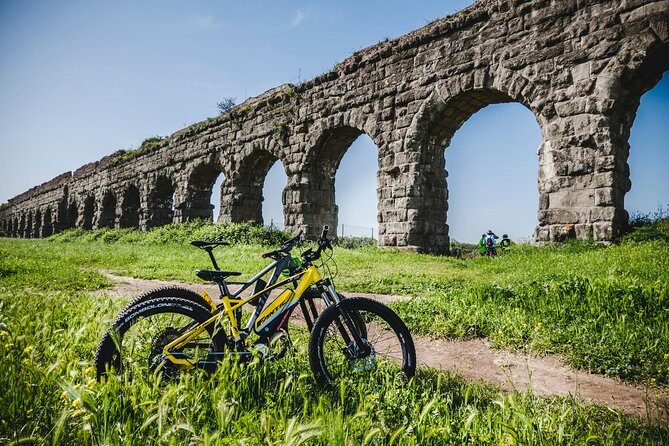
What makes this stop so valuable is the Roman engineering angle. This area sits at crossroads of the water network of Ancient Rome. You’ll get to admire aqueduct remains in places that are well preserved. Even better: the description notes that surprisingly some aqueducts are still in operation.
I love how this kind of stop changes how you see the whole city. After this, Rome’s fountains and bath culture stop looking like random beauty. They start looking like the surface of a buried, working system.
One small heads-up: this portion of the route is the sort where you might want to stop and stare. Try to stay with the plan—your guide will connect the dots between roads, water, and why certain villas and tombs ended up where they did.
Villa dei Quintili and Santa Maria Nova: power that ended up confiscated
After the aqueduct focus, the tour goes to Villa dei Quintili and Santa Maria Nova (at the fifth mile of the Appian Way). The villa belongs to the Quintili brothers—Sesto Quintilio Condiano and Massimo Valerio, consuls in the second century AD.
Then the story sharpens: they were killed by Commodus I, who confiscated the villa and made it imperial property. That kind of shift—private wealth to state control—shows up across Roman history, and the Appia Way is a perfect place to see it because the road itself carried status.
What I like here is that the stop isn’t only about admiring the size of things. It’s about understanding why those places existed at all and why the Appian Way mattered to elites.
This stop can also feel a bit less dramatic visually than the big-ticket monuments, depending on your expectations. If you want constant wow-factor photo moments, balance this with the next tomb stop.
You can also read our reviews of more private tours in Rome


Cecilia Metella and Castrum Caetani: a tomb that kept its shape
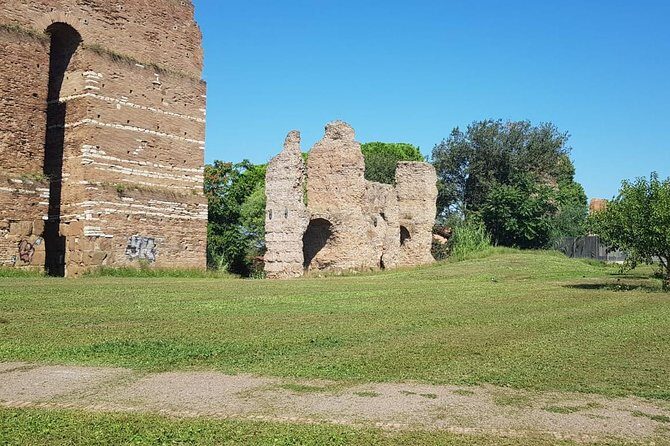
One of the tour’s most memorable stops is Mausoleo di Cecilia Metella and Castrum Caetani. This mausoleum is a pagan tomb dating back to the 1st century BC, dedicated to Cecilia Metella. It’s described as the best preserved mausoleum on the Via Appia Antica—which matters, because when something survives in good form, you can actually read the scale.
It was incorporated into Castrum Caetani, and you can also see remains of the medieval house of the wealthy Caetani family. There’s even mention of the church of San Nicola, with only the perimeter walls still standing.
This is a standout stop for me because it shows layering: Roman pagan monument, then medieval use, then later survival as partial walls. You’re watching time stack up in front of you.
Photo note: the exterior views tend to work best. Interiors aren’t the focus here, based on what’s described. If you like architecture, this is a good stop to slow down a little.
Circus of Maxentius: Roman entertainment, minus the crowd
Next you hit the Circus of Maxentius, located on the Via Appia Antica. The description calls it the best example of a Roman circus that has survived to this day. And you can see why: it’s a big, physical structure, not just a few scattered blocks.
The key feature to look for is the spina, the central divider that’s still visible. The spina once housed the Agonale obelisk, which was moved during the Renaissance to the Fountain of the Four Rivers in Piazza Navona.
This stop gives you a satisfying connection between suburbs and the center of Rome. After you see the circus here, you understand how Rome recycled its own monuments. The city didn’t just move on; it repurposed.
Baths of Caracalla: massive public Rome, still holding together
The tour wraps with Terme di Caracalla, the Baths of Caracalla. These were built by the emperor of the same name and, for about a century, were the largest public baths ever built. Today, most of their structure is preserved.
Aqua mattered again here. The description notes that a branch of the Aqua Marcia brought water to the baths through the Antoninian aqueduct. It even points out that small remains can be admired at Porta San Sebastiano, linking the water story across stops.
This ending is strong because it closes the Appia puzzle: roads brought people; water kept cities running; baths reflected how Romans built community around daily life.
If it’s hot, pace yourself here. This is a stop where you might want extra time just to walk around and take it in. On this tour, the time is limited, but the guide usually helps you find the best angles quickly.
E-bikes, traffic, and how to know if this fits you
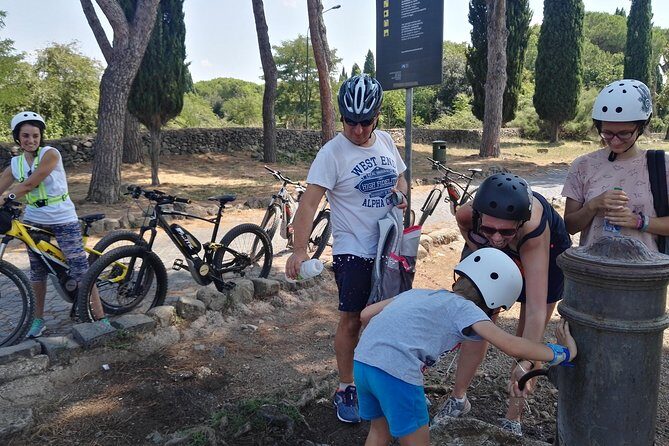
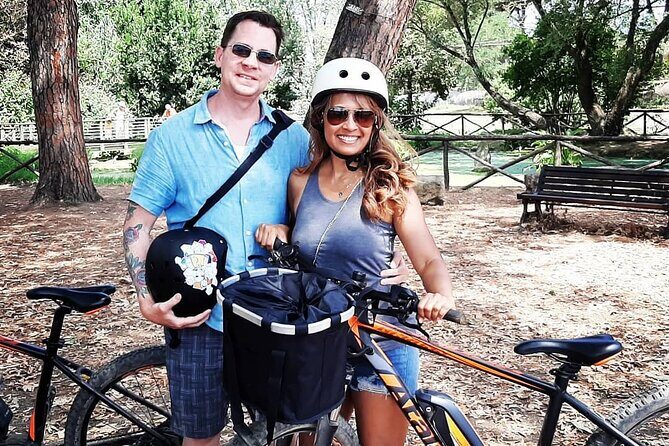
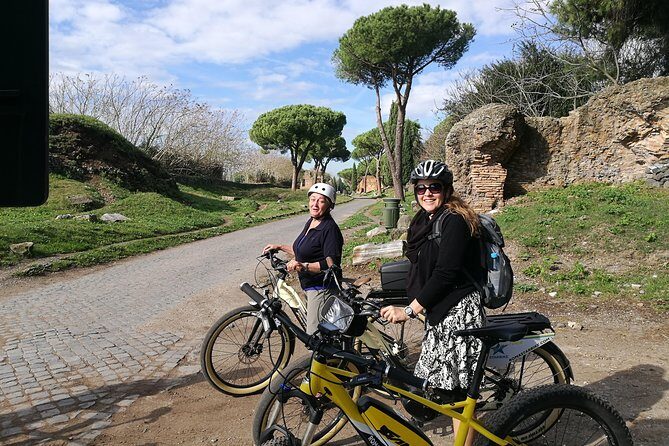
The ride is built for people who want motion without suffering. You get a high quality e-bike plus a helmet, and the bikes include practical extras like a mobile phone holder and handlebar holder. That matters more than it sounds, because you’ll take photos, check directions, and keep your hands where they should be.
But read the fine print and the feedback: you must know how to ride a bike well. The tour also says travelers should have a moderate physical fitness level, and one review adds a key detail: there’s no throttle. The bikes are pedal assisted, so you’ll still be pedaling.
Traffic is the big reality check. One review warns that about 20% of the ride can be in busy city traffic and that you’ll share the road with drivers. Another review praises the experience but also frames biking in the city as something you should feel comfortable doing.
So here’s my honest take on fit:
- This is ideal if you can ride confidently and don’t mind occasional road-sharing.
- It’s not ideal if you want a fully car-free ride.
- It works well for families because child seats are included (until 25 kg), and there’s a child option tied to height.
Family value: child seats and the height rule
This tour is often chosen for families, and the setup is straightforward. You’ll have a child seat until 25 kg, which helps younger kids ride safely as a passenger.
There’s also a child discount for ages 6–10, but with a specific condition: the child must be less than 4/7 feet tall (143 cm) because they’ll use a trailer bike, not a bike alone. If your child is close to that limit, measure ahead of time so you’re not scrambling at the start.
In the family review, the kids ranged from 11 down to 5, and the group described the ride as a fun way to see a lot of Rome in a half-day. That matches the tour’s style: shorter stops with guided stories, plus time on the bike that feels like play.
Price and value: $147.54 for a private, story-led half-day
At $147.54 per person for about 4 hours, this isn’t a cheap activity. But it can be good value because you’re paying for:
- Private guiding (your group only)
- An e-bike with safety gear and phone mount
- A planned route that strings together major Appia-area sites without you needing to figure everything out
Also, the stop list is dense. You’re covering gateways, parks, myth-making springs, aqueduct engineering, elite villas, famous tombs, a Roman circus, and Caracalla’s baths. Done on your own, you could get to many of these spots, but it would take more planning and more time lost to logistics.
One review even frames it as a quick way to see about 14 miles of Rome by e-bike. The private format likely makes the pace feel controlled rather than rushed.
Worth noting: admission tickets for the listed stops are shown as free in the tour details, so the cost isn’t inflated by mandatory entry fees.
Should you book it? The practical call
I’d book this if you want the Appia Way as a guided experience where the stories actually connect—water systems to emperors, tombs to later medieval reuse, and an ancient road to Rome’s wider urban life. The private format also helps if you want questions answered as you ride instead of waiting for a busier group tour rhythm.
I’d think twice if:
- You don’t ride bikes confidently (the tour states you must ride well)
- You’re worried about sharing roads during parts of the route
- You expect a throttle-only e-bike experience (the bikes are pedal assisted)
FAQ
How long is the Ancient Appian Way private bike tour?
It’s approximately 4 hours.
Where is the meeting point and where do we finish?
You meet at Via dei SS. Quattro, 58, 00184 Roma RM, Italy, and the tour ends back at the same meeting point.
Is this a private tour?
Yes. It’s private, so only your group participates.
Do I need to know how to ride a bike?
Yes. The tour requires that you must know how to ride a bike well.
Are admission tickets required for the stops?
The stops listed show admission ticket free options.
Is the tour good for children?
Child seats are included until 25 kg. There’s also a child (6–10) discount if the child is less than 4/7 feet (143 cm), since they will use a trailer bike.