REVIEW · 2-HOUR EXPERIENCES
2-Hour Walking Tour in Rome’s Enchanting Jewish Ghetto
Book on Viator →Operated by CENTURION OF ROME - TOUR EXPERIENCE · Bookable on Viator
Rome has a gift for layered stories.
This 2-hour walking tour ties together ancient Rome and the Jewish community of Rome, moving from monuments you’ve probably seen on postcards to places that still matter today. I especially like the small-group feel, where you can actually ask questions, and the way the route blends major sights like Trajan’s Column with the exterior view of the Great Synagogue. There’s also an English guide and headsets when appropriate, so you’re not stuck half-listening as you shuffle along the street.
One thing to plan for: two key stops have entrances that are not included. You’ll also want comfy shoes, since parts of the walk include steps that can feel tougher than you expect on an urban route.
In This Review
- Key Highlights You’ll Feel on This Walk
- Why This 2-Hour Jewish Ghetto Walk Fits Rome Perfectly
- Start at Trajan’s Column on Via dei Fori Imperiali
- Teatro di Marcello: Ancient Performances Outside the Ticketed Door
- Il Portico di Ottavia: Columns, Calm, and a Weather-Smart Pause
- Tempio Maggiore / Great Synagogue: A Landmark That Still Serves a Community
- Turtle Fountain, Kosher Gelato, and the Walk Toward Tiber Island
- Isola Tiberina Finish: Crossing the Oldest Active Bridge
- Practical Stuff That Makes This Walk Easier (and More Enjoyable)
- Should You Book This Rome Jewish Ghetto Walking Tour?
- FAQ
- Is the tour private?
- How long is the walking tour?
- What language is the guide?
- Are headsets included?
- Are tickets for the Teatro di Marcello included?
- Are tickets for the Great Synagogue included?
- Where does the tour start and end?
- What if I need to cancel?
Key Highlights You’ll Feel on This Walk
A tight 2-hour loop that keeps the story moving without wasting half your day in transit.
Trajan’s Column first, which gives you a strong “ancient Rome” anchor before you shift to Jewish Rome.
A Great Synagogue stop with real meaning, even if entry isn’t included.
Octavian Portico as a practical breather, with shade and classic Roman columns in a calmer setting.
Tiber Island as a satisfying finish, reached by one of Rome’s oldest active bridges.
Small shared group size (up to about a dozen), which helps the guide stay on track.
Why This 2-Hour Jewish Ghetto Walk Fits Rome Perfectly
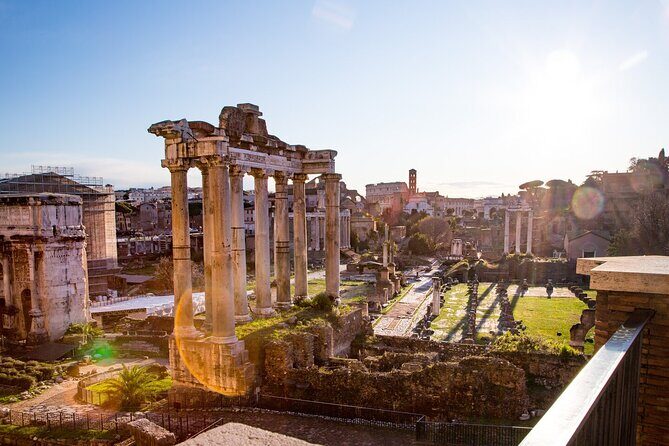
Rome is big, and the Jewish Ghetto area can feel like a maze if you show up cold. This tour works because it’s short enough to stay focused and structured, but packed enough to connect the dots between empire-era Rome and the Jewish community that formed—and persisted—here.
You’ll go at a walking pace with a professional guide, and the tour is shared with a maximum group size (the experience lists up to 15 per group, and also notes up to 12 travelers). That smaller size is the difference between hearing a lecture from a distance and getting real attention when you have a question.
At $96.13 per person, it’s not a budget impulse buy. But you are paying for the guide and the logistics that make a short route actually meaningful—plus mobile ticketing and headsets when appropriate so you can follow without craning your neck.
You can also read our reviews of more walking tours in Rome


Start at Trajan’s Column on Via dei Fori Imperiali
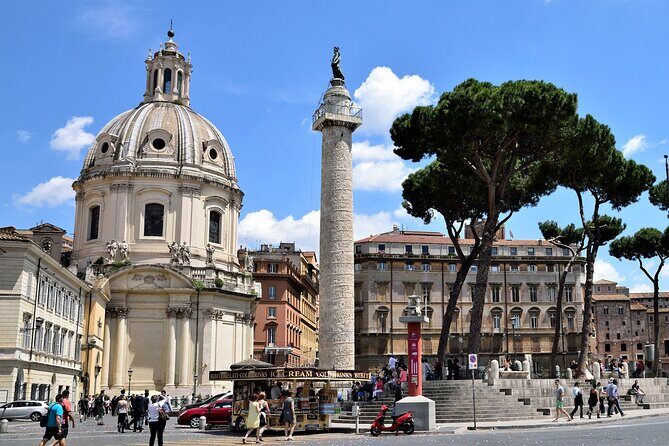
Your tour begins at Trajan’s Column on Via dei Fori Imperiali. This is a strong choice for a start, because it immediately drops you into Roman power, propaganda, and artistry. Trajan’s Column was erected between 106 and 113 AD, and it rises about 30 meters (98 feet) with detailed bas-reliefs spiraling around the shaft.
Expect a focused stop of around 20 minutes. Admission is listed as free for this part, which is a nice bonus in a tour where some later entrances cost extra. Even if you’ve seen photos, standing near the column helps you understand how Roman monuments were built to communicate—not just decorate.
If you’re the type who likes context, this stop sets the stage well. You’ll be primed to notice how later sites reflect changing communities, shifting rules, and different ways of public life.
Teatro di Marcello: Ancient Performances Outside the Ticketed Door

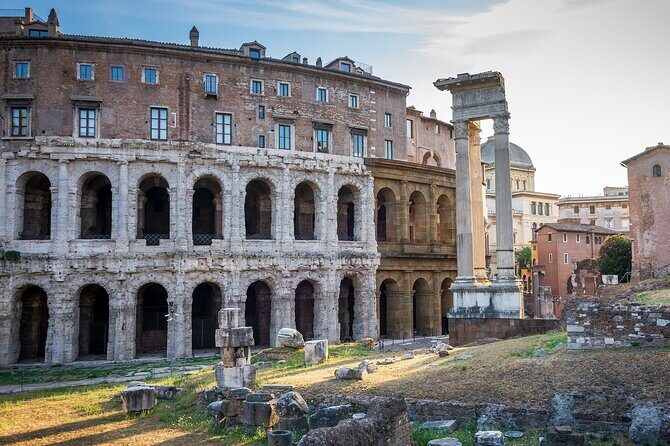
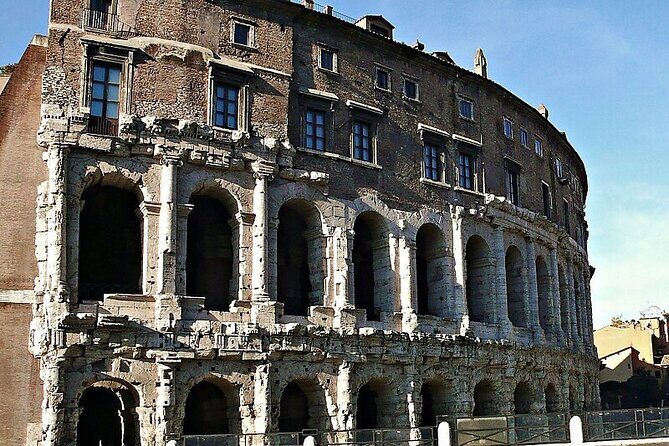
Next you’ll head to the Teatro di Marcello, one of Rome’s striking ancient amphitheater-theaters. Commissioned by Emperor Augustus in the 1st century BC and named for Marcus Marcellus, it once seated up to around 10,000 people.
This stop is about 20 minutes, and here’s the key practical point: entrance is not included. You’ll see the structure and take in the scale, but plan for the possibility that you won’t be going inside unless you choose to add tickets separately.
What I like about including Marcello on this specific route is how it connects “public entertainment” to “public identity.” The theater is all about communal life. As you move later into Jewish Rome, you’ll start noticing how public spaces—prayer spaces included—carry stories about who belonged, who was allowed, and who had to navigate restrictions.
Il Portico di Ottavia: Columns, Calm, and a Weather-Smart Pause
Il Portico Di Ottavia (Porticus Octaviae / Octavian Portico) is one of those Roman structures that feels made for real walking-life. Built by Augustus in the 1st century BC and dedicated to Octavia Minor, it served multiple purposes: shelter, cultural activities, and public gathering.
You get roughly 20 minutes here, and admission is free. That matters because it keeps the tour moving without charging you for every step of the day. Architecturally, you’ll be looking at Corinthian columns and a sense of refined design that still reads as impressive even after centuries.
I find this stop useful for another reason: it’s a mental reset. After Trajan’s Column’s direct, towering statement, Portico di Ottavia brings you into a space with rhythm—columns and covered edges—where you can slow down, catch your breath, and absorb what the guide explains about how neighborhoods functioned beyond just the headlines.
Tempio Maggiore / Great Synagogue: A Landmark That Still Serves a Community
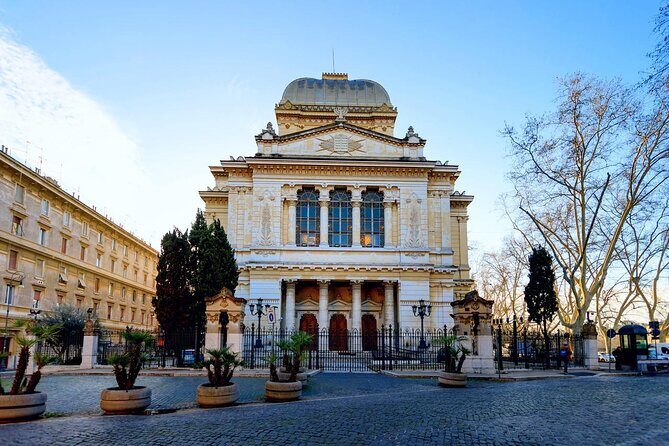
The centerpiece of the Jewish Ghetto story is the Great Synagogue area, specifically the stop for Tempio Maggiore. The tour describes it as the third largest synagogue in Europe and—important detail—it still functions as a place of prayer and a key cultural reference point for Rome’s Jewish community.
Here’s the practical catch: the Great Synagogue entrance is not included. You’ll spend about 30 minutes at the site, which is enough time to take in the exterior and hear the guide’s explanation, but you’ll need to buy or arrange entry separately if you want to go inside.
Visually, this synagogue is known for a grand façade that blends Moorish and Roman styles, with a large dome and tall windows. Even from outside, it’s easier to understand why it draws attention: it’s not just a historic building; it’s still in use.
I also appreciate that this stop is framed as continuity, not as museum-only nostalgia. The story isn’t only about what happened long ago. It’s about how a community endured, adapted, and maintained identity over time.
You can also read our reviews of more tours and experiences in Rome





Turtle Fountain, Kosher Gelato, and the Walk Toward Tiber Island
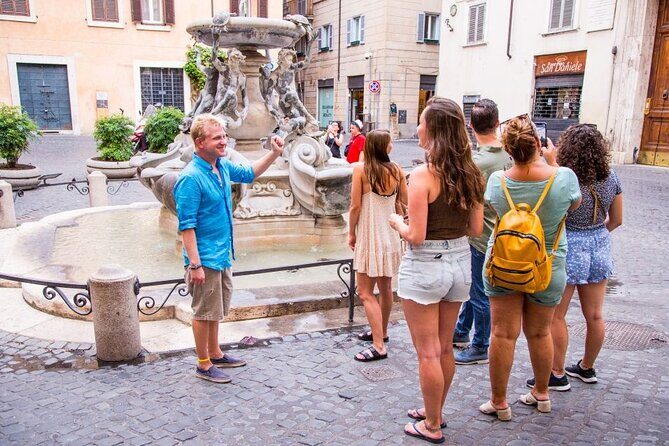
After the synagogue stop, the route moves through classic Rome street scenes. You’ll encounter Fontana delle Tartarughe in Piazza Mattei, famous for its bronze turtle figures. Designed by Giacomo della Porta in the 16th century and completed by Taddeo Landini in the early 17th century, the fountain is small enough to feel personal, but iconic enough that you’ll probably recognize it from books or photos.
This is a free stop (admission ticket free) and lasts around 20 minutes. The tour also routes you past where you can sample kosher gelato. Since extra food and drinks are listed as not included, treat it like an optional add-on—something you can choose if it fits your day and your budget.
One of the best things about this stretch is that it’s not just “sightseeing.” It’s the in-between Rome moments: you’re walking local streets, you’re getting a sense of texture, and you’re getting a natural break before the final crossing.
Isola Tiberina Finish: Crossing the Oldest Active Bridge
The tour ends at Tiber Island (Isola Tiberina). You’ll cross the island via the boat-shaped bridge that’s described as the oldest active bridge in Rome.
This last leg is short—around 10 minutes—and admission is listed as free. Still, don’t treat it like a throwaway finale. By the time you reach this point, you’ve already shifted from empire monuments to community-focused landmarks. The island setting gives you a calm, scenic moment to let the story land.
Also, the end location is convenient for continuing your day. If you want more walking after the tour, you’re in a strong position to keep exploring along the river area.
Practical Stuff That Makes This Walk Easier (and More Enjoyable)
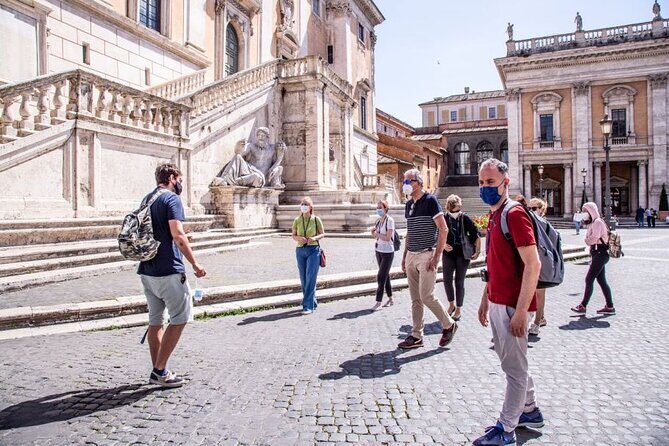
This is a shared walking tour, not a private one. You should expect you’ll be part of a group that may include up to around a dozen people (and the listing also references maximum 15 per group). That’s the model: you’re paying for a guided route, not a personalized one-on-one experience.
The tour includes a professional and expert guide and headsets for groups when appropriate. If you’re sensitive to noise or you like hearing details clearly, that headset setup is a real quality-of-life feature.
Wear comfortable shoes. One review called out challenging steps, so don’t assume Rome’s sidewalks are always flat and friendly. Also plan for sun and shade: one guest reported a guide named Daniel using an umbrella to keep them shaded. Even if your guide doesn’t do the same, it’s a reminder that conditions can change fast.
Finally, remember that two big entrances (Teatro di Marcello and the Great Synagogue) are not included. That means your best-value strategy is deciding in advance whether you want to spend extra time and money on entry inside those sites—or be happy with the outdoor viewing and the guide’s explanation.
Should You Book This Rome Jewish Ghetto Walking Tour?
Yes, I’d book it if you want a focused, human-paced introduction to the Jewish Ghetto area without getting lost in research mode. The short duration, the small shared-group size, and the mix of ancient monument context plus a still-active community landmark make it a strong “first visit” option.
I’d think twice if you want to see everything inside. Entrance is not included for the Teatro di Marcello and the Great Synagogue, so you may end up paying more later if your must-do list includes interior access. And if steps are a challenge for you, go in with that expectation and dress for walking.
FAQ
Is the tour private?
No. It is a shared walking tour, with a maximum group size noted as up to 15 people per group and also listed as up to 12 travelers for the experience.
How long is the walking tour?
It runs for approximately 2 hours.
What language is the guide?
The tour is offered in English.
Are headsets included?
Yes. Headsets are included for groups when appropriate.
Are tickets for the Teatro di Marcello included?
No. Entrance to the Marcello Theater is not included.
Are tickets for the Great Synagogue included?
No. Great Synagogue entrance is not included.
Where does the tour start and end?
It starts at Trajan’s Column on Via dei Fori Imperiali, and it ends at Tiber Island (Isola Tiberina).
What if I need to cancel?
You can cancel for a full refund up to 24 hours before the experience starts.
If you tell me your travel dates and whether you want synagogue or theater interior access, I can help you plan what to add and how to time the rest of your Rome day.