REVIEW · 2-HOUR EXPERIENCES
2 Hour Guided Walking Tour in Trastevere and Jewish Ghetto
Book on Viator →Operated by RomAbout Tours · Bookable on Viator
Walking between Trastevere and Rome’s old Jewish Quarter feels different. This guided 2-hour route links everyday neighborhood scenes with the heavier 16th-century history people often skip, and it’s paced for small groups (max 12) so you can actually ask questions. I especially like how the guide’s stories make the streets feel personal, and I like the headsets setup for bigger groups, so you don’t have to lean in or strain to hear. One thing to consider: this tour is built around piazzas and squares, not a museum-heavy day—so if you’re expecting lots of big indoor sites, plan accordingly.
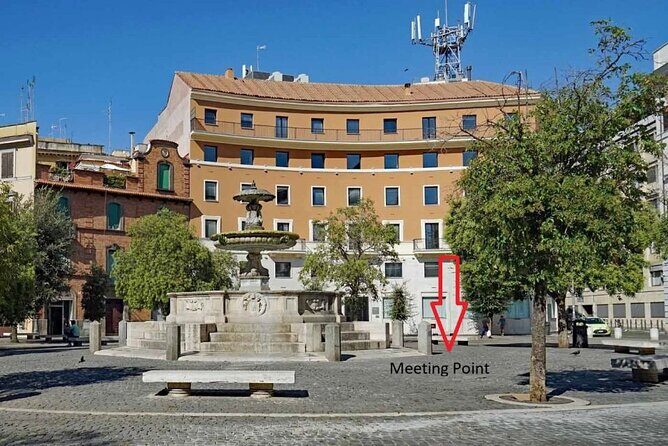
You start near Piazza Mastai and end at Via del Teatro di Marcello, by the ancient Teatro di Marcello. It’s offered in English, runs about 2 hours, and uses a mobile ticket. You’ll be walking at an easy sightseeing pace, with included tickets tied to the stops where access is part of the experience.
In This Review
- Key things you’ll notice on this walk
- Trastevere to the Jewish Ghetto: what this tour is really good at
- Price and time: does $23.91 make sense for 2 hours?
- Where you start and where you finish (and why the route feels efficient)
- Piazza di Santa Maria in Trastevere: the basilica ticket moment
- Piazza Trilussa: why this square feels lively at night
- Campo de’ Fiori: the market square you’ll recognize instantly
- Antico Quartiere Ebraico: the 16th-century ghetto story in street form
- Teatro di Marcello: ending with ancient Roman entertainment
- Group size, headsets, and English: comfort on a city walk
- What to expect on the ground: a walk with timed stops
- Who should book this tour (and who might skip it)
- Should you book 2 Hour Guided Walking Tour in Trastevere and Jewish Ghetto?
- FAQ
- How long is the tour?
- How much does the tour cost?
- Where does the tour start and where does it end?
- Is the tour offered in English?
- Is the group size limited?
- Are headsets provided?
- What’s included in the price?
- What is not included?
- Where is the meeting point located?
- Can I cancel for a full refund?
Key things you’ll notice on this walk
- Trastevere street life with context so you understand what you’re seeing, not just where it is
- Max 12 people for a more conversational guide-chat feel
- Headsets if the group is over 10, which is a real comfort on a busy Rome day
- Included admissions at the main stops, including the 12th-century basilica area at Piazza Santa Maria in Trastevere
- A deliberate shift from charming squares to ghetto history in the Antico Quartiere Ebraico area
- An ending that ties it to ancient Rome at Teatro di Marcello
Trastevere to the Jewish Ghetto: what this tour is really good at
This is not a “run from landmark to landmark” tour. It’s a focused walk that helps you connect three layers of Rome: everyday neighborhood vibe in Trastevere, the story of the Jewish Quarter under duress, and then the older Roman backdrop you can still see in the setting around Teatro di Marcello.
That mix is why this works so well. If you only hit the big-ticket stops, you end up with Rome as a postcard. Here, you get Rome as a lived-in place, where a square can hold both charm and consequences depending on the era you’re learning about.
For most people, the sweet spot is timing and pacing. You’re not stuck on a 6+ hour tour. You can slot this in on a lighter day, then return to whatever area you liked most for your own wandering afterward.
You can also read our reviews of more walking tours in Rome


Price and time: does $23.91 make sense for 2 hours?
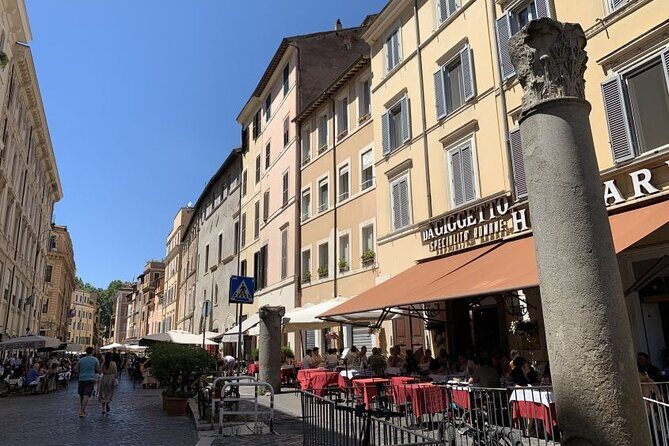
At $23.91 per person for about two hours, you’re paying for one thing: a professional guide who can point out what matters and put it in order for you. This isn’t a “buy a ticket, read a plaque” experience. The value is in the explanations—especially when the walk shifts into the story of the 16th-century ghetto area.
You’ll also notice that the tour group size is capped at 12. That usually means less waiting around and more chances to ask questions. And when groups grow beyond 10, you get headsets, which is a small detail that can make a big difference in a noisy Rome square.
So the practical way to think about value is this: if you enjoy guided context and you want to understand what you’re looking at (not just take photos), the price feels fair. If you prefer self-guided wandering with no commentary, you may feel like the money is only worth it if you truly use the guide’s knowledge during the walk.
Where you start and where you finish (and why the route feels efficient)
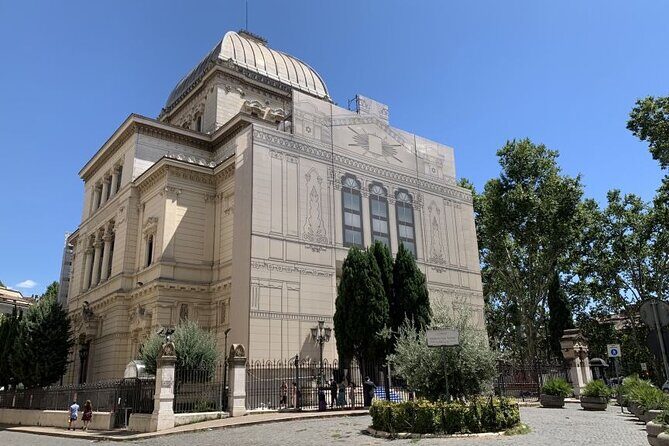
You meet at Piazza Mastai (00153 Roma RM) and finish at Via del Teatro di Marcello (00186 Roma RM), near Teatro di Marcello. That start-to-finish setup matters because it reduces backtracking. Instead of starting and ending in the same zone, you move across neighborhoods and end near a major ancient site.
It also helps you plan your day. After the tour, you’re in a good position to keep exploring around Teatro di Marcello, catch food in the general historic center area, or find your next museum stop without crossing the city again.
And since it’s near public transportation, you can also reach the meeting point without a complicated bus or long taxi detour.
Piazza di Santa Maria in Trastevere: the basilica ticket moment
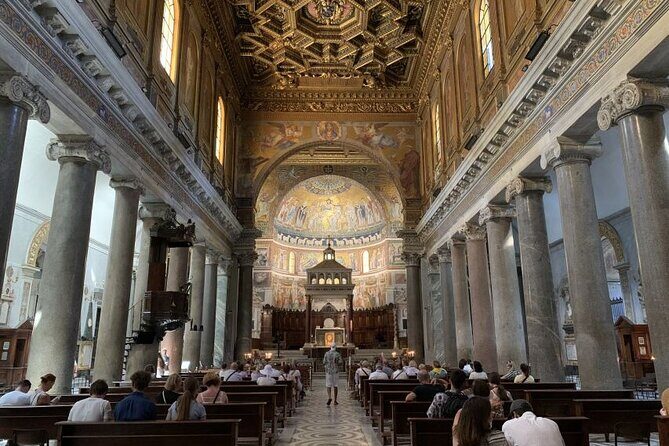
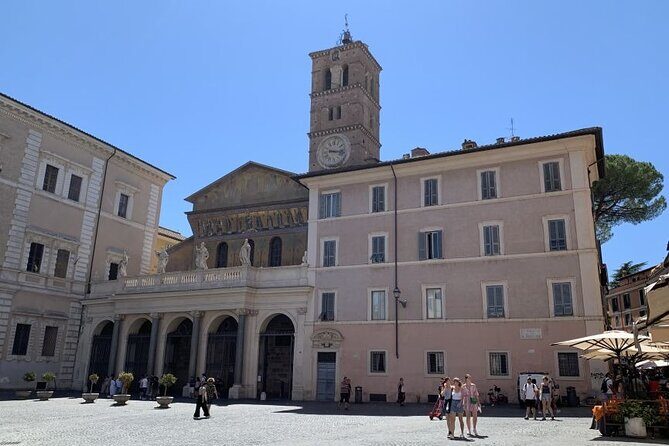
The first stop sets the tone. You’ll gather in Piazza di Santa Maria in Trastevere, where you’ll admire a 12th-century basilica. You also get an admission ticket included tied to this moment.
What I like about starting here is that it anchors you fast in the identity of Trastevere. You can feel why this neighborhood stays popular with both locals and visitors: it’s old, visually strong, and it already feels like it has its own rhythm before you even talk about the heavier chapters coming later.
One practical note: if you’re hoping for a long, museum-style visit, keep your expectations aligned. This stop is timed—about 20 minutes—so treat it as a gateway into the story, not a deep interior tour.
Piazza Trilussa: why this square feels lively at night
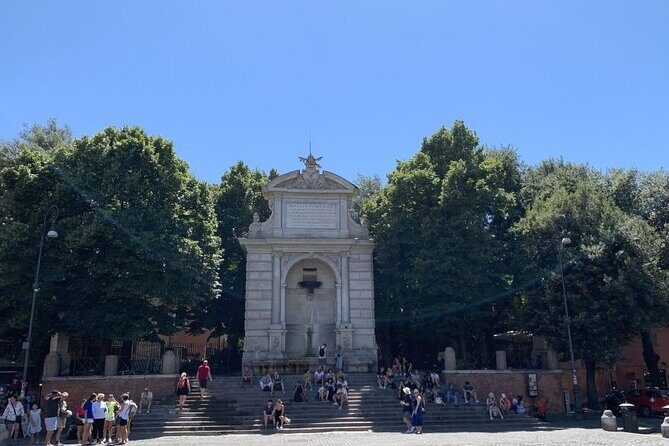
Next comes Piazza Trilussa, a picturesque square where you get a sense of the area’s social life. The vibe here is often associated with evening gatherings, especially among younger crowds.
This stop is valuable because it shows you how Trastevere works day-to-day. Rome can look “dead” to you when you visit only daytime monuments. In places like Piazza Trilussa, you learn how locals and regular visitors actually use the space—sitting, meeting, lingering, and turning a square into a social stage.
Drawback to consider: because this segment is short and focused on passing through, you won’t have tons of time to stop and stare like you might if you were on your own. If you love squares, you can always return for a second look after the tour ends.
You can also read our reviews of more guided tours in Rome




Campo de’ Fiori: the market square you’ll recognize instantly
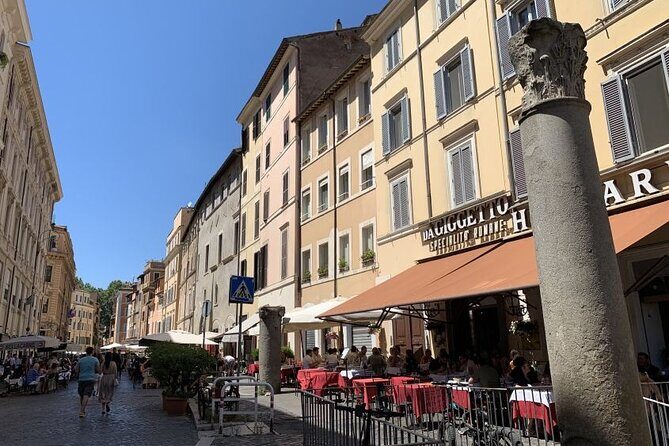
Then you head to Campo de’ Fiori, one of Rome’s best-known central squares. It’s famous because it functions as a main market during the morning.
This stop helps you “place” Rome in a more real context. A market square isn’t just scenery—it’s where shopping habits and daily routines have shaped the neighborhood for generations. Even if you only catch a slice of that market energy during a walk, the guide’s framing makes the square feel less like a postcard and more like a daily engine.
A small consideration: depending on the time of day, you might see more of the square than the market in action. Still, even when it’s quieter, Campo de’ Fiori’s layout and feel are hard to miss, and the guided explanation is what turns it from photos into understanding.
Antico Quartiere Ebraico: the 16th-century ghetto story in street form
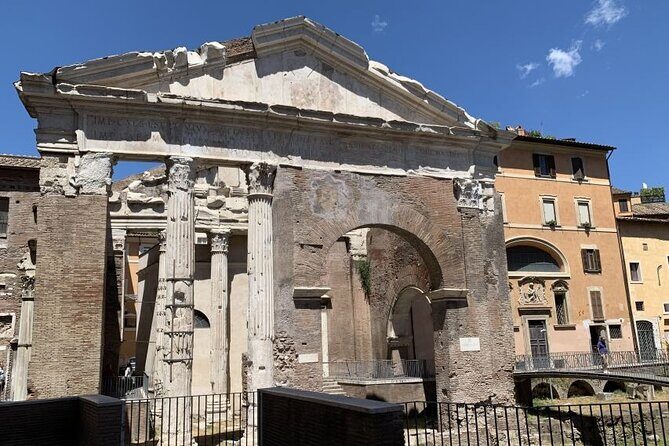
This is the emotional center of the tour. At Antico Quartiere Ebraico, your guide explains the tragic history that unfolded in the neighborhood during the 16th century. You’ll spend about 20 minutes here, with an admission ticket included as part of the stop.
What makes this segment stand out is the way it refuses to treat history as distant. You’re not reading about the ghetto on a computer screen. You’re learning while you’re standing in the area, watching how the street pattern and nearby structures create a physical sense of place.
This is also where a strong guide really matters. In the past, guides like Sarah have been praised for deep local familiarity and for answering questions clearly and patiently. That matters here because the subject is sensitive, and it’s a lot easier when the guide can explain with care and keep things understandable.
One more practical note: because the tour focuses on squares and streets, your “site time” may feel different than you expect if you’ve done museum tours elsewhere. If you want long indoor time in multiple buildings, this may not be your best fit. But if you want a guided historical orientation without a huge itinerary, this segment hits the right balance.
Teatro di Marcello: ending with ancient Roman entertainment
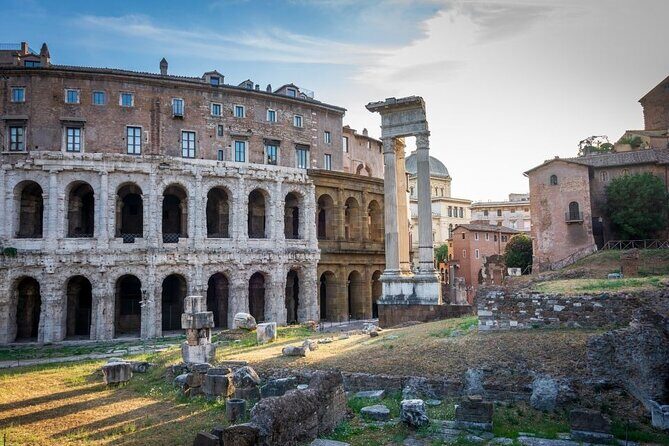
The tour finishes in front of Teatro di Marcello, an impressive ancient Roman monument tied to entertainment and architecture. It dates back to 13 BC, and you’ll end at Via del Teatro di Marcello.
Ending here is smart. After learning about later centuries in Trastevere and the Jewish Quarter, you get a reminder that Rome’s layers keep stacking. Ancient public spaces weren’t just architecture. They were about community gathering, performance, and how people used space for shared experiences.
Even if you’ve seen other Roman ruins, Teatro di Marcello gives a different angle because of its size, setting, and how it still feels like it belongs to the city’s daily life. It’s a satisfying closer: you end with something dramatic and timeless without being trapped in the same kind of indoor-heavy schedule.
Group size, headsets, and English: comfort on a city walk
A cap of 12 travelers is a big plus for comfort and flow. In practice, that often means you don’t get lost in the shuffle. You can hear your guide’s key points and ask questions without feeling like you’re shouting into a crowd.
If your group grows beyond 10, headsets are provided, which helps a lot in Rome’s squares and busy street corners. It’s one of those details you don’t appreciate until you’ve tried to hear a guide through background noise.
The tour is in English, and you get a mobile ticket. That keeps things simpler when you’re moving around neighborhoods rather than hanging out at a single ticket office.
What to expect on the ground: a walk with timed stops
This is designed as a steady walking loop with several short segments. Each main stop runs around 20 minutes, which helps you cover multiple areas without turning it into a marathon.
The trade-off is that each stop has a “starter pack” feel. You’ll learn enough to understand what you’re looking at and why it matters, but you won’t get hours inside. That’s not a flaw—it’s the structure. But it does mean you should plan to do your own extra wandering after if you want deeper time in any one place.
Also, because the tour is centered on piazzas and squares, you’ll spend a lot of time outdoors. If you’re visiting in hot weather, bring water. If it’s cool or rainy, have a light layer ready. Rome weather can turn fast, and this route is built for the outdoors.
Who should book this tour (and who might skip it)
Book it if you want:
- A small-group guided walk that connects Trastevere to the Jewish Quarter
- Clear explanations of what you’re seeing, especially around the 16th-century ghetto history
- Included moments like the 12th-century basilica stop where admission is part of the experience
- A route that ends near Teatro di Marcello, so you can keep exploring right afterward
Consider skipping or choosing something else if you:
- Want a museum-heavy day with long indoor visits
- Are specifically looking for a long list of major, ticketed archaeological sites
- Prefer total self-guided control with no timed stops
In other words, this tour fits best when you like walking, learning, and getting your bearings quickly across neighborhoods.
Should you book 2 Hour Guided Walking Tour in Trastevere and Jewish Ghetto?
Yes, if you want a guided, meaningful walk that shows you Rome beyond the usual headline sights. The price is reasonable for the guide-led context, the small group size keeps it human-sized, and the route gives you an important historical lens without turning the day into a lecture.
I’d especially recommend it if you’re curious about how Rome’s neighborhoods work across time—when charming squares in Trastevere relate directly to the story of the Antico Quartiere Ebraico, and then you close with the ancient stage of Teatro di Marcello.
FAQ
How long is the tour?
It’s listed at about 2 hours.
How much does the tour cost?
The price is $23.91 per person.
Where does the tour start and where does it end?
It starts at Piazza Mastai, 00153 Roma RM, Italy, and ends at Via del Teatro di Marcello, 00186 Roma RM, near Teatro di Marcello.
Is the tour offered in English?
Yes, it’s offered in English.
Is the group size limited?
Yes. The maximum number of travelers is 12.
Are headsets provided?
Headsets are provided if the group has more than 10 people.
What’s included in the price?
A professional tour guide is included, and headsets are included if applicable. Admission tickets are included for the listed stops.
What is not included?
Hotel pickup and drop-off are not included.
Where is the meeting point located?
The meeting point is Piazza Mastai, 00153 Roma RM, Italy, and the tour ends near Teatro di Marcello at Via del Teatro di Marcello, 00186 Roma RM, Italy.
Can I cancel for a full refund?
Yes. You can cancel up to 24 hours in advance for a full refund.