Pompeii feels huge, then manageable. This wheelchair-accessible, skip-the-lines visit is built around a special route—about 2 kilometers—so you can see the main Pompeii sights without it turning into an endurance test. The story sticks too: in 79 AD, Vesuvius buried the city under ash, and centuries later, the ruins were uncovered in the 18th century, like a time capsule that never stops talking.
I especially like how the tour balances big highlights with human details. You’ll move through Pompeii’s main streets the way Romans did, with a guide sharing anecdotes and secrets while you pass key stops such as the Thermal Baths and the Forum. It’s also a big win that admission and the guided tour are included, so you’re not juggling paperwork while trying to enjoy the site.
One thing to consider: getting to the meeting point can be a bit of a project depending on your starting location. Even though the tour is wheelchair accessible, you still have to reach the start at the Amphitheatre of Pompeii (and public transport is involved), so plan your route ahead of time.
In This Review
- Key things you’ll notice on this Pompeii tour
- What this tour gets right about Pompeii (and why it matters)
- Starting at the Amphitheatre of Pompeii: your day’s anchor point
- The 2-hour route: how you’ll pace your Pompeii highlights
- Main streets and Roman life stories you’ll actually remember
- Thermal Baths and public spaces: why the Roman routine hits hard
- Domus, everyday work, and the homes behind the facades
- Gladiators’ Gym and the city’s entertainment side
- The Lupanare: when history gets frank
- Theater, Forum, and the public stage of Roman city life
- Pleasure houses and the meaning of Pompeii’s social design
- Meeting your accessibility needs: what the tour is built to handle
- Price and value: what $254.67 buys you
- Who this tour suits best (and who might want a different plan)
- How to get the most out of your 2 hours in Pompeii
- Should you book this wheelchair-accessible Pompeii tour?
- FAQ
- How long is the Pompeii tour?
- Is skip-the-line entry included?
- What’s included in the price?
- Where does the tour start?
- Is the tour private?
- Is it wheelchair accessible?
- Are service animals allowed?
- What is the cancellation policy?
Key things you’ll notice on this Pompeii tour
- Skip-the-lines access means more time inside the park and less standing around
- A built-for-access route (~2 km) helps you pace the day without missing the top sights
- Guide-led Roman life stops like the Thermal Baths, Forum, and domus-style areas
- Condensed highlights in 2 hours keeps the visit focused and easier to manage
- Service animals allowed for travelers who need them
What this tour gets right about Pompeii (and why it matters)
Pompeii can overwhelm you fast. The scale is big, the ground can be uneven, and the ticket lines can eat up your day. This tour is designed to solve the two biggest problems: time and access.
First, the skip-the-line ticket is real value. Pompeii is popular, and if you arrive when crowds are building, you can lose precious hours before you even start seeing the ruins. With this experience, you’re aimed at getting you into the action promptly, then keeping the rest of the visit moving with purpose.
Second, the route is explicitly planned to be easier. The tour uses a special path of about 2 kilometers, and that makes the difference between “I saw Pompeii” and “I actually enjoyed Pompeii.” Instead of trying to cover everything on your own, you get a curated walk that hits major stops at a pace that works for wheelchair users and others with mobility needs.
Finally, the best part is how the ruins are explained. Pompeii isn’t just stones. It’s everyday life frozen in time—streets, public buildings, homes, and places for entertainment and worship. A good guide helps you connect what you’re seeing to how people lived, shopped, worked, and relaxed.
You can also read our reviews of more tours and experiences in Pompeii.



Starting at the Amphitheatre of Pompeii: your day’s anchor point
Your tour starts back at the Amphitheatre of Pompeii at Piazza Immacolata, 80045 Pompei NA, Italy. That matters more than it sounds. Amphitheatre areas give you an immediate sense of how Pompeii functioned as a city with a public heartbeat—audiences, crowds, and events.
It’s also the kind of meeting point that helps you keep orientation. When the tour ends, you return to the meeting point, which reduces the stress of figuring out a one-way route back to where you started.
Because your group stays together as a private experience (only your group participates), you can expect a tighter, calmer flow. This is useful when you’re using a wheelchair, scooter, or walking support—anything that benefits from predictable pacing.
The 2-hour route: how you’ll pace your Pompeii highlights
The full experience runs about 2 hours. That’s a sweet spot for many people: long enough to feel like you got the essence of the site, but short enough that you don’t arrive home exhausted in a bad way.
What you’ll likely notice is that Pompeii’s “big hits” are packed in a smart sequence. You won’t be wandering randomly. You’ll be guided along a path designed to keep you moving through recognizable zones of the city. The guide links sites together so the ruins start to make sense in relation to each other—streets to buildings, buildings to daily life.
Also, this is a tour that’s explicitly built to be accessible. The “special path” concept is a quiet hero here. It turns a potentially complicated visit into something you can plan around.
Main streets and Roman life stories you’ll actually remember
A big part of the value is the way the guide brings Pompeii to life. You’ll walk through main streets and hear how people lived in Roman times. This isn’t only about naming buildings; it’s about translating what you’re seeing into real routines—commuting through streets, using public spaces, and living with the city’s social rules.
This is where the tour earns its keep. When you understand what a place was for, the ruins stop being overwhelming. Instead, they become familiar: a forum feels like a civic center, thermal baths feel like a social hub, and small details begin to tell bigger stories.
If you’ve ever toured ruins and thought, Okay, but what would I do here?—this kind of guided storytelling usually fixes that.
Thermal Baths and public spaces: why the Roman routine hits hard
One of the confirmed highlights is Pompeii’s Thermal Baths. Roman baths were more than hygiene. They were a social scene, a place to relax, meet people, and pass time. Seeing them on foot in Pompeii helps you understand why the Romans treated bathing like a daily ritual.
Even with a shorter, accessible route, the baths are worth focusing on. They show how public life worked: changing spaces, circulation, and the idea that comfort was part of civic culture.
This stop also tends to be a good “anchor” for many visitors because it’s a place where you can picture behavior easily. You don’t need a lot of imagination. The layout supports it.

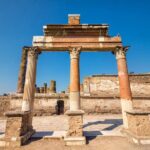
Domus, everyday work, and the homes behind the facades
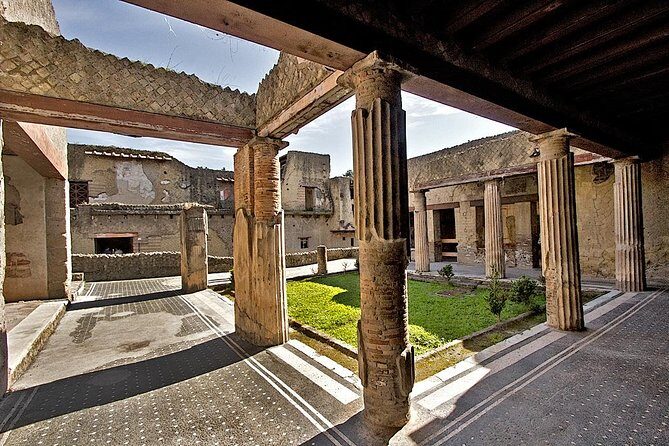
You’ll also visit domus areas and other features that connect to everyday life. Pompeii homes weren’t all identical, but the general idea is consistent: private spaces for family life paired with practical areas for daily activity.
The tour includes the kinds of locations that help you see Pompeii as a functioning city, not just an outdoor museum. For example, you’ll learn about mills—an element that quickly makes the scale of food preparation feel real. It’s hard to read about it. It’s much easier when you’re standing near the physical setting.
These stops can be especially meaningful if you’re traveling with someone who wants context beyond big monuments. Pompeii has plenty of dramatic architecture, but it also rewards attention to the “how did they do it” details.
Gladiators’ Gym and the city’s entertainment side
You’ll pass by the Gladiators’ Gym, another major highlight included in the route. It’s a reminder that Pompeii wasn’t only commerce and home life—it also had entertainment culture.
Roman athletic and performance spaces are great for understanding what people watched and valued. If you’ve ever wondered whether gladiatorial fame was only in Rome, Pompeii answers that with evidence you can see.
And because this tour is guided, you get the context needed to interpret what might otherwise look like spare ruins. You’ll come away understanding what these spaces were used for, not just what they used to look like.
The Lupanare: when history gets frank
The tour includes the Lupanare, known for its erotic frescoes. This is one of the more sensitive stops on the itinerary, and it’s also one of the most famous because it doesn’t hide the reality of Pompeii’s social world.
Keep expectations practical here: this is not a polished, sanitized museum explanation. Pompeii was a real city with real norms and real behavior, and that shows up in the art and signage you’ll encounter.
If you’re uncomfortable with sexual imagery, you might want to mentally prep for this portion of the visit. On the flip side, if you’re curious about daily life—especially the parts that modern culture tends to euphemize—this stop is part of the reason Pompeii feels so honest.
Theater, Forum, and the public stage of Roman city life
You’ll also visit the Theater and the Forum, both classic Pompeii highlights. These are “big picture” stops that show Pompeii as a public city—where civic decisions, community identity, and entertainment met.
The Theater helps you grasp the performance culture in a city where public events weren’t rare. Meanwhile, the Forum gives you the framework for how Romans organized civic life. Put together, these places help you see Pompeii as a system: public spaces served as the stage for most of the city’s shared experience.
This is where the guide matters. Without interpretation, you can look at ruins and still not feel the social energy. With interpretation, you start to understand how people used these areas.
Pleasure houses and the meaning of Pompeii’s social design
Pleasure houses are also part of the tour’s highlights. Along with the Lupanare, this helps fill out the social geography of the city.
These stops add a different type of perspective: instead of focusing only on power and politics, you’re also seeing how Pompeii served everyday wants and social interactions. Again, it’s frank history—but it’s the kind of frankness that makes Pompeii memorable.
Meeting your accessibility needs: what the tour is built to handle
This experience is explicitly wheelchair accessible and uses a special path of about 2 kilometers to make Pompeii more reachable for everyone. The tour also allows service animals, which is important if you rely on one for mobility or health.
The tone from the best guides tends to be practical and reassuring. In the reviews, I saw clear praise for guides who actively make sure people can see the major sights, including wheelchair and scooter users. Names that came up included Mariano, and another guide referred to as Momma. That’s a good sign: it suggests the guides aren’t just reading scripts; they’re adjusting pace and viewpoints to help you actually take the sights in.
What you should do: if you have specific needs (preferred viewing angles, transfer concerns, fatigue limits), plan to communicate those on the day. With a private tour for your group, you’re more likely to get the attention that helps.
Price and value: what $254.67 buys you
At $254.67 per person, this isn’t a cheap, casual outing. But it can be good value for the right traveler.
Here’s what you’re paying for:
- Skip-the-line entry (time savings are worth real money when the park is busy)
- a guided tour with admission included
- an access-focused route (about 2 km) designed to make Pompeii feasible
- a private setup where only your group participates
For people who need an accessible route, the cost often makes sense because you’re not trying to solve everything alone: entrance logistics, pacing, and navigation. For families traveling with mobility needs, that “less stress” factor is huge.
Tips aren’t included, so budget a little extra for gratuity if you want to follow local norms for guided service.
Who this tour suits best (and who might want a different plan)
This tour is a strong match if you:
- need wheelchair accessibility or a route designed for mobility limits
- want a guided walkthrough that hits major Pompeii highlights without decision fatigue
- prefer a shorter, focused visit around 2 hours
- would benefit from a private group experience
It may be less ideal if you’re the type who wants to wander slowly at your own pace for several hours, or if you want to see every single room and corner of the archaeological park. This tour is built around the highlights, not total coverage.
How to get the most out of your 2 hours in Pompeii
To make this day feel smooth, I’d do three things:
1) Wear comfortable shoes and bring a layer. Pompeii weather can change fast, and you’ll be out in open air.
2) Arrive ready to move. The whole concept works when the tour stays on rhythm.
3) Ask your guide what to prioritize if you have limited energy. With an accessible route, you can still tailor your attention, but you’ll want to speak up early.
Also, because the stops include places like the Lupanare, decide ahead of time how you want to handle that content. It’s better when you’re not surprised by your own comfort level.
Should you book this wheelchair-accessible Pompeii tour?
If you’re excited to see Pompeii but worried about long distances, lines, or the effort of coordinating an accessible visit, I think booking is a smart move. The combination of skip-the-lines, a guided route of about 2 km, and a private group format is exactly what you want when you’re trying to maximize quality time inside the ruins.
Book it especially if accessibility is a serious factor for your group. It’s designed for that reality, not treated like an afterthought.
If you’re healthy, fully mobile, and you love to explore on your own for hours, you might not need this level of structure. But if you want Pompeii without the friction, this is a practical, high-value way to do it.
FAQ
How long is the Pompeii tour?
The tour lasts about 2 hours.
Is skip-the-line entry included?
Yes. A skip-the-line ticket is included.
What’s included in the price?
Admission ticket and guided tour are included. Tips are not included.
Where does the tour start?
It starts at the Amphitheatre of Pompeii, Piazza Immacolata, 80045 Pompei NA, Italy.
Is the tour private?
Yes. It’s listed as a private tour/activity, meaning only your group participates.
Is it wheelchair accessible?
Yes. The tour is designed as wheelchair accessible, and it uses a special path of about 2 kilometers.
Are service animals allowed?
Yes, service animals are allowed.
What is the cancellation policy?
Free cancellation is available. You can cancel up to 24 hours in advance for a full refund.