REVIEW · POMPEII
Visit Pompeii with a local expert guide
Book on Viator →Operated by Guide Turistiche Campania di Febronia Amato · Bookable on Viator
Pompeii gets clearer with the right guide. This 3-hour private walk is built around two of the most important public spaces in the buried city, with a local expert who turns ruins into real everyday life. You can also choose your language, so you’re not stuck piecing things together from fragments. Pompeii in a focused format means less wandering and more meaning.
I especially like that tickets are included for both the Foro de Pompeya (the public forum) and the Teatro Grande (the Great Theatre). It saves time and keeps the tour moving at a good pace. I also like the private-group setup: only your group joins, and the guide is right there to answer questions and adjust the tempo to your needs.
One consideration: there’s no private transportation included, so you’ll need to handle getting to the meeting point and arriving in time for the 9:00 am start. Once you’re there, the rest is handled.
In This Review
- Key highlights you should know
- Why a local expert makes Pompeii feel real
- Meeting at Piazza Esedra: keep it simple
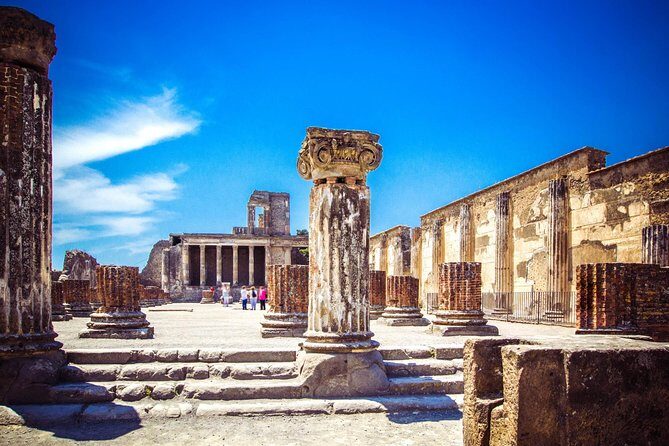
- Foro de Pompeya: where Roman public life actually happened
- Teatro Grande: how performances shaped daily habits
- How the 3-hour format avoids Pompeii overload
- Language choice: get the story in your comfort zone
- Price and value: $210.52 per group up to 10 people
- What to expect during the walk (and what to plan)
- Guides matter: clear explanations and good pacing
- Should you book this Pompeii guided tour?
- FAQ
- What is the duration of the Pompeii tour?
- What is the price and group size?
- Where do we meet for the tour?
- What time does the tour start?
- Are admission tickets included?
- Is private transportation included?
- Is this tour private?
- FAQ
- Can I choose the language for the tour?
- Is there a weather requirement?
- Can most travelers participate?
- Is there free cancellation?
Key highlights you should know
- Certified local guide running the show for your whole group
- Tickets included for Foro de Pompeya and Teatro Grande
- Private tour with only your group, not mixed with strangers
- Three hours that targets the city’s public life without dragging forever
- Choose your language for explanations that actually land
Why a local expert makes Pompeii feel real
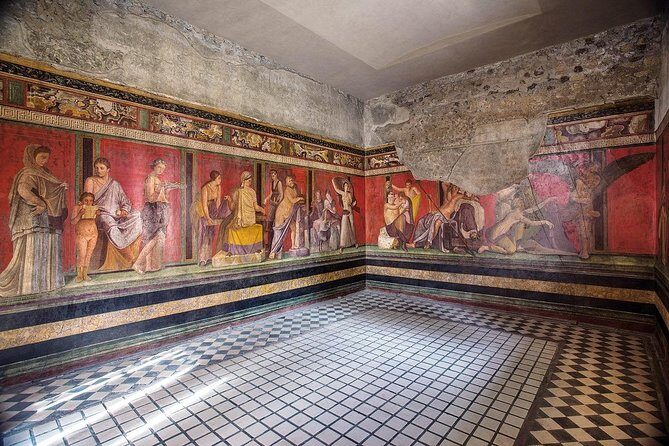
Pompeii can feel like a museum you walk through—until someone explains how the place worked. This tour is built for that exact problem. Instead of treating the site like a checklist of sights, your guide keeps you oriented and gives you the “how did Romans actually live?” angle.
The Foro de Pompeya and the Teatro Grande aren’t random stops. They’re public spaces where Roman life played out. The forum was where people showed up for civic duties, business, and debate. The theatre was where crowds gathered for performances—and where social habits became visible in the way people arranged their attention, seats, and conversation.
I like that this isn’t a long, exhausting crawl. You get a clear route, key stops with admission tickets included, and a guide to help you understand what you’re looking at—without needing to do homework on your phone for every block.
You can also read our reviews of more guided tours in Pompeii

Meeting at Piazza Esedra: keep it simple
This experience starts in the morning at 9:00 am, at Piazza Esedra, 80045 Pompei NA, Italy. It ends back at the same meeting point, so you’re not trying to figure out how to get across the site and back on your own.
A few practical notes that matter:
- The meeting point is described as near public transportation, which is helpful if you’re coming from Naples or another nearby area.
- The ticket redemption point is also listed in Pompei, so you can expect to sort out admissions there rather than hunting around at the last second.
- Since private transportation isn’t included, plan your arrival with buffer time. Pompeii mornings can move slower than you hope, especially if you’re coordinating with public transit or parking.
If you want the least-stress day, show up a few minutes early, get your bearings, and then let the guide lead you into the ruins.
Foro de Pompeya: where Roman public life actually happened
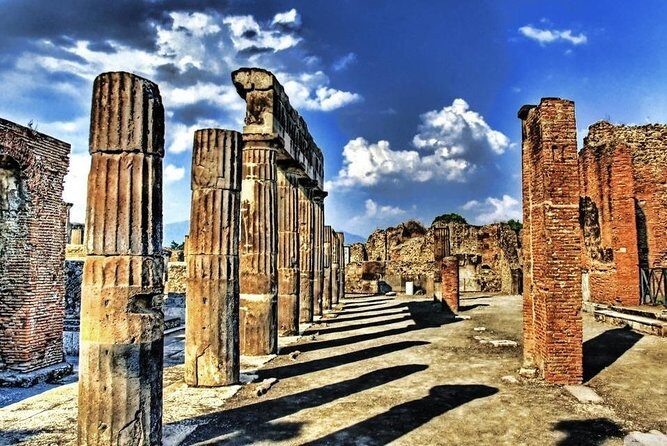
Your first major stop is the Foro de Pompeya. You’ll spend about 30 minutes here, with the admission ticket included.
What makes the forum special is that it’s not just architecture. It’s a map of civic power and everyday movement. When you stand in the forum, you’re looking at a place designed for crowds and conversation—where public announcements mattered, business got done, and status showed.
A good guide helps you read the forum like a story:
- where people likely gathered
- how public buildings signaled authority and function
- why the forum mattered enough that the city’s identity was built around it
One reason I like starting here is that it gives you a baseline. After the forum, the theatre doesn’t feel random. You start seeing how Romans structured their lives around public spaces: politics and commerce in one place, entertainment and social rhythms in another.
Time check: thirty minutes sounds short, but with a guide it can be plenty to understand the big picture—especially if you’re not trying to memorize every corner of Pompeii in one day.
Teatro Grande: how performances shaped daily habits
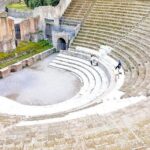
Next up is the Teatro Grande, about 50 minutes, again with admission ticket included.
Your guide’s focus here is not only dates and structure, but also habits—how people used the space. Even without getting technical, a theatre in an ancient city tells you a lot:
- where crowds assembled and how they behaved together
- how entertainment fit into social life
- why these venues were important enough to build with care
The phrase “dating and habits” hints at what you should expect: you’ll likely connect the building to its era and then to the human side of the story—what audiences did, how they came to performances, and what kinds of moments pulled them into shared attention.
This stop is also one of the best chances for you to slow down and notice details. The guide can point out what you might otherwise walk past: the layout, the logic of the seating space, and how the theatre’s design supports visibility and movement.
Practical tip: if you’re sensitive to sun and heat, theatre areas can be brighter and more exposed depending on the time of year. Wear a hat, bring water if you can, and let the guide pace you.
How the 3-hour format avoids Pompeii overload
Pompeii is big. Even the parts that don’t sound “dramatic” still add up fast. That’s why a guided, time-limited route is such a smart choice.
Here’s the real value of the three hours (approx.):
- You avoid the common problem of trying to do too much alone.
- You spend more time understanding the parts you see.
- You get a guided structure that helps you remember things afterward.
You’ll still get that classic Pompeii feeling—the weight of history and the strange calm of stone streets. But you won’t waste energy trying to turn every ruin into a personal research project.
If you’re traveling with kids, a teen, or anyone who gets restless when a day is mostly walking, this format can be a win. It’s focused. It doesn’t pretend Pompeii is small. It just makes your time count.


Language choice: get the story in your comfort zone
This tour lets you choose the language you prefer. That sounds simple, but it changes the whole experience.
In Pompeii, meaning doesn’t come from visuals alone. You need context: how a building functioned, what it signaled, and how people moved through the city. If your language is comfortable, the guide’s explanations stick. You ask questions without hesitating. And you spend your attention where it belongs instead of translating in your head.
If you’re with friends, couples, or mixed-language groups, you’ll appreciate knowing you can match the tour to what you’ll understand best.
Price and value: $210.52 per group up to 10 people
The price is listed as $210.52 per group (up to 10) for about 3 hours.
Here’s how I think about value with this kind of tour:
- If you’re a small group, you pay more per person—but you still get admission tickets included for the main paid stops.
- If you can fill the group, the cost per person drops fast. With a larger group, this becomes a budget-friendly way to get expert interpretation without sacrificing time.
Also, private doesn’t automatically mean you get a fancy car. In this case, private means your group stays together with one guide. The value is in instruction and flow, not transportation.
If you’re visiting Pompeii as a couple or with a small group, this tour can be a sweet spot because it gives you structure without forcing you into a long, all-day route. You’ll leave with a clearer understanding of Pompeii’s public life, which is exactly what you want from a guide.
What to expect during the walk (and what to plan)
Because this experience is a guided, time-limited route, you should plan your day around being flexible and walking at a steady pace.
A few things that generally matter for Pompeii—without trying to invent a chore list:
- Wear comfortable shoes. The site has uneven surfaces and lots of steps.
- Bring sunscreen and water, especially in warmer months.
- Have a quick plan for timing. This tour begins at 9:00 am, so you’ll want to avoid a late start.
You might also find that the guide helps you get your bearings fast. Pompeii can be confusing even when you think you’re paying attention. With a guide explaining how the forum and theatre connect to broader life in the city, you’ll understand more with less effort.
Guides matter: clear explanations and good pacing
This tour is run by Guide Turistiche Campania di Febronia Amato. That matters because Pompeii is a site where delivery counts. Two guides can point at the same stones; one makes it click, the other turns it into noise.
From examples shared with this tour style, I’d expect guides who:
- keep explanations easy to follow
- handle groups smoothly
- know how to time the walk so you’re not waiting around or rushed
Names you may hear in the guide lineup include Alessia and Soraya, who are described in positive terms for being attentive and professional, and Piero, praised for detailed explanations. Even if your guide is someone else, the pattern is the same: strong communication and good timing.
In a place like Pompeii, that’s the difference between seeing ruins and actually understanding them.
Should you book this Pompeii guided tour?
Book it if you want:
- a private Pompeii experience with only your group
- ticketed access covered for the Foro de Pompeya and Teatro Grande
- a manageable route that makes sense in about three hours
- explanations in a language you’re comfortable with
Skip it (or consider a different format) if you want:
- to roam the entire site on your own for hours
- a tour that includes private transportation from Naples or elsewhere
- a deep, stop-every-20-minutes scavenger hunt through every corner
My take: for most visitors, this is a smart way to get the story of Pompeii’s public spaces without burning the day—or your brain—trying to figure it out alone.
FAQ
What is the duration of the Pompeii tour?
The tour lasts approximately 3 hours.
What is the price and group size?
It costs $210.52 per group, up to 10 people.
Where do we meet for the tour?
The meeting point is Piazza Esedra, 80045 Pompei NA, Italy.
What time does the tour start?
The start time is 9:00 am.
Are admission tickets included?
Yes. Admission tickets are included for the Foro de Pompeya and the Teatro Grande.
Is private transportation included?
No, private transportation is not included.
Is this tour private?
Yes. It is a private tour/activity, and only your group participates.
FAQ
Can I choose the language for the tour?
Yes. You can choose the language you prefer.
Is there a weather requirement?
Yes. The experience requires good weather. If it’s canceled due to poor weather, you’ll be offered a different date or a full refund.
Can most travelers participate?
Most travelers can participate.
Is there free cancellation?
Free cancellation is available. You can cancel up to 24 hours in advance for a full refund.