REVIEW · NAPLES
Walking Tour of Naples Old Town with Expert Guide
Book on Viator →Operated by Grand Tour Experience · Bookable on Viator
Old Naples moves in layers.
This walk is interesting because an expert guide turns scattered sights into one story, with major history and art sites paced for real humans (no map-whipping). I love that you get the “why” behind what you see, not just dates, and I love the small-group format that keeps questions possible. One possible catch: a couple of the most “wow” interiors can cost extra, so budget for optional admission at certain stops.
You’ll cover the historical center from Piazza Bellini to the Duomo area in about 2.5 hours, focusing on Greek-Roman traces, church art, and Neapolitan traditions you’ll actually recognize in the streets. Guides vary, but you’ll often hear deep context and local color from people like Enrica, Livio, Tony, or Ricardo, who are praised for making Naples feel alive rather than like a checklist. Bring comfy shoes and good stamina—this is a walking tour, not a sit-and-stare museum.
And yes, there’s espresso involved. You’ll also reach Via San Gregorio Armeno, the famous nativity-studio street where the craft never really stops, even when it is not Christmas.
In This Review
- Key highlights at a glance
- Old Naples in one afternoon, not a puzzle
- Starting at Piazza Bellini: a smooth entry to the historic center
- Ancient stones: tufa walls and the Roman city trace
- Museo stop outside San Pietro a Majella: music culture in street form
- Churches as timeline books: Santa Maria Maggiore and San Domenico Maggiore
- Piazzetta Nilo espresso stop: quick, intense, very Neapolitan
- Via San Gregorio Armeno: nativity craft street all year
- Complesso Museale Santa Maria delle Anime del Purgatorio ad Arco: a special interior with extra admission
- The ancient major decumano: the old main drag in modern streets
- Basilica di San Lorenzo Maggiore and the Roman traces
- Ending at the Duomo: San Gennaro’s Treasure Chapel and cathedral styles
- Logistics that matter: shoes, pacing, and hearing the guide
- Price and value: why $30.04 can make sense here
- Who this tour suits best
- Should you book this Naples Old Town walk?
- FAQ
- How long is the Walking Tour of Naples Old Town?
- How much does the tour cost?
- Is the tour offered in English?
- What’s included in the price?
- Do I need tickets for the sites on the route?
- Is there an espresso stop during the tour?
- How many people are in a group?
- What happens if the weather is poor?
Key highlights at a glance
- Expert guide with archaeology and art-history background: you get real context for churches, ruins, and traditions
- Small group (max 15): better pace and more chance to ask questions
- Skip the map problem: you follow a route through the old center without guessing
- Via San Gregorio Armeno nativity workshops: see the craft shops that run all year
- Neapolitan espresso stop at Piazzetta Nilo: a quick taste of local rhythm
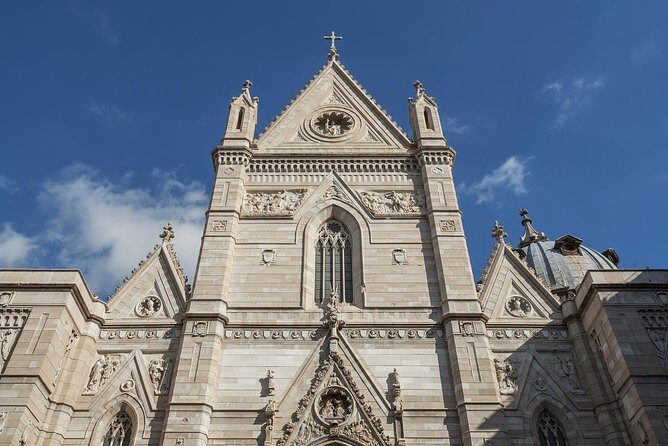
- Church stops built around centuries of change: bell towers, Gothic forms, and older Roman traces
Old Naples in one afternoon, not a puzzle

What makes this tour work is that it’s built for flow. You start in the old center, then keep moving so the city’s timeline shows up in your legs: ancient stones first, then churches, then Neapolitan faith and craft in the street life around you.
I like that you get to see the top sights without trying to solve Naples on your own. You’re still doing the walking, but your guide handles the connections—why a bell matters, why a church looks the way it does, and how patron saints and traditions shape daily culture.
The route also ends near the Duomo, which helps you plan the rest of your day. Once you finish here, you’re positioned well to continue exploring nearby streets on your own.
You can also read our reviews of more walking tours in Naples



Starting at Piazza Bellini: a smooth entry to the historic center
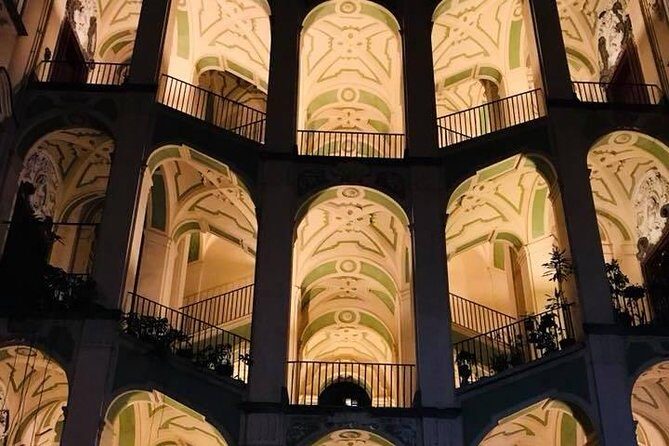
Your walk begins at Piazza Bellini. It’s a good meeting point because it sits right in the center of action, and it’s also a smart place to start if you want an immediate sense of old Naples before your feet wear out.
The tour ends at the Duomo area near Via Duomo, so you’re not backtracking. In practice, that means you can aim to schedule your next activity nearby instead of wandering across town later.
Timing is about 2 hours 30 minutes on average, which is long enough to feel like you got somewhere, but short enough that you can still have energy for pizza after. (Naples rewards the second half of the day, so don’t blow it all on one indoor museum.)
Ancient stones: tufa walls and the Roman city trace
Early on, you’ll pause to admire a section of the old tufa walls of the Greek-Roman city. This matters because tufa—Naples’ signature stone—shows up everywhere once you start noticing it. You stop just long enough to look closely, then the walk continues so you don’t feel stuck in one spot.
From there, the route threads through sites tied to the layers of Naples: older layouts, architectural shifts, and the way later builders used what was already there. It’s not just “look at ruins.” It’s “understand what the city decided to keep and what it rebuilt.”
This is one of the reasons the tour works even if you are not a hardcore history fan. The guide keeps tying the physical space to the story, so the stones become clues rather than decorations.
Museo stop outside San Pietro a Majella: music culture in street form
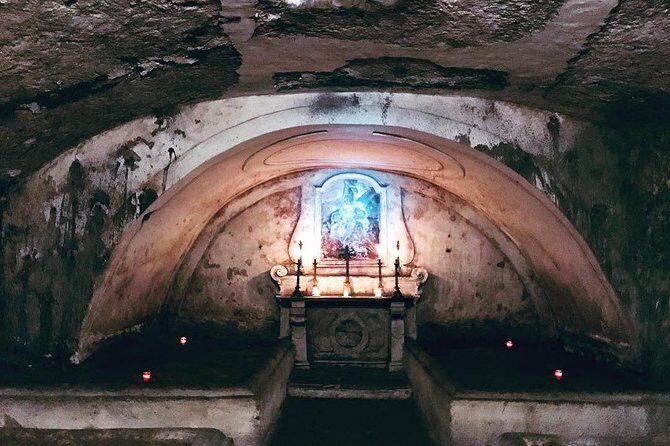
One quick stop is outside Museo del Conservatorio San Pietro a Majella, tied to Naples’ music academy. The point here is small—about 10 minutes—but it sets a tone.
Naples is famous for sound, faith, and craft. By weaving in the conservatory early, you get a reminder that the city’s identity is not only stone and saints. It’s also performance culture, and the guide gives context while you’re still fresh.
You’ll be standing and listening, and this stop is designed as a brief “pause with purpose,” not a long museum break.
Churches as timeline books: Santa Maria Maggiore and San Domenico Maggiore
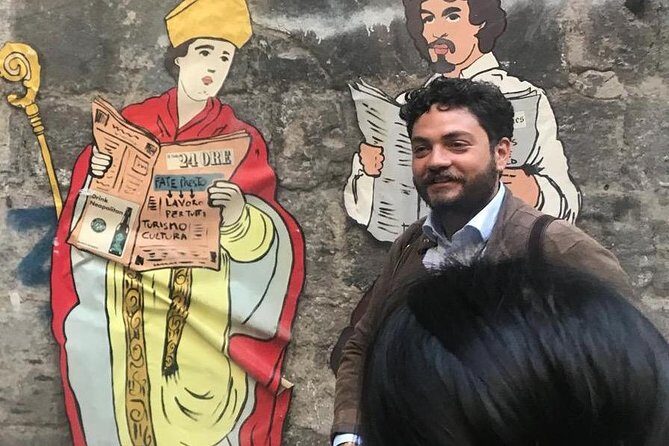
A highlight stretch for many people is how the guide explains church architecture as a timeline. You’ll see Basilica di Santa Maria Maggiore alla Pietrasanta, known in part for an ancient tower bell, and you’ll get a quick framing of why a bell tower can feel like city memory.
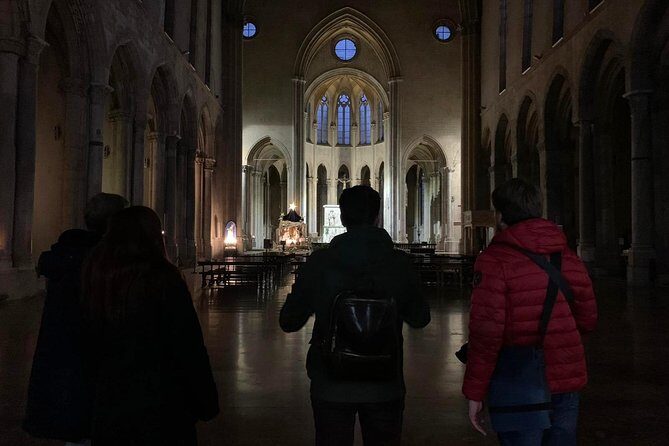
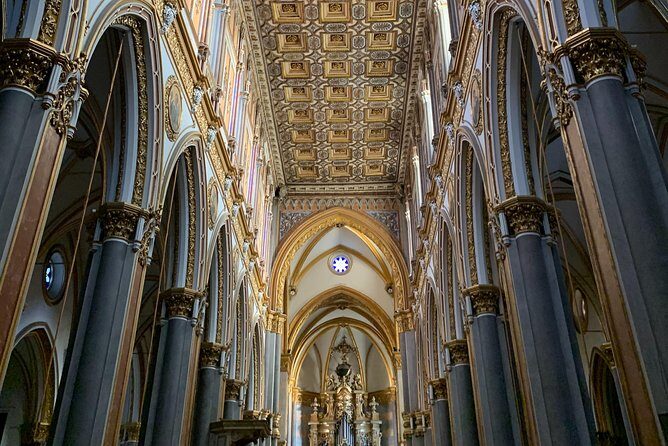
Next comes Chiesa di San Domenico Maggiore, one of the oldest churches in Naples. This is where you’ll get to see traces of different artistic currents over centuries—Middle Ages and Gothic, then Renaissance and Baroque art. The takeaway is practical: you start learning how to read a church visually, instead of treating it like one big photo backdrop.
If you care about art history at all, this is where the walk earns its keep. You’re not just told that styles changed—you’re shown how you can notice those changes yourself while you’re standing there.
You can also read our reviews of more guided tours in Naples



Piazzetta Nilo espresso stop: quick, intense, very Neapolitan
Then you move toward Piazzetta Nilo, with a short break focused on espresso at a Neapolitan coffee bar. This is one of the tour’s simplest ideas, and it’s also one of the most effective.
Naples runs on strong coffee culture, and the guide uses this stop to connect everyday life to the city’s rhythm. Even if you’re not a coffee expert, it gives you a moment to slow your brain for five minutes while your feet keep moving.
One note: espresso here can be strong. If you’re sensitive to caffeine or just want something gentler, you might want to pace yourself or bring a backup plan for later.
Via San Gregorio Armeno: nativity craft street all year
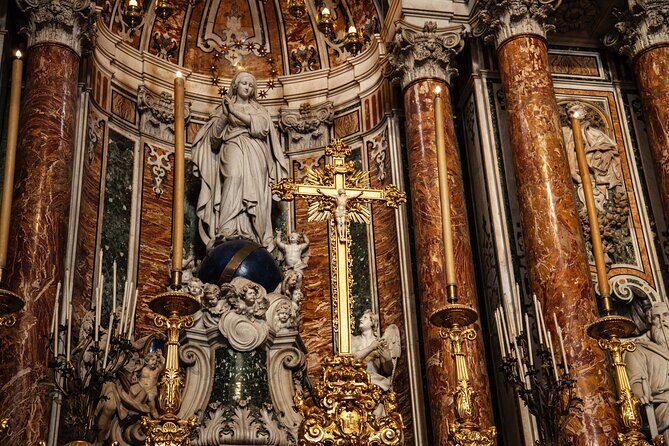
The walk reaches Via San Gregorio Armeno, the heart of Naples nativity culture. You’re looking at shops where crib artisans make and sell the handcrafted scenes. What I like about this stop is that it is not staged for tourists in a generic way—it’s built around a craft that appears across seasons.
The street is one of those places where your senses do half the work. You’ll see figures, materials, and shopfront displays as you walk, so the “history and tradition” part of the tour feels tangible instead of theoretical.
This stop is also a great time to do small purchases if you want a souvenir with real local identity. The key is to browse with patience—shopkeepers often take their time, and the tour moves on a set schedule.
Complesso Museale Santa Maria delle Anime del Purgatorio ad Arco: a special interior with extra admission
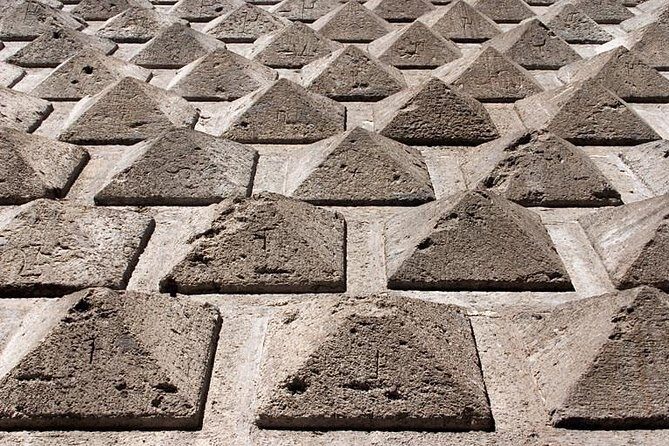
A major stop in the middle is Complesso Museale Santa Maria delle Anime del Purgatorio ad Arco. The tour time here is about 30 minutes, and the interior is described as one of the city’s most special places.
The big practical point: admission is not included. That doesn’t mean you should skip it—it means you should expect to pay if you want inside access. If you’re the type who likes to see the whole story through to the last room, this is one to plan for.
This is also the kind of stop where the guide’s focus can make or break your experience. When the guide connects the religious context and the meaning of the site, the place turns memorable fast.
The ancient major decumano: the old main drag in modern streets
You’ll also walk along the route connected to the ancient major decumano, one of the most lively old streets. Even without a long lecture, this part gives you spatial understanding.
You start seeing how the city layout influences what you experience today: where foot traffic naturally funnels, where sightlines open, and how neighborhoods feel connected. It’s the kind of orientation you can use later when you go exploring on your own.
Think of this stretch as the tour’s “connect the dots” moment—after seeing churches and workshops, the street layout helps everything feel more real.
Basilica di San Lorenzo Maggiore and the Roman traces
Next up is Basilica di San Lorenzo Maggiore, with about 15 minutes on site. The key detail here is that you can still see traces of the old roman city of Neapolis.
This is another stop where the guide’s explanation matters. If you just walk in and look around, you might miss the deeper significance. With the story, though, it becomes a “here’s where the old Naples left fingerprints” kind of visit.
You’ll likely come out with a more grounded sense of how Naples evolved rather than reinvented itself from scratch.
Ending at the Duomo: San Gennaro’s Treasure Chapel and cathedral styles
The final big religious stop is Duomo di Napoli. You get around 10 minutes on the cathedral itself, and the tour highlights the Treasure Chapel dedicated to San Gennaro, Naples’ patron saint.
Just like the purgatory complex, admission for the Duomo experience is not included. So you’re making a choice: go only with what you can see with the guide, or plan for the extra ticket if you want the chapel.
If you want a strong ending, plan to prioritize what the guide recommends here. San Gennaro is a central figure to Neapolitan identity, and the guide’s framing can help you understand why the cathedral area feels emotionally important to locals.
Logistics that matter: shoes, pacing, and hearing the guide
This is a walking tour with stops designed to keep momentum. Expect uneven pavement and streets that can feel chaotic at times, because that is just Naples’ physical reality. The tour keeps you standing for much of the time, so wear shoes you can trust for a couple hours of uneven ground.
Hearing can also be a factor. Some people have noted audio device issues and crowd noise. My practical advice: if your guide uses audio, keep your device snug and check that you can hear clearly at the first stop. If you cannot, ask right away. Don’t wait an hour and suffer.
Also, photography timing can feel tight if you want lots of shots at every church. Bring a quick strategy: shoot a wide exterior first, then rely on the guide’s explanation before you take deeper close-ups.
Price and value: why $30.04 can make sense here
At $30.04 per person for roughly 2.5 hours, this can be a solid value if you want guidance through multiple major stops. Most stops are free in terms of admission, which matters because church and site entry costs can add up quickly on your own.
You’re paying for something you cannot DIY well: someone who can connect architecture, ancient layout, religion, and street traditions into one coherent route. That’s the part you feel when you walk out and suddenly you can recognize patterns—stone types, stylistic changes, and how the city’s identity shows in daily culture.
The small-group cap (max 15) helps too. You are not lost in a crowd; the guide can often keep your attention, and you can ask follow-up questions without shouting.
Who this tour suits best
This walk is ideal if you want a first introduction to Old Naples and you like learning through real places, not just museum-style interpretation. It’s also a great fit if you enjoy churches, streets, and traditions—especially nativity craft culture.
It is also a good choice early in your trip. Once you learn the main lines of the city, you waste less time later because you understand what you are looking at as you explore independently.
If you dislike walking, or you want long seated stops, you might find it demanding. And if you hate paying extra for certain interiors, plan your expectations around optional entries at the purgatory complex and the Duomo treasure area.
Should you book this Naples Old Town walk?
Yes, I’d book it if you want an efficient, story-led way to understand Naples’ old center. It’s strong when the guide focuses on how the sites connect—ancient traces, church art, and Neapolitan traditions show up as one narrative instead of separate checkboxes.
Before you go, set yourself up for success: wear solid shoes, bring energy for walking, and expect a couple stops to involve optional paid entry. If you know you want the Duomo chapel and the purgatory interior, mentally budget for that so you do not feel surprised at the end.
If you are the kind of traveler who likes to learn while moving through a city, this is a practical way to start Naples right.
FAQ
How long is the Walking Tour of Naples Old Town?
The tour is about 2 hours 30 minutes.
How much does the tour cost?
The price is $30.04 per person.
Is the tour offered in English?
Yes, the tour is offered in English.
What’s included in the price?
You get an official tourist guide. The guide has a degree in archaeology and history of art.
Do I need tickets for the sites on the route?
Some stops are listed as free, but at least two notable interiors are not included: the Complesso Museale Santa Maria delle Anime del Purgatorio ad Arco and the Duomo area with the Treasure Chapel dedicated to San Gennaro.
Is there an espresso stop during the tour?
Yes. There is a stop at Piazzetta Nilo described as a chance to sample Neapolitan coffee.
How many people are in a group?
The tour has a maximum of 15 travelers.
What happens if the weather is poor?
This experience requires good weather. If it is canceled due to poor weather, you’ll be offered a different date or a full refund.