REVIEW · VATICAN CITY
Dome Climb & St. Peter’s Basilica Private Tour
Book on Viator →Operated by Tours of the Vatican with Francesco & his team · Bookable on Viator
Lines hate this tour. This private St. Peter’s experience is built to help you see more of Vatican City without wasting hours in cattle-line crowds. You’ll tackle the Cupola di San Pietro climb, pause for Porta Santa and its Jubilee tradition, then spend real time inside St. Peter’s Basilica with stories that connect art, faith, and politics in one place.
I especially like two things. First, the professional art historian guide focus turns famous sights into something you can actually understand as you look at them. Second, the price is practical: entrance fees for the dome and Basilica are included, so you’re not juggling ticket lines or add-ons while your time ticks away.
One thing to plan around: Vatican access can change on short notice because of Papal events. If parts of the complex are closed, your guide will pivot to an alternative that focuses on Vatican Museums—so your best day is still the one with flexible expectations.
In This Review
- Key takeaways before you go
- St. Peter Square meeting point and the fast start you’ll appreciate
- Dome Climb at Cupola di San Pietro: lift views and the 281-step payoff
- Porta Santa: the Jubilee door story you’ll actually remember
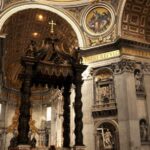
- St. Peter’s Basilica: Pietà details, Bernini’s altar focus, and side chapels
- Down in the papal crypt: where Popes are interred
- Price and value at $367.25: what you’re really paying for
- Dress code, crowd control, and last-minute Vatican closures
- Who should book this private dome and Basilica tour?
- Should you book this Dome Climb & St. Peter’s Basilica private tour?
- FAQ
- How long is the Dome Climb & St. Peter’s Basilica private tour?
- What’s included in the tour price?
- Are Vatican Museums and the Sistine Chapel included?
- Where do we meet and where does the tour end?
- What happens at the Cupola di San Pietro?
- What is Porta Santa, and will the doors be open?
- Is there a dress code?
- Is this tour refundable if plans change?
Key takeaways before you go
- Guaranteed skip-the-line entry so you’re not losing your morning to long queues
- Lift + 281 steps up to the top for city views you can’t get from the ground
- Porta Santa and Jubilee lore explained, including why the doors are normally sealed
- Michelangelo’s Pietà detail and why it’s the only work he signed
- St. Peter’s Basilica with crypt time including the papal crypt and where key Popes are laid to rest
St. Peter Square meeting point and the fast start you’ll appreciate
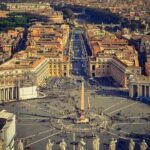
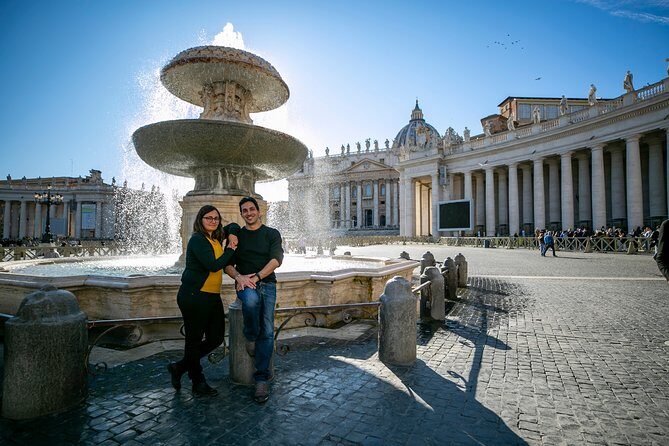
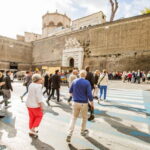
Your tour starts back in St. Peter Square, at the St. Peter Square Obelisk (Piazza San Pietro). That matters because you’re already in the right universe the moment you meet your guide. There’s no long commute, no wandering “hunt the group” stress, and no need to figure out how to get from one Vatican corner to another with a time limit hovering over your head.
This is a private tour, meaning it’s only your group. That can be a big deal in the Vatican, where a normal day can feel like you’re orbiting other people’s photo plans. With a private guide, you get the freedom to ask questions, pause where you want, and keep moving in a way that makes the total experience feel focused instead of frantic.
The guides are part of why this works. Tours are run by Francesco & his team, and the guide style you want here is the storytelling + art-reading mix. In feedback, guides such as Francesco, Claudia, Anna, and Thomas are described as articulate, warm, and able to explain what to look for—so even if you have zero art background, you’ll still know what matters while you’re standing in front of it.
One more practical note: it’s offered in English, and you’ll get a mobile ticket. That helps on the days when lines move but information doesn’t.
You can also read our reviews of more private tours in Vatican City
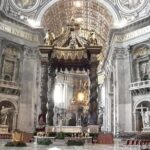
Dome Climb at Cupola di San Pietro: lift views and the 281-step payoff
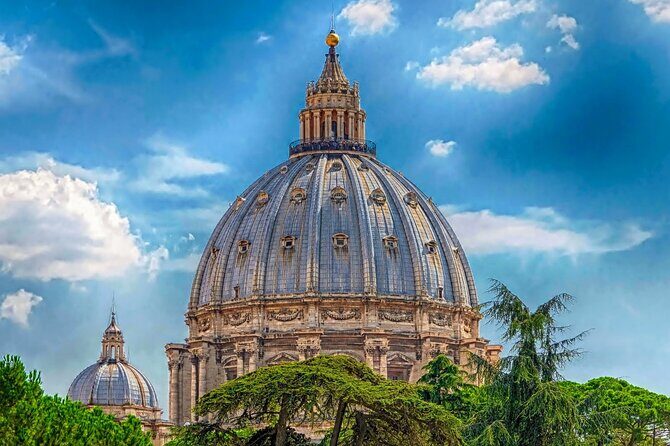
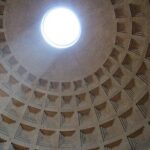
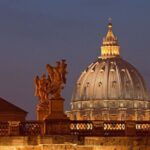
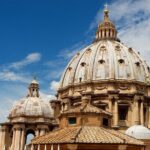
If you want one “wow” moment that feels earned, it’s the Cupola climb. You go up in a way that respects your legs: you take a short lift ride to the main level inside the vault, then you’re positioned for the best kind of looking—up close at the mosaics and intricate embellishments right in the dome space.
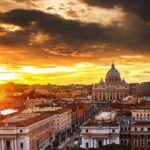
From there, the real climb starts. You’ll ascend 281 steps to reach the highest point of the Dome. This is where the experience becomes more than sightseeing. From the top, you don’t just see Rome—you learn how to spot major landmarks and points of interest from above. That’s exactly the kind of guide help that changes a view from pretty to meaningful.
The upside of doing the climb with a guide is pacing. Your time here is about 30 minutes, which forces a tight, efficient route. You’re not supposed to wander slowly and “maybe I’ll get there” your way up and back down. The guide keeps you on track and helps you appreciate the work you’re moving through, not just the steps you’re taking.
The one trade-off is physical effort. Those 281 steps are real, and you’ll need to be comfortable with stairs. Also, St. Peter’s area can be busy even on a private tour day—so wear footwear that’s stable and be ready for a bit of crowd flow while you’re inside the complex.
Porta Santa: the Jubilee door story you’ll actually remember
Stop two is Porta Santa, a portal traditionally found within the major Papal basilicas in Rome. Here’s the key detail you’ll hear: the doors are normally sealed from the inside with mortar and cement, so they can’t be opened.
So what makes this stop worth your time if the door might be shut? The value is the context. During Jubilee years, the Pope ceremoniously opens these doors for pilgrims. The tradition is tied to spiritual practice—people who enter through the doors may receive the plenary indulgences connected to the Jubilee celebrations.
Even if the doors aren’t open during your visit, the guide’s explanation helps you “read” the space. You’re not just seeing a doorway—you’re understanding why it exists, why it’s treated differently, and why the Vatican marks certain years as spiritually significant.
This portion is also timed at about 30 minutes. That’s a good length: long enough for the story, short enough that it doesn’t eat your dome and crypt time. It’s a smart way to balance art and architecture with tradition and ritual.
St. Peter’s Basilica: Pietà details, Bernini’s altar focus, and side chapels
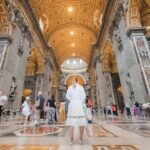
Inside St. Peter’s Basilica, the tour shifts from upward views to close-up art and symbolism. You’ll explore side chapels and also learn about the idea of “hidden crypts” connected to the Basilica spaces. That guided perspective is where a private format pays off. Left alone, it’s easy to bounce from one famous object to another without understanding what you’re looking at.
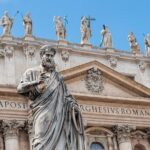
One highlight is Michelangelo’s Pietà. Your guide will point out why it’s uniquely important: it’s the only work Michelangelo signed. That kind of specific fact changes how you interpret the piece as you stand there. You stop treating it like a postcard statue and start noticing how artists embed meaning.
Your guide will also help you appreciate Bernini’s altarpiece—especially the craftsmanship and mastery behind it. And you’ll hear about Michelangelo in a broader sense, including how he earned the honor tied to painting St. Peter’s magnificent dome. That big-picture linking is the value of an art historian style guide: you begin to see the Vatican as one conversation between major artists, not a random pile of masterpieces.
There’s also a practical benefit to the way this is paced. The Basilica is huge, and “self-guided” can turn into “lost with a map.” With a private guide, you get a route that prioritizes what’s most important and what’s most likely to impress once you understand the story behind it.
Down in the papal crypt: where Popes are interred
The tour doesn’t stop at the surface. After the Basilica portion, you go below ground to the papal crypt. This is where many of the Popes have been interred over the centuries, and it remains a site of pilgrimage for Catholics.
You can talk while you’re there—so it doesn’t feel like a silent, museum-only space. But your guide will set the tone and tell you where the most important Popes are laid to rest before you enter. That is one of those moments that feels small at first and then lands hard once you’re standing in the space.
Even with all the famous names above, the crypt is the part that can make the whole Basilica feel personal. It reminds you this building isn’t just a famous set for architecture nerds. It’s also a living religious place, shaped by centuries of burial, devotion, and ritual memory.
Time here is about 1 hour, which is enough to feel grounded. You’re not rushed straight through, and you’re not left to wander without direction.
If you’re visiting for cultural reasons alone, you’ll still appreciate the artistry and symbolism. If you’re visiting with faith, you’ll likely feel the significance more strongly.

Price and value at $367.25: what you’re really paying for
At $367.25 per person, this isn’t a cheap add-on. But the price makes sense if you care about two things: time and interpretation.
First, entrance fees are included. That means your dome access and Basilica access aren’t a separate hunt for tickets. Second, there’s a guaranteed skip-the-line setup. In the Vatican, skipping lines isn’t just comfort—it’s the difference between seeing the right things today versus coming home with a list of what you never managed.
Third, you’re buying a guide who can translate the visual. In the feedback, guides like Anna are described as articulate and helpful, and Claudia as warm and engaging. There’s a real difference between a person who points and a person who explains what to notice while you’re still looking.
Now, what you’re not getting matters too. Vatican Museums and the Sistine Chapel aren’t listed as included. That doesn’t mean they’re impossible on your day—because access can change due to Papal events—but as planned, this tour focuses on the dome, Basilica, Porta Santa, and the crypt.
One more reality check: this is about 2 hours total (approx.). It’s built to be efficient, not to turn into a slow evening. So it’s a smart pick if you want one high-impact Vatican hit without trying to cram multiple big attractions into the same day.
Dress code, crowd control, and last-minute Vatican closures
You’ll need the Vatican’s dress code to get in. No shorts. No sleeveless tops. Knees and shoulders must be covered for both men and women. Ignore this and you risk being refused entry, even if you have your ticket in your phone.
On top of clothing rules, there’s the Vatican’s less predictable side: Papal events can close areas last minute, sometimes without advance notice. The guidance for your tour is straightforward. If the Sistine Chapel and/or the Basilica of Saint Peter aren’t accessible, your guide will provide an alternative focusing the tour inside the Vatican Museums.
That means your day should be flexible. You might not get the exact set of rooms you planned. But the point of having a guide pivot you is that you’re not left staring at closed doors wondering what to do next.
Crowd control is another theme. The dome and Basilica are always busy, but a private guide with skip-the-line handling helps you avoid the slowest bottlenecks. One nice bonus from the way this kind of tour runs: the pace can be faster than you’d expect when everything clicks and access is smooth.
Who should book this private dome and Basilica tour?
This works best if you want a guided approach to the Vatican’s biggest hits—especially if you’re the kind of person who likes to understand what you’re seeing, not just photograph it.
It’s also a strong choice if:
- You want to skip long lines and keep your day from turning into queue time
- You’re interested in art specifics like Michelangelo’s Pietà signature detail
- You want dome views with context, plus a look at the papal crypt
- You’re traveling with a group that values a shared plan (feedback includes private groups ranging from 4 people to about a dozen)
If you’re comfortable with stairs, you’ll love the dome climb. If you’re not, you’ll still get a lot from the Basilica and crypt, but the dome component is the centerpiece, so you’ll want to think carefully before booking.
If you’re thinking about stacking this with another major site the same day—like the Colosseum—I’d avoid it. The Vatican already demands time, movement, and patience with access rules. Adding another heavyweight attraction can turn your day into a sprint.
Should you book this Dome Climb & St. Peter’s Basilica private tour?
Book it if you want maximum meaning per minute. You’re getting a tight route through the Dome (with lift + the 281-step climb), Porta Santa’s Jubilee tradition, St. Peter’s Basilica with key art moments, and the papal crypt where Popes are interred. Add skip-the-line handling and included entrance fees, and the price stops feeling random.
Skip it only if your group can’t meet the dress code, you strongly prefer museums (since Vatican Museums and the Sistine Chapel aren’t planned inclusions), or you need a plan that’s guaranteed to include every Vatican room regardless of Papal events. For most people, though, this is a smart way to experience St. Peter’s with guidance that actually helps you look.
FAQ
How long is the Dome Climb & St. Peter’s Basilica private tour?
It’s about 2 hours (approx.).
What’s included in the tour price?
The tour includes St. Peter’s Basilica and the Dome, and the entrance tickets are included. It also includes a private, professional art historian guide.
Are Vatican Museums and the Sistine Chapel included?
No. Vatican Museums and the Sistine Chapel are not included in this tour.
Where do we meet and where does the tour end?
You start at the St. Peter Square Obelisk in Piazza San Pietro, and the tour ends back at the same meeting point.
What happens at the Cupola di San Pietro?
You’ll take a short lift ride to the main level, then climb 281 steps to the highest point for city views, with guidance on what to look for from up high.
What is Porta Santa, and will the doors be open?
Porta Santa is a portal in major Papal basilicas. The doors are normally sealed, and they are ceremoniously opened during Jubilee years. Your guide will explain the tradition as part of the stop.
Is there a dress code?
Yes. You must have knees and shoulders covered. No shorts or sleeveless tops are allowed. Not following the dress code can risk refused entry.
Is this tour refundable if plans change?
No. This experience is non-refundable and cannot be changed for any reason.