REVIEW · VATICAN CITY
Private Tours: A Journey through the Ancient Rome
Book on Viator →Operated by Cab Rome · Bookable on Viator
A short drive can feel like a whole Roman day. This private half-day tour strings together big-name stops across Rome and Vatican City, so you spend less time routing and more time seeing. You’ll ride in an air-conditioned vehicle with a professional driver, and you get a mobile ticket for the day.
I like the built-in comfort and flow: hotel pickup/drop-off (or a start at Port of Civitavecchia) plus time-blocked stops makes the day easier to manage. I also like that you get breathing room to explore on your own, since tickets/entrance fees are not included in the tour price. One drawback to consider: the tour provides driving and sightseeing time, not a tour guide, and some drivers may have limited English.
In This Review
- Key Things That Make This Tour Work
- How the 9:00 Start Sets You Up for an Easy Day
- Piazza Navona and Bernini’s Four Rivers Fountain
- Trevi Fountain: The Aqua Virgo Story Behind the Photo
- St Peter’s Square: A Vatican Stop That Feels Bigger Than It Looks
- Piazza del Popolo: Rome’s Northern Threshold
- Pantheon: What You See in 20 Minutes Can Still Land
- Spanish Steps, Fontana della Barcaccia, and the Keats Corner
- Foro Romano: The Heartbeat of Ancient Rome (From the Ground Up)
- What You’re Really Paying For: Comfort, Transport, and Stop Time
- Driver Language and the Real Risk of a No-Show Day
- Who This Tour Fits Best
- Should You Book Private Tours: A Journey through the Ancient Rome?
- FAQ
- What is the meeting point and start time for this tour?
- How long is the tour?
- Is hotel pickup and drop-off included?
- Are tickets or entrance fees included in the tour price?
- Is a tour guide included?
- Is a mobile ticket provided?
- Is free cancellation available?
- Are service animals allowed?
Key Things That Make This Tour Work
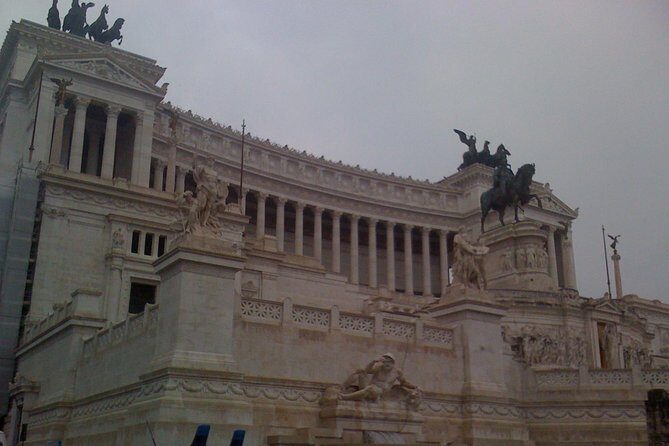
- Private vehicle comfort: air-conditioned minivan or coach keeps you sane in Rome traffic.
- Half-day structure: clear time windows at major stops help you avoid the rushed feeling.
- St Peter’s Square gets real time: about 1 hour for that Vatican-first-timer moment.
- Ticket flexibility: you can decide on-the-spot whether to enter or just enjoy views (tickets aren’t included).
- Driver-led experience: in a true private setup, communication quality can matter.
How the 9:00 Start Sets You Up for an Easy Day
This tour runs about 4 hours, starting at 9:00 am at the Port of Civitavecchia. If you’re coming from a cruise, that timing is a big deal: it reduces the stress of figuring out transport across the city on your own. You also have hotel pickup and drop-off listed, so it’s designed for people who want minimal hassle before and after.
The other practical win is predictability. Transfers are approximate and traffic matters, but the day is paced around specific stops, not a vague “see Rome” promise. That’s the difference between enjoying Rome and white-knuckling your schedule.
Tip: leave room in your brain for quick walks and security checks where they apply, especially around the Vatican.
You can also read our reviews of more private tours in Vatican City

Piazza Navona and Bernini’s Four Rivers Fountain
Your first stop is Piazza Navona, a square that became a major public space after the city market shifted there in the late 15th century. It later turned into a standout example of Baroque Roman art and architecture under Pope Innocent X (1644–1655), whose Palazzo Pamphili faced the square.
The big visual centerpiece is Fontana dei Quattro Fiumi by Gian Lorenzo Bernini, crowned with the Obelisk of Domitian. Even if you don’t read the labels, you’ll notice how the fountain pulls your eye to the center and makes the piazza feel like a stage. You also get to see the church of Sant’Agnese in Agone nearby, another Baroque presence that frames the square well.
Why I like this stop: Piazza Navona is one of those places where Rome feels like Rome fast. You can take photos, people-watch, and still get a clear sense of the city’s artistic style without committing to museum hours.
Possible drawback: the square can be busy, so your time window (about 30 minutes) works best if you’re ready to move when the moment hits.
Trevi Fountain: The Aqua Virgo Story Behind the Photo
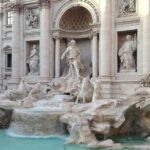
Next comes Fontana di Trevi, where the fountain’s location is tied to the “tre vie,” the junction of three roads. It marks the endpoint of the revived ancient aqueduct Aqua Virgo (modern understanding often uses Aqua Virgo as the revived name), which helped supply water to Rome for centuries.
What’s interesting here is the mix of myth and engineering. According to the context shared for the fountain, pure water was found about 13 km away with Roman technicians, and the aqueduct’s route ended up about 22 km due to practical routing. So when you look at the fountain, you’re also looking at the infrastructure that fed Roman life long after the aqueducts were built.
How to enjoy it in real time: treat it as a quick moment, then decide whether you want to get closer for photos. With about 30 minutes allocated, you can do both without the day turning into a line-management project.
Consideration: if you’re hoping for a calm, uncrowded experience, this stop may disappoint at peak times. Still, it’s one of the most iconic sights for a reason.
St Peter’s Square: A Vatican Stop That Feels Bigger Than It Looks
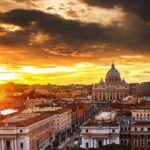
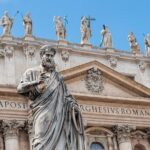
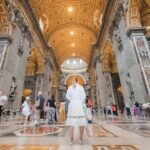
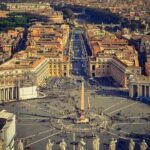
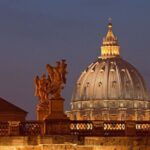
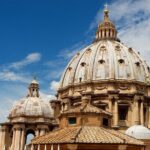
You’ll spend about 1 hour at St Peter’s Square. It’s tied to St. Peter’s Basilica, the Renaissance-style papal basilica in Vatican City. The square is the grand approach—less about ticketed interiors and more about scale, symmetry, and that instant sense of arrival.
The architecture story matters because it explains the feeling of the place: design work involved figures like Donato Bramante, Michelangelo, Carlo Maderno, and Gian Lorenzo Bernini. Even if you only have time for exterior views, the square gives you the core Vatican experience—massive open space, dramatic lines, and the kind of sight that makes you lower your voice.
Why this stop is valuable: for many first-time visitors, the Vatican is the one place where arriving matters as much as entering. This stop lets you take in the setting without forcing the rest of your day to revolve around long ticket lines.
Drawback to keep in mind: the tour highlights stops, but tickets and entrance fees aren’t included and a tour guide isn’t provided. If you want inside access to specific areas, you’ll likely need to plan that separately.
Piazza del Popolo: Rome’s Northern Threshold
After the Vatican, you head to Piazza del Popolo, a large square that historically derived its name from poplars (pioppo/populus). It’s also tied to ancient infrastructure: it sits inside the northern gate in the Aurelian Walls, where the Porta Flaminia once stood.
This is a neat “Rome on arrival” stop. It connects to the Via Flaminia, the ancient route north toward Ariminum (modern-day Rimini). Before railroads, this piazza would have been the first major view of Rome for travelers.
The piazza has a darker footnote too: for centuries it was used for public executions, with the last recorded in 1826. That contrast—beauty, architecture, and power—makes the stop more than a pretty square.
How to use your 20 minutes well: stand where you can take in Santa Maria del Popolo at the corner and the open reach of the piazza. Then walk a little and let the views reset your perspective after the Vatican scale.

Pantheon: What You See in 20 Minutes Can Still Land
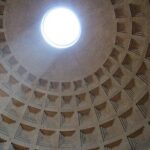
Your next highlight is the Pantheon, a former Roman temple now a church. It’s on the site of an older temple commissioned by Marcus Agrippa, and the structure we see today was completed under Emperor Hadrian, with dedication likely around 126 AD.
The key visual features are the cylindrical form, the granite Corinthian columns, and the dramatic contrast between portico and rotunda. The description points out eight columns in the first rank and groups of four behind—details you’ll notice even without counting. The Pantheon’s story is also about continuity: Hadrian kept Agrippa’s older inscription rather than inscribing the new temple.
Best way to experience it with limited time: focus on geometry. Look up at the portico, then shift your gaze to the round mass of the building and the way it frames light. Even if you don’t plan to go inside, the setting is still impressive.
Possible drawback: with only about 20 minutes, it’s a “see and absorb” stop, not a “slow study” stop. If you want extra time inside, you may need to plan separate entry timing around your day.
Spanish Steps, Fontana della Barcaccia, and the Keats Corner
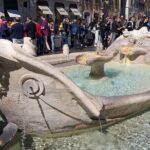
You’ll have about 20 minutes at the Spanish Steps area, which sits next to Fontana della Barcaccia. That fountain belongs to the early Baroque period and is attributed to Pietro Bernini and his son, Gian Lorenzo Bernini. It’s one of those details that makes the whole neighborhood feel designed, not accidental.
On the edges of the scene are storytelling places. The house of English poet John Keats sits at the right corner and is now a museum. On the left corner, you’ll find Babington’s tea room, founded in 1893—another clue that the Spanish Steps area has long been a social stop, not just a photo stop.
How to get value from a short stop: pick one main anchor—fountain, steps, or the side buildings—then let the rest fill in around it. In 20 minutes, that approach keeps you from turning into a distracted head-turner.
Consideration: like Trevi, this area can be crowded. The upside is that the vibe is alive. The downside is that time passes fast when you’re stopping and starting.
Foro Romano: The Heartbeat of Ancient Rome (From the Ground Up)
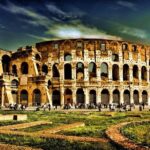
Your longest “classic ruins” moment is Foro Romano, with about 45 minutes allocated. This is the Roman Forum, the rectangular plaza surrounded by ruins of major government buildings. People in ancient Rome called it the Forum Magnum at the center of everyday life.
It wasn’t just sightseeing space. It was described as the center of triumphal processions and elections, the place for public speeches and criminal trials, and even the venue for gladiatorial matches. It also functioned as a commercial nucleus, with statues and monuments honoring major figures.
Why this stop feels different: it’s not one building—it’s a whole civic stage. When you stand among the ruins, you can connect what you see to how Rome actually worked: politics, business, spectacle, and public life all in one zone.
Possible drawback: ruins need walking. With 45 minutes, you can enjoy the key areas, but you won’t have time for deep reading across multiple sections. If you’re history-heavy, you may want to return later with more time on your own.
What You’re Really Paying For: Comfort, Transport, and Stop Time
At $145.18 per person for a private 4-hour driving tour, the price is mainly paying for logistics done well: private vehicle, fuel surcharge, and hotel pickup/drop-off (or port start), plus transport in an air-conditioned minivan or coach.
What’s not included is the part that can change your total budget: tickets/entrance fees for attractions and a tour guide. The stop list also shows many stops as free entry on the tour’s side, but the overall policy is still clear—don’t assume paid entries are covered.
So how do you judge value? For me, it’s about your priorities:
- If you want a relaxed route with less planning, this is strong value.
- If you’re hoping for expert guiding inside major sites, you’ll need to supplement with your own planning or separate services.
Practical money-saving move: bring snacks and water from outside where possible, since food and drinks aren’t included.
Driver Language and the Real Risk of a No-Show Day
This is where I’ll be direct. In the feedback patterns tied to this kind of private driving product, two issues can matter: driver communication and whether the service starts on time and actually arrives.
You could get a highly helpful driver who explains things and adjusts to make your day feel special. Other times, you may run into limited English, which can make it harder to understand what you’re seeing and where to spend your limited minutes.
And on the worst end, there have been cases where the driver/provider didn’t show up and communication went unanswered, though refunds were successfully requested in that scenario. Your best defense is simple: be ready to follow up quickly and keep contact details handy.
How to protect your day:
- Keep your phone charged.
- Be at the meeting point early.
- If language is important to you, ask what level of English to expect when you book.
Who This Tour Fits Best
This tour suits people who want Rome highlights without turning the day into a self-guided endurance test.
It’s a great match for:
- Cruise passengers who land at Port of Civitavecchia and want a half-day route.
- First-timers who want a fast tour of the big names: Piazza Navona, Trevi, St Peter’s Square, Pantheon, Spanish Steps, plus Foro Romano.
- Couples or small groups who prefer private transport over crowded bus tours.
It may be less ideal if you want a narrated, expert walkthrough while you’re inside every major site, because a tour guide is not included.
Should You Book Private Tours: A Journey through the Ancient Rome?
Book it if you want a smooth, time-managed half-day that hits key sights across Rome and Vatican City with air-conditioned private transport. The structure—stop after stop with real time chunks—helps you see a lot without feeling like you’re sprinting.
Skip it or plan carefully if you need a guided explanation at every step. Tickets aren’t included, and the experience depends heavily on your driver’s communication. If you’re the type who wants deep interpretation, consider pairing this with separate timed entries and a guide for the sites that matter most to you.
If you do book, go in with the right mindset: this is a great way to get your bearings fast and rack up major Roman highlights, then choose how much deeper you want to go afterward on your own.
FAQ
What is the meeting point and start time for this tour?
The start is Port of Civitavecchia, with a 9:00 am start time.
How long is the tour?
The tour duration is about 4 hours.
Is hotel pickup and drop-off included?
Yes. Hotel pickup and drop-off are listed as included.
Are tickets or entrance fees included in the tour price?
No. Tickets/entrance fees for attractions are not included.
Is a tour guide included?
No. A tour guide is not included in the price.
Is a mobile ticket provided?
Yes. The tour includes a mobile ticket.
Is free cancellation available?
Yes. You can cancel for a full refund if you cancel at least 24 hours in advance of the start time.
Are service animals allowed?
Yes. Service animals are allowed.