REVIEW · AMALFI COAST DAY TRIPS
Villa Cimbrone in Ravello and Amalfi Coast from Rome
Book on GetYourGuide →Operated by Romaetravel · Bookable on GetYourGuide
One day can change how you picture the Amalfi Coast. This tour strings together the classic Villa Cimbrone viewpoints and the packed charm of Amalfi and Positano, all with a professional guide and Mercedes transport. I especially like how Villa Cimbrone turns the scenery into something you can walk through: long paths, statues, and garden moments that make the views feel personal, not just scenic. Then you get to step into two towns that feel built for stairs, alleys, and sea air, not car traffic.
The one thing to watch is pacing. You’re dealing with a long day (12 hours) plus uneven ground and lots of steps, so plan around that with comfortable shoes and a calm mindset. This isn’t wheelchair accessible, and it’s not a good fit if you want a mostly-flat stroll.
In This Review
- Key points to know before you go
- A private way to do Villa Cimbrone and the Amalfi Coast from Rome
- Villa Cimbrone: the gardens that turn the coastline into a “walkable” view
- The Viale dell’Immenso and why summer can feel magical
- Statues and themed garden stops you can actually picture
- A practical reality: walking comfort matters here
- The break and the drive south: setting up the town visits
- Amalfi: the vertical town at the mouth of Valle dei Mulini
- Cathedral of Sant’Andrea and the Arab-Norman bell tower
- What to do in Amalfi (besides photos)
- Positano: whitewashed houses, winding stairs, and classic seaside life
- A town made for strolling
- Architecture and photo odds
- What’s included, what’s not, and how that affects your day
- How long is the day, and who should choose this option
- Best fit
- Not ideal if
- Guide quality: the difference between seeing and really getting it
- Tips to get the most from Villa Cimbrone, Amalfi, and Positano
- Should you book this Rome to Amalfi day trip?
- FAQ
- How long is the tour?
- Does the tour include pickup and drop-off?
- Is the tour wheelchair accessible?
- What is included in the price?
- Are meals included?
- What languages are the guides?
- How many people are required to book?
Key points to know before you go

- Villa Cimbrone views first, then the walk: you start with the Amalfi Coast panorama and keep seeing new angles as you move through the gardens.
- Wisteria season can steal the show: the Viale dell’Immenso pergola is especially striking in summer with wisteria in white and blue.
- Statues and themed stops: you’ll pass specific features like the Statue of Ceres, Temple of Bacco, the Eve Cave, and the Tea Room with its Moorish-style gazebo.
- Amalfi’s signature vertical center: the Cathedral of Sant’Andrea, the dramatic staircase, and the Arab-Norman style bell tower anchor your time in town.
- Positano’s stair-and-house layout: whitewashed buildings follow the mountains, and you’ll see why it became a postcard favorite long before social media.
- It’s private and guided: hotel pickup and a guide help you make sense of what you’re seeing without wasting time.
A private way to do Villa Cimbrone and the Amalfi Coast from Rome

From Rome to the Amalfi Coast is the kind of trip that can either feel effortless or exhausting, depending on how you plan it. This one leans toward effortless. You get hotel pickup and drop-off, plus transportation in a Mercedes vehicle, with a professional guide leading the day.
The big win is that you’re not trying to stitch together buses, ferries, and ticket lines while also navigating a coastline that’s famous for steep roads and vertical towns. A private day tour also means you can move at a realistic pace—slow enough for photos and viewpoints, but not so slow that you lose daylight.
And yes, this is a long day at 12 hours. You’ll want to treat it like a full-day outing: eat before pickup if you can, carry water, and plan to enjoy walking as part of the experience rather than fighting it.
You can also read our reviews of more tours and experiences in Rome.



Villa Cimbrone: the gardens that turn the coastline into a “walkable” view
Villa Cimbrone is the opening act, and it matters. The attraction isn’t just a single viewpoint you rush past. It’s an immense garden built to keep you moving, with statues, themed areas, and sightlines toward the sea.
When you arrive, you’ll take in the Amalfi Coast views from a high vantage point. On clear sightlines you can also admire the profile of the Cilento Mountains in the distance. You can even spot the plain where the ancient city of Paestum was built. That little geography lesson is part of what makes the experience feel more grounded: you’re not just watching a pretty coast, you’re understanding the region.
The Viale dell’Immenso and why summer can feel magical
One path is specifically called out: Viale dell’Immenso, a main walkway under a pergola. In summer, wisteria can bloom so intensely that the colors—white and blue—become a memorable visual theme. Even if you don’t come in summer, the point remains: this is a garden designed for a slow stroll.
As you walk, you’re not wandering randomly. The gardens have named stops and recognizable features, so you feel like you’re moving through a curated route rather than an open-ended park.
Statues and themed garden stops you can actually picture
This is where the tour feels rich without feeling complicated. You’ll see a run of specific garden highlights, including:
- Statue of Ceres
- The Poggio of Mercury
- Temple of Bacco
- Eve Cave
- A copy of the Statue of David
- Roses Terrace
- The Tea Room, including a rectangular garden and a Moorish-style gazebo
Knowing the names makes it easier to connect what you see with what you’re learning from your guide. It also helps you plan photos: you’ll know where the “wow” spots tend to be, instead of snapping random pictures and hoping for the best.
A practical reality: walking comfort matters here
Villa Cimbrone is beautiful, but it isn’t designed for flip-flops and short attention spans. Expect uneven terrain and steps. If you come with comfortable shoes and a relaxed pace, you’ll enjoy it more. If you come in stiff, painful footwear, the day can feel like a chore.



The break and the drive south: setting up the town visits

After the Villa Cimbrone portion, you’ll have time for a break before heading toward the Amalfi Coast towns. That break is important. You’ve already done walking and viewpoints, and the next phase involves more strolling through old streets.
The driving part matters too. A Mercedes vehicle doesn’t magically remove winding roads, but it does keep the trip smoother and lets your guide manage timing. The coast is famous for bottlenecks, and private transport helps you keep the day on track.
Amalfi: the vertical town at the mouth of Valle dei Mulini
Amalfi is where the day’s architecture starts to show its personality. The town is located at the mouth of the Valle dei Mulini, and its layout is built around cliffs and movement. It looks like a cluster of white houses clinging to rock, connected by covered alleys and stairways.
That vertical setup is the big idea to keep in mind: Amalfi isn’t a flat sightseeing loop. It’s a town you read by moving—up, down, around corners, and through stair-connected neighborhoods.
Cathedral of Sant’Andrea and the Arab-Norman bell tower
Your time in Amalfi centers on the main square, anchored by the Cathedral of Sant’Andrea. The highlights include the spectacular staircase, the bell tower in Arab-Norman style, and the Cloister of Paradise.
This is one of those stops where a guide can really help you slow down and look. Without someone explaining the elements, you can miss the way these architectural styles create a layered look. With guidance, you’re more likely to notice details as you move through the square and approach the cathedral area.
What to do in Amalfi (besides photos)
If you want the town to feel real, don’t only aim for big buildings. Use the alleys and stairways as part of your route. Amalfi’s charm comes from the continuity of small street moments: glimpses between buildings, shaded covered passages, and sudden openings where the sea shows up again.
Also, this is a good moment to grab a drink or snack if you want one—food and drinks aren’t included, but the tour does welcome your own drinks and snacks.
Positano: whitewashed houses, winding stairs, and classic seaside life
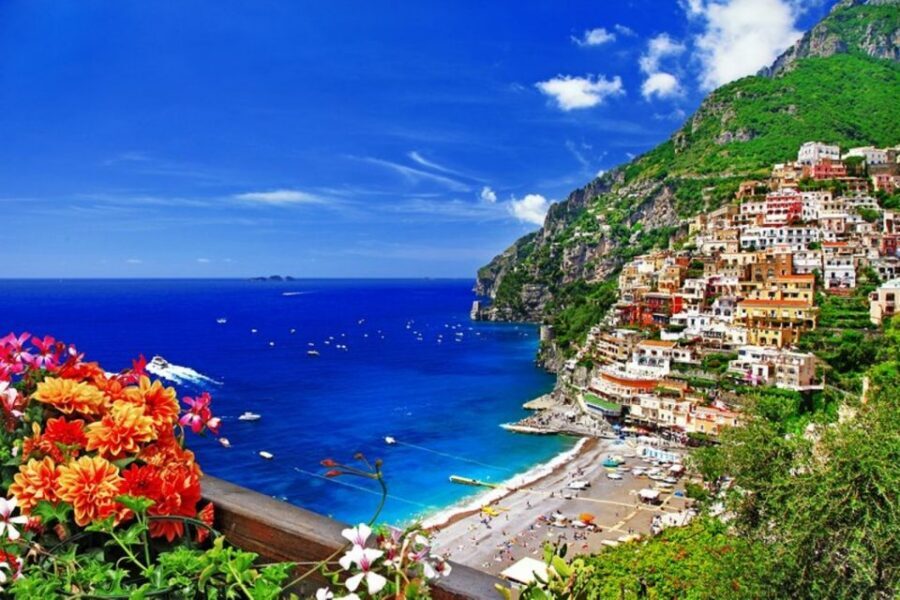
After Amalfi, you’ll visit Positano, one of the most famous stops on the coast. Positano is known for winding staircases and whitewashed houses that follow the natural course of the mountains. In other words: it feels vertical in a way that makes the town seem sculpted rather than just built.
Positano has been appreciated by artists and jet-setters since the early post-war period. It’s also known for what you can carry home: leather sandals, plus cotton and linen clothes. If you like shopping as a way to understand a place, Positano fits that style.
A town made for strolling
This is another destination where comfort with walking matters more than fitness bragging. Expect stairs and uneven ground. The upside is that the town layout practically invites you to wander slowly, because every turn gives you a new angle on the sea and the hillside houses.
Architecture and photo odds
Positano’s 19th and 20th century buildings are part of why the town still looks like a living postcard. You’ll get plenty of photo moments, but the best ones usually come when you stop and let your eyes adjust: first the white houses, then the layers of stairs, then the water.
What’s included, what’s not, and how that affects your day
This tour includes:
- Entrance fees
- Professional guide
- Transportation by a Mercedes vehicle
- Hotel pick-up and drop-off
- Private tour
It does not include:
- Food and drinks
- Personal expenses
For your budget, this matters more than the headline price. At $545.42 per person, you’re paying for a private day with entrance coverage, a guide who helps you make sense of the sights, and a dedicated vehicle. If you tried to DIY this with a mix of transit and tickets, you’d likely spend time and energy fighting connections, plus you’d still need to navigate steep areas on foot.
What you’ll need to plan yourself is the “in between” stuff: your snacks, drinks, and any lunch. The tour even welcomes your own drinks and snacks, which is a smart way to stay energized without turning the day into a restaurant search.
How long is the day, and who should choose this option
This is a 12-hour experience. That long duration is the tradeoff for seeing multiple major highlights in one day from Rome.
Best fit
This works well if you:
- Want a guided day where you understand what you’re seeing, not just where to stand for a photo
- Like scenic walking but you’re okay with stairs and uneven ground
- Prefer private pacing over group timelines
- Want to cover Amalfi and Positano without worrying about transport logistics
Not ideal if
You might want to look for another format if you:
- Need step-free access (it’s not wheelchair accessible)
- Want minimal walking
- Get cranky when a day runs long
Guide quality: the difference between seeing and really getting it
The tour’s most praised element is the guide experience—friendly, professional, and good at keeping the day running smoothly. Names like Giulia, Marco, and Stefano come up for exactly that kind of handling: the day feels guided, not just transported.
What I look for in a coast tour is someone who can give you a simple framework while you’re walking: where to look, why a feature matters, and how to manage the route so you don’t miss the key spots. When that happens, the day feels smoother and the places feel more meaningful.
Tips to get the most from Villa Cimbrone, Amalfi, and Positano
A few practical moves make this day much easier:
- Wear comfortable shoes with grip. You’ll be on uneven ground and stairs.
- Bring water and a snack if you’re the type who gets hungry before lunch. Food and drinks aren’t included.
- If you’re aiming for photos, treat the garden as a place to pause, not a place to rush through.
- In Amalfi and Positano, don’t fight the vertical layout. Take it as part of the experience and keep moving steadily.
And if you’re sensitive to crowds, go in with realistic expectations. These towns are famous, and your timing and route matter—one reason guided pacing helps.
Should you book this Rome to Amalfi day trip?
If your goal is a single-day hit of the Amalfi Coast’s biggest names—Villa Cimbrone views and gardens, plus Amalfi and Positano—this is a strong option. The included entrance fees, private Mercedes transport, and hotel pickup make the day feel controlled rather than chaotic, and the guide makes the garden details and town architecture easier to connect.
I’d book it if you’re comfortable with walking and stairs and you want the convenience of a planned route. I wouldn’t book it if you want step-free access or you’re trying to keep a very light schedule.
If that sounds like you, you’ll likely leave with two things: better memories of the details (statues, gardens, cathedral features) and a clearer sense of how the coast towns actually function. That combination is what turns a pretty itinerary into a real day you remember.
FAQ
How long is the tour?
The tour duration is 12 hours.
Does the tour include pickup and drop-off?
Yes. Hotel pick-up and drop-off are included, and pick-up is from your hotel, apartment, or bed and breakfast located within the Aurelian Walls.
Is the tour wheelchair accessible?
No, this tour is not wheelchair accessible.
What is included in the price?
Included items are entrance fees, a professional guide, transportation by a Mercedes vehicle, hotel pick-up and drop-off, and the private tour.
Are meals included?
No. Food and drinks are not included, but you’re welcome to bring your own drinks and snacks.
What languages are the guides?
The live tour guide is available in English and Italian.
How many people are required to book?
A minimum of 2 people per booking is required.