REVIEW · ROME
Jewish Ghetto and Trastevere Tour Rome
Book on Viator →Operated by Airotour Ltd - Freetourrome · Bookable on Viator
Small streets. Big stories.
This Jewish Ghetto and Trastevere walk is a smart way to understand central Rome fast, without trying to wrestle a map. You start at Palazzo Venezia and move through three historic areas, with a pause at one of Europe’s largest synagogues, then on toward Trastevere and Piazza Santa Maria in Trastevere. The guides bring the place to life with strong storytelling, and names like Axel, Caitlin, Yousef, Fabiana, and Luara show up again and again in the praise for their pacing and how they answer questions.
I like the format because it’s compact and efficient: around 90 minutes to 2 hours, with a maximum group size of 30. I also like that it mixes “must-see” energy with off-the-usual streets, including Campo de’ Fiori (famous for lively food markets) and a river crossing near Tiber Island via one of Rome’s oldest bridges.
One drawback to consider: the tour doesn’t use headsets, so if you’re at the back, you may catch less of the details at each stop. Also, since the main time sits in the Jewish quarter, you should expect the Jewish Ghetto segment to take center stage more than the ending in Trastevere.
In This Review
- Key highlights worth your attention
- Jewish Ghetto and Trastevere: the best kind of intro to Rome
- Where you start matters: Palazzo Venezia and fast orientation
- Antico Quartiere Ebraico: the Jewish Ghetto stop that actually means something
- Campo de’ Fiori and Piazza Farnese: the quick-hit Roman atmosphere break
- Crossing toward Tiber Island: why this bridge moment matters
- Piazza Santa Maria in Trastevere and the Trastevere finish
- Guides, group size, and why your day feels smoother
- Price and value: what $4.62 buys you in real Rome time
- What to expect day-of: timing, weather, and how to prepare
- Should you book the Jewish Ghetto and Trastevere tour?
Key highlights worth your attention
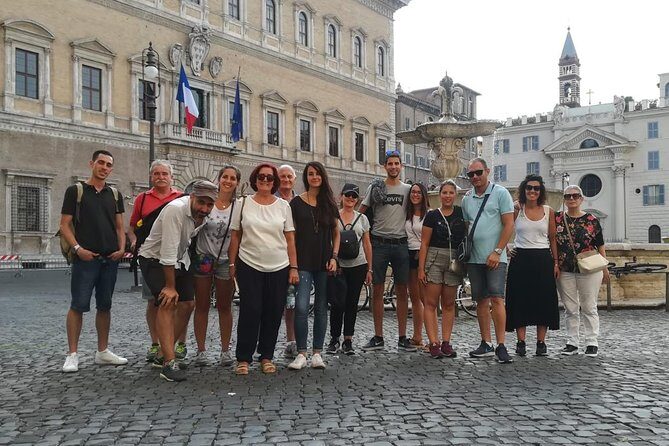
- Palazzo Venezia start: you begin in a strong orientation point, then head straight into older Rome.
- Jewish Ghetto with synagogue stop: you get a real sense of the neighborhood, not just a quick exterior glance.
- Campo de’ Fiori food market area: a short stop in the middle of action, good for atmosphere and quick photos.
- Old-bridge crossing toward Tiber Island: a classic Rome geography moment tied to how the city is laid out.
- Small group feel: with up to 30 people, you’re more likely to ask questions and keep pace together.
- End at Piazza Santa Maria in Trastevere: you finish in one of the most useful launch points for your next meal and walk.
Jewish Ghetto and Trastevere: the best kind of intro to Rome

If you only have a day (or even just an afternoon) to see Rome’s “different sides,” this tour does a good job of steering you away from the same sightseeing loop. The route connects Jewish Ghetto, Campo de’ Fiori, and Trastevere in one logical line, so you don’t waste time guessing where to go next.
What makes it work is the way the tour is paced. The total walk time is built for first-timers: you stop long enough to absorb key landmarks, then you move on before the day gets heavy. That means you finish with energy left for wandering on your own, instead of feeling like you’ve been dragged through a marathon.
Another plus is the guide-driven approach. This isn’t just names on a map. The tour includes a local guide and a professional guide, and the standout praise mentions storytelling that keeps people paying attention. You’ll hear context about the Jewish community in Rome and how major events shaped lives. One review specifically called out details tied to the Nazi invasion and what that led to in the concentration camps—exactly the kind of sober history that helps you understand what you’re seeing.
You can also read our reviews of more tours and experiences in Rome.



Where you start matters: Palazzo Venezia and fast orientation
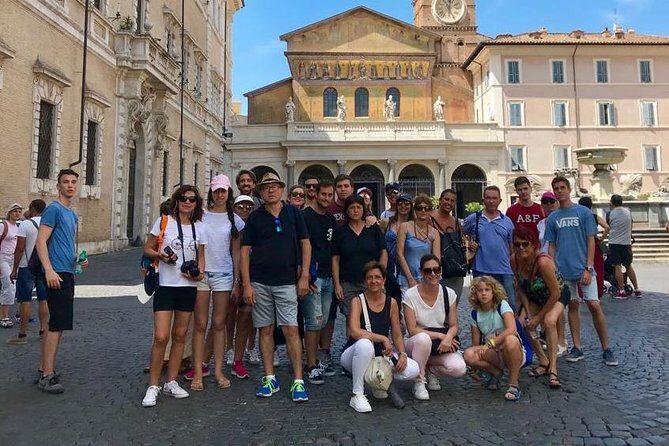
The meeting point is Palazzo Venezia, Piazza di S. Marco 48, and you start in front of the major landmark zone around there. Starting here is practical. From the moment you begin, you’re in central Rome where buses, trams, and walking routes intersect. That matters because it makes the day easier before and after the tour.
Also, starting in the Palazzo Venezia area helps you “get your bearings.” Even if you already know the Colosseum and Roman Forum, this tour shifts your mental map. By the time you reach the Jewish Ghetto, you understand you’re not just moving between neighborhoods—you’re moving through different layers of the city.
If you’re the kind of person who likes a plan but hates strict schedules, you’ll also appreciate that you can choose a morning, afternoon, or early evening start time. That flexibility lets you match the walk to your energy level and to the rest of your day.
Antico Quartiere Ebraico: the Jewish Ghetto stop that actually means something
The first stop is Antico Quartiere Ebraico (the Jewish Ghetto), where the tour spends about 40 minutes. This is the heart of the experience, and it’s why the tour is worth it even if you’ve already seen other “big Roman sights.”
Here’s what to expect from a stop like this: tight streets, dense history, and landmarks that look simple until you know what they represent. The tour is designed to go beyond a quick look by guiding you through what the neighborhood has meant over time, including the impact of major European events. Since one review highlighted learning about the Nazi invasion and the path that led many Jews to the concentration camps, you should expect the guide to address hard history, not just postcard facts.
You also stop at one of Europe’s largest synagogues. That’s not a small detail. For a first-timer, seeing a major synagogue in context is one of the fastest ways to understand that this was not only a “theme” neighborhood—it was a lived community with institutions, culture, and survival.
Practical note: because this stop is long compared to the rest, it’s a good place to ask questions. If you want the guide to slow down for a specific detail—family history, architecture, or the difference between Roman eras—this is your window.
Campo de’ Fiori and Piazza Farnese: the quick-hit Roman atmosphere break
After the Jewish Ghetto, the tour shifts toward Campo de’ Fiori for about 10 minutes. The idea here isn’t a deep museum-style stop. It’s atmosphere. Campo de’ Fiori is known for lively food markets, so even in a short time you get that Roman street energy.
This is a smart pivot. After a heavy historical neighborhood, a brief market area helps reset your brain. It also gives you something useful: a sense of where locals shop and linger, which can help later when you’re choosing what to eat on your own.
Next is Piazza Farnese for another 10 minutes. You’ll pass through and absorb the feel of another classic square without it turning into a detour. This keeps the tour compact. The tradeoff is that you shouldn’t expect a long stop with a lot of optional exploring. Think of it as a visual breather that keeps your day moving.
Crossing toward Tiber Island: why this bridge moment matters
The tour includes walking over one of the oldest bridges in Rome to Tiber Island, then continuing toward Trastevere. You don’t need a lot of extra time here to make it valuable. Bridge-and-river stretches are where Rome becomes easier to understand. They show you how neighborhoods connect, where the river bends, and why so many routes feel like they funnel through certain points.
Expect a photo-friendly moment. But don’t treat it like a quick snapshot only. Use it to link what you learned earlier to what you’re doing next. The Jewish Ghetto is a neighborhood story; the river crossing is a city-shape story. Together, they help you read Rome as a place, not just a list.
Also, this segment supports the flow of the whole tour. Instead of ending abruptly after one district, the route “transitions” through geography, then lands you in Trastevere feeling like you arrived there naturally.



Piazza Santa Maria in Trastevere and the Trastevere finish
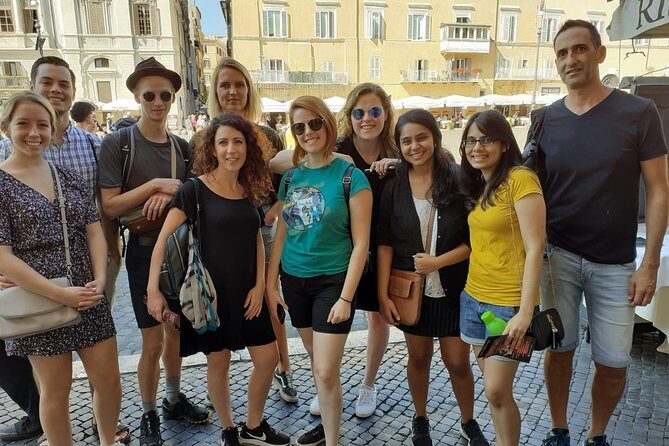
The tour ends at Piazza di Santa Maria in Trastevere and then includes about 20 minutes in Trastevere before finishing at Piazza Santa Maria in Trastevere (near the church). The ending point is set up so you can keep going immediately—walk a side street, grab food, or just soak up the area on your own.
What makes this ending useful is timing. If you start in the morning or afternoon, Trastevere at the end of your tour becomes an easy next step. If you start early evening, it helps you transition into dinner time without having to figure out where to go first.
Should you expect Trastevere to get equal weight as the Jewish Ghetto? Not always. One piece of feedback noted that the Trastevere content felt lighter than expected for the tour title. So if Trastevere is your main goal, you might want to plan extra time there after the walk—use the finish point as your starting line.
Guides, group size, and why your day feels smoother
This tour runs with a maximum of 30 travelers and is offered in English. That matters for two reasons.
First, smaller groups usually mean fewer delays. When the pace stays tight, you actually reach all stops without cutting corners. Second, you’re more likely to have a conversation with the guide at the moment you have the question. That’s repeatedly mentioned in the praise: guides answering questions, adjusting pacing, and keeping people engaged.
Names from the reviews that you may hear praised include Axel, Caitlin, Yousef, Fabiana, Etienne, and Lulu. You also have reports of guides keeping a friendly vibe and adding helpful tips for the rest of the trip. Another review mentioned that pace was adjusted for mobility limitations, which is reassuring if you need a slower tempo—just flag it early when you meet the group.
One more practical consideration: the tour doesn’t use headsets, so sound level matters. If you’re hard of hearing, or if you prefer to clearly follow every detail, try to position yourself closer to the front at each stop.
Price and value: what $4.62 buys you in real Rome time
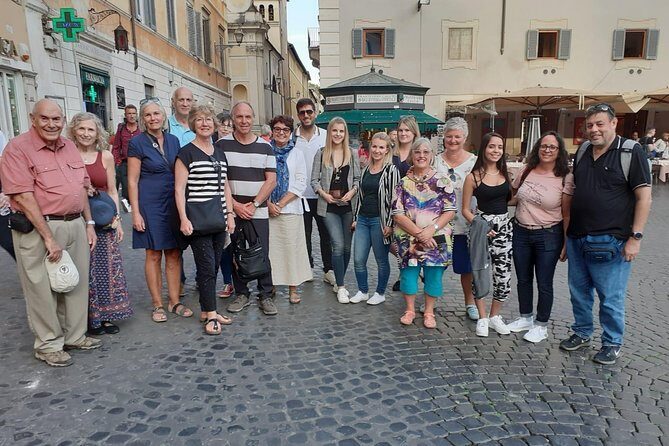
The price listed is $4.62 per person, with the tour described as a free / pay-what-you-wish style in the way it’s handled through booking. Either way, the point is that the “ticket” cost is low compared with most organized tours, and you’re paying for a guided route plus context.
So is it worth it at this price? In most cases, yes—because you get:
- A guided walk focused on central Rome neighborhoods you’ll likely revisit anyway
- A meaningful synagogue stop in the Jewish Ghetto
- A compact route (about 90 minutes to 2 hours) that fits into tight itineraries
- A setup that ends in Trastevere, where you can immediately use the time for your next plans
The value increases if you’re a first-time visitor or you already know the headline sites and want the “other” stories. This route is exactly for that moment when you think, I’ve seen the big monuments. Now what?
If you’re traveling as a large group, the tour also notes group discounts, which can make it an easy choice for families and friend clusters.
One final fairness note: the tour does not include food and drinks, and tips are not included. That’s normal for a walking guide experience, but it does mean you should budget for at least one snack or drink around the market area.
What to expect day-of: timing, weather, and how to prepare
This tour runs in all weather conditions, so dress for Rome’s mood swings. Wear comfortable walking shoes. Even when a tour is under two hours, Rome streets add up fast, and cobblestones don’t care about your schedule.
Also, the tour is near public transportation, which helps if you want to add an extra stop before or after. And the meeting point is clear: in front of the Church in Trastevere for where you end, and Palazzo Venezia for where you begin.
Because there’s no headset, it helps to stand where you can hear. When the guide stops, move with the group and don’t hover too far off to the side.
Finally, confirmation is received at booking, and the experience allows service animals. Confirmation timing and the exact start process are important to check on your own booking confirmation message when it arrives.
Should you book the Jewish Ghetto and Trastevere tour?
Book it if you want an efficient, guided way to see three crucial neighborhoods—Jewish Ghetto, Campo de’ Fiori, and Trastevere—in one go. You’ll get a synagogue stop, a river-bridge moment near Tiber Island, and an ending point that makes it easy to keep your day moving.
I would skip or adjust expectations if you’re mainly hunting for long, detailed time in Trastevere. The Jewish Ghetto segment takes the lead, and that’s not a flaw—it’s the tour’s core focus.
If your schedule is tight, pick a start time that matches your day so you’re not rushing the history part. And if you’re sensitive to sound, plan to stay near the front because there are no headsets.
Overall, this is a smart value walk for Rome newcomers who want more than the obvious route—and who appreciate a guide willing to connect places to real people and real events.