REVIEW · 1-DAY TOURS
Venice Day Trip from Rome: Private Tour by High Speed Train
Book on Viator →Operated by ROMAETRAVEL · Bookable on Viator
Venice in a single day feels fast—and it is. This private trip pairs a high-speed train from Rome with a guided walk through Venice’s most famous sights, from Rialto to St. Mark’s Basilica. You’re not stuck figuring things out alone, either; your guide keeps the day moving without turning it into a boring checklist.
I love the value of getting a real guide for the Venice portion while the train handles the hard logistics. I also like that the route hits both “postcard” Venice and some local-feeling corners, like the squero shipyard area and student squares. One drawback to plan for: the train time eats most of the day, so Venice itself is relatively short—and you’ll be doing a lot of walking.
In This Review
- Key takeaways you can plan around
- The early train out of Roma Termini
- The seat reality: 2nd class on high-speed trains
- Venice timing: a long day with a short walk window
- Stop-by-stop: what each Venice stop gives you (and what to budget)
- Canal Grande: the view that sets the mood
- Chiesa di San Giorgio dei Greci and the leaning clocktower
- Strada Nova: a wide street built for speed
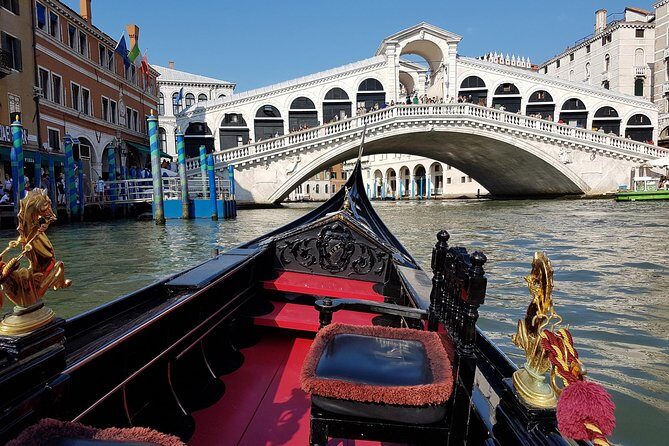
- Ponte di Rialto: the historic center of Venice
- St. Mark’s Basilica: the big ticket moment
- Ponte dei Sospiri: the Bridge of Sighs
- Chiesa di San Zaccaria: Gothic-Renaissance mix in a calmer pocket
- Ponte dell’Accademia: bridge view near the art world
- Squero di San Trovaso: gondola workshop energy
- Campo San Pantalon: a modern art pause
- Campo Santa Margherita: where students gather
- Piazzale Roma: the car-access ending point
- Guides make or break the day
- Price and value: what you’re really paying for at $602.39
- Practical tips so your day doesn’t feel rushed
- Who this private Venice day trip suits best
- Should you book this tour?
- FAQ
- How long is the Venice day trip from Rome?
- Where do I meet for the tour and what time does it start?
- Is this a private tour?
- What’s included in the price?
- Are meals or drinks included?
- Is a gondola ride included?
- When are the train tickets purchased and how do I get them?
- What is the cancellation policy?
- Does the tour run in all weather, and what should I wear?
Key takeaways you can plan around
- Early start from Roma Termini means you get to Venice before the day peaks
- Second-class high-speed train keeps costs down, but seat choice can’t be guaranteed
- About 3.5–4 hours in Venice makes the tour feel efficient, not relaxed
- St. Mark’s Basilica and some churches aren’t included—budget extra for entry tickets
- Gondola rides are optional and not included, so if you want one, plan for added time and cost
- Guides like Sneh Wayne, Su Aydin, Mehmet, Alessandra, and Giada have been praised for meeting on time and tailoring the walk
The early train out of Roma Termini
Your day starts with a very practical setup: you meet at Roma Termini (Via Giovanni Giolitti, 40) around 6:30am. Trains to Venice typically run a bit over four hours each way, so you’re trading a big chunk of your day on the rails for not having to sleep in Venice.
This is a private tour, meaning it’s just you and your group with a professional guide. That matters because Venice is easy to get turned around in, and having someone who can point you toward the right canal crossings saves time and energy.
You can also read our reviews of more private tours in Rome

The seat reality: 2nd class on high-speed trains
The tour includes transport by train (2° class). That’s a big part of what you’re paying for—high-speed rail between two major cities—yet it also explains why some people feel the day doesn’t match the price they paid.
Here’s the key point: seat selection can be random because the railway company assigns seating for second class. If you’re sensitive to where you sit for a scenic ride, don’t assume you’ll get the best view. Think of the train as comfortable transit, not a guaranteed “best seats” experience.
Also, the operator purchases train tickets ahead of time and sends information the day before the tour. One thing I’d take seriously: make sure you can access the tickets in advance. Late surprises are avoidable, and several real-world hiccups in the feedback come back to ticket download or communication timing.
Venice timing: a long day with a short walk window
This trip is built around one simple math problem: train time is long, and Venice time is shorter. In practice, you’ll have roughly under 4 hours in Venice in many schedules, plus extra walking between stops.
That’s why the tour feels “efficient” rather than slow and romantic. If you like to pause for photos, linger in one church, or wander off the main path, you’ll want to choose your moments carefully—or be upfront with your guide about what to prioritize.
Stop-by-stop: what each Venice stop gives you (and what to budget)
Below is how the day’s flow works from the first canal views through the last photo at the car-access point.
Canal Grande: the view that sets the mood
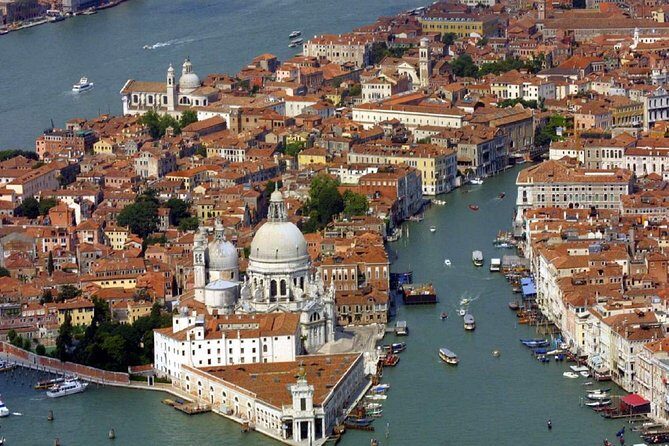
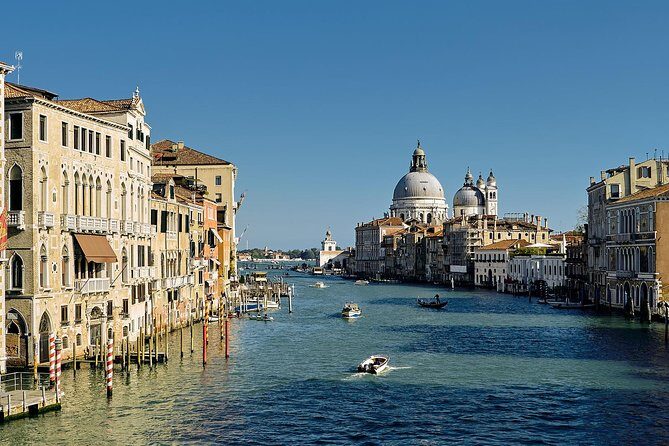
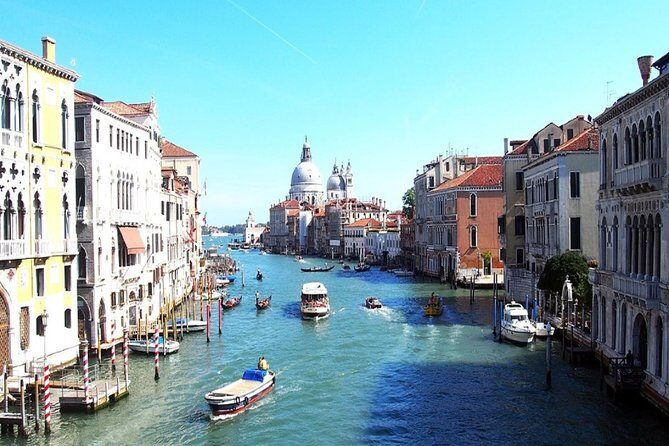
You start with the Canal Grande, Venice’s main waterway. It runs about four kilometers through the city and effectively splits Venice into two halves. Even if you’ve seen Venice before, this is the moment that makes it feel real—the “streets that are canals” idea stops being a slogan and turns into a visual fact.
Admission isn’t required here, so it’s a low-cost, high-impact start. The tradeoff is time: it’s a view-and-move stop, not a sit-and-stare stop.
You can also read our reviews of more tours and experiences in Rome
Chiesa di San Giorgio dei Greci and the leaning clocktower
Next is Chiesa di San Giorgio dei Greci, tied to the Greek community that served Venice’s sailors and merchants. The campanile is famous for its early tilt, and you also get a chance to see the San Luca sanctuary area.
This is one of the tour’s smarter choices because it gets you away from only the headline sites. The potential drawback: the ticket situation isn’t included for everything here, so you may need to pay entry separately depending on what’s open and what you want to see.
Strada Nova: a wide street built for speed
Then you walk Strada Nova, known as Venice’s widest street. It’s an interesting contrast to Venice’s usual narrow lanes and it was built in the 19th century to make pedestrian movement easier between Rialto and the railway station.
If you like how cities evolve, this stop is a quick lesson in modern Venice. If you’re expecting only old-world alley vibes, this can feel more like infrastructure than postcard magic—but it still helps you understand how people actually navigate.
Ponte di Rialto: the historic center of Venice
The walk brings you to Ponte di Rialto, the oldest of the four Grand Canal bridges. It long served as a hub for Venice’s economy, so you’re not just looking at a landmark—you’re looking at the city’s former business engine.
This is another stop with no required admission for basic sightseeing. The main consideration is crowding: Rialto is always busy, so go in with the mindset that you’re sharing space and finding angles quickly.
St. Mark’s Basilica: the big ticket moment
Then comes St. Mark’s Basilica, one of Venice’s most famous interiors. Your guide focuses on the basilica’s mosaics—gold-ground work covering domes, vaults, and upper walls.
Here’s the budgeting reality: the entry is not included in the tour price. So plan for additional ticket cost if you want full access. Also remember the day moves fast, so if you care about specific areas inside, tell your guide so you get the time where it matters to you.
Ponte dei Sospiri: the Bridge of Sighs
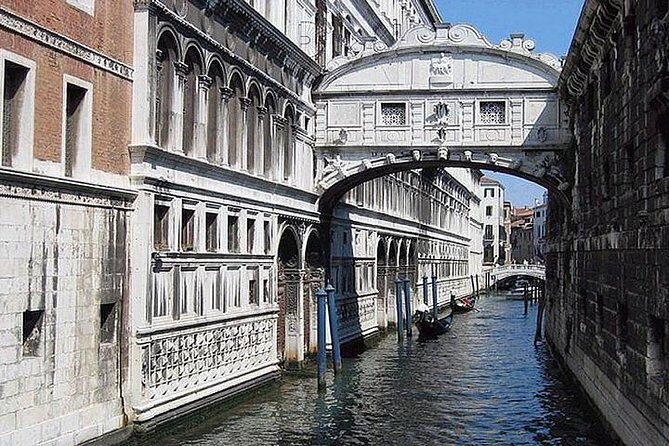
You’ll pass Ponte dei Sospiri, built in the 1600s and linking the Doge’s Palace area to the historic prison across the canal. Locals call it the Bridge of Sighs, tied to the tradition of prisoners lamenting what they won’t see again.
You don’t need admission just to appreciate it from the right vantage points. The only downside is that the moment is quick—think photos and symbolism more than a long linger.
Chiesa di San Zaccaria: Gothic-Renaissance mix in a calmer pocket
Next is Chiesa di San Zaccaria, a former monastic church. The current church’s build dates between 1458 and 1515, and the facade blends late-Gothic and Renaissance styles in a harmonious way.
This stop can feel refreshing because it’s not as “tour-only” as some famous squares. Entry isn’t included, though, so again you should expect some sights to require separate tickets if you want full interiors.
Ponte dell’Accademia: bridge view near the art world
You head to Ponte dell’Accademia, one of only four bridges spanning the Grand Canal. It crosses near the southern end of the canal and is named for the nearby Accademia di Belle Arti di Venezia.
This is a “good photo, quick explanation” type stop. It’s also useful because it lines up your next moves through Venice’s walking network toward quieter spaces.
Squero di San Trovaso: gondola workshop energy
Now for something you’ll likely remember: Squero di San Trovaso. A squero is a classic Venetian shipyard, and this one is among the oldest and most famous for gondola repair work.
Even if you don’t watch a full restoration, you get that rare glimpse of Venice as a working craft city, not just a museum of views. Admission isn’t listed here, which makes it a strong value stop. One consideration: it’s still a time-sensitive moment in a short day, so go with a “look, learn, move” rhythm.
Campo San Pantalon: a modern art pause
Then you reach Campo San Pantalon, where a well-known Banksy painting appears on a building wall (often referred to as the shipwrecked or migrant child). This stop is a neat reminder that Venice isn’t frozen in time.
No admission is needed for the outdoor view. The drawback is simple: street art can be weather-impacted and views can be angle-dependent, so you may want to ask your guide for the best viewing spot.
Campo Santa Margherita: where students gather
You’ll also visit Campo Santa Margherita, a public square in Dorsoduro near university buildings. The vibe here is more day-to-day Venice—students, casual strolling, and local pacing.
This is a nice “breather” stop in a packed day. Since admission isn’t required, you can treat it as your moment to reset, grab a quick snack, and regroup—if time allows.
Piazzale Roma: the car-access ending point
Your last stop is Piazzale Roma, the main entry area to Venice by road. It’s at the end of the Ponte della Libertà, and it’s one of the only places where ground vehicles can access Venice’s insular urban core.
It’s a fitting finale: you end at the edge of the car world and return toward the train. If you love the contrast between how Venice works and how the rest of Italy works, this ending lands well.
Guides make or break the day
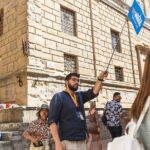
The biggest variable in this experience is the person walking with you. In feedback tied to this tour, guides including Sneh Wayne, Su Aydin, Mehmet, Alessandra, and Giada are praised for staying on track and offering clear local guidance.
Some of the best reports share a common theme: the guide meets you in Venice and escorts you back to the train so you don’t have to fight the station logistics while tired. A couple of examples also describe proactive help when trains ran late, like suggesting an adjustment to keep everyone aligned with the boarding time.
Still, not every experience is smooth. There are complaints about communication difficulties and missed trains tied to last-minute ticket access issues. My practical advice is simple: treat the day like a high-speed operation. Download tickets early, arrive early, and keep your phone ready in case your guide needs a quick response.
Price and value: what you’re really paying for at $602.39
At $602.39 per person, you’re paying for three main things: the high-speed train, the guide for Venice, and the included Venice visitor fee. You’re not paying for a full day of indoor admissions, meals, or add-on experiences.
That’s where expectations can clash. The train ride is real travel time, not a guided city moment. Some people feel 2nd class seats and no gondola inclusion means the day doesn’t justify the price, especially when they believe they could do the rail and sights on their own for less.
I think the value is strongest if you:
- want a guided route that reduces navigation stress in a short window
- care about hitting key landmarks without building a schedule yourself
- prefer a private format where pacing can bend to your group
The value is weaker if you:
- expect premium train seating or included gondola time
- want long stays inside multiple major churches and museums
- plan to eat most meals as you go and can’t spare extra budget for entry tickets
Practical tips so your day doesn’t feel rushed
If you book this, you’re signing up for time pressure. You can still make it pleasant.
Wear comfortable shoes. Venice is made for walking, but your feet will be the first to complain when you’re doing bridge-to-bridge movement on a timetable.
If you care about St. Mark’s Basilica (and church interiors in general), budget for separate entry. Not every stop includes admission, and several major interiors are explicitly not included.
If gondola is on your “must do” list, treat it as an optional add-on with its own time slot and cost. Some guides have been able to help arrange it, but the ride itself isn’t part of what’s included.
Finally: plan for the possibility of late trains. High-speed rail usually works well, but your margin for recovery is limited because the itinerary depends on train timing. Give yourself extra readiness before departures, and your day has a much better chance of feeling smooth.
Who this private Venice day trip suits best
This is a great fit for you if:
- you want a first-time Venice highlight tour from Rome without overnight planning
- you prefer a private guide who can respond to what your group wants
- you’re okay with short stays and fast moving between major sights
It may not be the best fit if:
- you want a slow, wandering day with minimal walking
- you hate crowds around Rialto and St. Mark’s
- you’re hoping most major interiors are included in the price
Should you book this tour?
I’d book it if your priority is seeing the famous Venice sights in one day with a private guide and you’re comfortable paying extra for entry tickets where needed. It’s also a smart call if you don’t want to wrestle with train timing and station navigation while you’re in a new city.
I’d skip it or consider a DIY rail plan if you’re price-sensitive and your dream Venice day is mostly about long lingering in interiors and optional experiences like a gondola. For that style of trip, the included value can feel thin against the train time.
If you want Venice fast, guided, and mostly stress-free, this private day trip has a clear purpose. Just go in knowing the day is built around the train, not around a long, slow Venice afternoon.
FAQ
How long is the Venice day trip from Rome?
The duration is listed as approximately 12 hours.
Where do I meet for the tour and what time does it start?
The meeting point is Roma Termini, Via Giovanni Giolitti, 40, 00185 Rome, and the start time is 6:30am.
Is this a private tour?
Yes. It’s private, and only your group will participate.
What’s included in the price?
Included items are a professional guide, train transport in 2nd class, private tour, and the Venice visitor fee.
Are meals or drinks included?
No. Food and drinks are not included.
Is a gondola ride included?
Gondola rides are not included.
When are the train tickets purchased and how do I get them?
Train tickets are purchased 48 hours in advance, and the day before the tour you receive an email with all information and the train tickets.
What is the cancellation policy?
Free cancellation is available up to 24 hours in advance for a full refund.
Does the tour run in all weather, and what should I wear?
The tour operates in all weather conditions. Wear comfortable shoes and dress appropriately for the conditions.