REVIEW · MUSEUMS
Vatican Museums Alone: Semi-Private Early Entry Tour & Breakfast
Book on Viator →Operated by LivTours · Bookable on Viator
Silence first, crowds later. This semi-private early entry gets you into the Vatican Museums two hours before the public and keeps the group small enough for real conversation, not just shoulder-to-shoulder shuffle. My favorite part is the way the guide brings out details in the art, including Michelangelo references that you normally miss when you’re being herded along.
Then comes the payoff. I love the feeling of reaching the Sistine Chapel before it swells with people, and I love that you end in the Pinecone Courtyard with a breakfast buffet so you’re not rushing on empty. One possible drawback: if you visit between Jan 12 and Mar 31, scaffolding covers the Last Judgment wall, so that artwork will not be visible during the conservation period.
In This Review
- Key things to know before you go
- Early Vatican at 6:40 am: why the timing matters
- A small group of 10: what you actually gain
- Vatican Museums first: how you get Michelangelo-focused context
- Raphael’s Stanze di Raffaello: the quiet before the buzz
- Gallery of Maps: golden accuracy and Flemish craft
- Sistine Chapel early: the empty-space effect
- Pinecone Courtyard breakfast: a smart end point
- What’s included, what’s not: plan your Vatican day
- Dress code, ID, and the rules you should take seriously
- Price and value: is $721.26 worth it?
- Who this tour suits best
- Should you book this Vatican Museums early-entry and breakfast tour?
- FAQ
- What time does the tour start?
- How many people are in the group?
- How long is the tour?
- Is breakfast included, and where do you eat?
- Is Saint Peter’s Basilica included?
- What dress code do I need for the Vatican?
- Do I need ID to enter the Vatican Museums?
- Is photography allowed in the Sistine Chapel?
- What happens to Michelangelo’s Last Judgment during the winter conservation period?
Key things to know before you go
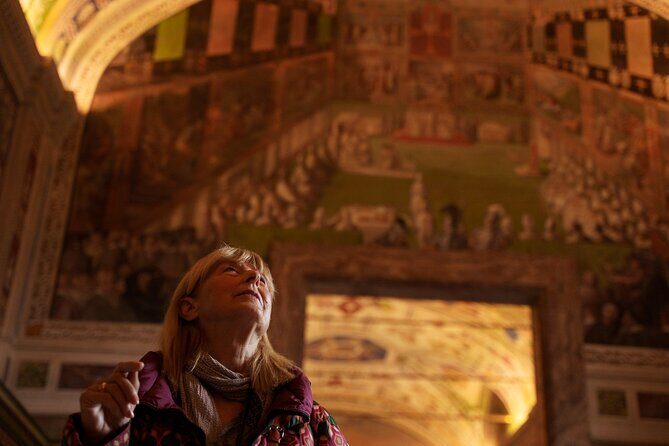
- A max of 10 people keeps the pace human and the guide’s attention on you
- Early entry at 6:40 am means you start in calmer galleries
- Sistine Chapel without the crowd press is the main emotional highlight
- Raphael Rooms peace and perspective in the Stanze di Raffaello
- Maps Gallery visuals with Flemish-made tapestries and golden fresco effects
- Breakfast in the Pinecone Courtyard helps you enjoy the morning instead of surviving it
Early Vatican at 6:40 am: why the timing matters
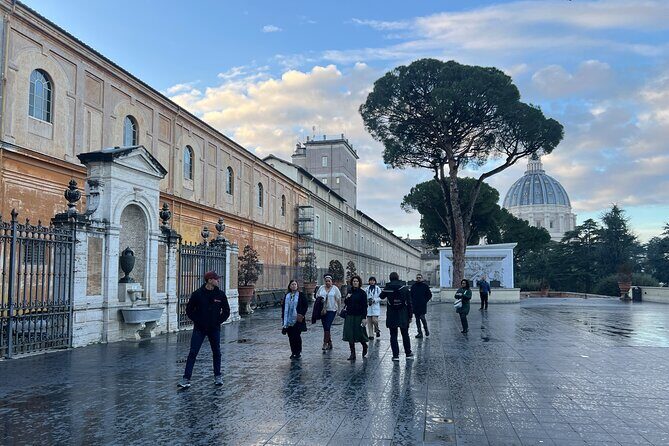
The biggest reason this tour feels different is the start time. You meet at Viale Vaticano at 6:40 am and enter the Vatican Museums about two hours before general public opening, when the building is still waking up instead of roaring. That early window changes everything: you get space to look, and your guide can slow down to point out what matters.
I also like that you’re not stuck in the long pre-opening stress cycle. You show up, follow the group, and then get a guided route that’s designed to take advantage of the quiet hours. It’s a smart way to beat the Vatican’s main problem: time wasted standing in line or trying to see art through other people’s phone screens.
And yes, your morning ends with something practical: you’re fed. After a 2 hours 45 minutes of concentrated museum time, the breakfast buffet in the Pinecone Courtyard gives you a reset instead of sending you back out into Rome hungry and cranky.
You can also read our reviews of more private tours in Rome

A small group of 10: what you actually gain
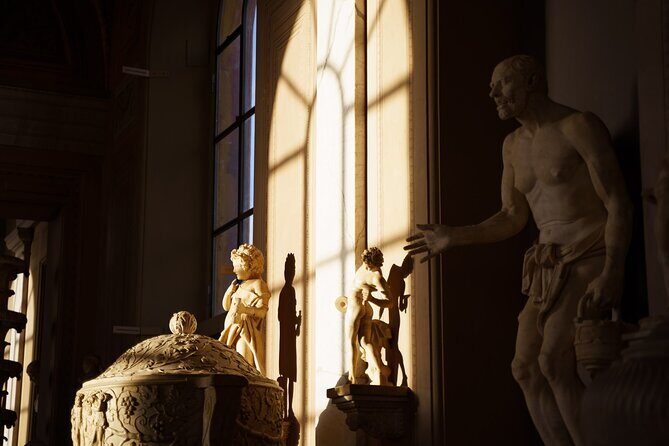
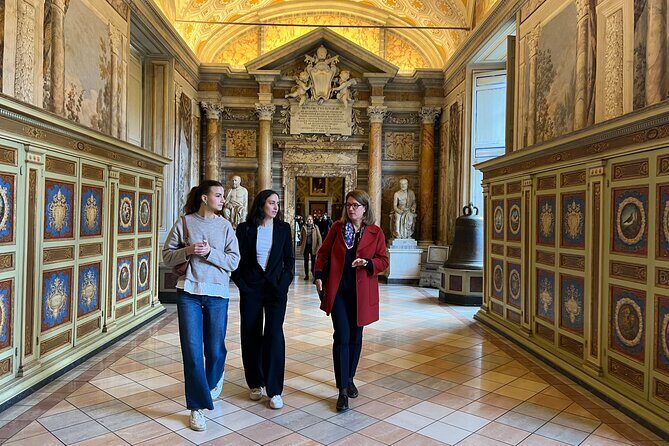
A capped group size sounds like a marketing line until you feel it. With no more than 10 people, you’re not fighting for position in tight corridors, and you can actually hear the guide without playing loudspeaker chess with strangers. In a place as famous as the Vatican, that matters more than fancy-sounding extras.
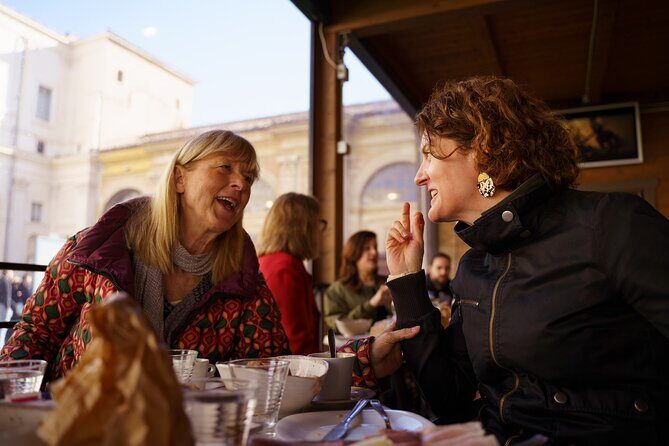
With a semi-private setup, the guide can also respond to what you’re noticing. You’re not just scanning for the next stop icon on a map—you’re looking at specific sections of frescoes and learning what you’re seeing. In the best moments, the art feels less like a checklist and more like a story.
One more detail I appreciate: this route is paced to match the early entry advantage. You don’t get the feeling that you’re being rushed through highlights to compensate for the crowd later. You arrive early, and then the tour stays focused.
Vatican Museums first: how you get Michelangelo-focused context
Your first and longest stop is the Vatican Museums section—about one hour—and that’s where the guide’s role really starts. The Vatican’s collections are massive, so a guided “highlights” approach works best when it tells you what to look for instead of trying to cover everything.
This is where you get help connecting famous visual themes. The tour includes guided points that focus on the most precious details you might otherwise overlook, including references tied to Michelangelo. The value is not that you see more rooms—it’s that you understand what you’re seeing as you move.
The early-entry timing also helps you physically. Your eyes adjust faster when you’re not constantly dodging bodies. You can look up without constantly being forced to look forward.
Possible tradeoff: a highlights route isn’t the same as a full-collection wander. If you want to spend hours chasing your personal favorite niche corner, this tour isn’t designed as that kind of deep dive. It’s built for focus and flow.
Raphael’s Stanze di Raffaello: the quiet before the buzz
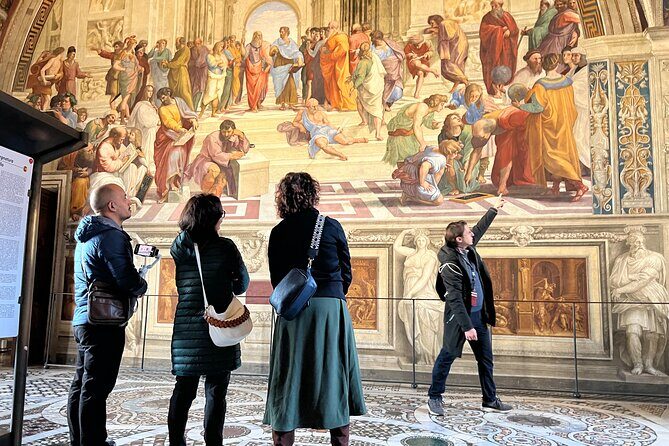
Next you head into the Stanze di Raffaello, where you normally find waves of people trying to get the best angle. Here, the experience is calmer, and it shows. You get about 20 minutes to absorb Raphael’s world in Pope Julius II’s private apartments.
The two big works you’ll spend time with are the School of Athens and the Disputa. These frescoes are popular for a reason, but the guide’s job is to slow your attention down to the signals: the composition choices, the way scenes are built, and how the work communicates ideas without modern explanations.
I also like how this stop keeps the “human story” in view. You’ll learn about Raphael’s life and his early death, which adds weight to seeing the artwork in person. It turns a famous image into something with stakes.
If you’re short on time in Rome, this stop is a good use of it. You get world-class art, plus enough context to make it feel meaningful rather than just famous.
Gallery of Maps: golden accuracy and Flemish craft
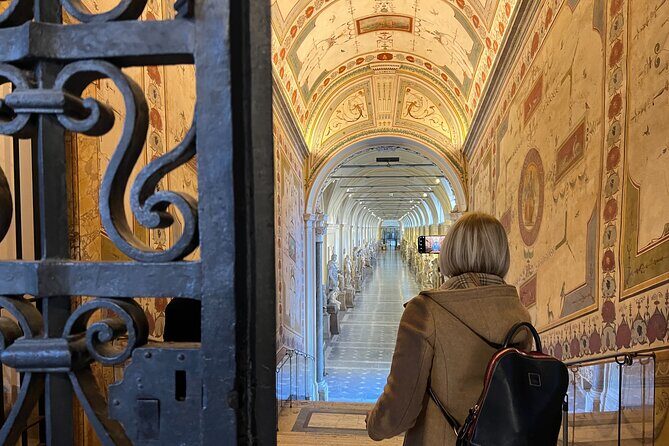
After the Raphael Rooms, you move to the Galleria delle Carte Geografiche, with about 10 minutes here. It’s brief by design, because the Vatican doesn’t let you “take your time” in every room when you’re on an early schedule.
Still, you’ll see two things that make this stop memorable. First are the hand-stitched Flemish tapestries created according to Raphael school designs. Second is the Gallery of Maps experience itself, where golden opulence mixes with impressive detail and accuracy in the 17th-century fresco presentation.
The magic isn’t only the visuals—it’s how it changes your sense of scale. You start thinking like a patron and a scholar: this isn’t decoration, it’s a statement about the world as it was understood then. A good guide helps you notice the precision instead of just admiring the gold.
A quick note: since the time here is limited, you’ll get more out of this stop if you decide in advance what you want to focus on. If you’re hoping for an unhurried, 45-minute room-by-room study, plan on needing additional time separately.
You can also read our reviews of more museum experiences in Rome


Sistine Chapel early: the empty-space effect
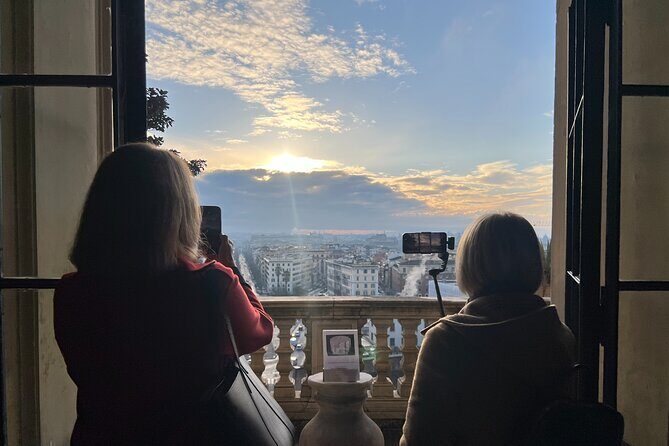
Then you reach the moment most people dream about: entering the Sistine Chapel while it’s still quiet enough to feel almost like you have the space to yourself. You’ll have about 10 minutes there, and those minutes can feel weighty in a way that’s hard to describe until you’re inside.
One rule you need to know: no photography is allowed inside the Sistine Chapel. So instead of trying to capture proof, focus on looking. If you want to remember what you saw, sketching with your eyes helps—notice sections, move slowly, and let your attention settle.
The tour also includes a special seasonal conservation detail you should plan around. From Jan 12 through Mar 31, the Vatican Museum will carry out special conservation work on Michelangelo’s Last Judgment. During that period, scaffolding will cover the entire Last Judgment wall. The chapel stays open and accessible, but that artwork will not be visible while restoration is happening.
That’s the main reason to double-check your travel dates before you book. If Last Judgment is your top priority, this could be disappointing. If you’re there for the full Sistine experience—composition, ceiling work, and the general emotional impact—your visit can still be strong.
Pinecone Courtyard breakfast: a smart end point
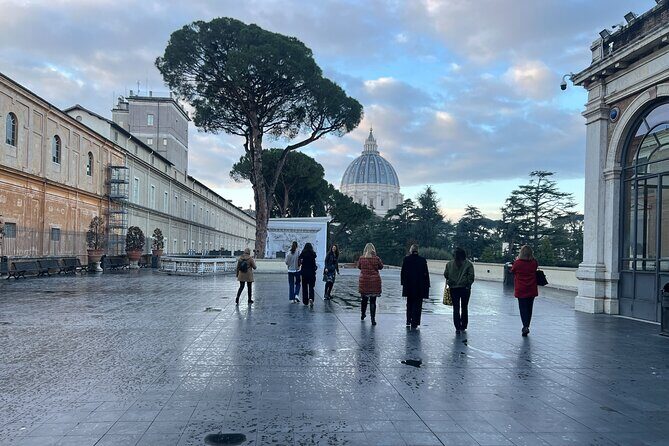
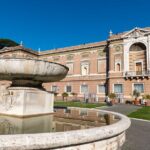
After the chapel, you don’t just escape into the street. You end with food. The tour stops at the Pinecone Courtyard, where you can enjoy a breakfast buffet for about 20 minutes.
This is more than convenience. Morning tours in Rome often leave you stuck making do with coffee and pastry while you’re mentally exhausted. Here, the meal is built into the experience, so you can actually enjoy the day after you’ve spent your attention budget on museums.
I also like the setting. Pinecone Courtyard feels like a pause—an in-between space where the Vatican’s scale is still present, but you’re sitting, eating, and letting your brain catch up. It’s a good moment to reflect on what you saw, since you’ve already gone through the emotional peak.
What’s included, what’s not: plan your Vatican day
Included in this experience:
- Extra early access to the Vatican Museums
- A semi-private guided tour with an expert guide
- Entrance to Vatican Museums, Stanze di Raffaello, Gallery of Maps, and the Sistine Chapel
- A breakfast buffet in the Pinecone Courtyard
- A group cap of 10 people
- A mobile ticket and English (plus other language options)
Not included:
- Saint Peter’s Basilica
That matters because many people plan a single “Vatican Day” including basilica time. If you want the basilica and don’t want to piece it together, you’ll need to plan that separately.
Dress code, ID, and the rules you should take seriously
The Vatican has rules, and this tour forces you to meet them early. For entry, you need government-issued ID for everyone in your group, regardless of age. So if you’re traveling with kids or teenagers, make sure you’re not assuming their birth certificate or other paper works. It’s ID, and everyone needs it.
Dress code is also strict: shoulders and knees must be covered. That means no tank tops and no short dresses. If you’re doing this in summer heat, bring a light layer you can pull on quickly.
There’s also a practical restriction that can surprise people: backpacks are not permitted in the Museum. So plan light. If you carry a bag, check what will be allowed and keep essentials minimal.
Finally, you’ll receive confirmation after booking, and the tour is offered in multiple languages (English is available, plus other European languages). If you need a language other than English, make sure you request it during booking.
Price and value: is $721.26 worth it?
At $721.26 per person, this is not a budget activity. But value here isn’t just money—it’s time, access, and guide attention.
You’re paying for:
- Early access to the Vatican Museums (about two hours before general opening)
- A small group cap of 10
- A guide-led route through multiple major art areas, not just one room
- Admission ticket access that covers the included museum stops
- A breakfast buffet at the end
If you try to DIY this on your own, you might save money, but you’ll likely lose the advantage of timing and the clarity of expert explanation. The early-entry benefit is especially hard to replicate without planning and ticket hunting. And the breakfast included at the end isn’t free in real terms—Rome breakfasts add up.
So the best way to judge the price is to ask: do you want the Vatican experience with quiet time and expert guidance, or do you want to optimize for the lowest cost? If you’re the first type—focused, art-inclined, and short on time—this price starts to make sense quickly.
Who this tour suits best
This is a strong fit if:
- You want the Vatican Museums without the full crowd energy
- You care about art details and want interpretation, not just photos
- You prefer a small group day over a big bus-style flow
- You like finishing your morning with breakfast rather than searching for it afterward
It might be less ideal if:
- You only care about the basilica (since St. Peter’s Basilica is not included)
- Your dates fall between Jan 12 and Mar 31 and you specifically need to see Last Judgment on the wall
For most people who want maximum impact in a short timeframe, it’s a practical way to get the big moments with less stress.
Should you book this Vatican Museums early-entry and breakfast tour?
If your goal is to experience the Vatican Museums, Raphael Rooms, and the Sistine Chapel with fewer people and a guide who helps you notice what matters, I think this is a smart booking. The small group size and the early timing are the core value, and the breakfast in Pinecone Courtyard is a nice bonus that makes the whole morning feel more human.
Book it especially if you’re traveling with limited time in Rome and want a guided route that hits major highlights without wasting hours in chaos. Just check your travel dates for the Jan 12 to Mar 31 Last Judgment conservation window, and decide whether that affects your must-see list.
FAQ
What time does the tour start?
The start time is 6:40 am.
How many people are in the group?
The group is capped at no more than 10 travelers.
How long is the tour?
It runs about 2 hours 45 minutes (approx.).
Is breakfast included, and where do you eat?
Yes. You get a breakfast buffet in the Pinecone Courtyard.
Is Saint Peter’s Basilica included?
No. Saint Peter’s Basilica is not included.
What dress code do I need for the Vatican?
You must have shoulders and knees covered. That means no tank tops or short dresses.
Do I need ID to enter the Vatican Museums?
Yes. Everyone in your group needs a government-issued ID to enter.
Is photography allowed in the Sistine Chapel?
No. Photography is not allowed inside the Sistine Chapel.
What happens to Michelangelo’s Last Judgment during the winter conservation period?
From Jan 12 through Mar 31, scaffolding covers the entire Last Judgment wall. The Sistine Chapel remains open, but that artwork won’t be visible during restoration.