REVIEW · CATACOMBS TOURS
Unique E-Bike Experience in the Appian Way and the Catacombs
Book on Viator →Operated by Easy Bike Rent Rome · Bookable on Viator
Ancient Rome, powered by pedals. This e-bike ride takes you along the Appian Way through major ruins, then you head underground for a guided visit to the Catacombs of Saint Callixtus. It’s a smart way to see big sights without spending the whole day walking.
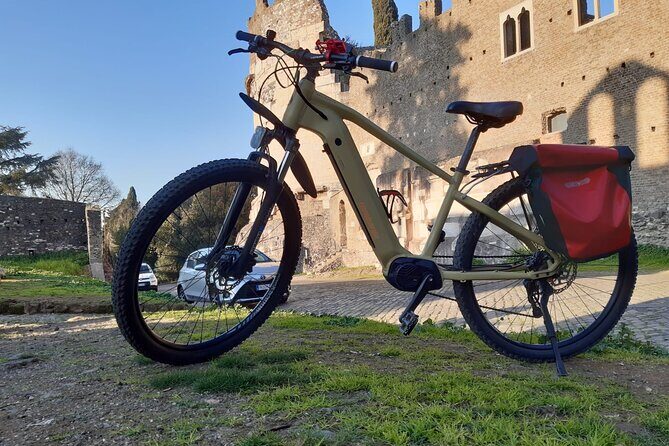
What I really like is the combination of easy-going logistics and hands-on guidance. You get quality e-bikes, a helmet, and a phone holder, plus a guide who keeps the pace friendly for a small group (max 10 people) and helps you connect what you see—Circo Massimo, the baths, the gates—to the stories behind them.
One consideration: the ride is not a smooth bike path the whole way. Roads can be a bit bumpy, and at times you’ll be cycling on streets alongside cars, so you should be comfortable riding and paying attention.
In This Review
- Key things that make this tour worth your time
- E-bike on the Appian Way: what changes when you pedal with help
- Where you start: Circo Massimo, the grand valley, and the first ancient clues
- Baths of Caracalla: massive ruins, plus one extra ticket you should plan for
- Porta San Sebastiano: a well-preserved gate in the Aurelian Walls
- Going underground: Catacombs of Saint Callixtus with a local guide
- Circus of Maxentius and the idea of Rome extending itself
- Cecilia Metella’s tomb: a landmark you can spot at speed
- Appian Way (Via Appia Antica): the road that makes the whole tour click
- Ninfeo di Egeria and the myth-meets-museum feeling
- Parco della Caffarella: the long reset after hours of stone
- E-bike setup and ride feel: what to expect on Rome’s real roads
- Price and value: what you get for $100.55
- Who this tour fits best (and who should skip it)
- Should you book this Appian Way and Catacombs e-bike tour?
- FAQ
- How long is the e-bike tour?
- What’s included in the price?
- Is admission to the Catacombs of Saint Callixtus included?
- Are tickets for the Baths of Caracalla or the Tomb of Caecilia Metella included?
- Do I need to know how to ride a bike?
- What fitness level do I need?
- Is it suitable for kids?
- How many people are in the group?
- Can I cancel for a full refund?
Key things that make this tour worth your time
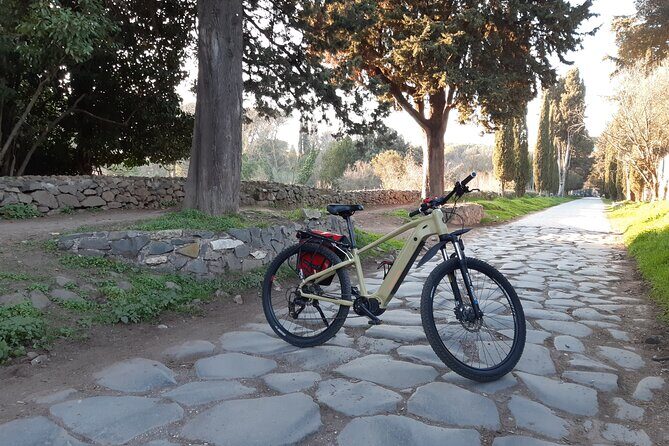
- Appian Way in one outing: you sample a handful of iconic stretches instead of treating the route like an all-day DIY project
- Catacombs ticket included: you get a guided underground experience at the Catacombs of Saint Callixtus (about an hour)
- Mix of monuments and countryside: your route blends major Roman landmarks with greener stretches like Parco della Caffarella
- Good biking gear for Rome: helmet and a phone holder make it easier to focus on riding and photos
- Small group pacing: with up to 10 people, you’re less likely to get lost in the crowd or rushed between stops
- Not every ticket is included: some sites along the way don’t include admission, so plan a little extra for tickets
E-bike on the Appian Way: what changes when you pedal with help
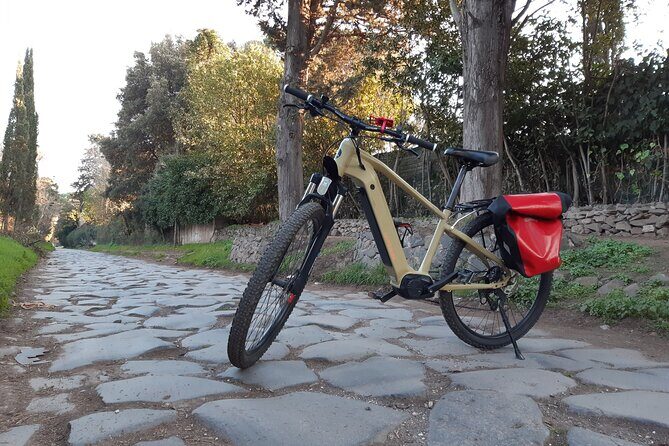
The Appian Way is famous for a reason. It’s Rome’s old “main road,” first built in 312 BC, and it turns ancient stone into something you can actually feel under you. On foot, it can feel long and draining fast. On an e-bike, you move at a pace where the scenery and the ruins both land in your brain.
You’ll also appreciate the setup. The tour provides quality e-bikes in several sizes, plus a helmet and a phone holder. That phone holder sounds small, but in Rome it’s practical—your pictures and your map plan can live in front of you instead of bouncing around in a pocket.
The route is designed to be scenic and safer than you might expect for Rome. Even with the electric assist, you’re still working a bit, and you’ll get a workout if you haven’t ridden a bike in a while. The best part is that you don’t have to choose between seeing “one neighborhood” and seeing “the good stuff.”
You can also read our reviews of more cycling tours in Rome

Where you start: Circo Massimo, the grand valley, and the first ancient clues
You begin at Via dei Cerchi, 59 (and you come back there at the end). The first stop is Circo Massimo, the Circus Maximus, Rome’s ancient chariot-racing stadium. This sits in the valley between the Aventine and Palatine hills, and it was Rome’s biggest stadium—about 621 meters long and 118 meters wide, built to hold over 150,000 spectators.
From a bike, Circo Massimo hits differently than it does from a quick glance. You’re not just seeing ruins; you’re watching the shape of the space that once controlled crowds and noise. It’s a great “orientation moment” because you can start imagining scale right away, before the tour drops deeper into the Appian Way zone.
This stop is short—about 20 minutes—and admission is free. That makes it a solid first win: you get context without spending time budgeting tickets.
Baths of Caracalla: massive ruins, plus one extra ticket you should plan for
Next comes Terme di Caracalla, the Baths of Caracalla. These were the city’s second-largest public baths (after Diocletian’s), built around AD 212–216/217 under emperors Septimius Severus and Caracalla. They were active until the 530s, then fell into disuse and ruin.
The baths can feel “still alive” even in ruins because they’re so big and so structural. You’ll see how Roman leisure was engineered—movement, water, and spaces built for crowds. This is also the kind of stop where being on a bike helps. You can look, rotate your attention, and still keep the tour moving.
Here’s the catch: admission for the Baths of Caracalla is not included. So if this is a must-see for you, plan a little extra time and money for the ticket. The stop itself is about 20 minutes, so you’ll want to be ready to make your time count.
Porta San Sebastiano: a well-preserved gate in the Aurelian Walls
After the baths, you reach Porta San Sebastiano, one of the Aurelian Walls’ gates and one of the best-preserved. This is a useful stop because it shows you Rome’s defensive planning—massive gates weren’t just entrances; they were controlled chokepoints.
You’ll likely appreciate this more if you’ve already started picturing the Appian Way as a route, not a single spot. Gates like this help you understand how people moved through Rome—and how the city thought about control, protection, and travel.
Admission is free here, and the stop is about 20 minutes.
Going underground: Catacombs of Saint Callixtus with a local guide
Then you switch gears for the tour’s biggest “you can’t do this anywhere” moment: Catacombs of Saint Callixtus. This catacomb is one of the Catacombs of Rome along the Appian Way, and it’s located in a relatively nice, almost pedestrian-feeling area.
The visit is about an hour, and the admission ticket is included. That matters, because underground sites can eat up time if you’re trying to coordinate tickets on your own. Having a guide here also makes a difference. You’re not just walking in dark corridors; you’re learning what you’re seeing as you go.
This is the part of the tour that tends to stick with people. It’s quiet, it’s different from all the outdoor stone stops, and it gives the Appian Way story a more human edge—Roman burial practices and the way communities used these underground spaces.
You can also read our reviews of more tours and experiences in Rome




Circus of Maxentius and the idea of Rome extending itself
Back above ground, you stop at the Circus of Maxentius. This ancient structure was part of a larger complex built by Emperor Maxentius on the Via Appia between AD 306 and 312.
You’ll get the sense that this road wasn’t only about travel—it was about spectacle and power, too. A circus is a statement: the city wanted entertainment, organization, and a way to gather people in one place.
This stop is about 20 minutes, and admission is free.
Cecilia Metella’s tomb: a landmark you can spot at speed
One of the most recognizable monuments along the Appian Way is the Mausoleo di Cecilia Metella e Castrum Caetani, part of the Parco Archeologico dell’Appia Antica. The tour time here is about 20 minutes, and admission is not included.
The tomb itself was built in the 1st century BC to honor Caecilia Metella, daughter of Quintus Caecilius Metellus Creticus. You’re looking at a structure built for long-term memory—this wasn’t a temporary marker. It’s the kind of stop where you can almost feel how Romans used public monuments to keep names and power present.
Because the admission isn’t included, you’ll want to decide whether you just want the exterior views and context from your guide, or whether you want to plan to pay for entry.
Appian Way (Via Appia Antica): the road that makes the whole tour click
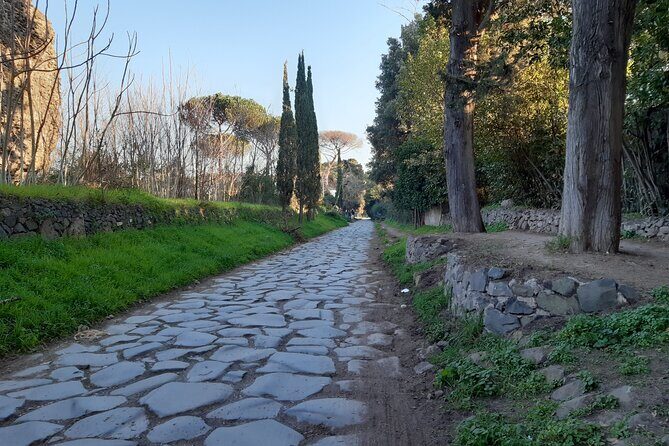
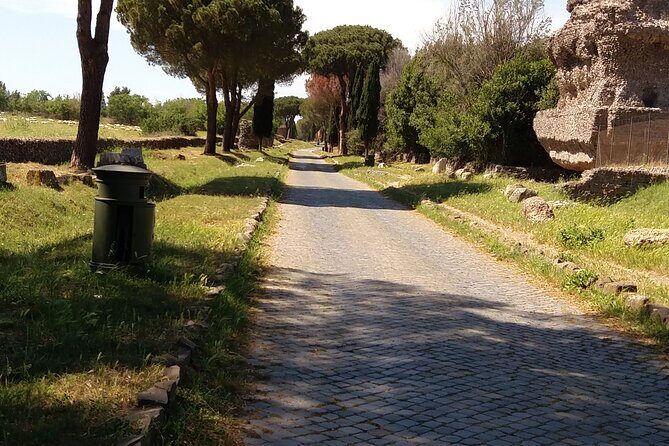
Now you get to the real headline: Appian Way (Via Appia Antica). This road is the first highway ever built, started in 312 BC by Appius Claudius Caecus. On this small-group e-bike tour, you’ll see only a small portion of its total stretches—enough to understand why it’s iconic.
Riding on ancient paving is different from reading about it. You feel the age in the textures under your tires. And because you’re moving, it becomes a line through time rather than a single monument.
Admission is not included here, which makes sense because much of the Appian Way experience is outdoors. Still, it’s worth setting expectations: you’re not buying a ticket to “the road,” you’re buying a guided ride that puts the ruins into a meaningful sequence.
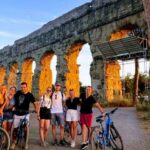
Also, take your time to notice the surroundings. In the countryside sections, you often get views of aqueducts up close, which is one of the best rewards of using bikes instead of buses or just wandering from spot to spot.
Ninfeo di Egeria and the myth-meets-museum feeling
The tour then includes Ninfeo di Egeria. Egeria was a nymph associated with early Roman legend and tied to Numa Pompilius, the second king of Rome. She’s described as a counselor who provided laws and rituals connected to Roman religion, and her name has become a way to refer to a female advisor.
This stop is short—about 20 minutes—and admission is free. It’s a fun reset between heavier ruins, because the mythic layer turns stonework into something more story-driven. Even if you’re not a mythology person, you’ll probably enjoy the way the guide connects the name and the place.
Parco della Caffarella: the long reset after hours of stone
The last major stop on the tour is Parco della Caffarella, a large park in the heart of Rome. It sits within the Parco Regionale Appia Antica, and the Caffarella Valley is bordered on the north by the Via Latina and on the south by the Appian Way.
You’ll spend about 40 minutes here, and admission is free. This is the moment the tour breathes. After catacombs and monumental structures, the park gives you a calm space to move slower, look around, and let the Roman story settle.
If you like photos, this is a strong finishing stretch. If you like just being in open air, this is even better.
E-bike setup and ride feel: what to expect on Rome’s real roads
You’ll be given an e-bike (in multiple sizes), a helmet, and a phone holder. That phone setup helps you keep track of where you are and grab pictures without turning your whole ride into a phone-staring contest.
The tour is for people with moderate physical fitness. It’s not advertised as a tough mountain challenge, but you should be ready for some time on a bike. And if you haven’t ridden in years, the electrics help—but they don’t erase balance and braking.
One practical caution: some sections can feel bumpy, and at times you may be riding on streets alongside cars. I’d treat that as a “ride defensively” moment. If you’re confident on bikes, you’ll likely enjoy the route more. If you’re nervous about street cycling, pick a day when you feel calm.
Price and value: what you get for $100.55
At $100.55 per person for about 4 hours, you’re paying for more than bike rental. Your ticket covers a guided e-bike experience with helmet and phone holder, a multi-stop route through Rome’s ancient sites, and—most importantly—the Catacombs of Saint Callixtus admission plus the guide time underground.
Food and drink are not included, and tips are not included. That means you’ll likely want to plan a snack plan for after the tour, especially if you’re doing this earlier in the day.
Two other sites don’t include admission: the Baths of Caracalla and the Tomb of Caecilia Metella (plus the Castrum Caetani area). So the true cost might be a bit higher depending on what you choose to enter versus view from outside.
Still, the value math works for many people because you’re stacking multiple major stops into one guided half-day. You’re not spending time figuring out transit, parking, and ticket timing for the biggest “hard-to-fit” item: the catacombs visit.
Who this tour fits best (and who should skip it)
This tour is a strong fit if you want an efficient Rome day that mixes major ancient monuments with a countryside feel and an underground guided site. It also works well if you like being outside and moving, but you don’t want the “all-day hiking” tax.
It’s not ideal if you don’t know how to ride a bike. The tour assumes you can handle a bike safely, even with electric help. It’s also not recommended for kids under 12.
You’ll be happiest here if you can handle moderate effort and you’re okay with some uneven road surfaces. If that sounds like your comfort zone, this is the kind of tour that turns Rome from a list into a route you can remember.
Should you book this Appian Way and Catacombs e-bike tour?
I’d book it if your dream Rome day includes three things: the Appian Way’s ancient paving, aqueduct-and-countryside views beyond the busiest streets, and a guided catacombs visit that’s hard to assemble on your own. The small-group size (max 10), included catacombs entry, and practical gear (helmet plus phone holder) make the experience feel “ready to go,” not complicated.
I’d pass or switch gears if you’re not comfortable riding on streets or you’re expecting perfectly smooth paths. This tour is for active people who don’t mind a real Rome road feel.
If you want a half-day that’s both efficient and genuinely different from the usual center-of-town sightseeing circuit, this one earns a spot on your plan.
FAQ
How long is the e-bike tour?
It runs for approximately 4 hours.
What’s included in the price?
You get a quality e-bike, a helmet, and a phone holder, plus the tour guidance. The Catacombs of Saint Callixtus admission is included.
Is admission to the Catacombs of Saint Callixtus included?
Yes. The Catacombs of Saint Callixtus ticket is included in the tour.
Are tickets for the Baths of Caracalla or the Tomb of Caecilia Metella included?
No. Admission is not included for Terme di Caracalla and the Mausoleo di Cecilia Metella e Castrum Caetani.
Do I need to know how to ride a bike?
Yes. The tour is not recommended for those who don’t know how to ride a bike.
What fitness level do I need?
It’s recommended for people with a moderate physical fitness level.
Is it suitable for kids?
No. It is not recommended for kids under 12 years old.
How many people are in the group?
The tour has a maximum of 10 travelers.
Can I cancel for a full refund?
Yes. You can cancel up to 24 hours in advance for a full refund. If you cancel less than 24 hours before the start time, the amount paid is not refunded.