REVIEW · ROME
Tour of the Churches of Rome- Up To 6 People
Book on Viator →Operated by Italy In Love Tours · Bookable on Viator
Rome’s baroque churches reward slow time.
This small-group walk focuses on baroque art and architecture up close, with a licensed guide shaping the route around famous church interiors. I like the calm pace and mobile ticket setup that keeps things simple while you’re on the move.
My favorite part is the way the guide points out big-name artists, including Caravaggio and Bernini, along with the design ideas behind churches associated with Rainaldi and Borromini. You’ll also get a laid-back coffee or tea stop tied to the kind of creative hangout Rome does well.
One thing to keep in mind: if you’re sensitive to language clarity or you prefer very short walking, this may not be perfect. And since church access can change at the last minute, you might occasionally get a slightly different experience on site, even though the tour length is intended to stay consistent.
In This Review
- What You’ll Remember From This 6-Person Church Walk
- Why This Tour Works for First-Time Baroque Fans
- The Price and What It Buys You in Real Terms
- Quick Logistics: Where You Start and How Long You’ll Be Walking
- Stop 1: Church of St. Louis of the French Near Piazza Navona
- Stop 2: Sant’Agnese in Agone and Piazza Navona’s Big Backdrop
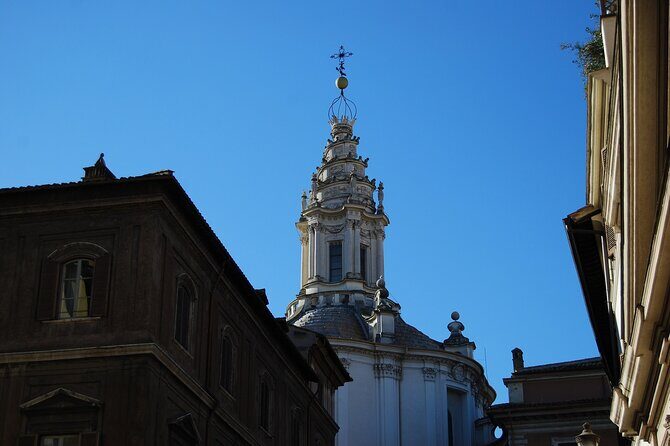
- Stop 3: Chiesa di Sant’Ignazio di Loyola and the Fake Dome Effect
- Stop 4: Basilica di Sant’Andrea della Valle and Its Maderno Dome
- Stop 5: Santa Maria di Loreto and Sangallo’s Brick-and-Travertine Look
- The Coffee or Tea Break: Why It’s More Than a Pause
- What the Guide Quality Can Change (A Realistic Expectation)
- Who This Tour Is Best For
- Should You Book the Churches of Rome Tour?
- FAQ
- How long is the Churches of Rome tour?
- How many people are in the group?
- Where does the tour start and end?
- What’s included in the price?
- Are church admission tickets included?
- Are alcoholic beverages included?
- What happens if a church is closed or inaccessible?
What You’ll Remember From This 6-Person Church Walk
- Tight group size (max 6) so your guide can slow down when you ask questions.
- Baroque interiors, not just facades, with attention to paintings and frescoes you can actually see well.
- Caravaggio and Bernini mentions, plus architectural creativity linked to Rainaldi and Borromini.
- A coffee or tea break in a writer-and-artist kind of setting, perfect for catching your breath.
- Logical cluster of churches around Piazza Navona and central Rome, so you’re not zigzagging endlessly.
Why This Tour Works for First-Time Baroque Fans
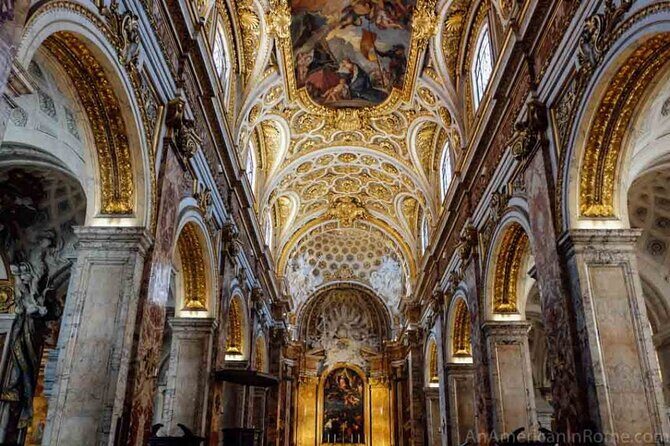
Rome has dozens of churches. The hard part is choosing the ones where the art and design feel connected, not random. This tour takes a “baroque greatest-hits” approach, but it doesn’t try to cram everything into a sprint. You’re walking between five major stops in about 2 hours, so you get time to look up, step inside, and actually take in what makes each church different.
The small-group size matters more than you might think. In a big group, you’re stuck following a pace you can’t adjust. Here, the guide can pause and point out details while the rest of the group stays with you. It also makes questions feel natural, like you’re getting a personal explanation instead of being rushed through a checklist.
You also get a licensed local guide, and from the standout review about Donnatella, you can see what that looks like when it’s done well: professional, friendly, and clearly invested in sharing the story behind what you’re seeing. You’ll still want to plan your expectations. Churches are living places, and access can shift.
You can also read our reviews of more tours and experiences in Rome.
The Price and What It Buys You in Real Terms
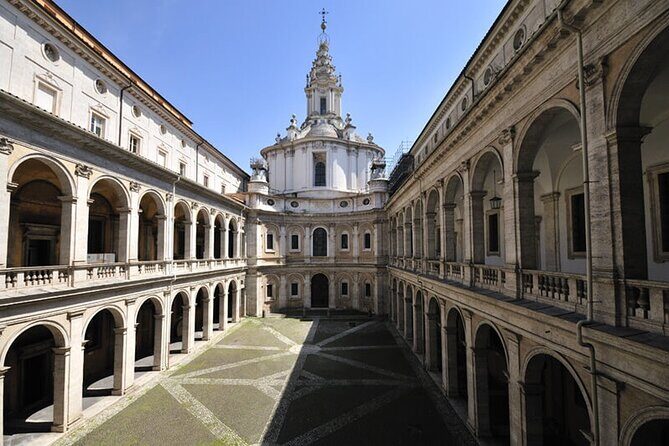
At $230.97 per person, this isn’t an impulse add-on. It’s priced like a guided experience where someone is paying attention to route flow, timing, and inside-art context. For that money, you’re paying for three things that matter in Rome:
- Guiding inside churches where the details can be hard to decode on your own
- Group management in a city where entrances, lines, and closures can change
- A coffee/tea stop that keeps the whole outing from feeling like pure museum mode
The tour also includes a mobile ticket, so you’re not juggling paper confirmations while you’re navigating streets near major landmarks. If you’re the kind of traveler who likes to understand what you’re looking at, the cost can feel fair. If you mostly want to wander solo and only glance at interiors, you may find better value by doing a self-guided church loop.
Quick Logistics: Where You Start and How Long You’ll Be Walking
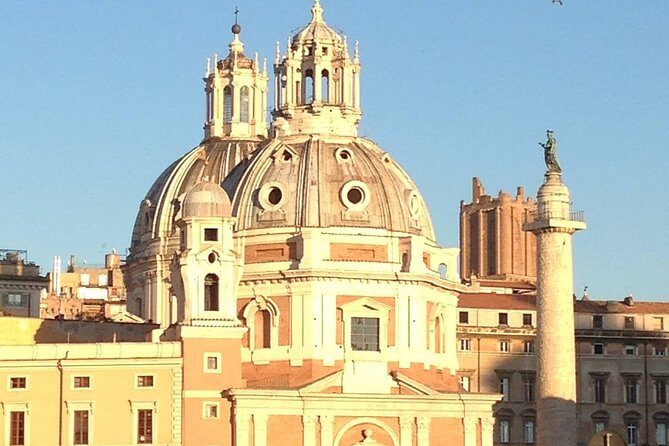
The tour starts at Piazza Venezia and ends at Santa Maria di Loreto (Piazza della Madonna di Loreto, 26). That end point is convenient because it keeps you near central Rome rather than dumping you somewhere far away.
Total time is about 2 hours, and the stops are set to run roughly 25 minutes, 20 minutes, 15 minutes, 15 minutes, and 15 minutes across the five churches. That adds up to a steady but not frantic pace. Still, wear comfortable shoes. Even with shorter time inside, you’re walking between stops and standing to look closely at artwork and ceilings.
Stop 1: Church of St. Louis of the French Near Piazza Navona
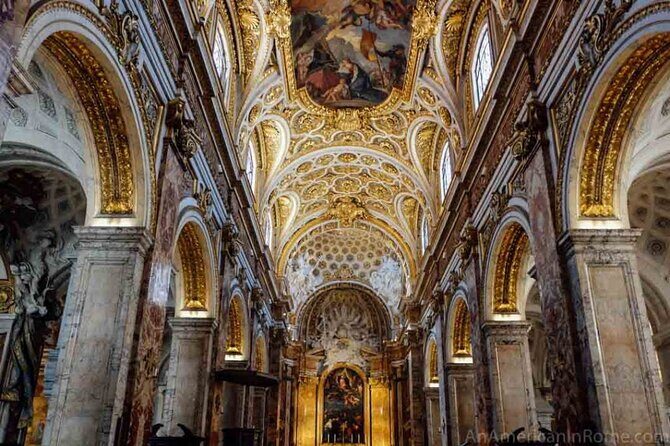
You begin near Piazza Navona with the Church of St. Louis of the French, a Roman Catholic church dedicated to the Virgin Mary, St. Denis the Areopagite, and St. Louis IX, the French king. It serves as a national church for France in Rome, so you’re not just seeing another interior. You’re seeing a place tied to identity and history, in a city where that theme is everywhere.
This stop is a good opener because it sets the tone: this is a tour about baroque-scale ideas, not silent sightseeing. Expect the guide to help you notice how the church’s dedication and symbolism connect to the kinds of art and design choices you’ll see in the next stops.
Time here is about 25 minutes, which is long enough for you to settle in, look around, and get comfortable reading what’s in front of you. If you’re easily overwhelmed in churches, this first stop is also a nice “warm-up” before the tour turns even more art-heavy.
Stop 2: Sant’Agnese in Agone and Piazza Navona’s Big Backdrop
Next is Chiesa di Sant’Agnese in Agone, a 17th-century Baroque church that faces Piazza Navona. The location is more than a view; it adds drama. Sant’Agnese is tied to the story of Saint Agnes’s martyrdom in the ancient Stadium of Domitian, so the church sits in the same kind of historical layering you only get in Rome’s center.
Inside, the focus shifts to what Baroque does best: turning a church into a stage for emotion. You’ll also hear about the Borromini Sacristy, which hosts classical concerts. That’s a great detail to keep in your mind as you look around, because it reminds you that these buildings weren’t designed only for occasional ceremonies. They were meant to be experienced repeatedly, and music is part of that.
You’ll spend about 20 minutes here. That’s enough time to appreciate the interior without feeling like you’re sprinting to the next door. The connection to Piazza Navona also helps you orient yourself while you’re walking—this is one of the reasons the route feels efficient.
Stop 3: Chiesa di Sant’Ignazio di Loyola and the Fake Dome Effect
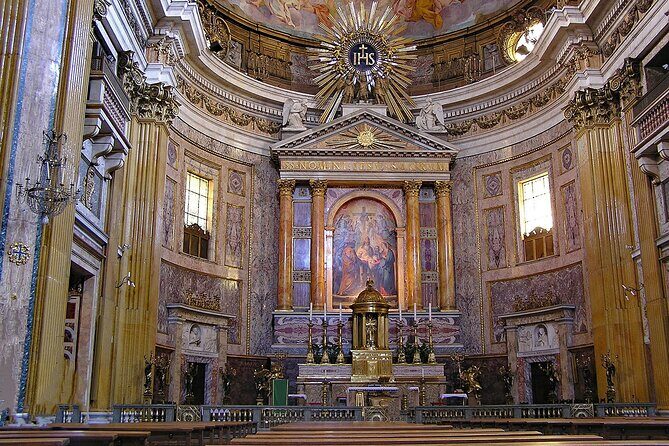
This is one of the tour’s most iconic moments: Chiesa di Sant’Ignazio di Loyola, dedicated to the founder of the Society of Jesus. The headline attraction is Andrea Pozzo’s Fake Dome, a famous illusion built to make space look bigger and more theatrical than it is.
That illusion trick is exactly why guided tours can be worth it. When you’re inside the right viewpoint, the guide helps you understand how the perspective works, so you’re not just seeing a ceiling. You’re seeing a planned visual experience.
Another centerpiece is a large fresco that highlights the Society’s missionary work and global apostolic activities. This isn’t random decoration. It’s part of the church’s mission story, expressed in art on a scale that feels made for awe.
Plan for about 15 minutes here. With that much art power in a compact space, it’s better to look slowly than to chase every detail. If the day is busy, ask your guide where to stand first for the dome effect.
Stop 4: Basilica di Sant’Andrea della Valle and Its Maderno Dome
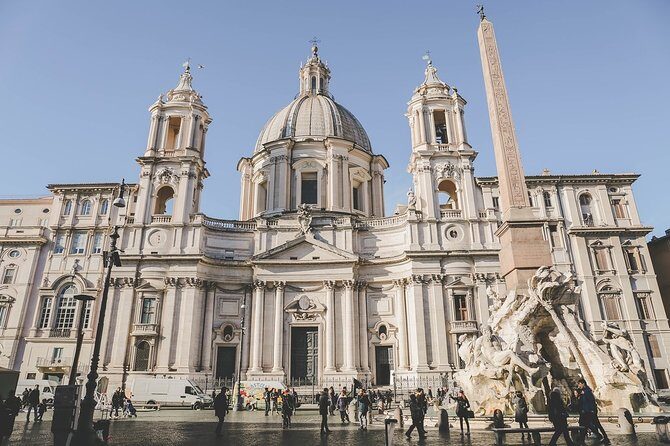
Now you move to Basilica di Sant’Andrea della Valle, built in the 17th century and considered one of Rome’s larger churches. You’ll feel that size in your body when you step in. Big interiors change how sound carries and how you naturally look upward, which is a huge part of why Baroque architecture still works centuries later.
The dome is designed by Carlo Maderno, and that’s the kind of detail a good guide can turn into a “now I get it” moment. The façade is one thing. The interior scale and the domed focal point are another.
This stop also includes notable art, including a fresco by Giovanni Lanfranco and a sculpture by Carlo Rainaldi. Even if you don’t know their names already, your guide can help you connect style and intent—how the art supports the architecture, and how the architecture supports the art.
You get about 15 minutes here. If you tend to spend too long on one spot, this is where you’ll want to watch the clock a bit. The goal is to see it without missing the last stop.
Stop 5: Santa Maria di Loreto and Sangallo’s Brick-and-Travertine Look
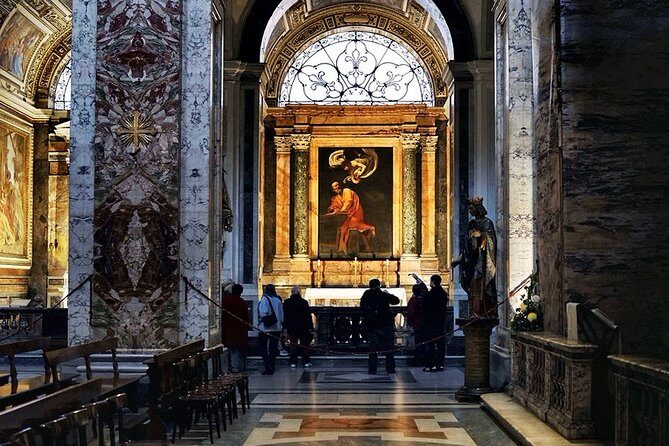
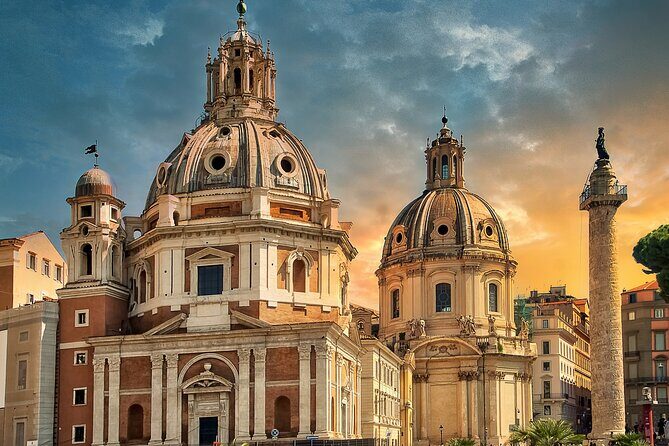
The final church is Chiesa di Santa Maria di Loreto, a 16th-century site connected to Antonio da Sangallo. It’s near Trajan’s Column and close to the Monument to Vittorio Emanuele II, so you’re finishing in a part of Rome where you can easily continue exploring on your own afterward.
What makes this church special from an architectural point of view is the mix of brick and travertine. The style is described as harmonious, with elegant proportions and a simplicity that still feels striking. That contrast is useful after spending time in more dramatic Baroque interiors. It gives you a different angle on Roman church design rather than repeating the same visual language five times.
You’ll spend about 15 minutes at this stop. It’s long enough to notice the building materials and feel the rhythm of the space, but short enough to keep the tour’s 2-hour promise.
The Coffee or Tea Break: Why It’s More Than a Pause
This tour includes coffee and/or tea, and it’s timed as a slow reset. The idea is smart: baroque churches are visually demanding. If you push straight through five interiors without a break, you’ll start noticing less because your brain is overloaded.
You’ll get your drink at a former hangout tied to writers and artists, which adds a small layer of “Rome life” to the experience. Even without going full museum mode, you get a moment that feels more like talking with someone in the city than just moving from one stop to the next.
One review mentioned an issue around the coffee element, so it’s wise to treat the break as part of the schedule, not an optional add-on. If you have dietary needs or strong preferences, plan ahead by ordering something simple and straightforward once you’re there.
What the Guide Quality Can Change (A Realistic Expectation)
This tour leans hard on the guide’s ability to explain what you’re seeing. When the guide is excellent, it turns art history into something you can actually feel. The strongest review singled out Donnatella as the best guide the reviewer had experienced in years: knowledgeable, professional, friendly, and eager to please. That’s the kind of guide who can make a church ceiling feel like a story instead of a ceiling.
There’s also a cautionary note from a lower score experience: the tour guide was hard to understand due to English not being strong, and some churches could not be accessed. I can’t predict which guide you’ll get, but you can manage risk:
- If you need very clear English, consider booking with flexibility so you’re not locked into a bad fit.
- If you prefer a very light walking pace, show up ready. The route is about 2 hours total, but city walking adds up.
- If a church is closed, don’t panic. This tour states that when access is affected, they’ll offer an extended tour in keeping with the advertised total length.
Who This Tour Is Best For
This works best if you fall into one of these buckets:
- You want baroque church art with interpretation, not just photos
- You like small groups and better Q&A time
- You’re curious about famous names like Caravaggio and Bernini and want the guide to connect them to what’s in front of you
- You want a manageable, central-route outing that fits into a busy Rome day
It may be less ideal if you’re looking for a silent, pick-your-own-time experience. Also, if you’re extremely sensitive to language clarity, you’ll want to be cautious, since one past experience wasn’t smooth.
Should You Book the Churches of Rome Tour?
I’d book it if you want a focused baroque walk with a licensed guide, a small group of up to 6, and a built-in break. The stops are concentrated around major central Rome landmarks, and the time plan is tight enough to keep momentum without turning it into a run.
I’d think twice if you’re mainly chasing outdoor views or if you get frustrated when church access changes. Even though the tour is designed to adjust when doors aren’t available, you should still expect that Rome can be unpredictable once you’re on the ground.
FAQ
How long is the Churches of Rome tour?
It’s approximately 2 hours total.
How many people are in the group?
The tour has a maximum of 6 travelers, in a safe and semi-private group.
Where does the tour start and end?
It starts at Piazza Venezia, 00187 Roma RM, Italy and ends at Santa Maria di Loreto, Piazza della Madonna di Loreto, 26, 00187 Roma RM, Italy.
What’s included in the price?
The price includes a licensed professional guide, a coffee and/or tea stop, and the tour ticket as a mobile ticket.
Are church admission tickets included?
Admission tickets are listed as free for the church stops on this tour.
Are alcoholic beverages included?
No. Alcoholic beverages are not included.
What happens if a church is closed or inaccessible?
If access is affected by last-minute closures, they offer an extended tour to keep the experience aligned with the advertised total length.
If you want, tell me your travel dates and what you like most (art, architecture, Baroque illusions, or music connections). I can suggest the best day/time to fit this walk with nearby sights.