REVIEW · ROME
Ticket to Piazza Navona Undergrounds Stadium of Domitian
Book on Viator →Operated by PIAZZA NAVONA UNDERGROUND - STADIO DI DOMIZIANO · Bookable on Viator
Piazza Navona has a secret basement. Going down into the Stadium of Domitian makes the famous piazza feel like a time machine, not just a postcard stop. You’ll descend about 5 meters and look at preserved ruins of a Roman masonry stadium, right under today’s streets, with UNESCO-listed remains and lots of interpretive media.
What I really love is the easy format: a handheld audio guide that lets you wander at your own pace, plus a kid-friendly audio option (age 6 and up). I also like that it’s well put together without feeling rushed, so it works as a quick culture break when Rome feels like it’s running you over.
One thing to keep in mind: this is a smaller site than Rome’s headline monuments. If you’re expecting an all-day spectacle, you might feel it’s done fast.
In This Review
- Key Highlights to Know Before You Go
- Piazza Navona’s Underground: Why This Stadium Makes Sense
- Going 5 Meters Down: What You’ll See Under the Piazza
- Stadium of Domiziano Ruins: How the Audio Guide Makes It Click
- Media, Photos, and the On-Site Library (Plus Optional Paid Extras)
- Your Time Plan: How Long 40 to 50 Minutes Really Feels
- Getting There: Via di Tor Sanguigna and Finding the Entrance
- Who Should Book This Underground Stadium Visit
- Price and Value: Why $12.10 Works So Well
- Should You Book the Piazza Navona Underground Stadium of Domitian?
- FAQ
- How long does the Piazza Navona Underground Stadium of Domitian visit take?
- What does the ticket price include?
- Is the audio guide available in English?
- Is the experience self-paced?
- Where do I meet for the tour?
- When is it open?
- Is a mobile ticket used?
- Is it suitable for children?
- Are service animals allowed?
- Can I cancel and get a refund?
Key Highlights to Know Before You Go

- Descend 5 meters underground to see what sits beneath Piazza Navona’s surface
- Stadio di Domiziano ruins of an early Roman masonry stadium (the first and only one of its kind in Roman history)
- Self-paced audio guide in English, plus an audio track for children (6+)
- Unpublished photo displays that help you picture the site beyond the exposed ruins
- On-site library with art/history books, antique prints, postcards, and DVDs
- Optional paid extras like VR/3D-style experiences may add value if you like visual time travel
Piazza Navona’s Underground: Why This Stadium Makes Sense
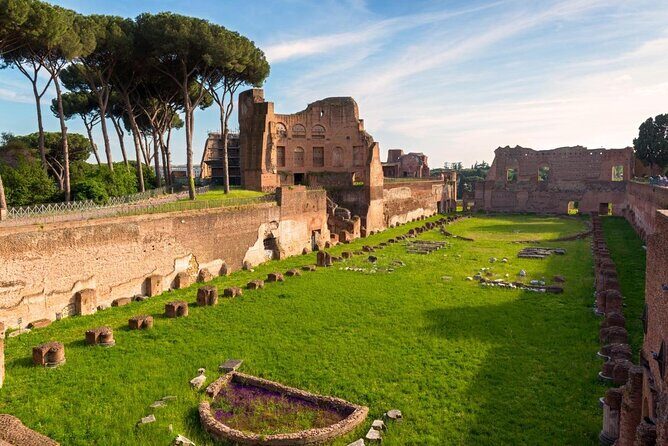
The surface of Piazza Navona is all graceful curves, fountains, and motion. But the real wow factor here is what you find below it: the physical proof that Rome layers its life over older life. This underground space opened to the public in 2014, which means it feels like a modern way to experience an ancient site.
The Stadium of Domitian matters because it’s not a generic “some ruins are down there” situation. The exposed masonry remains let you study a stadium layout that served real sports and public events during the Roman Empire. You’re not just reading about the past—you’re standing over it.
And because you’re underground, it’s also a smart break on hot days. Even if Rome is loud and bright above, you get a quieter, cooler experience while you listen and look.
You can also read our reviews of more tours and experiences in Rome



Going 5 Meters Down: What You’ll See Under the Piazza
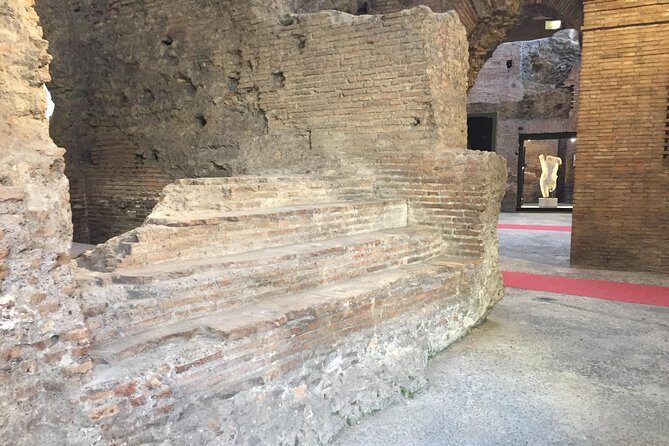
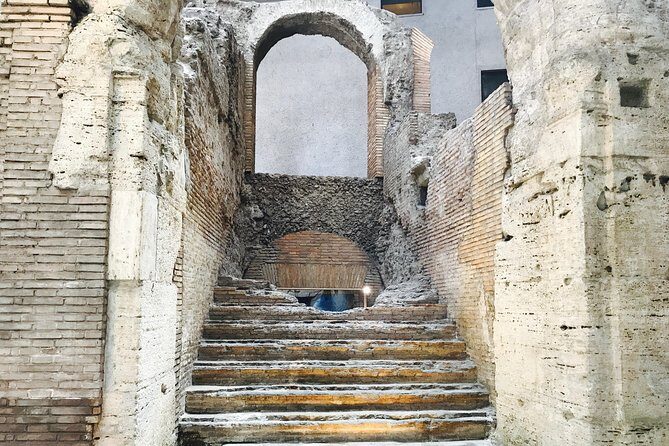
Your visit starts at the Stadio di Domiziano – Navona Square Underground area. From there, you’ll head down into excavations roughly 5 meters beneath street level. That vertical drop changes everything. It’s one thing to see ruins behind glass; it’s another to feel the scale of what’s preserved inside the excavation walls.
Inside, you’ll encounter the ancient masonry stadium remains—plus supporting interpretive displays. Expect ruins that are fragmentary in the way many archaeological sites are, but the site helps you build the picture. One theme that comes up again and again is that you have to use your imagination to understand how large the stadium was in its full ancient form.
You also get helpful visual context. The space includes media such as videos and other interpretive materials, and some visitors highlight a 3D-style video that shows how the stadium changed over time. That kind of guided visual is especially useful when the exposed structures are smaller than what your mind assumes.
Stadium of Domiziano Ruins: How the Audio Guide Makes It Click
This visit is built around an audio guide that helps you connect dots as you move. Instead of a single “follow the group” model, you explore at your own speed. That matters because your attention span in Rome is always in competition with gelato, crowds, and your feet.
With the audio system, you’ll learn what you’re looking at and why it mattered. The setup helps you understand the relationship between Stadium / Piazza Navona / ancient Roman sports—so you don’t just pass through rooms of stone and brick.
A big plus: you’re given a handheld listening device. Reviews consistently praise how clear and thorough the audio is, and how easy it is to understand. For me, that’s what turns this from a quick stop into a real learning experience—especially if it’s your first time in Rome or your first time seeing underground archaeology.
Practical tip: audio can be very effective, but it’s also easy to get “lectured at” if you’re not paying attention. I’d treat it like museum headphones: stop walking when the audio focuses on a particular feature, then move on when you’re ready.
Media, Photos, and the On-Site Library (Plus Optional Paid Extras)
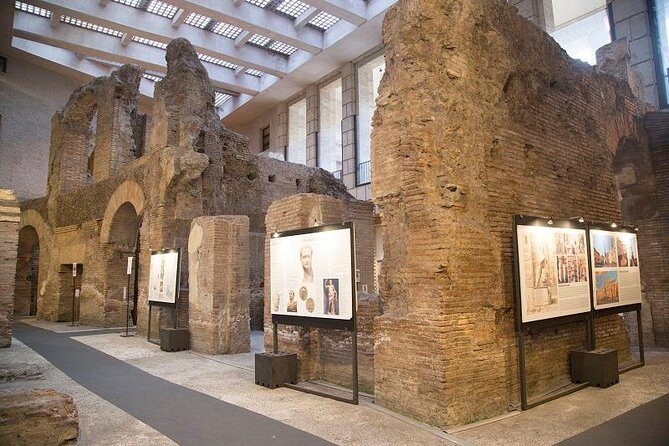
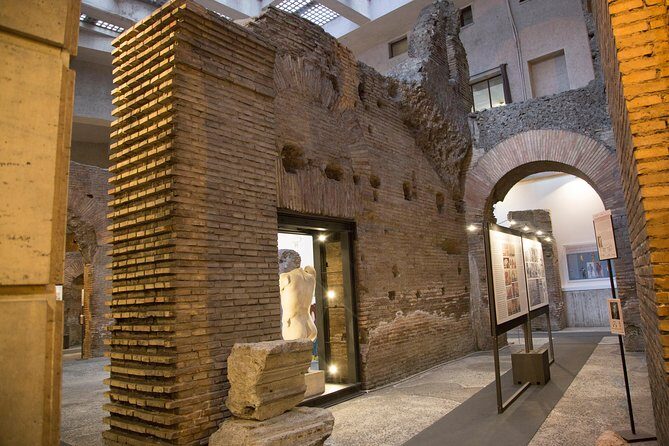
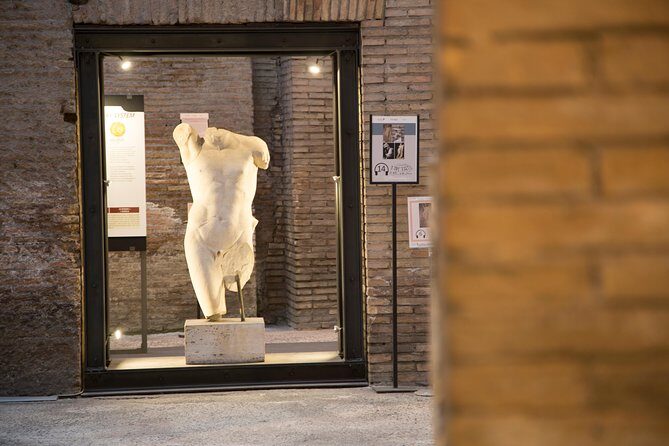
Beyond the ruins, the site gives you extra ways to understand the story. One highlight is unpublished photos, which can make a difference because they show the site as it was (or how it has been studied) rather than only what’s exposed today. If you like archaeology and documentation, this is where you’ll feel the value.
There’s also an on-site library area. The information provided for the space says you’ll find art and history books, antique prints, postcards, gadgets, souvenirs related to artistic crafts, multimedia DVDs, and a section dedicated to children. Even if you don’t read much, browsing for a few minutes helps you leave with a fuller picture of the site.
Now, optional extras: some visitors mention additional paid experiences like VR or an AI-style add-on. In one case, a visitor said an extra experience cost around 4€. The key practical point is simple: if you like visual reconstructions, these may be worth it. If you’re happy with the audio + exhibits, you can skip the add-ons and still feel you got your money’s worth.
Your Time Plan: How Long 40 to 50 Minutes Really Feels
The scheduled duration is about 40 to 50 minutes. In practice, the experience usually feels like a short, manageable loop—especially because it’s designed as a self-guided circuit. Multiple visitors describe it as a quick break rather than a long slog, which I agree with. It’s perfect when you want something meaningful without turning it into a half-day project.
Since the site is underground and smaller than Rome’s top monuments, it doesn’t demand endurance. Instead, it rewards attention. If you take your time with the audio at key stops, you’ll feel like you got more out of it.
Also helpful: the site is described as not crowded for many visitors. With a maximum of 150 travelers, the group size is limited compared to big-name attractions, which usually means the underground rooms don’t feel chaotic.






Getting There: Via di Tor Sanguigna and Finding the Entrance
Meeting point is Via di Tor Sanguigna, 3, 00186 Roma. That address matters because one of the most common practical complaints is difficulty finding the entrance. Some people mention it can be hard to spot and that signage isn’t always obvious from the surrounding piazza area.
So here’s your best approach: arrive a few minutes early and don’t rely on vague directions. Use the exact address in your map app and look for the specific doorway connected with the Piazza Navona Underground site. Once you’re oriented, it’s easy enough—just don’t rush in and assume it will be screamingly visible.
Good walking shoes are strongly recommended. You’re going underground, and even if the floors aren’t extreme, Rome’s stone streets and interior steps can add up.
Who Should Book This Underground Stadium Visit
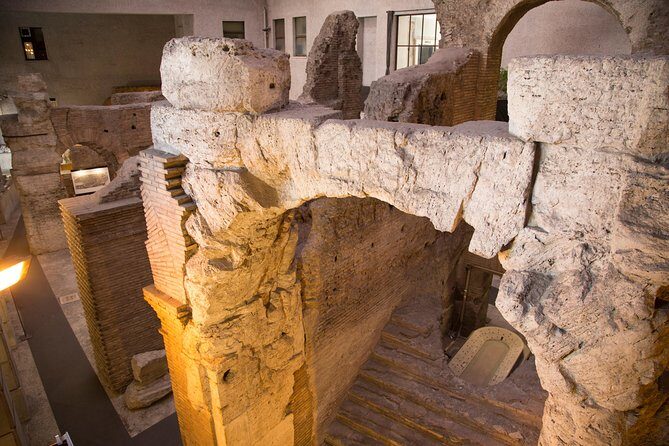
This is a strong option if you want Roman history that feels human-scale. The ruins aren’t “massive wall-to-wall Colosseum drama,” but they’re fascinating because they show a different side of the city—how public life sat under today’s landmarks.
It’s also a good fit for families with kids age 6 and up because there’s an audio guide for children. I like experiences that don’t try to entertain kids by dumbing everything down. An age-appropriate audio track usually works better than forced silence or a long adult narration.
It’s also worth your time if you’ve been to Rome a few times. Several visitors say this is their first visit to the underground stadium, even after multiple Rome trips. That’s a good sign: it’s not just repeating the standard highlight circuit.
And it’s ideal if you need a break from heat. Underground + a short time commitment makes it a comfortable slot in your day.
Price and Value: Why $12.10 Works So Well
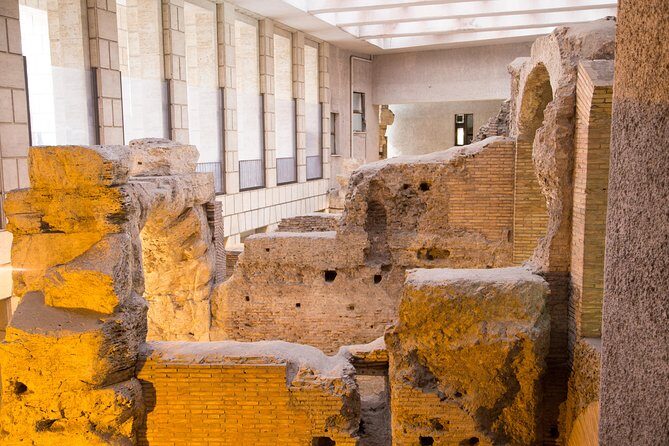
At $12.10 per person, this is a “strong value for what you get” type of ticket. You’re paying for:
- Access to an underground UNESCO-listed archaeological site
- A self-paced English audio guide (plus a kids version)
- Built-in interpretive media, including photos and videos
This isn’t just another “look at the ruins and go” stop. The audio and media help you understand the stadium and its role in ancient sports, which makes the ticket feel less like a fee and more like entry to an exhibit.
Also, because the visit is relatively short, you’re not spending hours coordinating your day. That makes it easier to fit between bigger attractions without burning your schedule.
One more value factor: it’s calmer than many top sights. People consistently mention it’s easy and not crowded, which matters in Rome because “worth it” often depends on whether you can actually hear and see what you paid for.
Should You Book the Piazza Navona Underground Stadium of Domitian?
Yes, I’d book it if you like archaeological sites with context, audio-guided interpretation, and a cooler indoor break. This is the kind of stop that turns Piazza Navona from a fountain-and-photo location into a layered history lesson you can physically walk through.
You should think twice if you want a big, visually overwhelming monument experience. This is smaller, and your enjoyment depends on whether you’re the type of person who likes studying details, listening closely, and mentally reconstructing scale.
If you’re on the fence, here’s my simple call: if you have an extra hour in your day and you’re curious about what Rome hides underground, this is an easy yes.
FAQ
How long does the Piazza Navona Underground Stadium of Domitian visit take?
It lasts about 40 to 50 minutes.
What does the ticket price include?
The ticket includes an audio guide, an audio guide for children (6 years old and above), and taxes.
Is the audio guide available in English?
Yes, the experience is offered in English.
Is the experience self-paced?
Yes. The audio guide lets you explore at your own pace.
Where do I meet for the tour?
The meeting point is Via di Tor Sanguigna, 3, 00186 Roma RM, Italy.
When is it open?
It’s listed as open Monday through Sunday from 10:00 AM to 6:00 PM.
Is a mobile ticket used?
Yes, it’s a mobile ticket.
Is it suitable for children?
There is an audio guide for children aged 6 and above, and most travelers can participate.
Are service animals allowed?
Yes, service animals are allowed.
Can I cancel and get a refund?
Yes. There’s free cancellation up to 24 hours in advance for a full refund.