Rome looks better from a golf cart. This 2.5-hour ride is built for smart sightseeing: you get close to major monuments, you don’t spend your day dodging traffic on foot, and the guide keeps the story line moving. Plus, the vehicle’s wraparound views make it easy to frame classic Rome shots without playing photo Tetris.
Two things I especially like: the tour keeps the group to a maximum of seven, so it feels more personal than big buses, and it’s very photo-forward. You’ll hit icons like the Colosseum and Trevi Fountain, but you’ll also get quick “how to look” tips—so you don’t just point your camera, you actually capture the angle.
One thing to consider: this is mainly an external, drive-by experience. You won’t go inside the Pantheon, and some stops are brief (and the Trevi photo moment depends on traffic). If you want long, in-depth time inside churches and ruins, you’ll need a separate ticketed visit.
In This Review
- Key Highlights You’ll Feel Immediately
- Why Rome by Golf Cart Actually Makes Sense
- Small-Group Comfort: The Max-7 Difference
- Getting On and Off: Largo Gaetana Agnesi to Campo de’ Fiori
- Stop 1: Colosseum Views and the Guide Story You Don’t Want to Miss
- The Ride Through Early Rome: Birthplace Views and Emperor-Era Context
- Circo Massimo: Chariot-Racing Imagination + A Fun Photo Moment
- The Roman Theater Close-Up: The Window Mystery
- Pantheon From the Outside: Oculus Views and a Video That Explains the Magic
- Trevi Fountain: The Wish Tradition and the Best-Photo Timing
- Spanish Steps: People-Watching Plus Hollywood-and-Rome Stories
- Piazza Navona: Bernini-Style Fountains, Street Energy, and Dinner Tips
- Panoramic Garden Finish: A Calm Close Above the City
- Guide Talent: Why These Stories Feel Different
- Price and Value: Is $163.33 Worth It?
- Who This Golf Cart Tour Suits Best
- Should You Book This Golf Cart Tour of Rome?
- FAQ
- How long is the golf cart tour of Rome?
- What’s the price per person?
- Is this tour in English?
- How many people are in a group?
- Will I go inside the Pantheon?
- Are admission tickets included?
- Is bottled water included?
Key Highlights You’ll Feel Immediately
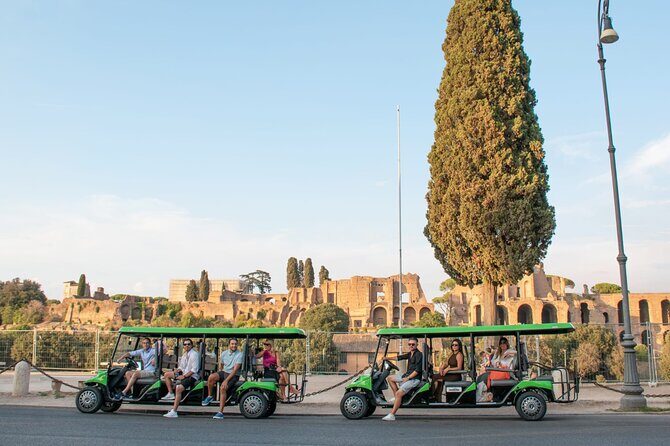
- Max 7 travelers keeps the vibe calm and the guide’s attention on you
- Wraparound golf cart views make monument photos simpler and more fun
- Guide storytelling with first-hand Colosseum roots gives context fast
- Short, efficient photo stops help you see more without burning the day
- Trevi and other landmarks outside-only keeps the pace moving
- Panoramic garden finish gives you a quieter ending over the rooftops
Why Rome by Golf Cart Actually Makes Sense
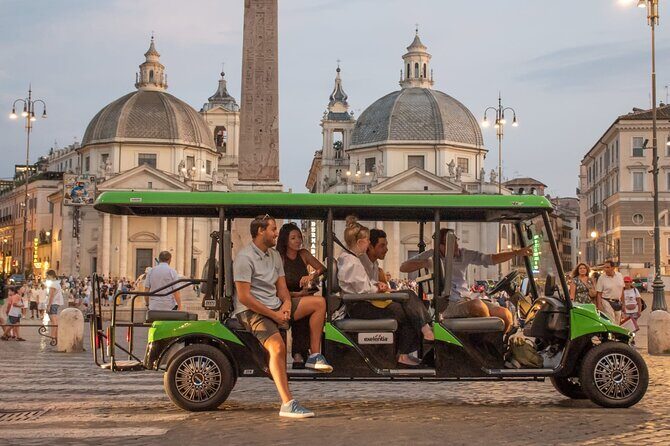
Rome can be great, but it can also be exhausting. Streets are busy, crosswalks appear when they feel like it, and the heat can turn a walking day into a leg day you didn’t train for. This golf cart format is built to solve that problem.
You sit up and out, so you naturally catch angles you’d miss on sidewalks. The cart also puts you closer to the action than you’d expect from a tour van, which matters for photos. And since stops are designed around brief pauses, you’re not stuck waiting long stretches for everyone to catch up.
The other big win is timing. This tour offers choice of departure times, which helps you plan around your energy, your other reservations, or the time of day you want the city light.
You can also read our reviews of more tours and experiences in Rome.



Small-Group Comfort: The Max-7 Difference
Big tours work when you want a checklist. They struggle when you want clear explanations and room to ask questions. With this one, the numbers are capped at seven, so the guide can keep the group together without rushing you like a herd.
That small size also helps with practical moments. You’re more likely to get immediate guidance for where to stand for the best photo, and the guide can adjust pacing if your group wants a slower look or a quicker snapshot.
In the same spirit, the guide style matters. You’ll see names like Vladimir, Vitaliy, Federico/Frederico, and Antonio associated with this experience, and the common theme is storytelling plus a strong sense of hosting—keeping the tour fun without losing the historical thread.
Getting On and Off: Largo Gaetana Agnesi to Campo de’ Fiori
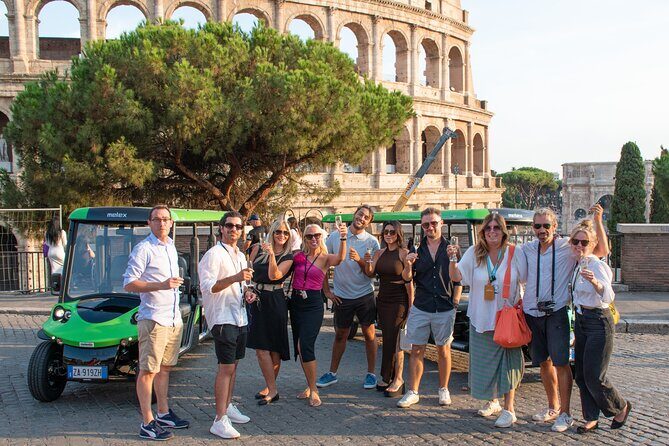
Logistics matter in Rome. This tour starts at Largo Gaetana Agnesi and ends at Piazza Campo de’ Fiori. That end location is handy if you want to keep exploring on your own afterward, grab dinner, or meet someone in the neighborhood.
The meeting point is in a city where not every GPS pin is perfectly helpful, so I’d plan to arrive early and confirm what you see matches the start area. A mobile ticket is included, which helps you avoid paper-fumbles in the middle of busy streets.
Also, you’ll have bottled water with you, which is a simple inclusion that feels great once the ride starts and the sun does its thing.
Stop 1: Colosseum Views and the Guide Story You Don’t Want to Miss
The tour kicks off with an exterior view of the Colosseum. This is the kind of first stop where you immediately know you’re in the right place—towering stone, iconic shape, and that instant Rome feeling.
What makes this stop more than a quick drive-by is the guide background. The guides are described as having started their guiding careers at the Colosseum, so you’ll hear details that feel grounded, not copied from a standard script. Expect a quick story about gladiators and the arena, plus time to snap a memorable photo.
A practical note: you won’t be going inside here. The value is orientation—getting your bearings and learning what you’re looking at before you decide what to do next in your trip.
The Ride Through Early Rome: Birthplace Views and Emperor-Era Context
After the Colosseum, you ride past the birthplace of Rome area. You get a panoramic look at the city, a short pause to capture scenery, and a sense of how the early Roman world grew into the empire.
This stretch works because the guide connects the geography to the people and power structures. You’re not just seeing big names—you’re understanding why those locations mattered. That helps later if you wander on your own and start noticing patterns.
The stop time is brief, so come with a “fast camera and attentive ears” mindset. If you enjoy learning how places connect, you’ll get more out of these minutes than you might expect.



Circo Massimo: Chariot-Racing Imagination + A Fun Photo Moment
Next up is Circo Massimo, the ancient chariot racing track. This is one of those places where your brain needs a little help to visualize the action, and that’s exactly where the guide earns their keep.
You’ll drive along the racing track and get a chance to spot where elements like the finish line once stood. It’s quick, but it’s the right kind of quick—short enough to keep energy up, long enough to make you picture the crowds and the chaos.
There’s also a fun, hands-on angle connected to fountains. The tour includes a bit of instruction on how to use a fountain like a true Roman, plus a photo stop so you can leave with something playful, not only historical.
The Roman Theater Close-Up: The Window Mystery
You’ll then admire a historic Roman theater up close. You’ll pause for photos in front of impressive arches, with the guide explaining the architecture and the kind of performances this space hosted.
One question gets called out: why the building has windows. That’s the kind of detail that turns a photo moment into a memory. It’s also a reminder that Rome isn’t just monuments—it’s design choices meant for real life.
Like the other stops, you’re not getting hours here. You’re getting an efficient “see it, understand it, photograph it” cycle. If you love architecture explanations, this one tends to land well.
Pantheon From the Outside: Oculus Views and a Video That Explains the Magic
At the Pantheon, you’ll see one of Rome’s best-preserved ancient buildings. The highlight is the exterior look plus a moment for the famous oculus in your photos.
Important tradeoff: you won’t have time to go inside. Instead, the guide provides a short private video explanation about why it reportedly never rains inside—tied to a clever airflow and drainage effect the Romans were said to master.
Even without entering, this stop is useful. It gives you a clear visual landmark and an explanation you can carry with you. Later, if you do a deeper Pantheon visit on your own time, you’ll notice more.
Trevi Fountain: The Wish Tradition and the Best-Photo Timing
Then you roll into Trevi Fountain. This is your moment for the classic tradition: you make a wish as you toss a coin into the water, and you get time for photos.
The key detail here is photography. The guide has a sharp eye for shooting angles, and you may be guided to get more distinctive shots than the standard postcard view. You’ll also get enough time for the moment itself rather than being herded through.
One consideration: the tour notes that the Trevi photo success depends on traffic. Rome traffic can be unpredictable, so if you’re extremely photo-obsessed, keep your expectations flexible. The best plan is to treat this stop as your “capture the fountain” moment, not your “perfect conditions for a full photo session” moment.
Spanish Steps: People-Watching Plus Hollywood-and-Rome Stories
Next come the Spanish Steps. You’ll climb a few steps or pause to admire the surrounding square, with time for a group photo.
This stop is more social than the ancient sites. The guide shares stories that connect Rome to popular culture, including references to Hollywood films, plus Roman history and local life. It helps you see why the Spanish Steps are used as a stage for so many scenes—real crowds, real energy, and a perfect view layout for wandering eyes.
If you’re traveling with friends who like photos and fun facts more than strict timelines, this stop usually hits the sweet spot.
Piazza Navona: Bernini-Style Fountains, Street Energy, and Dinner Tips
From there, you move to Piazza Navona, a square known for its fountains and lively street atmosphere. You’ll get close to Bernini’s fountains, spot recognizable river gods, and enjoy the energy of street performers.
This is also where you can steer your evening. The guide can recommend a spot for an authentic Italian lunch or dinner right in the heart of the square. That’s a practical bonus because after 2.5 hours of moving, you don’t want to guess blindly.
This stop works well because it’s the kind of Rome experience you feel in your body. You’re standing in the middle of it, not parked at the edge. It’s a nice shift from ancient ruins back to modern street life.
Panoramic Garden Finish: A Calm Close Above the City
The tour ends at a peaceful panoramic garden with views over Rome. After several landmarks in motion, this last stop feels like a reset. You can take final photos, breathe, and let the city sink in without constant crosswalk anxiety.
This kind of ending matters. It turns the tour from a rushed checklist into a coherent experience—ancient power to modern piazzas to quiet rooftops.
Guide Talent: Why These Stories Feel Different
The standout theme across the experience is guide performance. Guides are credited with being professional, friendly, and full of smart details—and they’re also praised for being good at hosting.
A few specific patterns show up in the kind of service you’ll likely enjoy:
- You get nifty back stories and tidbits tied to each stop, not random facts
- You get help with what to look for in photos
- The guide can often adapt the pace to what your group wants to prioritize
- Practical touches like water are included, and guides have been praised for helping with bathroom access when needed
That last part is underrated. Rome is full of beautiful architecture and zero signage that helps you when you’re looking for a bathroom. If your guide is already aware of where to direct people, it can save your day.
Price and Value: Is $163.33 Worth It?
At $163.33 per person for about 2 hours 30 minutes, the question is value per minute. This tour is not trying to replace a full museum day or a day of deep archaeology.
Instead, you’re paying for:
- A small-group ride (max seven)
- Transportation without the legwork
- Multiple major monuments handled in one outing
- A guide who provides context and photo help
- Bottled water included
If you only have a short window in Rome, or if you want an orientation tour on your first travel day, this format can be a smart use of time. It’s also good if you’re traveling as a family or with adults who don’t want to spend the day walking in heat and crowds.
If your budget is tight, you could do the same sights at your own pace with transit and taxis. But you’d trade away the smooth routing, the narrative thread, and the fast photo coaching that helps you get a stronger set of images in less time.
Who This Golf Cart Tour Suits Best
This tour is a strong match if you:
- Want a Rome overview with minimal walking
- Care about photos and want help positioning for better shots
- Like history explained in clear, story-driven chunks
- Are short on time and want major landmarks without a multi-day plan
It also fits well for people who prefer comfort and efficiency. The golf cart is a real advantage when your legs are tired or the day is hot.
Should You Book This Golf Cart Tour of Rome?
Yes, if your goal is to see the big stuff fast, keep it comfortable, and learn what you’re looking at. The small group size, the close-up photo opportunities, and the guide’s storytelling style are the main reasons this works.
Hold off or pair it with other plans if you want long interior visits and in-depth time inside major sites. This is mainly an exterior experience with quick pauses—so it’s best as your “get your bearings and build your itinerary” outing, not your only Rome day.
FAQ
How long is the golf cart tour of Rome?
It’s about 2 hours 30 minutes (approx.).
What’s the price per person?
The price listed is $163.33 per person.
Is this tour in English?
Yes, it’s offered in English.
How many people are in a group?
The tour has a maximum of 7 travelers.
Will I go inside the Pantheon?
No. The tour notes you won’t have time to go inside the Pantheon; instead, the guide shares a short video explanation.
Are admission tickets included?
The itinerary notes Admission Ticket Free for the listed stops, and the landmarks are described as external visits including the Colosseum, Spanish Steps, and Trevi Fountain.
Is bottled water included?
Yes. Bottled water is included, and tips are not included.