REVIEW · ROME
The last day of Julius Caesar: from the glory to the Ides of March
Book on Viator →Operated by Maria Tours · Bookable on Viator
The Ides of March walk feels uncomfortably close. This private route traces Julius Caesar’s last day across the exact political and sacred zones tied to the 15th of March story—so you don’t just see ruins, you follow a timeline in stone and street corners. It’s built for people who like cause-and-effect: ambition, power, fear, and the way one day can rewrite a century.
I particularly like the focus on the key places in 44 BC rather than a generic highlights reel. You also get admission access to Palatine Hill and the Roman Forum, which matters because those are the core “how did Rome work?” areas for Caesar’s world.
One consideration: the stop times are short (roughly 10–20 minutes each), so you’ll need to be ready to listen, take notes, and accept that you can’t fully wander every corner solo.
In This Review
- Key takeaways before you go
- A Rome walk that turns dates into real places
- Price and what you actually get for $218.79
- Start at Via di S. Gregorio and settle into Palatine Hill
- Foro Romano and Domus Publica: tracing the walk Caesar is tied to
- Tempio del Divo Giulio and Curia Julia: the Senate’s seat and its repairs
- Forum di Cesare and Largo Argentina: power built, power cut
- Why the private guide (and guide personality) matters
- Timing, pacing, and what to watch for at each stop
- Is it worth it for you? Who this tour fits best
- Should you book The last day of Julius Caesar?
- FAQ
- How long is the tour?
- Is this tour private?
- Where does the tour start and end?
- What sites are included during the walk?
- Are admission tickets included?
- What is not included?
- Can I choose between morning and afternoon?
- How far in advance do people typically book?
- Is it refundable?
- Is it accessible for most people?
Key takeaways before you go
- Private pacing: you and your group move at a guide-led tempo instead of getting swept along with crowds.
- Tickets included for Palatine Hill and the Roman Forum: you’re not paying extra just to step into the main stages.
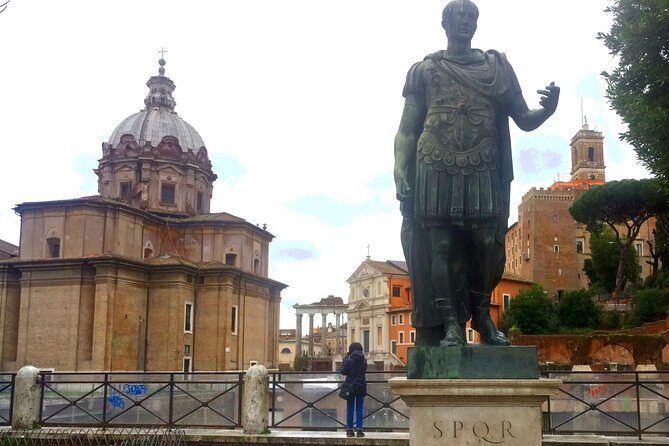
- A real route, not random stops: the walk connects Caesar’s public life to the place where he’s believed to have been stabbed.
- Politics meets religion: you’ll see Caesar’s legacy both in buildings and in how Rome re-framed him after death.
- Guide storytelling power: the tour is praised for guides who explain history with clear consequences—good and bad.
A Rome walk that turns dates into real places
This is the kind of tour where the calendar finally has weight. You start in one of Rome’s most prestigious hill neighborhoods, then you move into the heart of civic life, and you end in the area that’s associated with the assassination site. The big win is that you can feel the shift from domestic life and building projects to Senate power struggles—without having to piece the story together yourself.
The day the Romans call the Ides of March isn’t only a dramatic moment. It’s the end of a long arc: Julius Caesar rising, Rome reacting, and institutions trying to preserve control while their own structures are in flux. That’s why the stops matter. Each one is tied to a specific role Caesar played—citizen, leader, lawmaker, and then, after death, a figure Rome turns into something almost divine.
Also, this tour is private. That sounds like marketing talk until you feel the difference: questions land at the right time, and you’re not stuck listening to explanations someone else needed 30 minutes ago. In other words, it’s easier to keep the thread of the story.
You can also read our reviews of more tours and experiences in Rome.


Price and what you actually get for $218.79
At $218.79 per person for an approximately 2 hours 30 minutes private walk, this isn’t a budget “quick Rome fix.” But it is value-forward if you care about interpretation and access.
Here’s where the price tends to make sense:
- Admission is included for Palatine Hill and the Roman Forum. Those sites can add cost on their own, and they’re the backbone of Caesar’s Rome.
- The tour is private, and that usually means you pay for a guide who can tailor the pace to your questions.
- There are group discounts, which is a real factor if you’re traveling with friends or family.
What’s not included is also part of the value math: there’s no Colosseum visit. That’s fine if you want a focused Caesar story, but it means you’ll need a different plan if Colosseum is your must-see.
Bottom line: if you’re the type who wants a guided storyline through the political core of ancient Rome, the ticket price feels more justified. If you only want broad “top sights,” you might find it pricier than you need.
Start at Via di S. Gregorio and settle into Palatine Hill
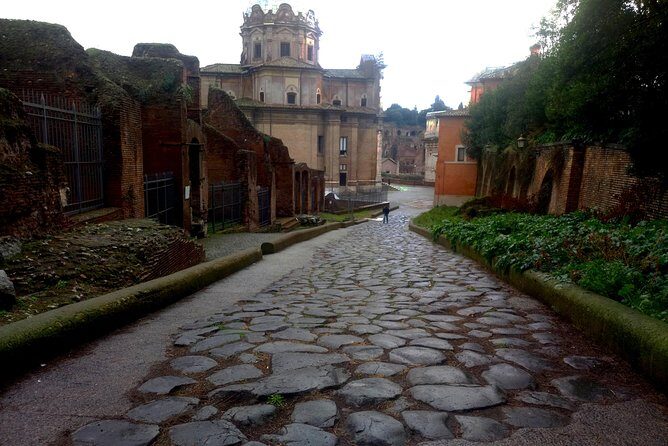
The tour meets at Via di S. Gregorio, 30 and later finishes near Largo di Torre Argentina. That layout is convenient because it keeps the day moving through the center of ancient Rome rather than looping back and forth.
The first stop is Palatine Hill, about 20 minutes with your included access. Palatine was a neighborhood of status—noble residences and the kind of addresses where private dinners can carry public consequences. This tour uses Palatine for a specific reason: it sets the stage for the day before the assassination, when Caesar was having his last dinner with friends.
What I like about this approach is that it prevents a common problem in “big historical moment” tours. Too often, everything begins at the explosion. Here, you start earlier, when the cast of characters is still living normal-day life—so the later political violence hits harder.
Practical note: Palatine Hill can involve steps and uneven ground. Wear shoes that can handle Roman stone and don’t plan on doing this in fragile footwear.
Foro Romano and Domus Publica: tracing the walk Caesar is tied to
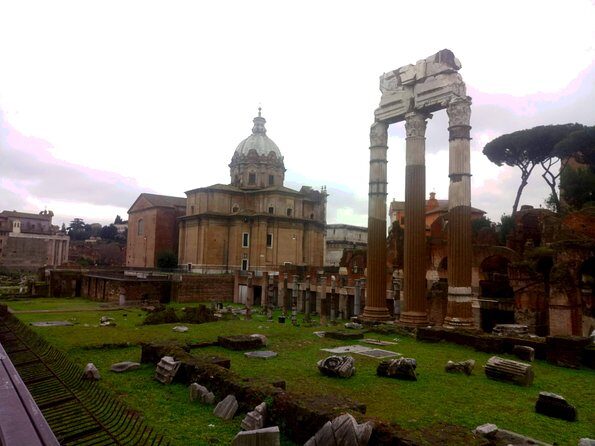
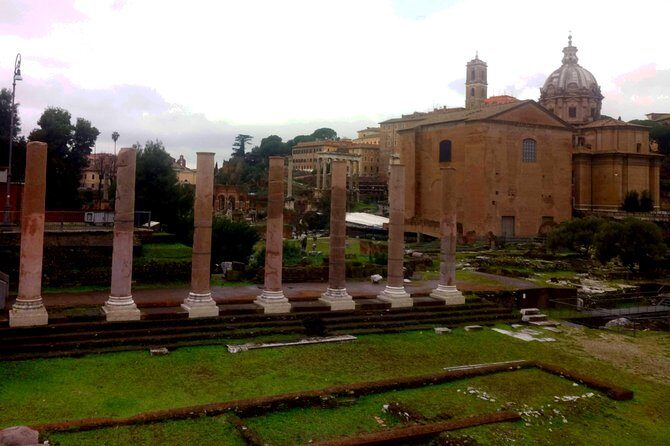
Next you head to the Roman Forum area for another 20 minutes. This stop is where the tour shifts from “who lived here” to “how the city ran.” With your guide, you retrace the route associated with Caesar on March 15—starting at his house presence in the Forum world (referred to here as Domus Publica in the Roman Forum) and moving toward largo Argentina, which is linked to the assassination area.
Even if you’ve visited the Forum before, a guided route helps you connect spaces that otherwise feel like separate ruins. The Roman Forum is huge on archaeology and big on ambiguity. A good guide turns it into a map with a story arc, including why certain buildings matter to decision-making and how people moved through power zones.
A useful way to think about this stop: it’s your “spine” segment. The tour keeps pointing back to the idea of movement—Caesar arriving, the Senate’s tensions, and the area where everything comes to a breaking point.
The included access matters here too. You’re not just standing outside looking in. You’re in the Forum spaces where the timeline makes physical sense.
Tempio del Divo Giulio and Curia Julia: the Senate’s seat and its repairs
After the Forum, the tour moves to two places that represent two sides of Roman authority: mythmaking and governance.
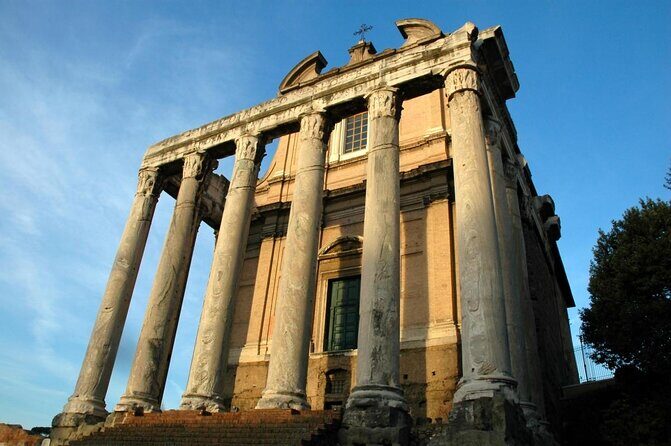
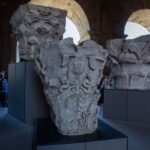
First comes Tempio del Divo Giulio for about 10 minutes. This is the Temple dedicated to Julius Caesar, and it’s tied to what happened after his death—Caesar was deified. That detail is more than a fun fact. It shows how Rome processed trauma. When you can’t reverse the event, you can rewrite the meaning: turn a man into an institution, and an institution into a kind of permanent order.
Then you visit Curia Julia for about 10 minutes. This is presented as the Senate house, and the story here connects directly to the assassination day. The Curia Julia was under restoration by Caesar’s will, and it was replaced by a secondary Senate seat near the Pompey theatre while work continued.
That restoration detail helps you understand the tension of the moment. The Senate wasn’t just dealing with politics; it was operating around a changing physical setting. Institutions don’t like change, especially when change already signals that someone new is gaining influence.
If you like historical consequences, these two stops are where you’ll feel them most clearly: you see Caesar’s death, then the afterlife of his image, then the political system adjusting in real time.
Forum di Cesare and Largo Argentina: power built, power cut
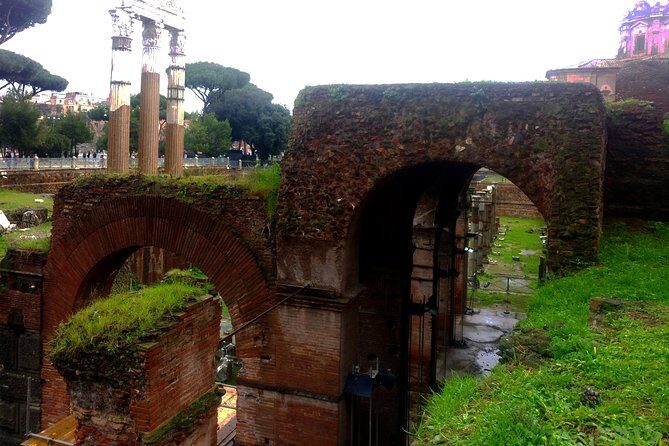
The tour continues with Foro di Cesare (the Caesar Forum) for about 15 minutes. This forum is described as the first of the Imperial Fora, built to extend the former Roman Forum area while also celebrating Caesar’s glory. In other words, you’re looking at propaganda with foundations.
This stop is important because it shows you what Caesar was doing when he was alive. He wasn’t only winning battles or issuing commands. He was shaping space—literally building a legacy you could walk through. It’s hard to overstate how much Rome expressed authority through architecture.
Then you reach the final key area: Area Sacra di Largo Argentina for about 15 minutes. This sacred zone includes four Republican-era temples, and behind it sits the Pompey theatre, which is described here as temporarily used by senators for meetings in place of the official Senate House (Curia Julia) during restoration. This sets up the “where were they when it happened?” logic.
Most importantly, your guide shows the spot that’s believed to be where Caesar was fatally stabbed. Even though archaeology leaves room for interpretation, this is the tour’s climax: you’ve spent the whole walk tracing authority, and now you stand at the place where power turns fatal.
If you only remember one concept from the whole route, make it this: Caesar’s public building projects and Rome’s political machinery collided in the same city spaces. The story doesn’t stay in the past; it’s embedded in the layout.
Why the private guide (and guide personality) matters
The best part of this experience is how the guide turns complex politics into a clear path. In the feedback for this tour, Thomas is highlighted as a guide who genuinely loves history and explains its consequences—how actions ripple forward, and how people rationalize choices when fear and power mix.
There’s also praise for guides who bring an archaeological mindset to the conversation, which helps when you’re standing among ruins that can look confusing at street level. You don’t just hear facts; you get orientation. That means you’re less likely to leave thinking I saw a bunch of ancient stuff and more likely to leave thinking I understand the stakes of that day.
Private also helps with comfort. You won’t have to search for the exact moment when someone starts talking, and you can ask questions when something clicks or doesn’t. In a story like the Ides of March—full of institutions, buildings, and shifting locations—that matters.
Timing, pacing, and what to watch for at each stop
This tour is around 2 hours 30 minutes, with stop durations that are mostly 10 to 20 minutes. That pacing is good for focus. It also means you should show up ready to listen.
A good mental checklist:
- At Palatine Hill, listen for the shift from domestic life to public consequences.
- At the Roman Forum, focus on orientation and movement, especially the route tied to March 15 and the reference to Domus Publica.
- At Tempio del Divo Giulio, pay attention to the idea of deification and legacy-making.
- At Curia Julia, track the restoration detail and what it meant for Senate meetings.
- At Foro di Cesare, remember this forum was built to celebrate Caesar’s glory.
- At Largo Argentina, stay with the meeting-place logic and the believed stabbing spot.
If you get a little overwhelmed, that’s normal. Rome is visually busy. Your guide’s job is to help you connect dots fast.
One more practical consideration: because the tour ends near Largo di Torre Argentina, it’s a solid spot to continue your day. Just make sure your next plan isn’t too far away or too time-sensitive.
Is it worth it for you? Who this tour fits best
This experience is a strong match if you:
- want a guided storyline through the specific spaces tied to the Ides of March
- like Caesar as a person and as a political force reshaping Rome
- enjoy architecture-as-history—temples, forums, and senate buildings—rather than only battle narratives
- prefer private group attention over large-group crowd herding
It’s less of a match if:
- you mainly want “major monuments” in one day (because Colosseum isn’t included)
- you need long free-time wandering at every stop (the tour is structured and stop durations are brief)
Also consider your comfort with standing and walking through historic terrain. “Most people can participate,” but this is still an outdoor Rome walk with ancient surfaces.
Should you book The last day of Julius Caesar?
If you want one good, guided day that links Caesar’s rise, his death, and Rome’s response in the same route, I think this is an easy yes. The price is higher than a standard group tour, but the included access to Palatine Hill and the Roman Forum plus the focused private storytelling tends to justify it—especially with a guide like Thomas who explains how history’s choices create consequences.
I’d only hesitate if you’re hoping for a broad sightseeing buffet or if you strongly need extra time to roam each site at your own pace. The tour is designed to be tight, clear, and story-driven.
If that sounds like your style, book it. The Ides of March works best when the city isn’t just background.
FAQ
How long is the tour?
The experience runs about 2 hours 30 minutes.
Is this tour private?
Yes. It’s a private tour/activity, and only your group participates.
Where does the tour start and end?
It starts at Via di S. Gregorio, 30, 00186 Roma RM, Italy and ends at Largo di Torre Argentina, 00186 Roma RM, Italy.
What sites are included during the walk?
You’ll visit Palatine Hill, the Roman Forum (including the route tied to March 15), the Temple of Caesar (Tempio del Divo Giulio), Curia Julia, the Caesar Forum (Foro di Cesare), and the Area Sacra di Largo Argentina.
Are admission tickets included?
Yes. Tickets to Palatine Hill and the Roman Forum are included.
What is not included?
A visit to the Colosseum is not included.
Can I choose between morning and afternoon?
Yes. You can choose from a morning or afternoon tour to suit your schedule.
How far in advance do people typically book?
On average, it’s booked about 18 days in advance.
Is it refundable?
No. The experience is non-refundable and can’t be changed for any reason.
Is it accessible for most people?
The info says most travelers can participate, and the meeting point is near public transportation.