REVIEW · ST PETER'S BASILICA TOURS
St. Peter’s Basilica Early Entry with Guided Dome Climb
Book on GetYourGuide →Operated by The Tour Guy · Bookable on GetYourGuide
Waking up early pays off here. This St. Peter’s Basilica experience pairs early entry with a guided climb up the dome for views over Vatican City, then gives you time to slow down inside one of Christianity’s most important spaces.
Two things I like a lot: the guided part makes the dome and basilica feel like a story (my guide Raphaela was especially good with clear explanations), and the panoramic views are the kind you don’t get any other way without climbing. One consideration: you’ll face stairs at the top end, and this isn’t a skip-the-line free-for-all, so you still need to arrive with realistic expectations.
If you want a smooth, mostly flat visit, this might not be your best match. It’s also not suitable for people with mobility impairments, claustrophobia, wheelchair use, or vertigo, and the dress code is strict (shoulders and knees covered).
In This Review
- Key highlights you’ll actually feel
- Early morning at St. Peter’s: getting in before the crowd noise
- Dome climb basics: elevator first, then stairs to the top
- Guided storytelling inside the dome and the basilica
- Stop-by-stop: what happens at each part of the route
- Meeting point and the first look at St. Peter’s Square
- St. Peter’s Dome: guided views and interior details (about 1 hour)
- The basilica visit with free time (about 1 hour)
- How the pace works for first-timers
- Price and value: is $62 worth it?
- What to bring (and what can derail your day)
- Who this tour suits best
- Should you book St. Peter’s early entry with guided dome climb?
- FAQ
- Where does the tour start?
- What time should I arrive?
- How long is the tour?
- What’s included?
- Do I need to climb the whole way?
- Is this a skip-the-line tour?
- Does this tour include the Vatican Museums?
- What should I wear?
- Is the tour suitable for wheelchair users or mobility impairments?
- What should I bring with me?
Key highlights you’ll actually feel
- Early entry to St. Peter’s Basilica before the crush, so you spend less time stuck and more time seeing.
- Elevator to the first level of the dome, with a terrace stop for big views of Vatican City.
- Guided climb to the top (about 300 more steps) with the reward of Rome-at-your-feet perspectives.
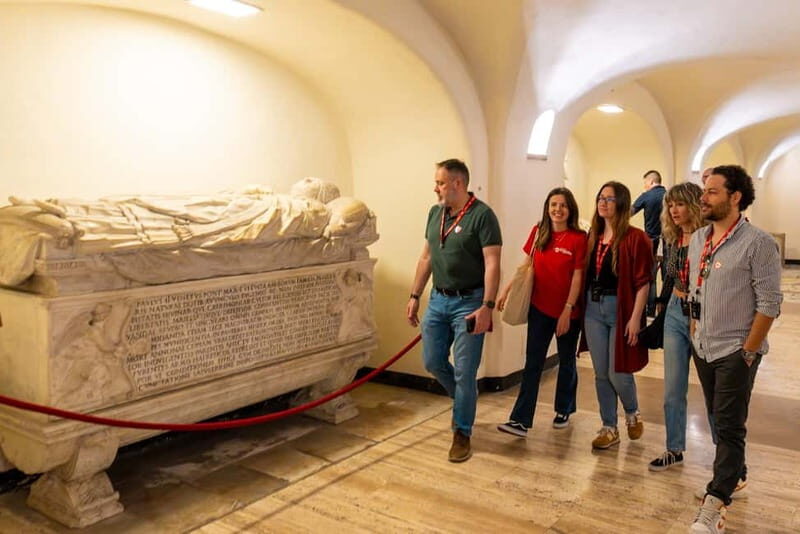
- A full basilica visit on your own right after the climb, with time to spot the Pietà, Baldacchino, and tombs.
- High-altitude viewpoints from roughly 136 meters, even before you reach the very top.
- English live guide on the route, with plenty of Q&A opportunities during the dome portion.
Early morning at St. Peter’s: getting in before the crowd noise
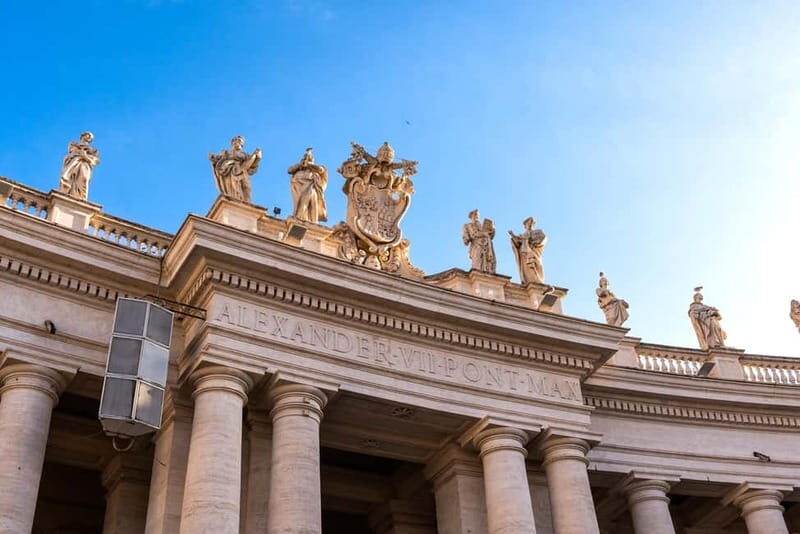
St. Peter’s Basilica is one of those places where timing changes everything. This tour is built around an early start that helps you avoid the biggest bottlenecks. The meeting point is right by St. Peter’s Square, so you’re close to the action from the first minute—no long transfers, no wandering.
You meet your guide 15 minutes early at Largo Del Colonnato, in front of the Fontana delle Tiare. Look for a staff member holding a The Tour Guy sign between the fountain and a green kiosk. It’s a small detail, but it matters here. When crowds are rising, being five minutes late can turn a clean start into a stressful one.
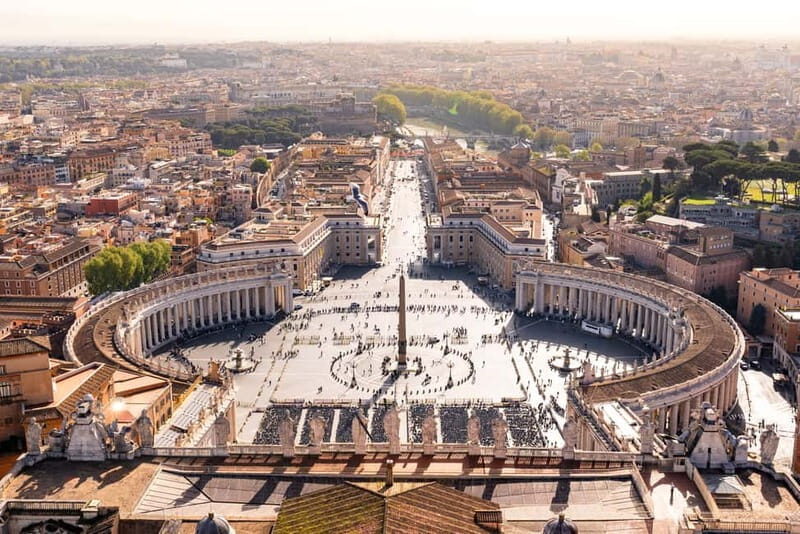
The route begins with a short look at St. Peter’s Square—there’s a photo stop and a quick pass by—just enough to get your bearings before you head upward. If you’re the type who likes to understand where you are before you start taking pictures, this flow works well.
You can also read our reviews of more guided tours in Rome



Dome climb basics: elevator first, then stairs to the top
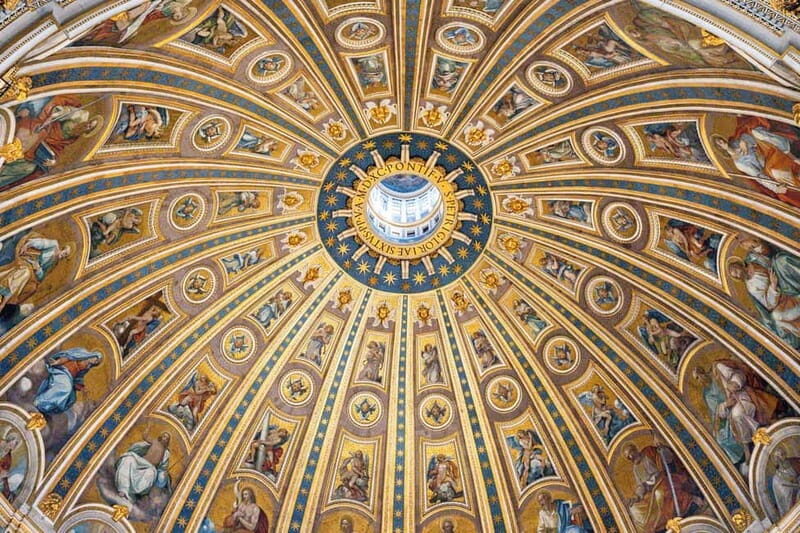
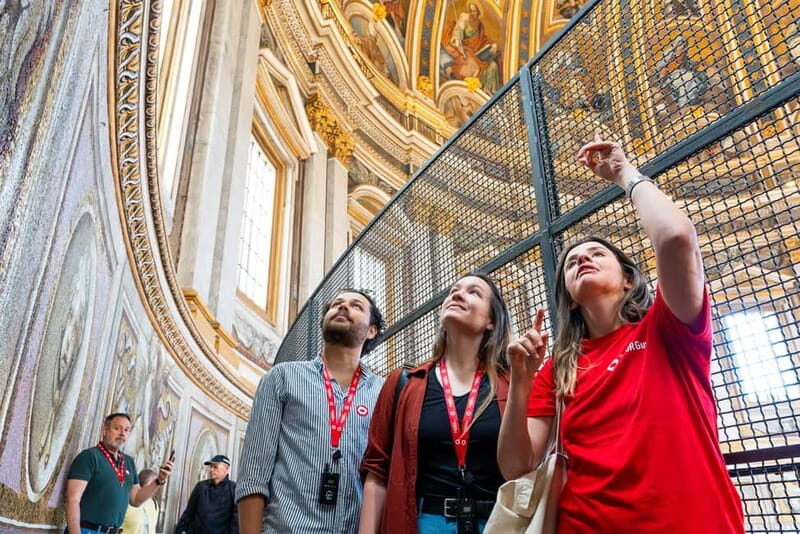
The dome climb is the heart of the tour, and you’ll feel the structure immediately. First, you ride the elevator to the first floor level of St. Peter’s Dome. That’s a practical win: it saves energy and helps you focus on the views and interior details rather than spending the entire climb inside a stairwell.
From there, you step onto a terrace area for scenic views over Vatican City. Even at this “not fully at the top yet” stage, the sightlines are impressive—think rooftops, curves of the Vatican area, and a sense of height. The tour info notes views from about 136 meters, so you’re not just climbing for bragging rights.
Then comes the choice point. If you’re up for it, you climb about 300 more steps to reach the very top. That’s where you get the sweeping panorama over Rome. The steps are the only real physical challenge in this experience, and it’s why the tour is not a fit for people with mobility issues or vertigo.
What I like about this arrangement is that you’re not forced into the hardest part from minute one. You can assess how you feel after the elevator + terrace portion. Still, the top end is part of the plan, so plan for a steady pace.
Guided storytelling inside the dome and the basilica
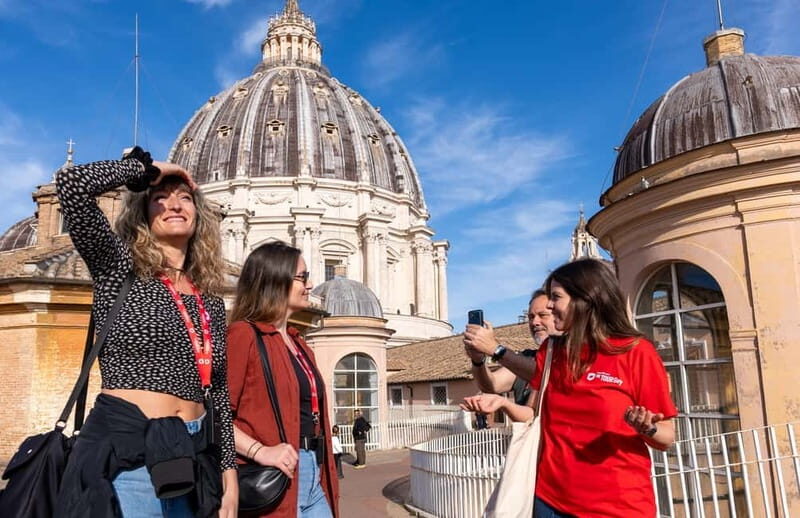
Once you’re off the elevator route, your guide connects what you’re seeing to why it matters. The dome isn’t just a big ceiling. It’s a structure with history, purpose, and specific features that most people miss when they’re moving fast.
In my case, I appreciated how Raphaela handled the explanation: clear, responsive, and grounded in what you can actually look for as you go. If your brain likes context—who built what, what you’re looking at, and why it’s famous—this guide-led approach is the difference between walking through and truly understanding.
You also learn the basilica is built over the tomb of St. Peter. The scale is hard to absorb at street level, but it makes sense once you understand the location and the years it took. The tour notes the basilica took over 120 years to complete, and that time span helps explain why the building feels like layers of vision rather than a single instant design.
And yes, the big art moments come next.
Stop-by-stop: what happens at each part of the route
Meeting point and the first look at St. Peter’s Square
You start at Largo Del Colonnato near the Fontana delle Tiare. You’ll pass by St. Peter’s Square with about a 10-minute photo stop. This is short on purpose: it gives you a sense of place, then gets you moving before the crowd pressure builds.
Practical tip: wear shoes you’d happily walk all day in. This isn’t an “it’s only 2.5 hours” situation. You’re outside for the start, and you’ll move again after the dome climb.



St. Peter’s Dome: guided views and interior details (about 1 hour)
This portion includes the elevator ride to the first level and the guided dome experience. Expect about an hour total here, and expect the guide to keep you oriented—what to look for while you’re climbing, what you’re seeing inside, and what it means.
Scenic views along the way are part of the benefit. You’re not just exerting yourself; you’re using that effort to earn perspective.
The basilica visit with free time (about 1 hour)
After descending, you shift to independent exploring. You get about 1 hour inside St. Peter’s Basilica on your own, which is enough time to hit major highlights without feeling totally rushed.
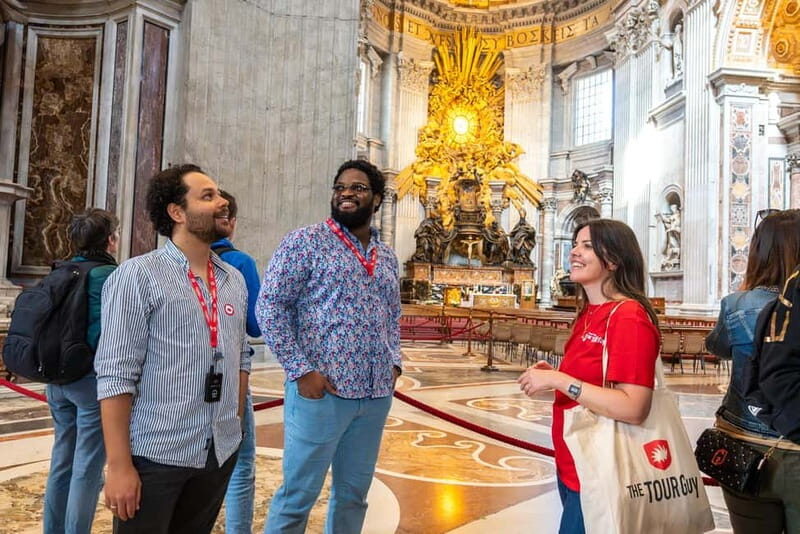
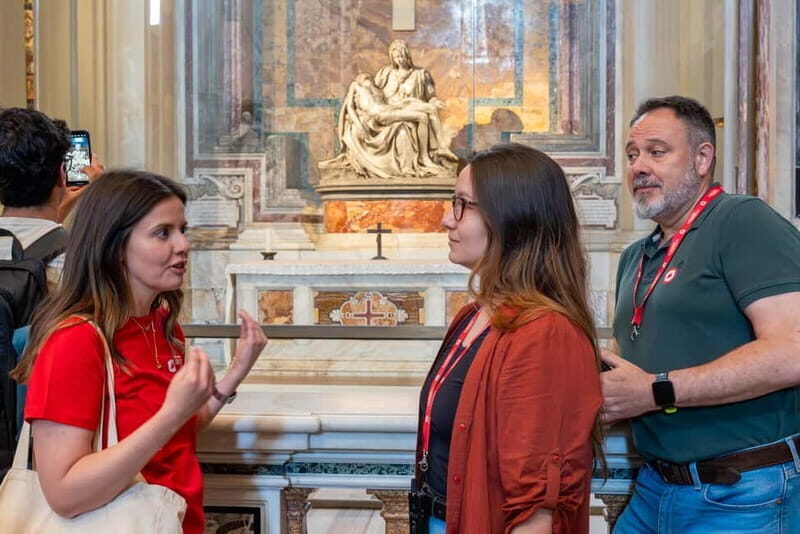
This is where you should aim your eyes first. The tour specifically calls out the Pietà and the Baldacchino, plus tombs. Those are the big “don’t miss” anchors:
- Michelangelo’s Pietà: the tour notes it’s his only signed sculpture. That detail helps you spot it with purpose rather than guessing what’s what.
- Bernini’s Baldacchino: an iconic focal structure inside the basilica.
- Tombs and the sense of the site’s sacred foundation, built over St. Peter’s tomb.
- The visual “signature” of the basilica dome and skyline presence—Michelangelo’s dome is noted as defining Rome’s profile.
Don’t forget to look upward at the dome too. The tour points out that while Michelangelo began it, his successors completed it. That’s a useful lens: you can look at the dome and realize it carries more than one chapter of design.
How the pace works for first-timers
This is a smart format if it’s your first time in Rome’s Vatican area. You get the major physical payoff first (the dome), then you finish with time to enjoy the basilica at your own speed. That avoids the common problem where everyone burns out during the climb and then sees the basilica like a checklist.
Price and value: is $62 worth it?
At $62 per person, you’re paying for three main things: early entry to reduce time at the entrance, a guided dome climb, and an elevator ride to the first floor level. The value depends on what you’d do without the tour.
If you’re the type who wants the shortest possible lines plus a guide to explain what you’re looking at, this price looks fair. Basilica and dome areas can be confusing on your own, and self-guided visits often turn into “move, see, move again.”
Also, the free time inside the basilica is a big deal. Instead of being herded for every minute, you get control over how long you want at the Pietà, Baldacchino, or tomb areas.
If you already know St. Peter’s inside out and you’re comfortable climbing stairs without guided context, you might not get as much “extra” value from the guide. But for most people—especially first-timers—this format feels like good tradeoffs.
What to bring (and what can derail your day)
This tour has clear dress and access rules, and they matter because St. Peter’s is religious and rules are enforced.
Bring:
- Passport or ID card
- Comfortable shoes
Dress code is strict:
- No shorts
- No short skirts
- No sleeveless shirts
- Shoulders and knees must be covered
Also noted:
- Not suitable for people with mobility impairments
- Not suitable for wheelchair users
- Not suitable for claustrophobia
- Not suitable for vertigo
- Comfortable footwear is recommended
- Weapons or sharp objects aren’t allowed
One more practical note: the tour is not described as skip-the-line. It’s early entry, so lines should be strongly reduced, but you’re still in a high-demand area. If you hate waiting at any point, plan for a little friction.
Who this tour suits best

This experience is a strong fit for:
- First-timers who want high views plus key basilica art
- People who like explanations while walking and climbing
- Anyone who wants a clear plan without sprinting through St. Peter’s
It may not suit you if:
- You need step-free access (this isn’t designed for that)
- You’re sensitive to heights or vertigo
- You get anxious in tight, enclosed spaces (claustrophobia is listed as a no-go)
If you’re traveling as a “see the highlights, but understand them” person, this tour matches that style well.
Should you book St. Peter’s early entry with guided dome climb?
If you want the best mix of views, art, and timing, I’d book it. The early start plus guided climb gives you two experiences in one: the dome’s perspective and the basilica’s masterpieces.
I’d skip it only if you strongly prefer a low-effort, fully accessible visit, or if climbing the top steps sounds like a problem. Otherwise, the guide-led pacing and the free time inside the basilica make it one of the more efficient ways to experience St. Peter’s without feeling like you’re stuck behind a sea of people.
FAQ
Where does the tour start?
You meet your guide at Largo Del Colonnato, in front of the Fontana delle Tiare, located next to St. Peter’s Square.
What time should I arrive?
Arrive 15 minutes early.
How long is the tour?
The total duration is about 2.5 hours.
What’s included?
It includes early entry to St. Peter’s Basilica, a guided climb to the top of the dome, an elevator ride to the first floor, and free time inside the basilica.
Do I need to climb the whole way?
You take the elevator to the first level, then climb about 300 more steps to reach the top if you’re up for it.
Is this a skip-the-line tour?
It’s not described as skip-the-line, but since it’s an early morning visit, lines should be strongly reduced.
Does this tour include the Vatican Museums?
No. This tour does not visit the Vatican Museums.
What should I wear?
You need shoulders and knees covered. Shorts, short skirts, and sleeveless shirts are not allowed.
Is the tour suitable for wheelchair users or mobility impairments?
No. It’s not suitable for people with mobility impairments, wheelchair users, or those with vertigo.
What should I bring with me?
Bring a passport or ID card and wear comfortable shoes.