REVIEW · NAPLES
Naples: Pompeii and Herculaneum Private Walking Tour
Book on GetYourGuide →Operated by Askos Tours · Bookable on GetYourGuide
Two ancient cities feel like time travel.
This private walk in Campania is built for seeing both sides of Vesuvius’ 79 AD disaster: Herculaneum’s unusually preserved streets and Pompeii’s bigger, busier layout—explained by a real live guide with skip-the-ticket-line access.
I especially like two things. First, Herculaneum is smaller but easier to “read” at human scale, with details that are still visible—second storeys, carbonized wooden items, intact wall paintings, and mosaics. Second, the guide-led rhythm means you’re not just looking at stones; you get a guided story that brings each neighborhood back to life, like you’re walking through an ancient Roman city one block at a time.
One consideration: the ruins involve uneven ground and the tour is not suitable for wheelchair users. Also, you’ll want to travel light—no umbrellas and no backpacks—and plan for walking in warm weather (bring water and good shoes).
In This Review
- Key things to know before you go
- Getting Oriented: Where You Meet and How the Tour Flows
- Herculaneum Ruins: Why This Smaller City Feels More “Human”
- Pompeii’s Western Sector: Public Life Meets Home Life
- The Private-Guide Advantage (and How It Justifies the Price)
- Tickets, Entrance, and What’s Actually Included
- What to Pack and Wear (Rules That Affect Your Comfort)
- Timing, Transfers, and Staying in the Flow
- Who This Tour Fits Best
- Should You Book This Private Walking Tour of Pompeii and Herculaneum?
- FAQ
- How long is the Naples Pompeii and Herculaneum private walking tour?
- Where do we meet the guide?
- How long is the guided time at each site?
- Are the entrance tickets included?
- Do we need to buy tickets or wait in line?
- What languages are available for the live guide?
- What should I bring?
- What items are not allowed?
- Is this tour wheelchair accessible?
- Is cancellation free?
Key things to know before you go
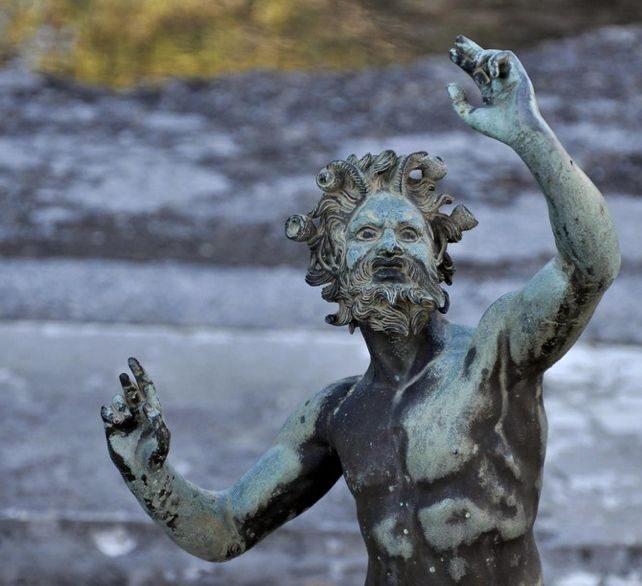
- Herculaneum vs Pompeii contrast: mud burial preserved more details in Herculaneum than ash burial did in Pompeii.
- Carved-in-the-mud visuals: second storeys, carbonized wood, intact paintings, and mosaics are part of the experience.
- A focused Pompeii route: you tour the western part of Pompeii, hitting major public buildings plus homes and shops.
- Private, guide-led explanations: you get 2 hours of Herculaneum and 2 hours of Pompeii with a person to answer questions.
- Skip-the-line access: you’re set up to enter faster instead of waiting at the ticket gate.
- Practical packing rules: comfortable shoes, water, and a sun hat; leave umbrellas and backpacks behind.
Getting Oriented: Where You Meet and How the Tour Flows
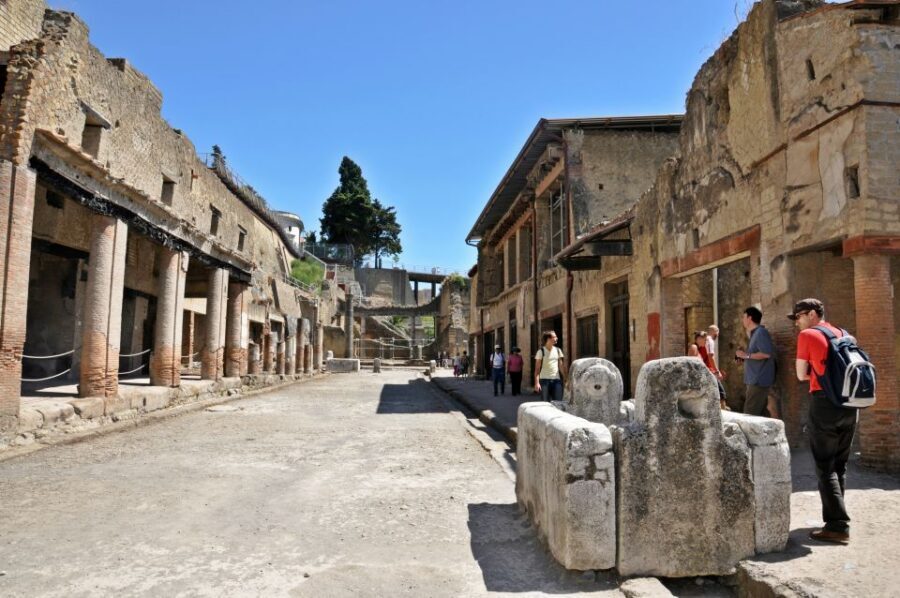
You start at the ticket office area for the Herculaneum Ruins, and your guide meets you at the entrance gate holding a sign with your name. That simple detail matters more than people think. Ruins are spread out, signage can be confusing, and a good meet-up point saves you from wasting your first 20 minutes searching.
From there, the plan is straightforward: a guided visit in Herculaneum for about 2 hours, then you transfer to Pompeii and get another 2-hour guided walk. The tour runs about 5.5 hours overall and ends back at the meeting point (so you’re not left figuring out how to get home after the ruins).
This “two cities, one day” structure is a big reason the tour works. Herculaneum and Pompeii are different places, not just different ticket lines. Seeing them close together helps you notice what Vesuvius did differently—and how Romans lived with daily routines that looked both ordinary and astonishing.
You can also read our reviews of more walking tours in Naples



Herculaneum Ruins: Why This Smaller City Feels More “Human”
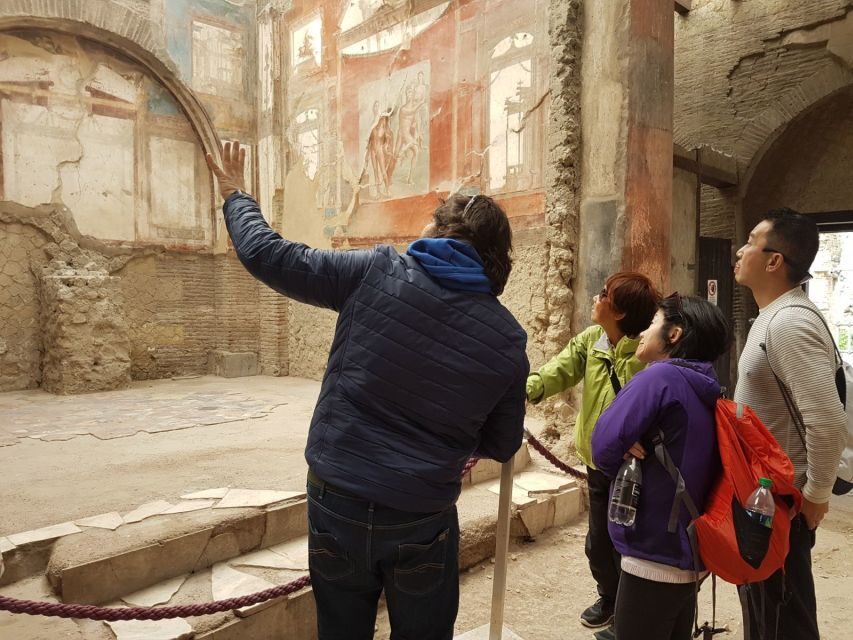
If you’re trying to picture what it felt like to be a resident in 79 AD, Herculaneum is the easier city to imagine. Pompeii is larger and more spread out. Herculaneum is more compact—and better preserved—so you see a denser slice of Roman life.
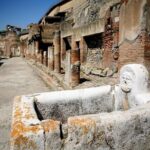
Here’s what makes the experience so striking: while Pompeii was covered in roughly 4 to 5 meters of ash, Herculaneum was buried under an avalanche of mud about 20 meters thick. That difference is why you can still make out things that feel almost too real—like second storeys, carbonized wooden objects, and intact paintings and mosaics. It’s not just “ruins.” It’s rooms, wall surfaces, and the physical evidence of daily life.
During the guided 2-hour portion, you’ll get the explanations that turn details into meaning. Without a guide, you might walk past a preserved doorway, a wall scene, or a mosaic and think: pretty, tragic, interesting. With a guide, you start connecting those visuals to what Romans valued—where they lived, how they arranged space, and what the city looked like before it disappeared.
You’ll likely get extra value from questions. Many of the standout guide experiences shared with me have focused on how well the guide answered lots of questions and kept the pace comfortable. Names that have come up in past departures include Michele, Giulia, Jasmine, Paulo, Maria Laura, and Alexander, with praise for being engaging, organized, and able to explain what you’re seeing in a way that sticks.
Practical tip: bring your eyes down to street level. Herculaneum rewards “slow looking.” If you rush, you’ll miss the details that make this place special.
Pompeii’s Western Sector: Public Life Meets Home Life
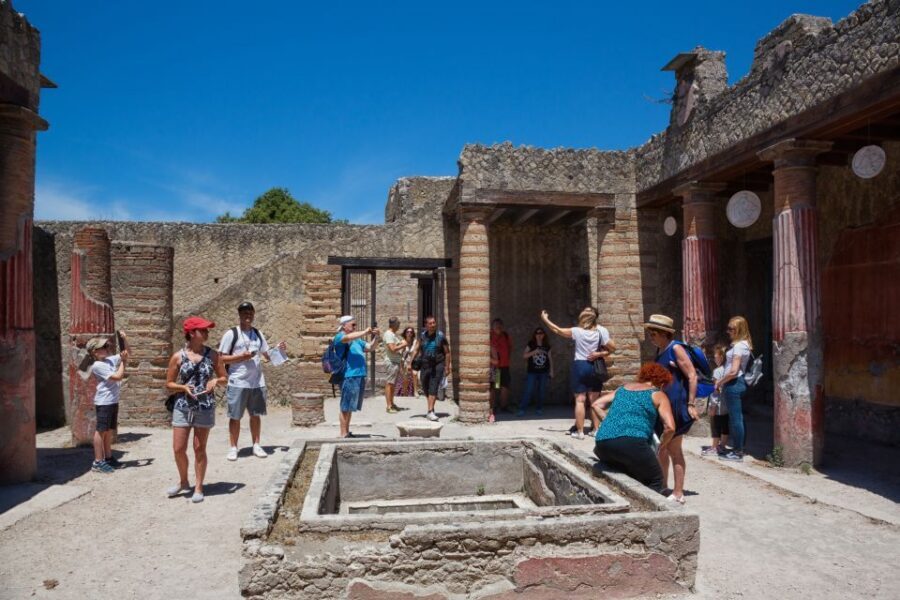
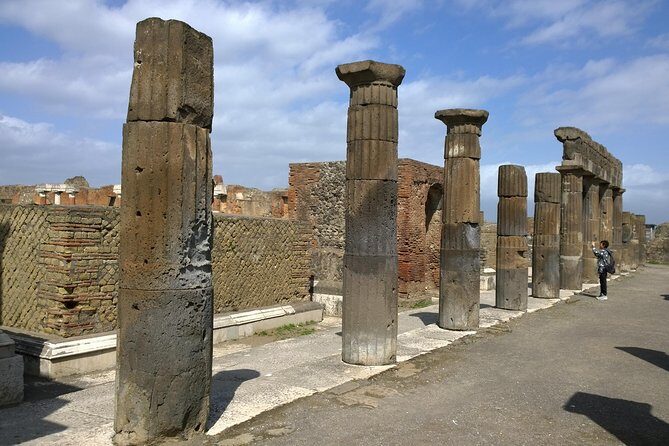
Then it’s on to Pompeii. Pompeii doesn’t feel quiet or museum-like. It feels like the city is still there, just paused. The scale is the change: Pompeii is much larger than Herculaneum, and you’ll feel that in the amount of walking and in how quickly the site can overwhelm you without a plan.
Your Pompeii portion is designed to keep you from aimlessly wandering. The guided tour focuses on the western part of the ancient town, with a look at the most important public buildings plus private houses and shops. That mix is a smart way to understand Pompeii because it mirrors how real people moved through their day: work, civic life, then private space.
The big value of a guided route here is selection. Pompeii contains a lot of must-sees, but time is limited. A structured 2-hour walk gives you a curated set of moments that connect the story: what public spaces were for, how everyday commerce worked, and how households were laid out. You’ll come away with more than “I saw ruins.” You’ll know what kind of Roman city you were looking at.
Also, Pompeii is often “hotter-feeling” because you cover more ground. So take breaks when the guide suggests them, drink water, and don’t feel guilty about slowing down. In a place this big, speed can turn into missing stuff.
The Private-Guide Advantage (and How It Justifies the Price)
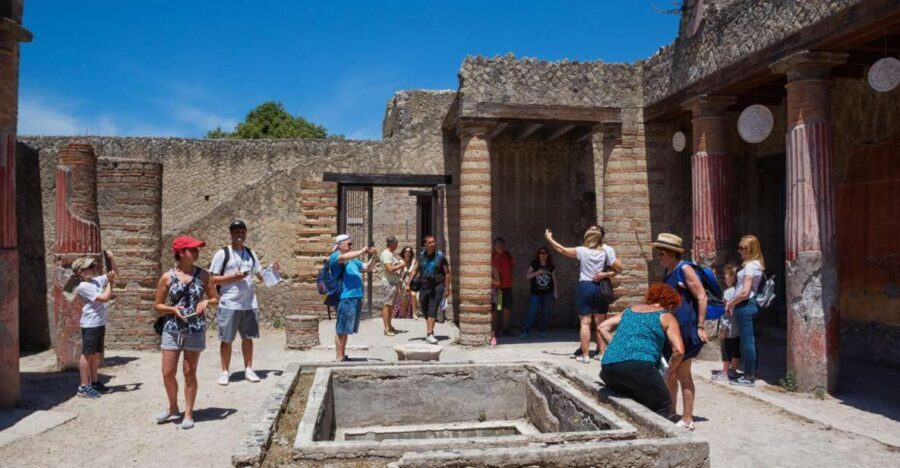
At $331.36 per person for about 5.5 hours, this is not a bargain-basement option. The value comes from two places you can feel on-site: time with a person who can explain what you’re seeing, and access management like skip-the-ticket-line entry.
If you’re traveling as a small group or family, the private format can actually be good value because the guide isn’t just giving facts into the void. You can ask questions. You can adjust pacing. And the guide can point out what matters most so you don’t spend your limited hours trying to figure out what you’re looking at.
The guide component is repeatedly tied to satisfaction in real experiences. I like the fact that this tour uses live guides with multiple language options—so you’re not stuck with generic audio storytelling. It also helps if you’re the type who wants specifics, not just general background.
In other words: the price isn’t only for entry tickets (though those are included). It’s for guided interpretation and a smoother, less stressful visit. That matters at Pompeii and Herculaneum, where self-guided can turn into scrolling your way through information while you stand in the sun.
Tickets, Entrance, and What’s Actually Included
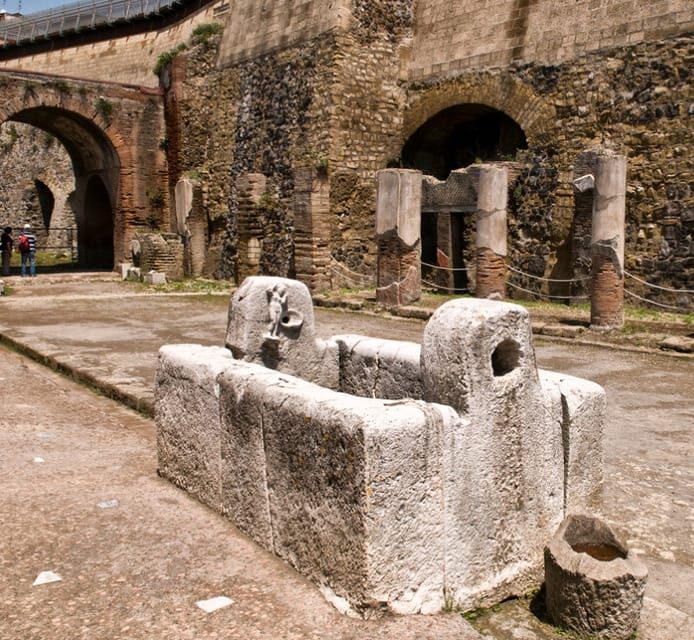
This tour includes:
- A private guide
- Entrance tickets to Herculaneum Ruins (16.00 euros each)
- Pompeii Express entrance tickets to Pompeii
It does not include:
- Transportation (so you’ll handle getting between major points beyond what the tour plan provides)
- Food and drinks
- Personal expenses
You’ll also want to know that the tour is described as skip-the-line, which usually saves time at the gate. Time at these sites is precious. A guided plan plus skip-the-line access helps you spend more of the day inside the ruins, not waiting to start.
You can also read our reviews of more private tours in Naples






What to Pack and Wear (Rules That Affect Your Comfort)
You’ll have the best day if you plan like you’re going to walk a lot in sun.
Bring:
- Passport or ID card
- Comfortable shoes
- Sun hat
- Water
Not allowed:
- Umbrellas
- Backpacks
That last part is a genuine comfort issue. If you arrive with a big daypack, you’ll need an alternative. Traveling with essentials only keeps your hands free and your pace steady.
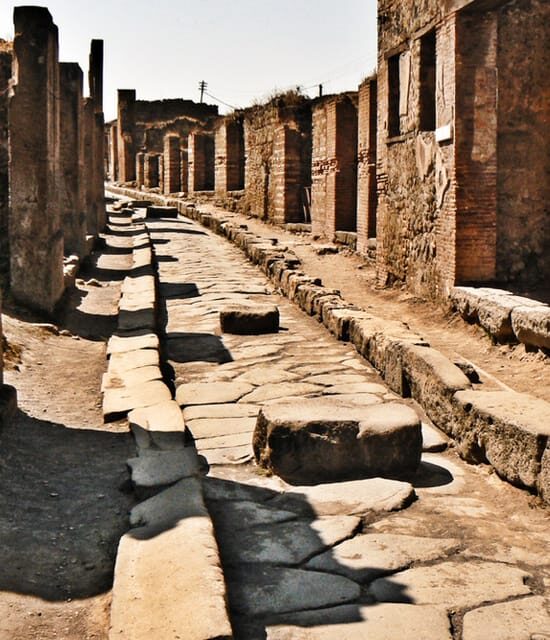
One more practical thought: you’re walking through uneven surfaces and historic stone. Choose shoes you trust on rocky ground. If you wear brand-new sneakers, test them first on a long walk at home.
And yes, it can be hot. One past guide experience even called out the heat. So go early if that’s an option, take shade breaks when you can, and don’t treat water as optional.
Timing, Transfers, and Staying in the Flow
The tour length is about 5.5 hours, with 2 hours in Herculaneum and 2 hours in Pompeii. Between those two guided blocks, there’s a transfer by train as part of the plan. The key is that the schedule is built so you’re not spending hours in transit.
Because you’re moving from site to site, you’ll enjoy the day more if you keep your pacing sensible:
- drink water during the transfer and before you start walking again
- keep your “must photos” list short
- let the guide show you what to look at rather than stopping constantly to research
Also, you’ll end back where you started, at the meeting point. That reduces stress. No surprise “find a bus at the far end of Pompeii” moments.
Who This Tour Fits Best
This is a good match if:
- you want a private group experience instead of a big crowd
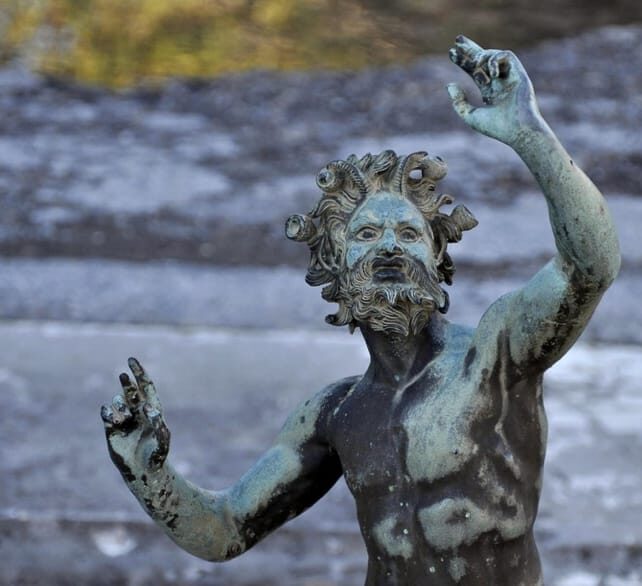
- you care about understanding what you’re seeing (paintings, mosaics, street layout, public buildings)
- you like asking questions and getting answers right where they matter
- you want both sites in one day without turning it into a self-guided scavenger hunt
It may not fit if:
- you need wheelchair-friendly access (the tour is listed as not suitable for wheelchair users)
- you’re looking for a fully self-paced visit with no structure
- you dislike heat and long walking days (you can manage it, but it won’t disappear)
If you’re the type who enjoys history but also appreciates practical storytelling, this tour hits a sweet spot: it’s structured enough to help you understand, and flexible enough to keep the day human.
Should You Book This Private Walking Tour of Pompeii and Herculaneum?
Book it if you want the best chance of really understanding both places in one day. The pairing of Herculaneum’s preserved details—mosaics, paintings, and second storeys—with Pompeii’s larger urban layout creates a clearer picture of Roman life before the eruption.
Skip it if you’re the “I just want to wander” type and you don’t want to pay for a guide’s time. Self-guided visits can work, but you’ll spend more energy figuring out what matters instead of watching the story unfold block by block.
One last booking tip: if you’re traveling on the first Sunday of each month, entrance can be free. But tickets can’t be reserved ahead of time, so entry isn’t guaranteed. If that date is critical, you’ll want a Plan B.
If you can tolerate walking and you want interpretation (not just photos), this private tour is a strong, practical way to experience these two Vesuvius-era cities.
FAQ
How long is the Naples Pompeii and Herculaneum private walking tour?
The duration is about 5.5 hours. Exact start times depend on availability.
Where do we meet the guide?
You meet at the ticket office of the Herculaneum Ruins. The guide meets you at the entrance gate holding a sign with your name on it.
How long is the guided time at each site?
The tour includes 2 hours of guided time at Herculaneum and 2 hours of guided time at Pompeii.
Are the entrance tickets included?
Yes. Entrance tickets for Herculaneum Ruins are included (16.00 euros each), and Pompeii Express entrance tickets to Pompeii are included as well.
Do we need to buy tickets or wait in line?
The tour includes skip-the-ticket line, so you should spend less time at the entrance gates.
What languages are available for the live guide?
The live guide is available in Spanish, English, Italian, French, German, Russian, Chinese, Japanese, and Portuguese.
What should I bring?
Bring your passport or ID card, comfortable shoes, a sun hat, and water.
What items are not allowed?
Umbrellas and backpacks are not allowed.
Is this tour wheelchair accessible?
No, the tour is listed as not suitable for wheelchair users.
Is cancellation free?
You can cancel up to 24 hours in advance for a full refund. Also, there is a reserve now & pay later option (no payment required today).