REVIEW · MOTORBIKE & SCOOTER RENTALS
Rome Vespa Tour with Gelato Stop
Book on Viator →Operated by Vittoria Rent - Noleggio Scooter · Bookable on Viator
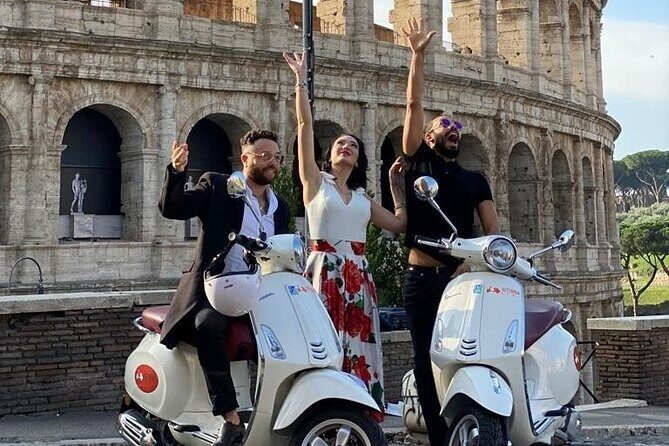
Cruising Rome on a scooter changes everything. This private ride is built for seeing major sights in a few hours, with short stops for photos and views instead of long waits and endless walking. You’ll also get a gelato stop, plus the kind of attention you only get when it’s just your group.
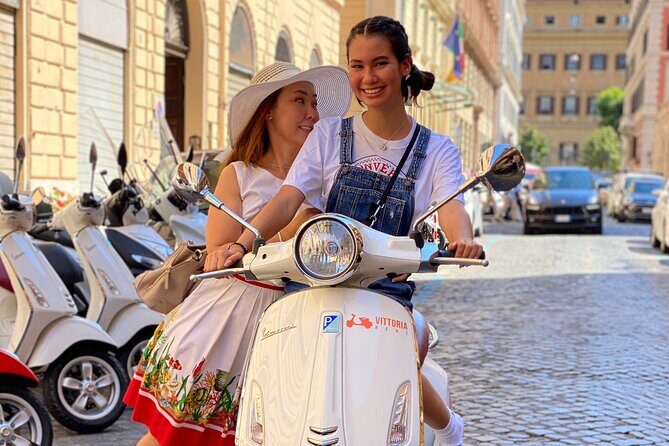
What I like most is the chance to drive your own Vespa like a local, with a helmet included. I also like that the route hits Rome’s signature areas fast, from Trinità dei Monti and the Pincio views to the Pantheon and Trevi, without turning the day into a leg workout.
One thing to consider: you’ll spend time on a scooter, so moderate physical fitness and comfort with city driving matter. And it’s weather-dependent, so rain can affect your plans.
In This Review
- Quick hits: what makes this Vespa tour work
- Why a Vespa route feels more Roman than bus sightseeing
- Getting started: Vittoria Rent, helmets, and your first minutes in traffic
- Trinità dei Monti and Terrazza del Pincio: Rome’s hilltop photo stops
- St. Peter’s Basilica area: fast orientation, not a long inside visit
- Terrazza del Gianicolo at noon: the cannon-shot wait
- Circo Massimo: seeing where chariot races took place
- Piazza Venezia and the Altare della Patria: big square, big presence
- The Pantheon’s dome: a classic stop that still lands
- Trevi Fountain: the symbol plus the aqueduct story
- Piazza Farnese and Campo de’ Fiori: Rome’s daily life in a compact route
- The final walk: small pause for bearings
- Gelato stop: a built-in reset during a fast-moving day
- Price and value: $268.25 for 3 to 4 hours on a scooter
- Who this Rome Vespa tour suits best (and who should skip it)
- Should you book the Rome Vespa Tour with Gelato Stop?
- FAQ
- How long is the Rome Vespa tour with the gelato stop?
- Is this a private tour?
- Do you get hotel pickup?
- What language is the tour in?
- Do I drive the Vespa or ride as a passenger?
- Is the tour affected by weather?
- Where does the tour start and end?
Quick hits: what makes this Vespa tour work
- Private, not crowded: your group gets more guide attention and flexible stop timing
- You ride the Vespa: helmet included, so you’re not just watching from the back
- Viewpoints are the star: Trinità dei Monti, Terrazza del Pincio, and Gianicolo keep the stops worthwhile
- Fast access to icons: quick, well-placed stops at the Pantheon and Trevi
- Ancient Rome in minutes: Circo Massimo and the story of chariot racing
- A gelato break: a sweet pause built into the experience
Why a Vespa route feels more Roman than bus sightseeing
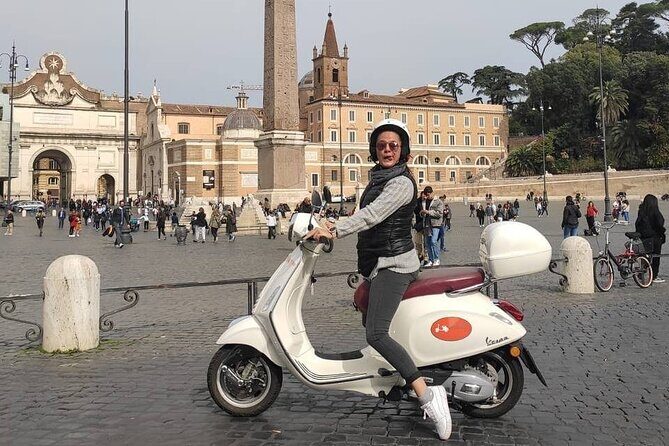
Rome is a city of layers: hills, domes, ancient stones, and big piazzas that feel like outdoor rooms. A Vespa tour turns that into a smooth route where you cover ground quickly and still get pauses to actually look.
You’re not stuck in a slow crawl on foot, and you’re not limited to the view from a bus window. On this private setup, the guide can keep the pace moving while still giving you time at the places that matter most to your route.
And yes, the gelato stop matters. When the day is a mix of quick photo moments and stops for orientation, having a planned break keeps the energy up.
You can also read our reviews of more tours and experiences in Rome

Getting started: Vittoria Rent, helmets, and your first minutes in traffic
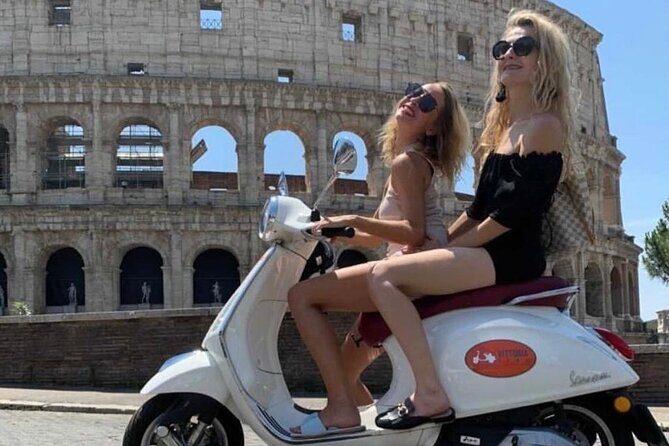
The tour begins at Via Marche, 15, 00187 Roma RM, at Vittoria Rent Noleggio Scooter. The schedule is short at the start (about 10 minutes), so you’ll want to treat this as a quick setup moment rather than a long hangout.
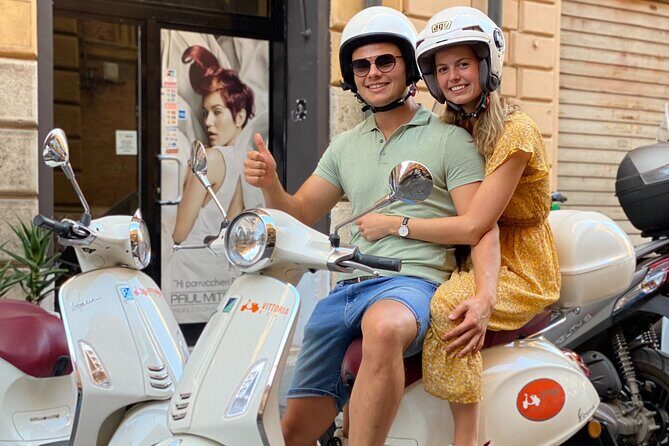
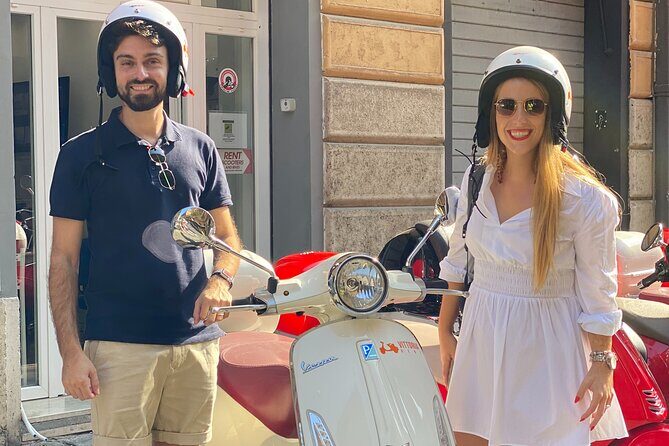
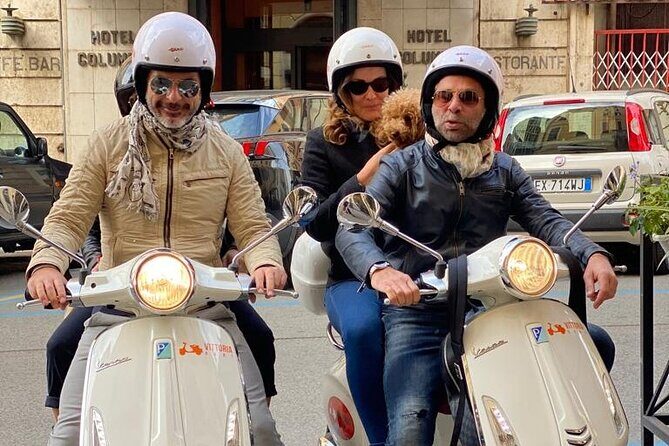
The key point: you’ll drive your own Vespa, and a helmet is included. That’s the real value here. You get to experience the city movement up close, instead of merely passing it.
If you’re considering a self-guided scooter option, the provider notes that an excellent level of scooter driving experience is required. So if you’re not already confident on a scooter, stick to the guided experience for the best match.
Trinità dei Monti and Terrazza del Pincio: Rome’s hilltop photo stops
Right after the scooter start, you head to Trinita dei Monti for a short stop and a photo opportunity with the panorama. This area is famous because it gives you a wide-angle feel for Rome’s sprawl—rooftops, church domes, and long sightlines.
Then comes Terrazza del Pincio, with another panoramic viewpoint. This is the kind of stop that rewards you for looking up as much as across. You get a strong Rome “postcard” view without having to hike for hours.
The drawback with both of these stops is also the same: the time is brief (about 10 minutes each). That’s not a flaw for this style of tour. It’s simply how the route is designed—quick, strategic viewpoint stops that keep the scooter ride flowing.
St. Peter’s Basilica area: fast orientation, not a long inside visit
Next you’ll make a stop near St. Peter’s Basilica for photos. The time on this portion is listed at about 15 minutes, and the plan is described as a picture stop.
That means you should treat St. Peter’s as an outside-and-spotlight moment here. If you want a long, detailed visit inside the basilica, this tour is not trying to replace that. It’s trying to get you the big visual impact and then move you on.
If you’ve never seen the basilica from a distance, this is a good first taste. In a short window, you can still appreciate the scale that makes St. Peter’s feel like a world-class landmark rather than just a church.
Terrazza del Gianicolo at noon: the cannon-shot wait
One of the most distinctive parts of this route is Terrazza del Gianicolo. You’ll stop for a panoramic view, with a wait for the cannon shot at 12 noon.
This is the kind of detail that makes a tour feel like more than a checklist. The view gives you Rome in layers, and the scheduled cannon shot adds a built-in moment of timing—something you can watch for, not just something you pass.
The time here is longer than many other stops (about 20 minutes), which helps you actually experience the moment rather than just stand next to it for a few seconds. If you’re booking this tour, try to align with the timing so you don’t miss the noon event.
You can also read our reviews of more tours and experiences in Rome

Circo Massimo: seeing where chariot races took place
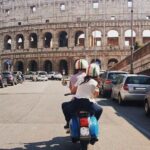
After the hill views, the route shifts toward the ancient core with a stop at Circo Massimo. This is where famous chariot races took place in ancient Rome, and the stop is described as a visit to the site.
You get a quick but meaningful change of pace. Instead of another panorama, you’re looking at the bones of Roman entertainment space—an arena-like setting tied to a very specific historic activity.
The time is short (about 10 minutes), so expect orientation rather than a full museum-style explanation. But even a short stop can help you connect what you see around Rome today to how the city functioned back then.
Piazza Venezia and the Altare della Patria: big square, big presence
Then you’ll pass through Piazza Venezia / Ancient City. The highlight here is the Altare della Patria monument, which dominates the scene.
This is a great stop for two reasons. First, the square is open enough to make quick photos and orientation easy. Second, it gives you context for Rome’s “center of gravity” feeling, where lots of important paths converge.
The stop is listed at about 10 minutes. That’s ideal for this style of tour because the scooter route keeps momentum, and you get enough time to see the monument clearly without dragging the schedule.
The Pantheon’s dome: a classic stop that still lands
Next up is the Pantheon, described with its gigantic round dome and columns. It’s presented as a temple dedicated to all the Roman gods.
This stop is one of the best examples of why this tour format works. Even with limited time (about 10 minutes), the Pantheon is visually overwhelming. You don’t need a long visit to appreciate the core geometry—those columns and the dome do most of the storytelling for you.
If you want to go deeper into the Pantheon interior, plan a separate visit on another day. Here, you’re getting the immediate wow-factor and a solid position within the route’s flow.
Trevi Fountain: the symbol plus the aqueduct story
No Rome scooter route is complete without Fontana di Trevi. You’ll get a stop and about 15 minutes at this iconic fountain.
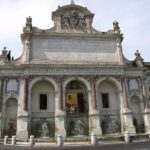
What makes this stop more than a tourist photo is the explanation tied to it: the fountain is connected to the Acqua Vergine aqueduct, which Marcus Vipsanius Agrippa brought to Rome in 19 B.C. to supply baths. That detail helps you see the fountain as part of Rome’s infrastructure, not just a dramatic decoration.
One practical consideration: because this is a famous stop, it’s a place where lots of people gather. This tour’s advantage is that it slots Trevi in with a clear time window (not hours of wandering), so you can get your look and move on with your schedule.
Piazza Farnese and Campo de’ Fiori: Rome’s daily life in a compact route
After Trevi, the route continues to Piazza Farnese, described as an area featuring Farnese Palace, the Church of Santa Brigida, and Fusconi Pighini Palace. You get about 10 minutes here, which is enough to see the architectural edges and understand why the square is known for its structure and presence.
Then comes Campo de’ Fiori, another classic. The focus here is that it’s been a market spot since 1869, with food, flowers, and other products sold every morning Monday through Saturday.
This is a nice emotional shift after the big monuments. At Campo de’ Fiori, Rome feels more lived-in and practical—less about grand memorials and more about everyday rhythms. If you like tasting the feel of a place through what happens on the street, this stop delivers.
The final walk: small pause for bearings
The itinerary includes time for a walk around segment near the end. Since the exact location of that walking time isn’t specified beyond the fact that it happens, treat it as a short grounding moment.
In a tour like this, that walk time is valuable because it helps you switch modes from scooter motion to street-level observation. It’s also when you can better notice small details you’d miss at scooter speed—street texture, storefront shapes, and the way the streets funnel toward bigger landmarks.
Gelato stop: a built-in reset during a fast-moving day
The tour name includes a gelato stop, and that’s worth planning for. In a route with multiple 10- to 20-minute stops, having one planned break can keep the pacing comfortable.
I like tours that treat food as part of the experience rather than an afterthought. Here, the gelato moment is integrated into the day structure, which makes it easier to stay relaxed instead of hunting for a place while you’re already tired.
Price and value: $268.25 for 3 to 4 hours on a scooter
At $268.25 per person for about 3 to 4 hours, you’re paying for three things: private time, scooter driving, and an organized route connecting major sights.
If you were doing this on your own, you’d still spend money on getting a scooter and dealing with time-consuming planning and route coordination. You’d also likely need more walking to connect these points efficiently. This tour packages all that into one guided, time-managed experience.
So the value question is simple: do you want speed plus structure, with enough stops to actually enjoy the city sights? If yes, the price feels more reasonable. If you’d rather linger at one monument for hours, you might find the short stop times don’t match your style.
Who this Rome Vespa tour suits best (and who should skip it)
This is a strong fit if you want a private tour, like quick photo stops, and prefer covering distance with less walking. It also works well for people who enjoy viewpoint moments—Trinità dei Monti, Pincio, and Gianicolo are built into the route for a reason.
It’s also a good choice if you like history that’s explained in place. The route touches ancient and iconic landmarks, with context like the Acqua Vergine aqueduct story and what Circo Massimo was used for.
Skip it if you know you’re not comfortable on a scooter, or if rain is likely to spoil your timing. The experience requires good weather, so you need Rome to cooperate.
Also, if you’re sensitive to the idea of quick stop durations, this route may feel a bit like getting a lot done in limited time. The upside is that it keeps momentum and gets you to more highlights in a single afternoon.
Should you book the Rome Vespa Tour with Gelato Stop?
I’d book it if your ideal Rome day is efficient, scenic, and guided in a way that gives you real attention. The private setup plus the chance to drive your own Vespa is the core appeal, and the route is built around major landmarks plus a couple of very Roman viewpoints.
I’d hesitate only if you want a slow, deep dive into one or two sites, or if you’re unsure about scooter comfort. For most people who can handle a short ride and enjoy photo-and-view stops, this is a high-value way to see Rome without turning the trip into a marathon.
FAQ
How long is the Rome Vespa tour with the gelato stop?
It’s listed as about 3 to 4 hours, depending on how the timing works during the route.
Is this a private tour?
Yes. It’s a private experience, and only your group participates.
Do you get hotel pickup?
Pickup is offered at the hotel reception.
What language is the tour in?
It’s offered in English.
Do I drive the Vespa or ride as a passenger?
You drive your own Vespa scooter, and a helmet is included.
Is the tour affected by weather?
Yes. The experience requires good weather, and if it’s canceled due to poor weather you’ll be offered a different date or a full refund.
Where does the tour start and end?
The meeting point is Via Marche, 15, 00187 Roma RM, Italy. The tour ends back at the meeting point.