REVIEW · POMPEII
Skip the Line Private Pompeii Guided Tour
Book on Viator →Operated by CIAO TOURS · Bookable on Viator
Time is everything at Pompeii.
This private skip-the-line guided tour is built for people who want to get inside quickly and actually make sense of what they’re seeing, instead of spending your best hours in queues. You’ll follow a guide through the ancient city’s major zones—Forum area, temples, theatres, houses with mosaics, and more—plus you’ll have time to ask questions as you go.
I like the focus on high-value sights over wandering. The route gives you clear stops (Temple of Apollo, the main Forum, Teatro Grande, and the Lupanar) without stretching the day out. You also get the kind of guide attention that’s harder to find on bigger group tours; one Pompeii guide named Paolo is specifically mentioned as being a helpful, story-filled companion. A possible drawback: this is a 2-hour highlights route, so if you want a slow, deep read of every corner, you’ll likely want extra time on your own afterward (and you’ll also need to budget for Pompeii admission fees, since they’re not included in the tour price).
In This Review
- Key Highlights at a Glance
- Why Skip-the-Line at Pompeii Matters Fast
- Porta Marina Meeting Point: Start Smart, Then Keep Moving
- The Two-Hour Route: A Highlights Circuit You Can Actually Use
- Pompeii Archaeological Park: Getting Oriented in the City Core
- Temple of Apollo: A Quick Stop That Changes Your Reading of Pompeii
- The Foro de Pompeya: Where Public Life Took Place
- Granai del Foro: Storage, Supply, and Why Cities Function
- Terme del Foro: One of Pompeii’s Best-Preserved Bath Areas
- Casa del Poeta Tragico: Mosaics That Hit You in the Face
- Casa del Cinghiale: Another Mosaic-Filled House
- Teatro Grande: Stories in Stone for Comedy and Tragedy
- The Lupanar: The Nightlife Side of Pompeii
- Tempio di Venere and Tempio di Giove Capitolino: Small Stops, Clear Meaning
- Price and Value: Is $82.65 Worth It?
- Who Should Book This Private Pompeii Tour?
- Should You Book This Skip-the-Line Private Pompeii Tour?
- FAQ
- How long is the Pompeii skip-the-line private guided tour?
- Where do I meet for the tour?
- Is this tour private?
- Does the tour include skip the line admission?
- Is a mobile ticket used?
- Are there different tour times?
- What sites are included during the guided visit?
- What is the cancellation policy?
Key Highlights at a Glance
- Priority admission to cut down your waiting time at Pompeii
- A private guide who can tailor answers and keep the pace clear
- Two hours of “best-of” stops across temples, Forum sites, mosaics, and the big theatre
- Morning or afternoon options so you can fit Pompeii into your schedule
- Mobile ticket for easier check-in
- Pompeii admission fees not included in the tour price
Why Skip-the-Line at Pompeii Matters Fast
Pompeii is huge. That’s the honest issue. Even if you’re excited, the site can feel like information overload if you arrive after peak crowds. Priority entry isn’t just a convenience—it’s how you protect your time so your guide can do the job you’re paying for: explaining what you’re looking at, connecting buildings to daily life, and helping you spot the details that make the ruins meaningful.
This tour is sized around that reality. At about 2 hours, you’re not trying to conquer everything. Instead, you get a guided walk through a cluster of major sights, so you build a mental map quickly. That matters because Pompeii is not a place where you can always “wing it” and feel oriented. With a guide, the route becomes a story.
You also get to choose your timing with morning or afternoon departures, which helps if you want smoother logistics (or you’re pairing Pompeii with other plans in the region).
You can also read our reviews of more guided tours in Pompeii


Porta Marina Meeting Point: Start Smart, Then Keep Moving
You’ll meet at Pompei-porta Marina (scavi 80045 Pompeii) and the tour ends back at the same meeting point. That matters more than it sounds. Pompeii’s entrances and walking paths can be confusing, especially if you’re arriving by public transport or if you’re juggling tickets and directions on the fly.
A few practical notes you can plan around:
- The meeting point is listed as near public transportation, which is useful if you’re not driving.
- Service animals are allowed.
- The tour says most travelers can participate, but you should still expect walking on an uneven, ancient site surface (comfortable shoes are a must).
If you’re prone to overpacking, go light. In a two-hour tour, extra bags slow you down and you’ll spend less time looking at ruins.
The Two-Hour Route: A Highlights Circuit You Can Actually Use
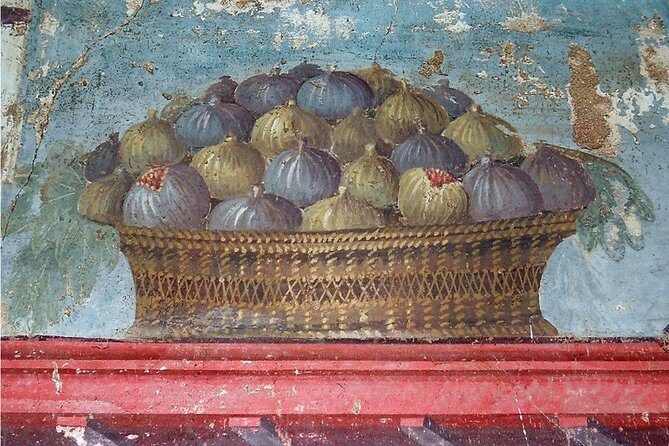
You’re moving through Pompeii with a guided set of stops that cover different “worlds” of the city: religion (temples), commerce and public life (Forum and nearby buildings), daily bathing and infrastructure (terme), domestic luxury (mosaic houses), and entertainment and nightlife (Teatro Grande and the Lupanar).
Here’s the practical takeaway: you’ll leave with more than photos. You’ll understand how these places fit together. That’s the real value of a guided highlights tour—your brain gets a framework.
Even the time allotments tell you what to expect: short focused visits at key points, with longer windows where the location naturally rewards attention (like the theatre and the Forum-related areas).
Pompeii Archaeological Park: Getting Oriented in the City Core
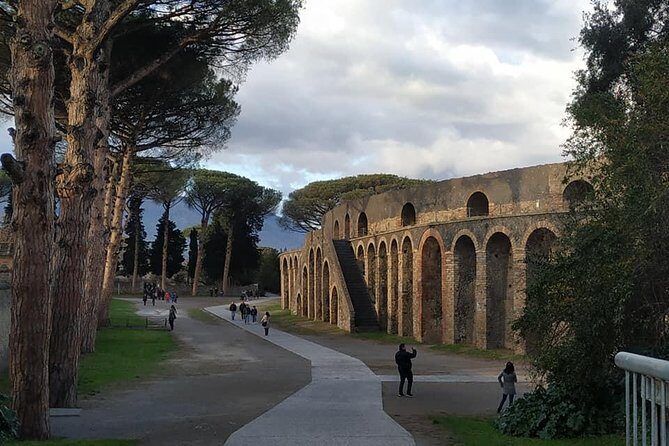
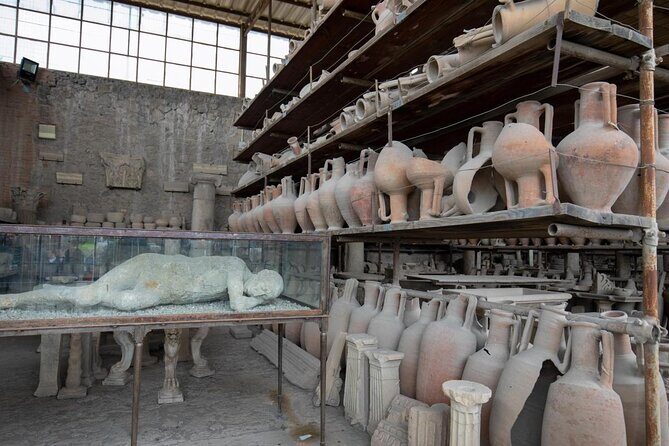
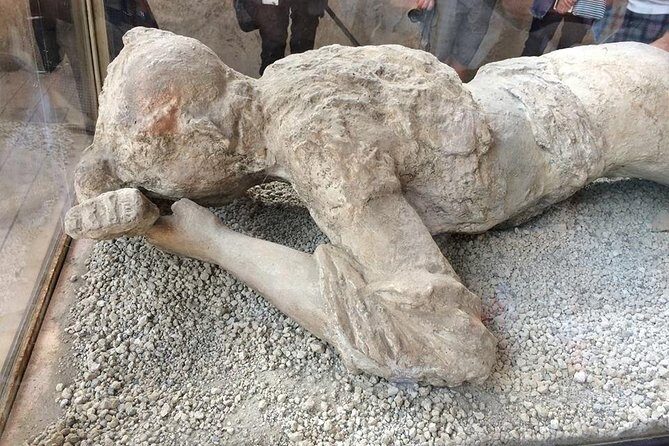
The tour starts at the Pompeii Archaeological Park, where you’ll cover a sweep of top areas such as theatres, the Forum, temples, plaster casts, baths/spa spaces, the brothel context, and Roman villas. Your guide’s job here is crucial: they show you where to look and give you the stories that turn “ruins” into a city you can picture.
This initial chunk is where you build your bearings fast. Instead of memorizing names on a map, you learn what each building type was for. You also get a chance to ask questions, which is one of the best uses of a short tour. If you’re wondering about daily life, street layout, or why certain structures are preserved differently, this is your moment.
A small watch-out: since admissions fees for Pompeii ruins are listed as not included, make sure you understand what you need to pay separately before you meet. The tour is described as having skip-the-line access, but you still need the correct entry permission for Pompeii itself.
Temple of Apollo: A Quick Stop That Changes Your Reading of Pompeii
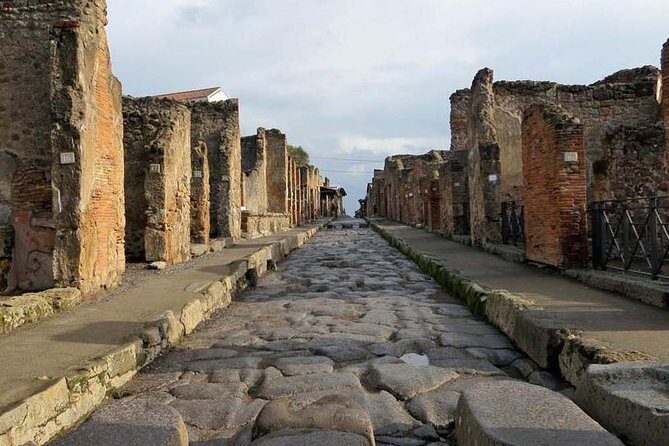
Next is the Temple of Apollo. It’s a short visit, but it’s placed for a reason: temples help you read Pompeii as a lived religious city, not just a city of homes and streets.
Even in a brief stop, you should try to notice scale and position. Temples weren’t tucked away. They sat in places meant to be seen and used. That helps you understand why some areas feel more “public” than others as you move through the site.
You can also read our reviews of more private tours in Pompeii





The Foro de Pompeya: Where Public Life Took Place
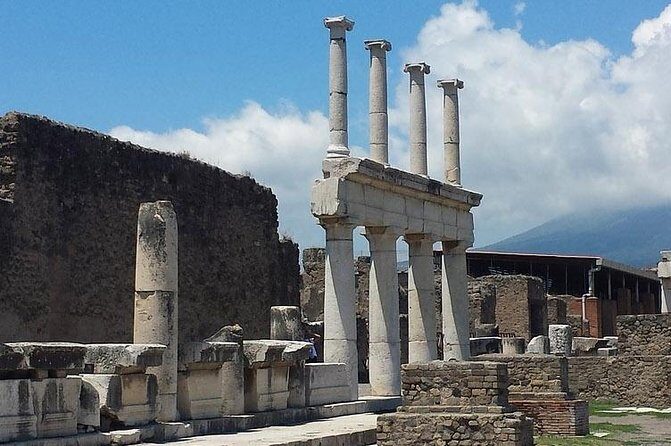
The Forum (Foro de Pompeya) is one of Pompeii’s most important anchor points, and you’ll spend about 20 minutes here. This isn’t random sightseeing time. The Forum is where civic and commercial life happened, so your guide’s explanations will often connect multiple buildings around the same center of activity.
Think of the Forum as the city’s stage. Temples, administrative spaces, marketplaces, and meeting points all cluster around this kind of square. If you’ve ever visited a big European city and felt lost until you found the main square, this is the Pompeii version of that moment.
One practical benefit of having a guide here: they can point out what is left, what’s been reconstructed (like plaster casts in related areas), and what you’re seeing from different angles. That prevents you from staring at stone and wondering what you’re supposed to notice.
Granai del Foro: Storage, Supply, and Why Cities Function
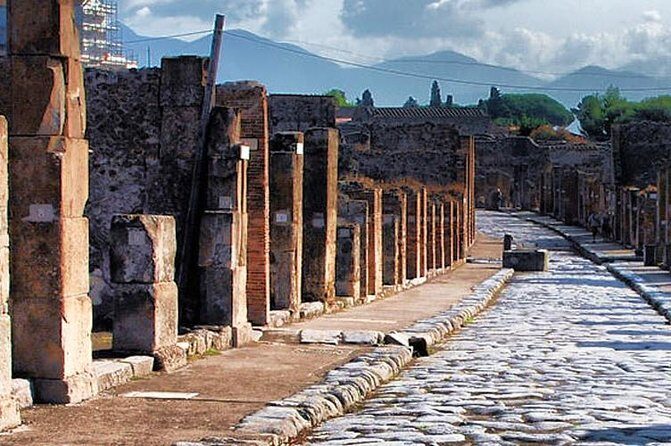
You’ll also visit the Granai del Foro (granaries connected to the Forum area), described as a museum stop. Even though it’s not the flashiest structure, it matters. Cities don’t run on marble alone. They run on systems—food supply, storage, and planning.
When a guide explains what this space likely did, the site stops feeling random. You start understanding how Pompeii could support public life and large gatherings. This is exactly the kind of stop that turns a highlights tour into something educational without becoming heavy.
Terme del Foro: One of Pompeii’s Best-Preserved Bath Areas
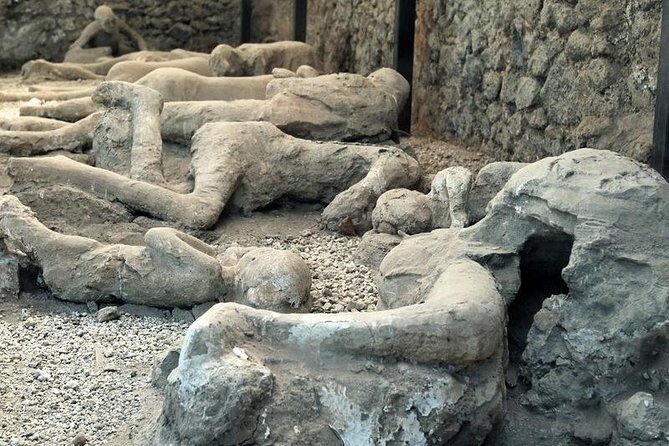
Then comes the Terme del Foro, described as one of the best preserved bath spaces in Pompeii. You’ll have about 20 minutes here.
Bath complexes in Roman cities were social spaces as much as they were practical. They also show how engineering and design supported daily routines—temperature changes, circulation, and how people moved through different rooms. If you’re the type who loves “how did they live” questions, this is a strong stop.
The best part of having a guide at a bath site is interpretation. You’ll likely understand why certain rooms look the way they do, and what the layout tells you about use.
Casa del Poeta Tragico: Mosaics That Hit You in the Face
You’ll pause at the Casa del Poeta Tragico for about 10 minutes, with emphasis on its famous mosaic. Pompeii’s houses can be a wow moment, but mosaics are what often make them memorable. They weren’t just decoration. They were identity and status—messages told through art in places where guests and family would notice.
Short time here means you should use the guide’s pointers. Ask what makes this mosaic special, and look at the details you might miss if you’re just snapping photos. You’ll get more out of it by letting someone tell you what to focus on.
Casa del Cinghiale: Another Mosaic-Filled House
Next is the Casa del Cinghiale, again about 10 minutes, described as a house full of mosaics. This is a good contrast stop. You’ll start noticing patterns: how Roman households displayed art, how spaces were arranged, and how floor design made rooms feel like stages for daily life.
Because time is tight, don’t try to “study” the whole house. Instead, look for one or two elements your guide points out. That keeps your attention sharp and prevents the experience from turning into a blur.
Teatro Grande: Stories in Stone for Comedy and Tragedy
Teatro Grande gets about 20 minutes. This is one of Pompeii’s most emotional stops, even though you’re surrounded by stone remnants. The theatre tells you that entertainment was built into the city rhythm, and it hints at how crowds gathered and reacted.
If you’re curious about what a performance felt like, ask your guide. They can help you connect the space you’re standing in—seating layout, stage orientation, and how spectators would experience it.
This is also a great stop for architecture lovers. Even if details are missing, the overall form explains function.
The Lupanar: The Nightlife Side of Pompeii
The Lupanar is another about 20 minutes, and it’s associated with old erotic frescoes and brothel history. The tone here is important. Treat it respectfully. You’re looking at a part of ancient life that modern visitors may find uncomfortable, but it’s also part of why Pompeii feels complete.
A good guide will handle this with context rather than sensationalism. If you’re the kind of traveler who likes social history, this stop is valuable. It rounds out the city beyond temples, baths, and theatres.
Tempio di Venere and Tempio di Giove Capitolino: Small Stops, Clear Meaning
You’ll finish with two short temple stops:
- Tempio di Venere (about 5 minutes)
- Tempio di Giove Capitolino (about 5 minutes)
These short visits still matter because they reinforce Pompeii’s religious geography. Temples were not “extras.” They were part of the city’s identity and daily routines. Even a quick look helps you understand how the Forum area and surrounding religious sites worked as a network.
Price and Value: Is $82.65 Worth It?
At $82.65 per person for an approximately 2-hour private guided tour, the value depends on what you want most from Pompeii: speed, interpretation, or both.
Here’s what you’re paying for, practically:
- Priority admission so you’re not burning your morning or afternoon in lines
- A tour guide service who helps you understand the site instead of staring at it
- A private tour—it’s only your group, so you’re not stuck waiting for others to catch up
- Mobile ticket convenience
- Optional morning or afternoon timing to fit your day
Where you need to plan ahead: Pompeii admission fees are listed as not included. That’s not a dealbreaker, but you should budget for it so you’re not surprised when you arrive.
If you’re going as two or more people, the private format can start to feel more like good value than you’d expect—especially when you consider how much time priority entry can save you. Also, the summary notes group discounts; if you’re booking with friends, it’s worth checking whether your group size improves the price.
Who Should Book This Private Pompeii Tour?
This tour is a smart match if:
- You feel overwhelmed by Pompeii’s size and want a clear route
- You only have a short window for Pompeii
- You prefer asking questions to reading captions
- You want a private experience with your own group
- You’re drawn to a mix of big public spaces and household details (Forum, theatre, mosaics, and the Lupanar)
It may be less ideal if:
- You want to spend half a day or more exploring at a slow pace
- You’re planning to photograph every surface and want deep, unhurried stops without time limits
- You prefer total independence with no guide steering you
Should You Book This Skip-the-Line Private Pompeii Tour?
I’d book it if your goal is to leave Pompeii feeling oriented and informed, without losing hours to crowds. The combination of skip-the-line access and a guide-led route is exactly what makes a short visit work. You’ll see the standout highlights—from Apollo to the Forum to the big theatre—and you’ll understand the “why” behind them, not just the “what.”
If you want to pair Pompeii with other stops the same day, this tour’s tight timing and predictable meeting/ending point are a real advantage. Just go in with one mindset: this is a highlights circuit, not a full-day occupation. Plan your budget for the Pompeii admission fee, wear good shoes, and you’ll get a lot of Pompeii in a short, satisfying block of time.
FAQ
How long is the Pompeii skip-the-line private guided tour?
The tour is about 2 hours (approx.).
Where do I meet for the tour?
The meeting point is Pompei-porta Marina – scavi, 80045 Pompeii, Italy.
Is this tour private?
Yes. It’s a private tour/activity, and only your group will participate.
Does the tour include skip the line admission?
The tour includes skip the line, with priority admission to Pompeii. Admissions fees for Pompeii ruins are listed as not included.
Is a mobile ticket used?
Yes. A mobile ticket is included.
Are there different tour times?
You can choose either a morning or an afternoon tour time.
What sites are included during the guided visit?
The tour covers Pompeii Archaeological Park and then key stops such as Temple of Apollo, Foro de Pompeya, Granai del Foro, Terme del Foro, Casa del Poeta Tragico, Casa del Cinghiale, Teatro Grande, Lupanar, Tempio di Venere, and Tempio di Giove Capitolino.
What is the cancellation policy?
Free cancellation is available. You can cancel up to 24 hours in advance for a full refund. Changes made less than 24 hours before the start time aren’t accepted.