REVIEW · EVENING EXPERIENCES
Sistine Chapel & Vatican Museums evening private tour with pickup
Book on Viator →Operated by Rome in tours · Bookable on Viator
Rome turns the lights on differently at night.
This Sistine Chapel & Vatican Museums evening private tour with pickup is built for comfort and focus: you go after peak hours, when the rooms feel less like a rush-job and more like a slow walk through masterpieces. I like the way the visit is paced across the Vatican Museums’ big highlights—ending at the Sistine Chapel—so you’re not stuck in one long line. I also love the practical extras: skip-the-line entry plus headsets, so you can actually hear the guide without craning your neck or competing with the crowd.
One thing to consider: you’re still doing a world-famous complex in a set window (about 2 hours 30 minutes), so it’s not the kind of tour where you can wander forever. Also, the dress code is strict—plan clothes accordingly or you risk refused entry.
In This Review
- Key things I’d plan around
- Evening entry to the Vatican: why timing is the whole game
- Pickup and transfers: how the logistics help you relax
- The guide experience: clear storytelling with real expertise
- Vatican Museums stop-by-stop: what each room is doing for you
- Terrace first: Saint Peter’s view and instant context
- Court of the Pine Cone: the calm before the galleries
- Gallery of the candelabras: movement, patterns, and light
- Gallery of the tapestries: seeing stories through textile art
- Gallery of the geographical maps: science, power, and curiosity
- Raphael’s Rooms: where the big names become personal
- Sistine Chapel: short time, serious focus
- What you’re really paying for (and why the value can make sense)
- The dress code and ID rules: the two things that can ruin your day
- Who this tour suits best
- Should you book this evening private tour?
- FAQ
- FAQ
- What’s the approximate length of the tour?
- Is pickup included?
- What time should I expect pickup?
- Are tickets included?
- Will I be able to skip the lines?
- Is the tour private?
- Is there a dress code?
- Do I need to bring ID?
- Do we get help hearing the guide?
Key things I’d plan around
- Evening timing helps you see the Vatican Museums with fewer crush moments
- Skip-the-line entry protects your time for actual looking, not queueing
- Art historian or archaeologist commentary gives you context as you move room to room
- Headsets/earpieces make the narration clear, especially for groups of 6+
- Terrace view sets the mood fast, before you even step into the galleries
- Only ~30 minutes for the Sistine Chapel means you’ll want to be ready to concentrate
Evening entry to the Vatican: why timing is the whole game
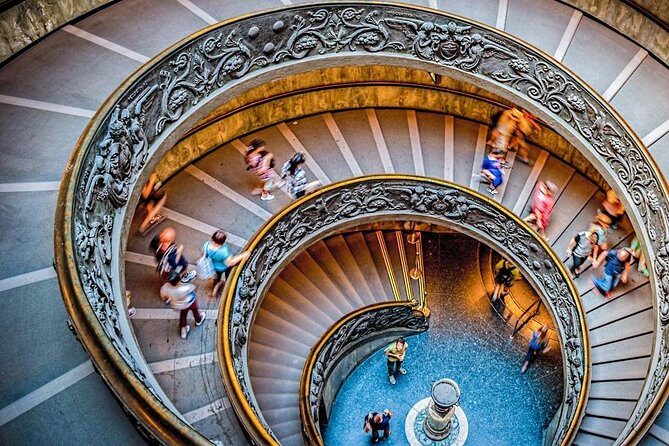
The Vatican Museums are famous for scale. The problem isn’t that they’re boring—it’s that crowds can turn looking into sprinting. This tour’s big advantage is simple: you visit after peak hours, so the atmosphere tends to feel calmer and easier to take in.
That matters because the Vatican isn’t one “thing.” It’s a stack of rooms with different subjects, different artists, and different styles—plus the constant question of what to notice first. When you start later in the day, you can actually spend time on the details your guide points out, instead of relying on luck to catch them between elbows.
And the tour does something smart with your energy. It begins in the Vatican Museums (a heavy-duty section), then finishes at the Sistine Chapel, when you’ll want your attention at full strength.
You can also read our reviews of more private tours in Rome

Pickup and transfers: how the logistics help you relax
A lot of Rome tours work like this: you arrive at a meeting point, then you scramble. This one aims to remove the scramble by offering pickup from select locations.
Pickup options include:
- Fiumicino Airport
- Ciampino Airport
- Civitavecchia Port
- other locations outside the designated area for an extra cost (ask ahead)
Pick-up timing is also designed with reality in mind. They’ll pick you up more than 15 minutes earlier than the official start time. That’s useful, especially in Rome traffic, where being “on time” can still mean being late.
One practical note: this is a private tour/activity, meaning it’s only your group. So you’re not sharing your experience with random strangers who might move slowly, stop constantly, or ask unrelated questions.
The guide experience: clear storytelling with real expertise
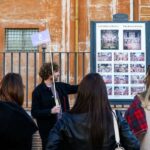
You won’t be walking around with a generic audio-only guide. This tour includes a local guide plus a professional art historian or archaeologist guide who provides in-depth commentary.
The value here is that you’re learning while you look. Instead of reading big wall labels, you get the why-behind-the-what: why certain symbols show up, what the scenes reflect about the time they were made, and how the artists’ choices connect to wider Vatican themes.
One detail worth highlighting from a previous English-speaking run: a guide named Fernando was praised for being extremely knowledgeable and accommodating, including helping adjust the tour time when requested. That’s a good sign for flexibility, because Vatican entry windows can be tight and plans sometimes shift.
If your group includes 6+ people, you also get radios and earpieces, so the guide’s voice stays clear without you leaning over distractions. It’s a small thing that makes a big difference in a place where people talk softly, whisper, and sometimes accidentally block your view.
Vatican Museums stop-by-stop: what each room is doing for you
The Vatican Museums section lasts about 2 hours and includes multiple signature areas. Here’s what those stops are likely to feel like and why they matter for your visit.
Terrace first: Saint Peter’s view and instant context
You start with a terrace view that can feel overwhelming in the best way: Saint Peter’s Basilica and the Vatican gardens in one sweeping look. This is not just a photo moment. It gives you geographic context—suddenly the Vatican isn’t a collection of buildings. It’s a planned complex with sightlines, power, and symbolism.
This kind of opening helps you “read” the rest of the day. When you later see how artists approached religious themes and patronage, you’ll have the bigger picture in mind.
Potential drawback: if you’re someone who hates waiting even a few minutes, terraces can be linger spots. The upside is that it sets your frame of mind quickly.
You can also read our reviews of more museum experiences in Rome




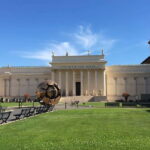
Court of the Pine Cone: the calm before the galleries
Next comes the Court of the Pine Cone. Courts like this are the Vatican’s palate cleanser: more space, more structure, and fewer dense ceiling moments than the rooms that follow.
The pine cone itself is a recognizable feature, and it’s the kind of object that invites questions like why it exists here and what it represents in the broader design language. In a group with an expert guide, you’ll get answers tied to how the Vatican curated meaning across spaces.
Gallery of the candelabras: movement, patterns, and light
The Gallery of the Candelabras is a study in decorative drama—ornament, rhythm, and visual repetition. Even if you don’t catch every artistic reference, this room trains your eyes to notice design choices: how the space guides you, how the decoration supports the setting, and how your attention changes as you move.
Best tip mindset: don’t rush this one. Look a little longer than you think you should, because galleries like this reward slow attention.
Gallery of the tapestries: seeing stories through textile art
You’ll pass through the Gallery of the Tapestries, where artwork comes to you in a different form—textile-based imagery instead of paint on canvas.
This stop helps you understand the Vatican as a patron system, not just an art museum. Tapestries also affect how a room “holds” light and shape. You may find yourself noticing edges, textures, and how the figures read from a distance.
Gallery of the geographical maps: science, power, and curiosity
Then it’s the Gallery of the Geographical Maps. This is a great room for showing how art, information, and authority overlap.
Maps can feel straightforward until you realize they’re designed objects. In many museum settings, maps are treated like background. Here, they’re part of the main event, which is why it’s worth giving them time. You’ll likely come away with a better sense of how geography and worldviews were shaped for audiences in that era.
Raphael’s Rooms: where the big names become personal
You’ll also visit Raphael’s Rooms (Raphael’s stanze). This is where the tour becomes emotionally louder. The art feels alive—composition, storytelling, and symbolism that’s easy to get pulled into.
The practical benefit is that these rooms are some of the most memorable in the Museums route. Even if you don’t have unlimited stamina, seeing Raphael’s Rooms tends to make the whole day feel worthwhile.
Possible drawback: Raphael’s Rooms can be intense. If you’re easily overwhelmed by crowds, bright rooms, or lots of visual density, try to follow the guide closely and keep your eyes up—not down at your phone.
Sistine Chapel: short time, serious focus
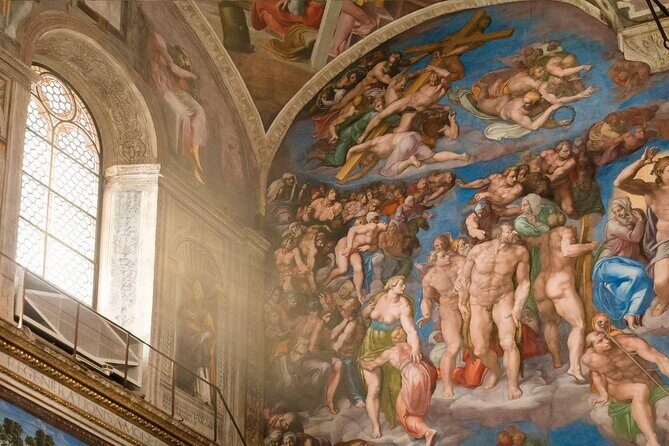
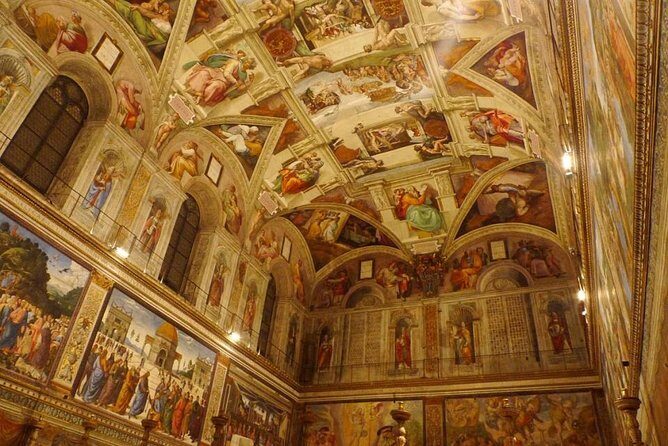
The Sistine Chapel stop runs about 30 minutes, with admission included as part of the experience package structure. Expect a peculiar atmosphere—the chapel is lit with warm artificial light, and the colors can look brighter than you might expect.
This short time slot is a feature, not a bug. It forces focus. If you spend 30 minutes trying to see everything, you won’t see everything. If you spend 30 minutes seeing the main themes your guide highlights, you’ll get something you can actually remember.
What to do with that time:
- Go in ready to look upward and forward
- Don’t try to take in every panel like a checklist
- Use the guide’s pointing as a route map
If you’ve ever visited the Sistine Chapel and felt like it was all noise and shuffling, this is where the evening timing and skip-the-line structure pay off. You arrive with less queue stress, so you can concentrate when it counts.
What you’re really paying for (and why the value can make sense)
The price is $475.37 per person, with an approximate duration of 2 hours 30 minutes. At first glance, that’s not cheap. But here’s what’s included that you’d otherwise have to piece together on your own:
Included:
- Local guide and an art historian or archaeologist guide
- Guaranteed skip-the-line
- Ticket fees
- All included, no extra fees
- Van or car with driver pickup and one-way transfer to the Vatican Museums
- Headsets/radios for groups of 6+
- Sistine Chapel brochure
That bundle matters because Vatican costs and time add up fast. A private guide plus ticketed entry can easily become a more expensive DIY situation once you factor in booking, entry timing, and transport headaches.
Also, the itinerary is tightly packaged: you’re not buying a “maybe we’ll see this” promise. You have set areas in the Vatican Museums and a set Sistine Chapel slot. For many people, that structure is what turns a stressful day into a confident one.
The dress code and ID rules: the two things that can ruin your day
This kind of tour lives or dies by prep.
You’ll need to follow the dress code for places of worship and selected museums:
- No shorts
- No sleeveless tops
- Knees and shoulders MUST be covered for both men and women
- Failing to comply can lead to refused entry
You also need a current valid ID for all participants, and ID is required at the Vatican Museums entrance on the day of the tour. If you travel light and assume your phone photo will work, don’t. Bring the real ID document.
For student situations: university students under 26 with a valid student card or under 19 must provide proof of university attendance and age.
For families: child rates apply only when sharing with 2 paying adults, and children must be accompanied by an adult.
Who this tour suits best
This tour fits best if you:
- want Vatican Museums and Sistine Chapel without wasting time in lines
- prefer guided context from an art historian or archaeologist guide
- like the idea of an evening quieter visit
- travel as a group that benefits from headsets (especially if you’re 6+)
It also works if it’s your first Rome trip and you want the “big Vatican hits” done in a controlled, guided way. If you’re the type who gets frustrated by crowds and wants a cleaner experience flow, this evening timing is the deciding factor.
Should you book this evening private tour?
I’d book it if your priority is time, clarity, and reduced crowd pressure. The combination of evening entry, skip-the-line, and a guide with real background means you spend more minutes seeing and understanding, less time managing logistics.
I would hesitate if:
- you strongly dislike fixed schedules (because the Museums + 30-minute Sistine Chapel window is structured)
- you might struggle with the dress code or forgot your ID
- you’re hoping to rearrange plans later (the experience is non-refundable and cannot be changed for any reason)
If those points aren’t an issue, this is a strong choice for a confident Vatican day—one that treats the Sistine Chapel as a moment of focus, not just another stop on a long checklist.
FAQ
FAQ
What’s the approximate length of the tour?
The tour is about 2 hours 30 minutes approximately.
Is pickup included?
Pickup is offered. Pickup details are available for Fiumicino and Ciampino Airports, Civitavecchia Port, and other locations outside the designated area may require an extra cost.
What time should I expect pickup?
Pickup time will be more than 15 minutes earlier than the starting time.
Are tickets included?
Yes. Ticket fees are included, and admission for the Vatican Museums is included as well. Sistine Chapel admission is included in the tour format.
Will I be able to skip the lines?
Yes. The tour includes a guaranteed skip-the-long-line experience.
Is the tour private?
Yes. It’s listed as a private tour/activity, and only your group will participate.
Is there a dress code?
Yes. You need knees and shoulders covered. No shorts or sleeveless tops are allowed, and you may be refused entry if you don’t comply.
Do I need to bring ID?
Yes. A current valid ID is required for all participants at the Vatican Museums entrance on the day of the tour.
Do we get help hearing the guide?
For parties of 6 people or more, radios and earpieces are provided.