REVIEW · MUSEUMS
Semi-private Tour of the Vatican Museums
Book on GetYourGuide →Operated by Trajan Tours · Bookable on GetYourGuide
The Vatican Museums can swallow a whole day. This semi-private setup keeps it focused and human, with an officially licensed guide and small-group attention rather than a rush-through crowd. I like that you get the main “wow” rooms plus time to actually look, not just shuffle from statue to statue.
Two things I really like: first, skip-the-ticket line so your visit starts quickly and stays calmer. Second, you still get a broad mix of highlights, including the Pio-Clementine Museums, Raphael rooms, and the Sistine Chapel, plus an exit that brings you toward St. Peter’s Basilica.
One drawback to know up front: this is about 2.5 hours, so you’ll see many top sights, but not everything the Vatican has to offer. If you want hours of wandering on your own, you may still want a second visit later.
In This Review
- Key takeaways before you go
- How semi-private timing changes the Vatican Museums
- Skip-the-line entry and why you’ll feel it fast
- Pio-Clementine Museums: Laocoon and the Belvedere Torso
- Gallery of Tapestries: texture and storytelling
- Gallery of Maps (16th century): a Vatican you can read
- Raphael Rooms and Borgia Apartments: papal politics in fresco form
- Sistine Chapel: short time, big responsibility
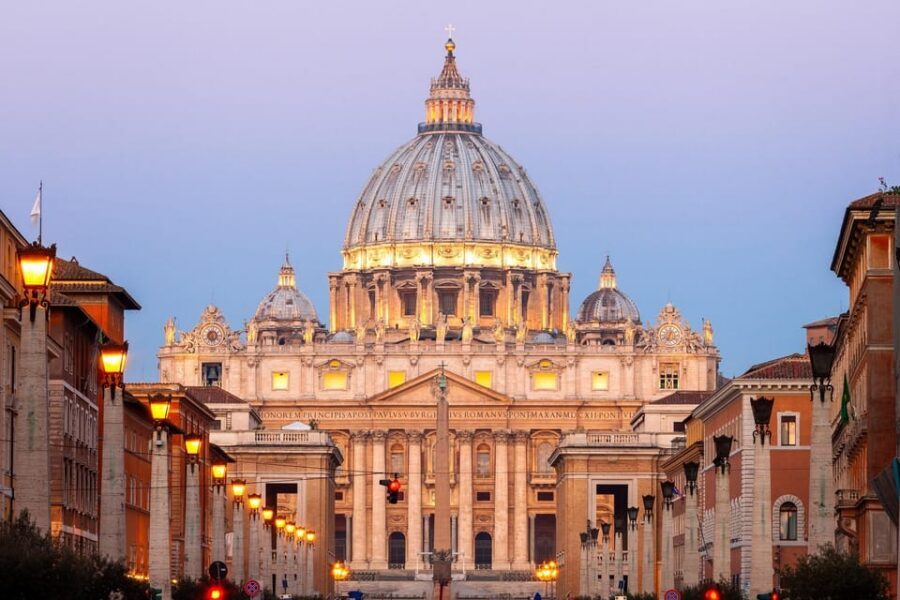
- Ending at St. Peter’s Basilica through a guided exit
- What you pay for: value of a 2.5-hour licensed guide
- Who this tour fits best (and who might want something else)
- Practical tips to get the most from the route
- Should you book this semi-private Vatican Museums tour?
- FAQ
- How long is the Semi-private Tour of the Vatican Museums?
- What’s included in the tour route?
- Is skip-the-line access included?
- What group size can I expect?
- What languages are offered?
- What is the cancellation policy?
Key takeaways before you go
- Semi-private size: no more than 14 spaces, typically around a dozen guests, so questions are possible.
- Licensed live guide: the tour leans on explanation, not just room-to-room movement.
- Pio-Clementine must-sees: Laocoon and the Belvedere Torso are part of the route.
- Map room + tapestries: the Gallery of Maps (16th century) and tapestries add variety beyond paintings.
- Sistine Chapel time: you get a short window to take in both the ceiling and the Last Judgment.
- St. Peter’s Basilica exit access: you leave by a guided route not meant for the general public.
How semi-private timing changes the Vatican Museums
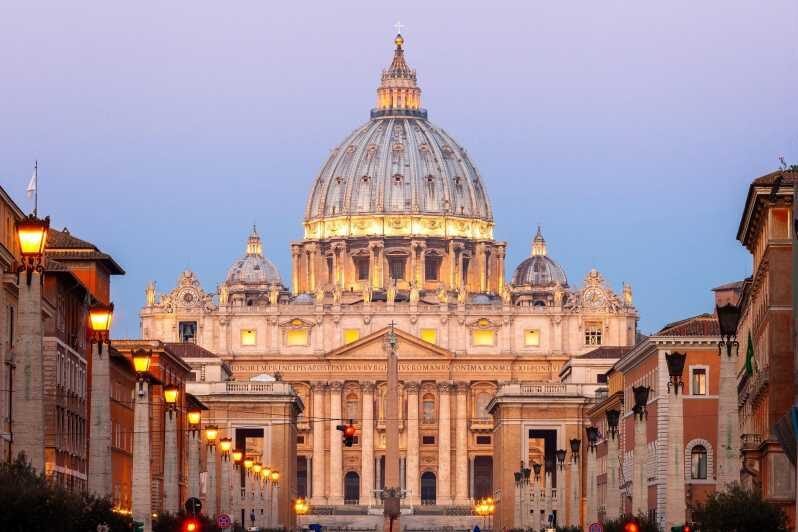
The Vatican Museums are famous for two things: famous art and serious crowd flow. A semi-private format matters because it changes how the day feels. Instead of trying to keep up with a big group, you’re in a tighter cluster where your guide can point, explain, and slow down when something clicks.
This tour is built for that “I can actually understand what I’m looking at” feeling. With up to 14 spots and a duration of 2.5 hours, the pace is brisk, but not chaotic. You’ll get a guided route that hits the major rooms people travel for, then finishes at St. Peter’s Basilica.
Also, you’re not stuck waiting outside once you arrive. Skip-the-line access gets you moving sooner, which is a big deal in Rome when you’re balancing heat, timing, and energy.
You can also read our reviews of more private tours in Rome


Skip-the-line entry and why you’ll feel it fast
Getting into the Vatican Museums can be the hardest part of the whole visit. This tour specifically includes skip-the-ticket line, so you spend less time staring at walls and more time inside with your guide.
That time advantage adds up. You arrive, you meet your guide, and you start absorbing art almost immediately. If you’ve ever joined a museum tour where the first hour is just standing in line, you already know why this matters.
One more practical point: because the tour is timed and guided, it helps you avoid the “I’ll figure it out later” trap. The Vatican is maze-like, and a route with planned stops is easier on your feet and your attention span.
Pio-Clementine Museums: Laocoon and the Belvedere Torso
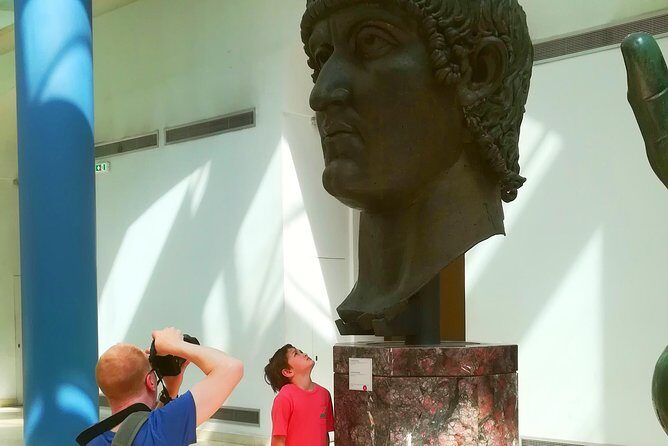
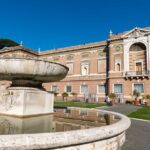
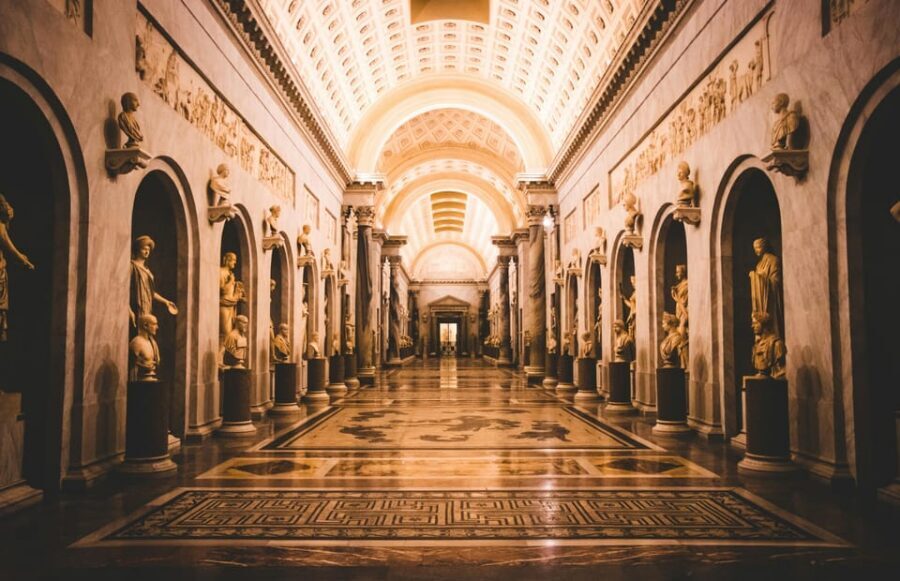
Your route begins in the Pio-Clementine Museums, which is where you get some of the Vatican’s most iconic classical sculpture. This area is a strong starting point because the pieces are dramatic even if you’re not a sculpture superfan.
Two names anchor this stop. You’ll see the Laocoon group, the famous sculptural scene that still reads as intense emotion and physical struggle. Then you’ll find the Belvedere Torso, one of those works that makes people stop and stare because it looks powerful even without the full story of the body completed.
What I like about this choice is that it gives you an immediate “baseline.” Once you’ve seen these major forms and scale, the rest of the museums land differently. Raphael rooms and the Sistine Chapel later feel connected to this older world of ideals, technique, and power.
Possible catch: sculpture can be a bit “slow” if you’re rushing. The guide’s job here is to keep it moving while giving you clear ways to look—where the drama is, how the forms are composed, and why these pieces became reference points for later artists.
Gallery of Tapestries: texture and storytelling
Next comes the Gallery of Tapestries. Tapestries might sound like a sidetrack if you’re expecting only marble and frescoes, but this room does an important job: it changes the visual language.
A tapestry isn’t just an image. It’s fabric, woven detail, and a different kind of realism compared to painting. You get a sense of how artworks served courts and politics, not only beauty for visitors.
This stop also helps break up the museum rhythm. After sculpture, moving into a room of woven images feels like a reset for your eyes and your attention.
If you’re the type who gets tired of “another room of the same thing,” this is one of the stops that can refresh your interest before you move into Raphael and the papal apartments later.
Gallery of Maps (16th century): a Vatican you can read
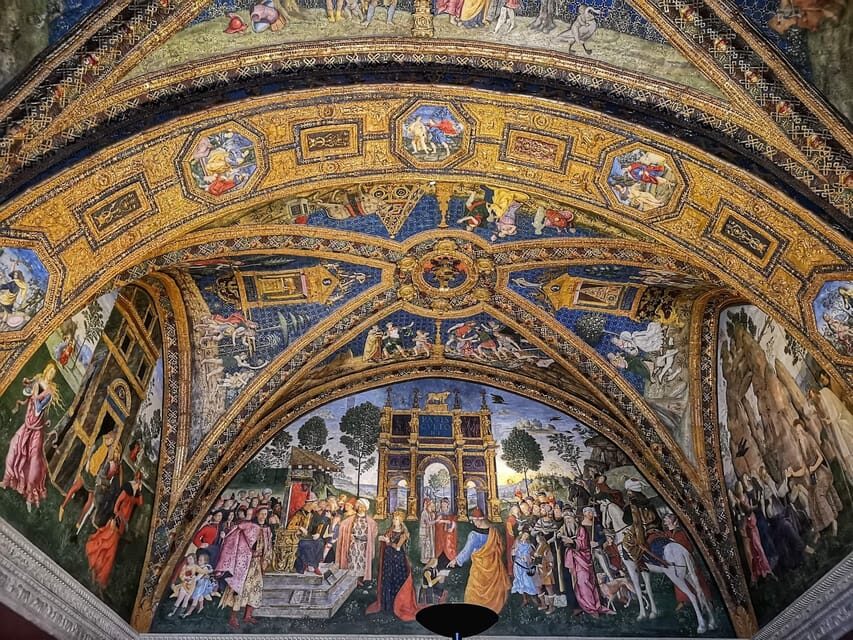
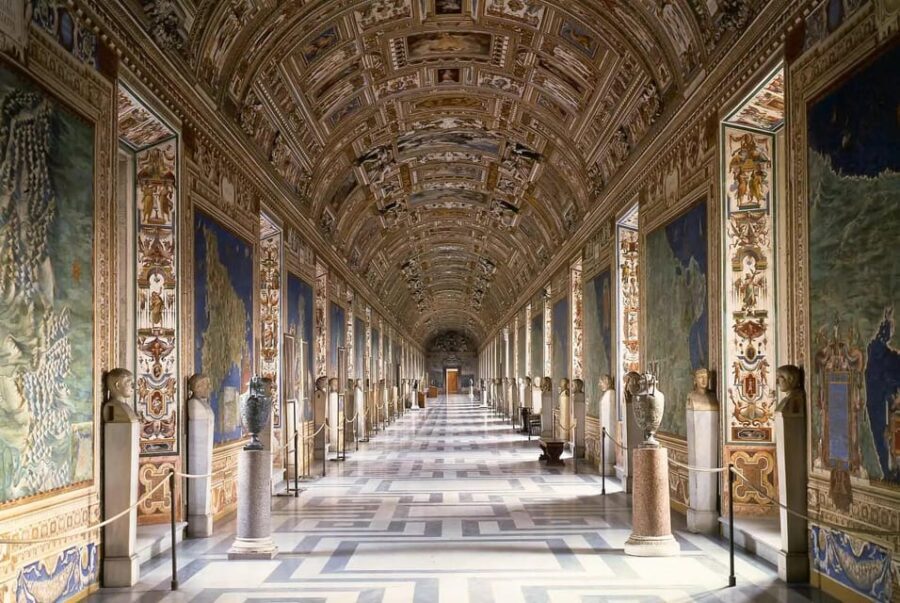
The Gallery of Maps is one of those places that’s more than a pretty room. It’s a way to understand the Vatican as an institution with a global lens—geography as power, planning, and knowledge.
Here you’ll see the 16th-century painted maps, a visual display that’s both educational and oddly entertaining. Maps are usually “background” in travel. In this gallery they become the main event.
What you’ll likely remember later isn’t only what’s on the maps, but how the room makes you think. You start noticing details like scale, layout, and how information is presented to viewers. In other words, this isn’t passive decoration; it’s communication.
Drawback to consider: if you’re in a strict art-only mood, the maps might feel less emotional than sculpture or frescoes. But if you want variety and context, this is a smart pivot point in the itinerary.
You can also read our reviews of more museum experiences in Rome

Raphael Rooms and Borgia Apartments: papal politics in fresco form
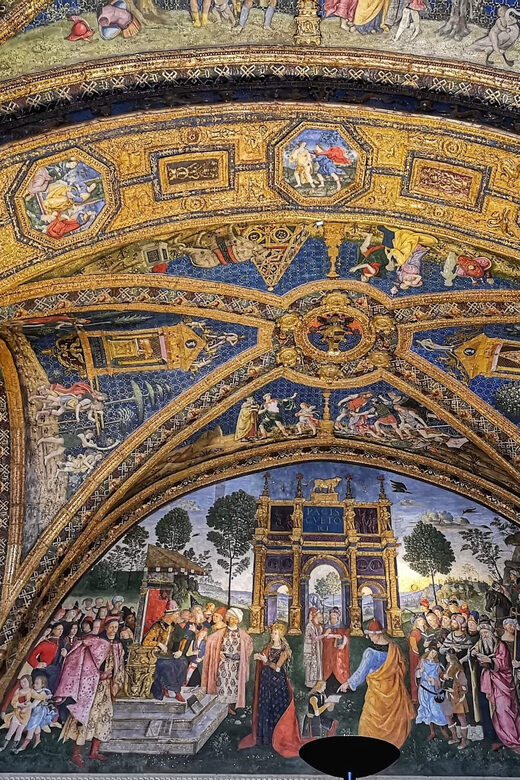
After the maps and tapestries, you move into the former papal apartments, including the Raphael rooms and the Borgia apartments. This is where the Vatican Museums shift from “objects in galleries” to “power on walls.”
The route includes the Raphael rooms first, which makes sense. Raphael’s painting world is known for clarity of composition and a kind of controlled drama. Even if you don’t know every scene, you can feel the structure: the way figures are arranged, how scenes are staged, and how the images guide your eye.
Then you go into the Borgia apartments, which bring a different tone. The Vatican isn’t just museum-like; it’s connected to real people and real eras. These rooms help you sense the atmosphere of the periods involved, especially how art served status and authority.
This section is also where a strong guide really shows. You don’t want a guide who just points and says what the painting is. You want someone explaining why these works were placed here and what they were trying to do to the viewer.
Sistine Chapel: short time, big responsibility
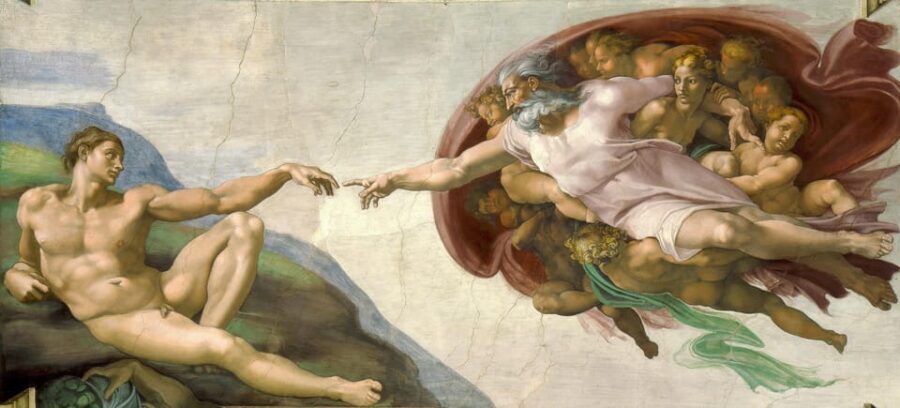
At the center of the tour is the Sistine Chapel, named after Pope Sixtus IV. This is the part people plan their whole trip for, and the tour gives you some time to take in the frescoes.
You’ll focus on two major areas: Michelangelo Buonarotti’s ceiling and the Last Judgment. The ceiling is the attraction people already expect, but the Last Judgment often hits differently once you’re inside—because the scale of emotion and figures feels overwhelming, even if you’ve seen photos before.
One practical reality: the tour time here is limited. That’s not a flaw in the tour so much as the math of the Vatican. The good news is your guide’s explanations help you choose where to look first, so your time doesn’t vanish into confusion.
If you’re someone who likes to linger, you might wish for more minutes. But if you want the core experience guided and understandable, this stop is well matched to the overall 2.5-hour format.
Ending at St. Peter’s Basilica through a guided exit
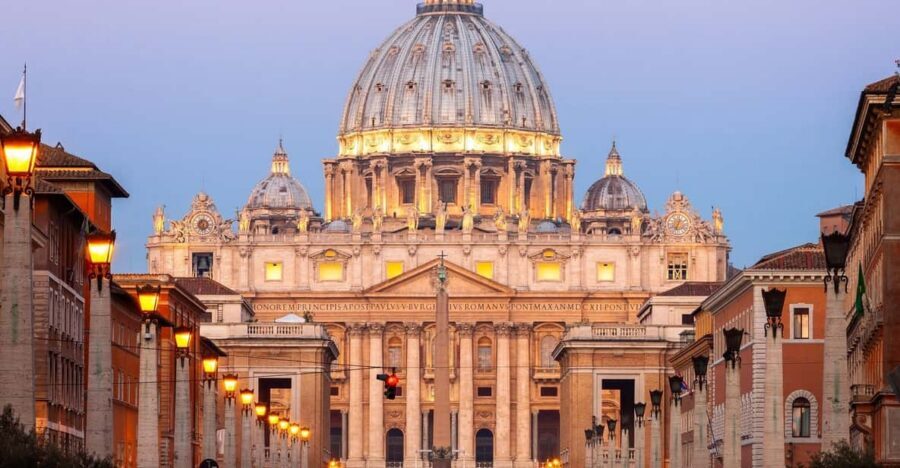
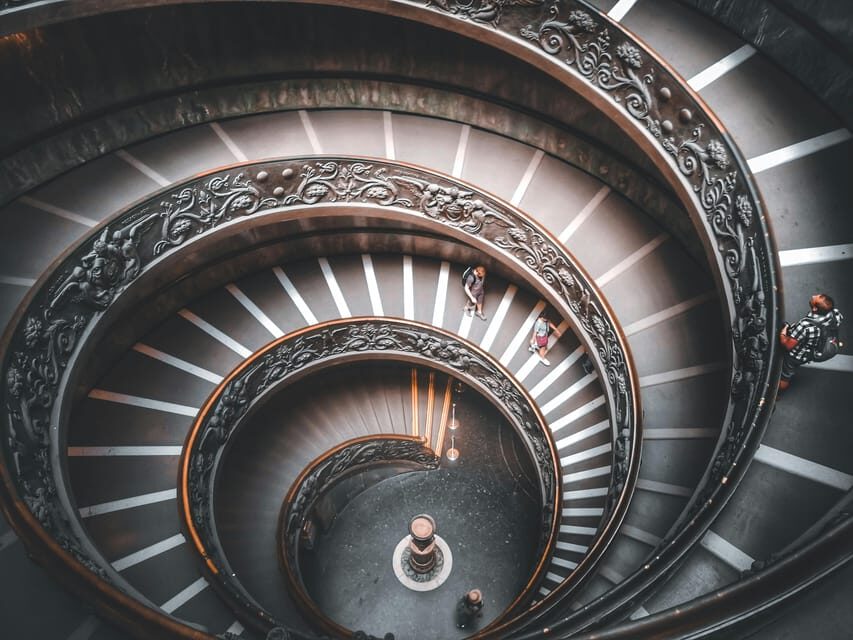
The tour doesn’t just stop at the Sistine Chapel. It ends with access toward St. Peter’s Basilica, using a guided tour exit that is not open to the general public.
That ending matters more than it sounds. St. Peter’s Basilica is huge, and arriving through a guided route can help you transition without losing time or energy at a random point in the complex. You’ll get your guide’s framing on what to notice as you enter or approach key areas.
This is a great “finish line” for first-timers. You get the Vatican Museums climax, then you land in a different architectural atmosphere—one that feels more alive and immediately present.
Just remember: the Basilica is a whole world by itself. Your guided moment won’t replace a slow walk if you want one, but it gives you a strong start and clear priorities.
What you pay for: value of a 2.5-hour licensed guide
The price is $123.48 per person for a 2.5-hour semi-private tour. That’s not cheap, but it’s not only for entry tickets either. You’re paying for three key things: licensed guiding, time saved with skip-the-line access, and a route that strings together major rooms without you figuring it out on your own.
If you’ve ever done this area solo, you know the hidden cost: stress. The Vatican isn’t just large; it’s packed with decisions. Where do you go first? What’s worth your limited time? Which details matter?
This tour reduces that friction. The guide’s job is to connect dots—classical sculpture to Renaissance painting to the Sistine Chapel, then into St. Peter’s Basilica. Based on the feedback, one of the strongest parts of the experience is the guide’s engagement and how clearly the tour is explained.
So is it worth it? If you want the best return on your time and you like learning as you walk, yes. If you hate following someone else’s pace, you may feel constrained by a fixed route and limited time in each room.
Who this tour fits best (and who might want something else)
This works especially well for you if:
- You want top Vatican sights in a short window.
- You prefer asking questions and getting responses in a small group.
- You appreciate a guide who can make famous art easier to see and interpret.
It may be less ideal if:
- You plan to spend half your day inside the Vatican Museums with no structure.
- You’re strictly chasing only the Sistine Chapel and nothing else, since the route covers more ground before you reach it.
Also, note the language options: English and Hungarian. If you want English, you’ll be fine here. If you need Hungarian specifically, this tour can match that.
Practical tips to get the most from the route
A short, structured Vatican tour rewards preparation. Here are a few ways to help your experience feel smooth.
First, wear comfortable shoes. Even at a brisk pace, you’re walking between major rooms and galleries. Second, keep your expectations realistic for the Sistine Chapel: you’ll get a focused window, not an all-day sit-down.
Third, use your guide’s approach. If your guide points out a detail in the ceiling or explains a scene in the Raphael rooms, lean in. The guide’s explanations are a core part of the value, and this tour is built around that interaction.
Finally, plan your Basilica time with the idea that the tour provides an ending introduction. If you want more, you’ll likely want to continue on your own afterward.
Should you book this semi-private Vatican Museums tour?
I think this is a strong choice if you want skip-the-line entry, a small-group feel, and a route that hits the big names without turning your day into a stampede.
The best reason to book is the format: you get an officially licensed guide and a focused itinerary that links sculpture, map rooms, papal apartments, and the Sistine Chapel, ending at St. Peter’s Basilica via a guided exit. The feedback also points to guides who are engaging and informative, which is exactly what you want in the Vatican.
If you’re okay with moving through highlights quickly and you’d rather understand what you’re seeing than spend hours lost in galleries, book this. If you want to meander for a long time without structure, you may prefer a slower independent plan or a longer tour.
FAQ
How long is the Semi-private Tour of the Vatican Museums?
It lasts 2.5 hours.
What’s included in the tour route?
You’ll visit the Pio-Clementine Museums (including the Laocoon group and the Belvedere Torso), the Gallery of Tapestries, the Gallery of Maps (16th century), the Raphael rooms, the Borgia apartments, and the Sistine Chapel. The guided tour then exits toward St. Peter’s Basilica.
Is skip-the-line access included?
Yes. The tour includes skip-the ticket line.
What group size can I expect?
It’s a semi-private tour with no more than 14 spaces available, typically around twelve guests.
What languages are offered?
The live tour guide is available in English and Hungarian.
What is the cancellation policy?
You can cancel up to 24 hours in advance for a full refund.