REVIEW · CYCLING TOURS
Rome’s Ultimate Bike Tour
Book on Viator →Operated by Rome's Ultimate Free Walking Tours · Bookable on Viator
A bike ride through Rome’s ancient spine. This tour is built for people who want big history without doing hours of walking. You cruise between iconic sites and green spaces, with an expert-style guide telling you what you’re looking at and why it mattered.
Two things I like a lot are the small group size (maximum 10) and the fact that the itinerary mixes famous monuments with quieter, nature-filled archaeology parks. One thing to consider: many stops are short (often around 10 minutes), so it’s better if you’re happy to move on and come back later for deeper exploring.
In This Review
- Key highlights you’ll feel right away
- A Rome bike tour that connects monuments and open air
- Where the tour starts and what your morning looks like
- Circo Massimo: the stadium that explains Roman spectacle
- Caracalla Baths and Museo delle Mura: everyday Rome and the city’s defenses
- Terme di Caracalla
- Museo delle Mura
- The Appian Way (Via Appia Antica): where the ride becomes the point
- Catacombe di San Callisto: a panoramic stop with a serious tone
- Parco degli Acquedotti (Aqueduct Park) and Parco della Caffarella: ancient engineering meets views
- Parco degli Acquedotti – Parco Archeologico dell’Appia Antica
- Parco Della Caffarella
- Parco di Torre Fiscale and the meaning of purpose
- Via Cristoforo Colombo: linking the old center to the sea
- Price and value: what $96.12 gets you for 4.5 hours
- Who this Rome bike tour suits best
- The most praised part: Dimitri-style guiding that turns facts into flow
- Should you book Rome’s Ultimate Bike Tour?
- FAQ
- What is the duration of Rome’s Ultimate Bike Tour?
- How much does the tour cost?
- How many people are in the group?
- What language is the tour offered in?
- Where do you meet and where does the tour end?
- Is there an admission cost at the stops?
- What time does the tour start?
- Do I need good weather?
- Can I cancel for a full refund?
- Is a mobile ticket provided?
Key highlights you’ll feel right away
- Max 10 riders means you can ask questions and stay engaged
- Free-admission stops listed throughout helps keep costs predictable
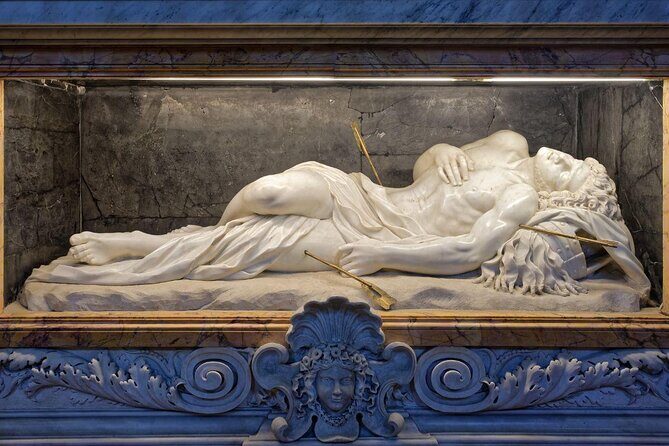
- Via Appia Antica for 40 minutes gives you real time to soak in the ride
- City-to-country flow connects Rome’s monuments to the outlying parks
- Parks plus ruins mean you’re not stuck staring at stone all day
A Rome bike tour that connects monuments and open air
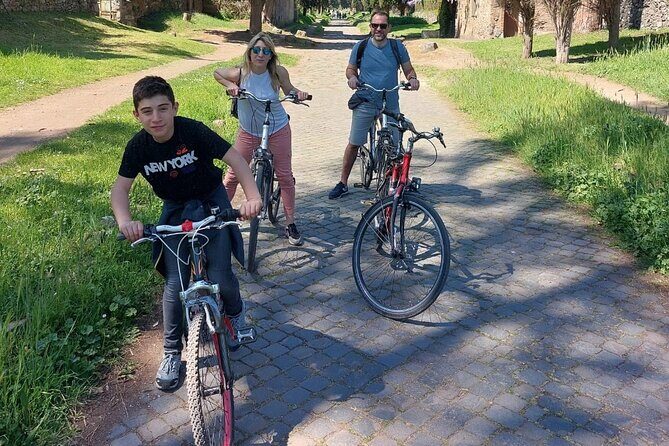
If Rome is a movie, this is the long take. Instead of hopping between separate attractions, you move by bike through a chain of sites that each explain a different layer of Roman life: entertainment, bathing culture, city walls, roads, burial sites, and the engineering that fed the city.
What makes this work in practice is the pacing and variety. You start with large, dramatic structures, then shift outward into parks where ancient engineering shows up in views, not just in photos. You get a sightseeing rhythm that feels efficient, but not rushed in the way some “see Rome fast” tours can be.
The guided part is what turns it from a ride into a tour. The experience is in English, and the guide approach is personal. In the feedback shared about this tour, the guide named Dimitri stands out for making Roman history feel like a story you can follow, not a list of dates.
One more practical benefit: it’s a simple way to see a lot while still getting fresh air. Rome can exhaust you with standing in lines and walking between areas. A bike changes the math.
You can also read our reviews of more cycling tours in Rome
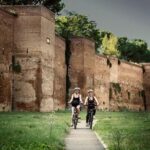
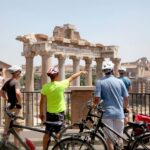
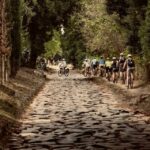
Where the tour starts and what your morning looks like
You meet at Via dei Serpenti, 89, 00184 Roma. The start time is 10:00 am, and the tour ends back at the meeting point. The location is described as near public transportation, which matters because it makes it easier to arrive without stress.
The total time is about 4 hours 30 minutes. That’s long enough for a full “Rome highlights” feel, but short enough that you can still plan another half day after—perfect if you’re also visiting museums or doing a separate evening activity.
You’ll have a mobile ticket, so you’re not juggling paper. That’s small, but on a busy Rome morning, it keeps things smooth. And because the group is capped at 10 guests, you’re unlikely to feel like you’re in a parade of strangers.
Weather is a factor here. The experience requires good weather, so if conditions don’t cooperate, you’ll be offered another date or a refund. Plan your day with that in mind, especially if you’re traveling in seasons with frequent rain.
Circo Massimo: the stadium that explains Roman spectacle
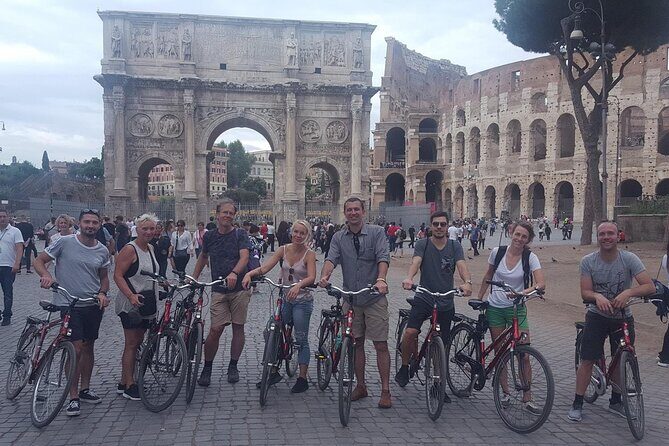
Stop one is Circo Massimo—the Circus Maximus, described as the biggest stadium ever built in the history of the world. Even if you only spend 10 minutes, this is a smart start. It tells you what Rome did best: scale, crowd energy, and civic entertainment.
On a bike, you don’t just see the space—you get a sense of why it could hold massive events. It’s also the kind of place where a good guide can connect architecture to behavior. Why build something so enormous? What did people come to see? How did public life work around spectacle?
The practical upside: this start sets expectations. You quickly learn how the tour will work—short stops with clear takeaways, then time riding while the city moves around you.
Caracalla Baths and Museo delle Mura: everyday Rome and the city’s defenses
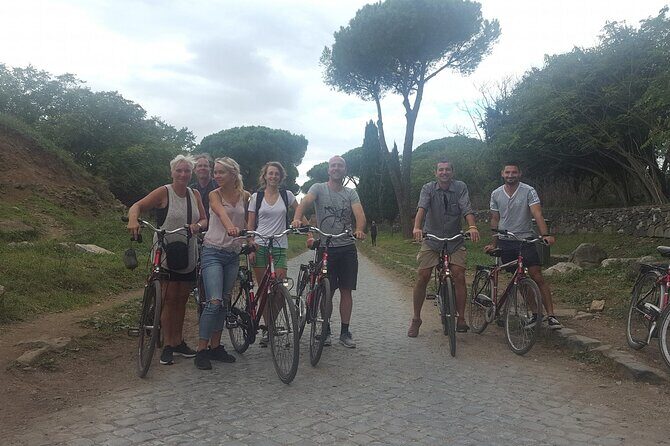
Next up are two quick hitters.
Terme di Caracalla
Baths of Caracalla are the second-largest public bathing complex in Ancient Rome, and this stop is 10 minutes. Baths sound familiar to modern visitors, but they’re more than a place to wash. They were social hubs, part of daily routine, and a sign of imperial power.
Because the tour keeps the stop short, aim to treat it as orientation. You’re not trying to memorize every room. You’re learning how the bath complex functioned as a Roman lifestyle center.






Museo delle Mura
Then you visit Museo delle Mura, tied to the Aurelian Walls—the walls that shaped the contemporary historical center of Rome. Again, it’s listed as 10 minutes, but this stop matters because it explains boundaries.
Walls are a theme in Rome: how the city protected itself, how it grew, and how later Rome inherited those edges. The museum stop helps you read the city you’re riding through, not just admire it.
Consideration: if you love museums where you can wander slowly, these two stops may feel brief. The payoff is that the bike time keeps your momentum and gets you to the more extended highlight ride soon.
The Appian Way (Via Appia Antica): where the ride becomes the point
This is the big one: Appian Way, also called Via Appia Antica, with 40 minutes set aside for the ride. The tour even frames it as the Queen of all Roman roads, and you can see why quickly.
When you bike along ancient routes, you’re not only viewing history—you’re traveling on the same idea of movement that once helped legions march, goods travel, and Rome stay connected. The road becomes a timeline. With the right commentary, you also start noticing the engineering logic: why roads like this mattered so much.
This longer stretch is also smart for comfort. If most stops are quick, the bike ride gives you a chance to settle in. It’s long enough to relax into the journey and take in the surrounding architecture and open-air feel.
In the feedback for this experience, the Appian Way ride is a personal highlight for more than one person, and I get it. It’s the most “still picture” site that turns into an actual journey.
Catacombe di San Callisto: a panoramic stop with a serious tone
Next is Catacombe di San Callisto, with 15 minutes allocated and a description focused on a panoramic ride through the largest catacomb complex of Rome.
Catacombs can be eerie, but what makes them worth including is context: Roman burial practices and how communities used underground spaces. A panoramic approach from the bike keeps it respectful and less time-crunched than a longer walking visit, while still giving you that sense of scale.
If you prefer underground spaces where you can take in details at your own pace, you might want to add a separate visit later. But as part of a 4.5-hour bike tour, this stop gives you the emotional and historical contrast you need after the long road ride.
Parco degli Acquedotti (Aqueduct Park) and Parco della Caffarella: ancient engineering meets views
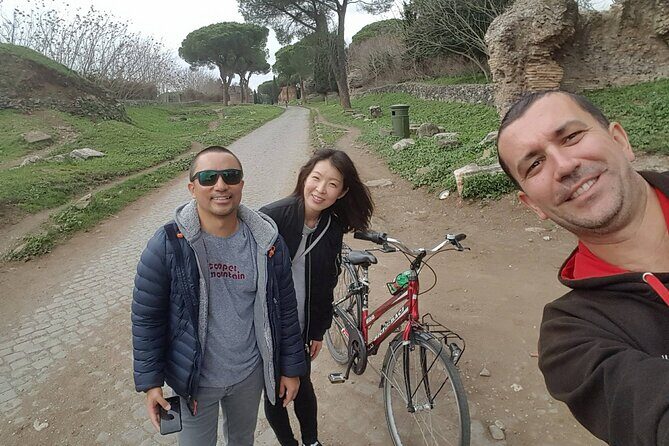
Then you shift into two nature-and-ruins parks that feel like a reset button from stone monuments.
Parco degli Acquedotti – Parco Archeologico dell’Appia Antica
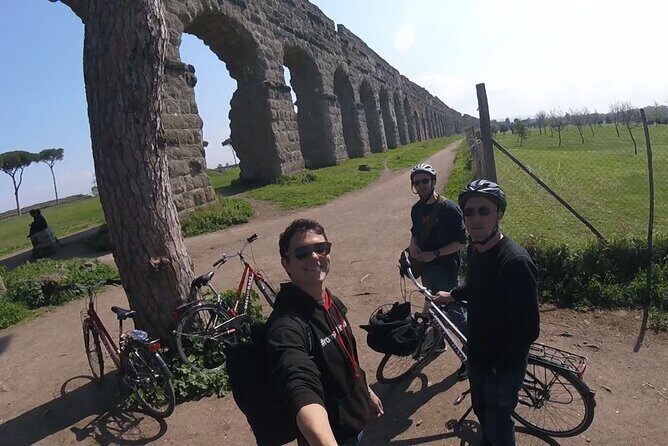
This stop runs about 30 minutes and focuses on the aqueduct park in the outskirts of Rome, with views plus ancient Roman architectural and engineering wonders. This is where biking earns its keep.
Aqueducts are impressive, but they’re also easier to appreciate when you can see them from multiple angles. In a park, you can take in how the structures relate to the land. And compared to indoor-only sights, it’s a more relaxed way to learn.
Parco Della Caffarella
After that, you also have 30 minutes at Parco Della Caffarella, described as where urban and nature meet. It’s another “you’re moving, not staring” segment, which helps if you’re sightseeing on a schedule.
These parks are valuable because they show a different side of Rome’s ancient legacy. Roman engineering didn’t just exist in cities. It shaped the countryside too—and it still shapes the view today.
Parco di Torre Fiscale and the meaning of purpose
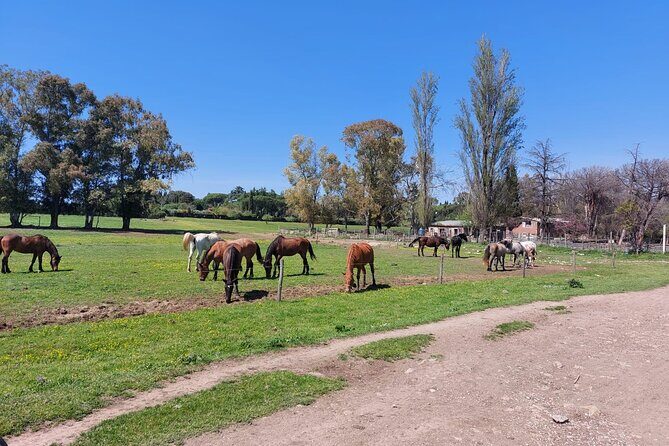
Stop eight is Parco di Torre Fiscale, with 10 minutes. The description points to the history of the Fiscal Tour and its purposes.
Even though the time here is short, this is a good example of how the tour keeps a theme going. Roads and public sites aren’t just pretty—they served administrative and practical goals. Learning the purpose side of Roman systems helps you understand why these places existed, not just what they looked like.
If you enjoy explanation that connects different sites—how a road links to civic function, how engineering connects to daily life—this is the kind of stop that clicks.
Via Cristoforo Colombo: linking the old center to the sea
The last stop is Via Cristoforo Colombo, described as the street linking Rome’s historic center to Ostia, the gateway of the Eternal City to the Tyrrhenian Sea, with 10 minutes set aside.
It’s a clever finish. You start with Roman spectacle and ends with a route concept: Rome’s reach outward. Via Cristoforo Colombo also acts like a reminder that Rome isn’t just ancient artifacts in a museum. It’s a city built on connections, transport, and movement—exactly what you’ve been doing on your bike.
Price and value: what $96.12 gets you for 4.5 hours
At $96.12 per person for about 4 hours 30 minutes, this isn’t a “grab a selfie and go” deal. The value is in the combination:
- Small group size (max 10) so you’re not lost in a crowd
- Guided interpretation in English to turn stops into stories
- A route that spans city monuments and multiple archaeology parks
- Stops that list admission tickets as free, which helps reduce add-on costs
That last point is key. Rome can nickel-and-dime you with separate ticket costs. When a tour stacks free admissions into the itinerary, you’re more likely to feel like the price covers the experience instead of fighting the budget mid-tour.
Is it worth it if you’re a hardcore “I want to go inside everything” traveler? Maybe not. If you want long museum time, you’ll likely do better combining a few guided stops with extra independent time elsewhere. But if your goal is to see a lot in one smart morning and understand what you’re looking at, this price makes sense.
Who this Rome bike tour suits best
This tour fits best if you want:
- Efficient sightseeing without turning your day into endless walking
- A guided story through major ancient themes: entertainment, daily life, walls, roads, burial sites, engineering
- A bike-based route that naturally includes fresh air and open space
- A group environment where you can ask questions (small cap of 10)
Most travelers can participate, and it runs at a manageable length for a half-day plan. That said, because stop times can be short, it’s less ideal if you need lots of slow time at each monument.
If you’re traveling with kids, this could work best for older kids who can handle bike time and the pace. If you’re in a group of mixed ages, the small group cap helps you stay organized.
The most praised part: Dimitri-style guiding that turns facts into flow
In the feedback tied to this tour, the guide experience stands out—especially when the guide is Dimitri. People consistently describe him as personable and approachable, and they highlight how the talk isn’t stuck in textbooks.
That matters because the tour includes a lot of different kinds of sites. Without guidance, it’s easy to treat each one like a postcard. With the guide approach, you get connections: why a road was built, what a bath complex meant, how walls shaped the city, and what you’re seeing in the parks.
If you care about learning while you move, this is where the tour earns extra points.
Should you book Rome’s Ultimate Bike Tour?
I’d book it if you want a high-coverage Rome morning with a guided narrative and a bike route that mixes ancient cities with parks and views. It’s especially good for first-timers who feel overwhelmed by Rome’s sprawl and want a structure that makes sense fast.
I wouldn’t book it as your only Rome plan if you need long museum time or you hate short stops. Also, if weather looks shaky, be ready to adjust since it’s described as requiring good conditions.
If you’re deciding between solo wandering and a guided bike route, this one is a strong pick. You’ll spend your time seeing major sites and understanding them, not just passing them by.
FAQ
What is the duration of Rome’s Ultimate Bike Tour?
It runs for approximately 4 hours 30 minutes.
How much does the tour cost?
The price is $96.12 per person.
How many people are in the group?
The tour has a maximum of 10 travelers.
What language is the tour offered in?
The tour is offered in English.
Where do you meet and where does the tour end?
You meet at Via dei Serpenti, 89, 00184 Roma, and the tour ends back at the meeting point.
Is there an admission cost at the stops?
The itinerary lists admission tickets as free for each stop.
What time does the tour start?
It starts at 10:00 am.
Do I need good weather?
Yes. The experience requires good weather, and if it’s canceled due to poor weather you’ll be offered a different date or a full refund.
Can I cancel for a full refund?
Yes. You can cancel up to 24 hours in advance for a full refund, based on the experience’s local time.
Is a mobile ticket provided?
Yes, it’s listed as a mobile ticket.