REVIEW · EVENING EXPERIENCES
Rome: Vatican Museums & Sistine Chapel Private Evening Tour
Book on GetYourGuide →Operated by LivTours - We craft tours, you live them · Bookable on GetYourGuide
Seeing the Vatican at night changes everything. You trade daytime crowds for softer light and a calmer pace, and that alone makes the Vatican Museums & Sistine Chapel feel more like a guided conversation than a checklist. The plan is built around skip-the-line entry and an evening visit, so you start moving through the collections while the museum is still awake but not packed.
Two things I really like: first, the route is focused on the spots that reward your attention, from the Pinecone Courtyard to the Octagonal Courtyard and then into the highlights most people miss or rush past. Second, the guiding style matters here, and in the names that show up for this tour (like Giovanni and Christina), the approach is very “stand here, look there, and here’s what you’re seeing.” A note to keep in mind: this is still the Vatican, so you’ll need to follow strict rules in the Sistine Chapel, and you should expect some walking inside the museums.
In This Review
- What Makes This Private Vatican Night Tour Feel Different
- Skip the Lines at Viale Vaticano: Starting Before the Rush
- Courtyard of the Pigna (Pinecone Courtyard): A Calm Pre-Game for the Art
- Cortile del Belvedere: Where Big Sculpture Energy Starts
- Gallery of Tapestries: Raphael’s Students at Their Best
- Gallery of Maps: A 40-Panel Lesson in How the Vatican Thinks
- Raphael Rooms: Standing in the Spots That Matter
- Pinecone-to-Sistine Flow: How the Evening Sets the Mood
- Sistine Chapel: Silent Rules, Clear Guidance, Big Payoff
- Price and Value: Is $288.88 Worth It?
- Who This Tour Suits Best (and Who Might Be Happier Elsewhere)
- Should You Book This Private Evening Vatican Tour?
- FAQ
- How long is the Rome Vatican Museums & Sistine Chapel private evening tour?
- Where is the meeting point?
- Can I take photos in the Sistine Chapel?
- Are backpacks allowed in the museums?
- What ID do I need to bring?
- Is this tour wheelchair accessible?
- What languages are the guides offered in?
- What is included in the tour?
- Is food and drink included?
What Makes This Private Vatican Night Tour Feel Different
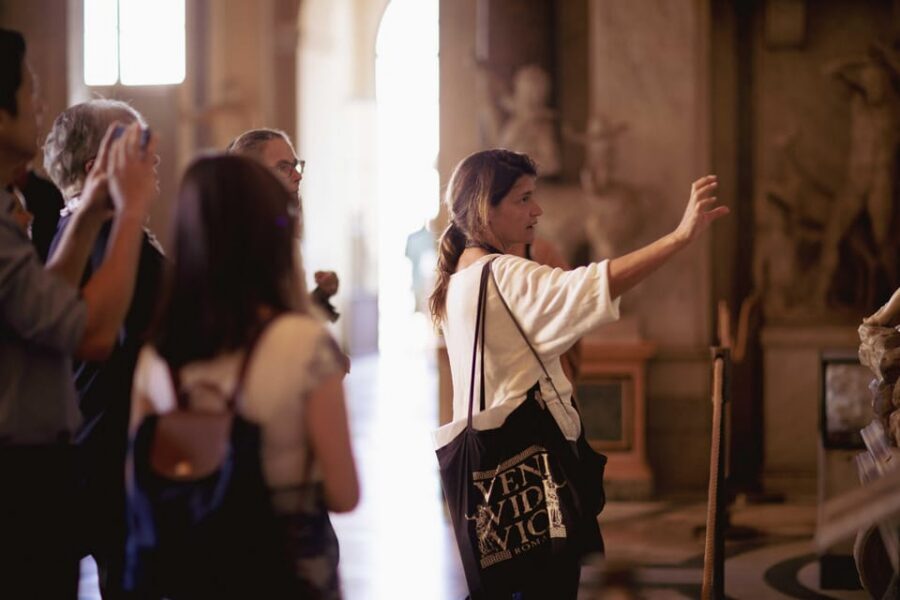
If your only goal is to see the big-ticket rooms, daytime can work. But if you want the art to land, an evening tour helps. The museum’s flow is the same on paper, but the experience is different when you aren’t fighting crowds at every doorway.
This is also a private group setup, which changes how the guide can manage timing. Instead of herding people, your guide can slow you down where it counts. That matters most around the Vatican’s famous sculpture groupings and the Raphael Rooms, where small “look for this” instructions can make a huge difference in how you understand the work.
Even the courtyards feel more like you’re stepping into a real space rather than an outdoor photo stop. After that long indoor art sprint, sitting with the Sistine Chapel under nighttime light is the kind of experience that sticks.
Skip the Lines at Viale Vaticano: Starting Before the Rush
The tour meets at Café Vaticano, Viale Vaticano 100, across from the Vatican Museums entrance. The timing detail isn’t small: you’re asked to arrive about 15 minutes early so the group can get through the first steps without stressing out.
Here’s the practical upside of the skip-the-line approach. The Vatican Museums are famous for queueing. Saving that time doesn’t just mean more sightseeing. It means you start the tour with your energy intact, which pays off later in the Raphael Rooms and Sistine Chapel, where your brain is doing a lot of absorbing.
Tip: arrive on time, but also keep your expectations flexible. You’ll still go through security and museum entry rhythms, just with less waiting than the usual route.
You can also read our reviews of more private tours in Rome

Courtyard of the Pigna (Pinecone Courtyard): A Calm Pre-Game for the Art
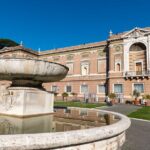
Stop 1 is the Courtyard of the Pigna (also known as the Pinecone Courtyard). This is the kind of place where the Vatican shows you it can be grand without being chaotic. The space works like a breath before the dense gallery hopping.
Why it’s worth it: it sets a visual mood. The courtyard’s open-air feel helps you reset, so when you move indoors, you’re not just steamrolling through rooms. You also start building context about how the Vatican Museums are arranged and how the guide will “thread” you through highlights.
What to watch for: follow your guide’s lead on where to stand. Courtyards like this aren’t just pretty—they’re reference points for understanding sightlines and the museum’s flow.
Cortile del Belvedere: Where Big Sculpture Energy Starts
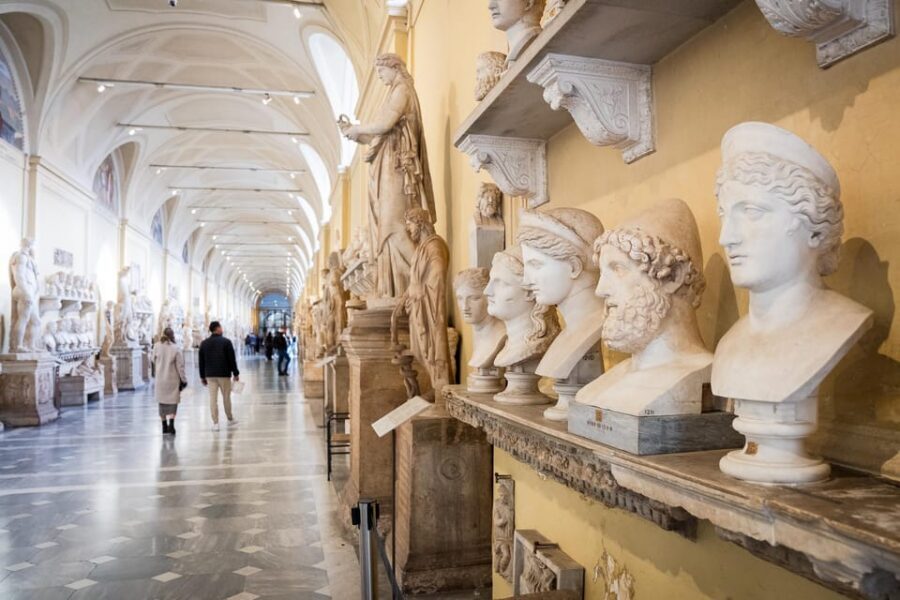
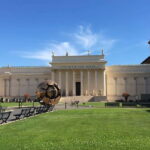
Next comes Cortile del Belvedere. This area is known for a heavy dose of sculpture, and your guide uses it to steer you toward the “why” behind the famous pieces.
One of the included highlights is the Ancient Laocoön statue. Another is the Ancient Apollo statue. These aren’t just names to memorize. They’re anchor works that help you understand how later artists were trained by classical sculpture—especially when you keep going toward Michelangelo and the Sistine Chapel.
Possible drawback: if you’re someone who hates waiting near crowds, you should know that even with evening timing, there can be pockets of foot traffic. Courtyards and major halls can still get busy because they’re natural meeting points for groups. Your best move is to listen for your guide’s instruction on where to stand and when to move.
Gallery of Tapestries: Raphael’s Students at Their Best
Then you’re led into the Gallery of Tapestries. This isn’t the kind of stop you rush. The whole point is to slow down and notice design, pattern, and composition rather than just treat it as a wall of decoration.
The value here is interpretation. With a good guide, you’ll connect the work to the Renaissance art world that surrounds it—especially the influence that runs toward the Raphael Rooms. If you’re picturing tapestries as purely decorative, this room can adjust that idea fast.
Look for: what your guide points out about composition and storytelling. Even without reading every label, you’ll start seeing how the scenes are built.
Gallery of Maps: A 40-Panel Lesson in How the Vatican Thinks
The route continues to the Gallery of Maps with its painted topographical panels by Ignazio Danti. This is the part of the Vatican that can surprise people: it’s not only about religion and myth. It’s about knowledge—how geography was presented, organized, and understood through art.
The practical win is that this gallery gives your eyes a different job. After sculpture and tapestry-like pattern work, the maps break the visual monotony in a smart way. Your guide can also make the details feel approachable rather than overwhelming.
If you care about the intersection of art and science, this is a standout. If you don’t, it still helps because it’s paced differently and it gives your attention a new direction.
You can also read our reviews of more museum experiences in Rome



Raphael Rooms: Standing in the Spots That Matter
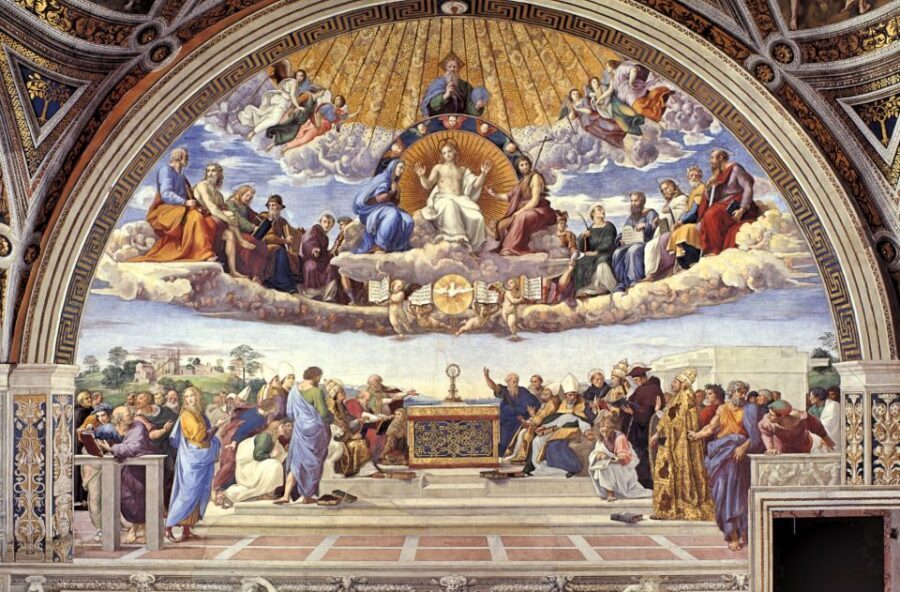
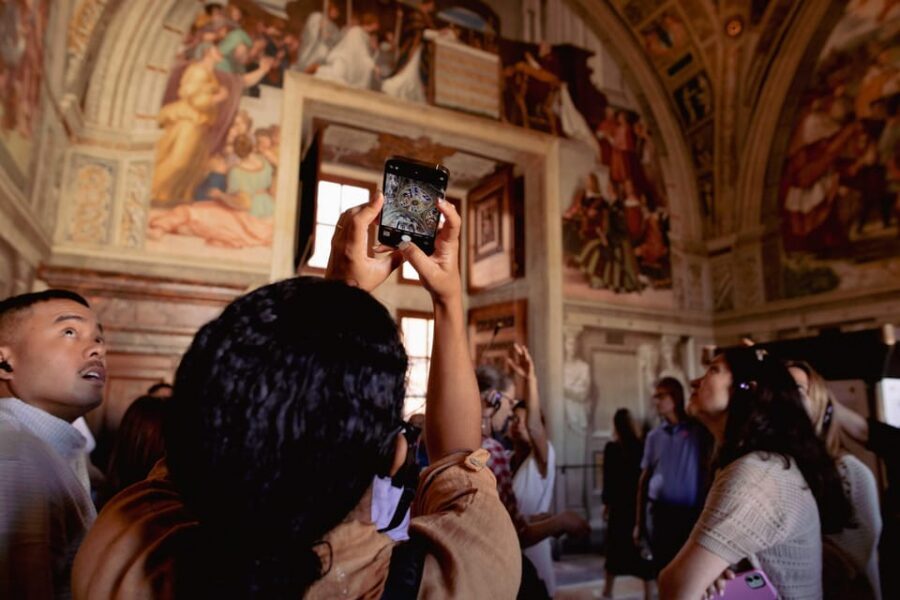
Next up: the Raphael Rooms, where you’ll spend time with major works tied to the mind of Raphael. You’ll hear stories and explanations as you stand in the spaces where he worked for countless hours.
One specific included highlight is The School of Athens. This is one of those paintings that can feel intimidating if you don’t know where to look. The guide’s job is to direct your attention: toward the figures, toward the arrangement, toward what makes it click.
This is where private pacing really helps. When you’re not squeezed into a constant stream, you can take a full look, then re-check details your guide mentions without feeling like you’re holding up a line.
Tip: if you want photos, plan carefully. The best approach is usually to photograph outside of the tightest moments and spend your time in front of paintings reading the guide’s instructions.
Pinecone-to-Sistine Flow: How the Evening Sets the Mood
By the time you approach the Sistine Chapel, the timing becomes part of the experience. Evening light plays a role in how the chapel feels, and the tour is set up so you’re not walking in right after a chaotic rush.
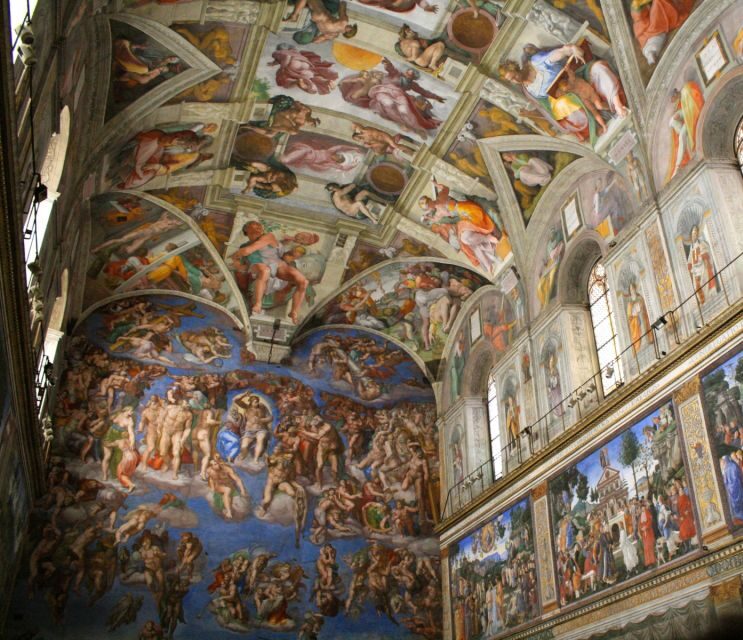
A key included element is the Michelangelo’s Sistine Chapel ceiling and the guided experience that slows you down. The tour also includes the Bernini’s bronze canopy, which is another reminder that the Vatican is always working on multiple art languages at once: classical sculpture, Renaissance painting, then later sacred theater.
This isn’t a museum you conquer in one swing. The nighttime approach helps you actually witness rather than simply survive.
Sistine Chapel: Silent Rules, Clear Guidance, Big Payoff
Finally, you visit the Sistine Chapel. There’s no way around the expectations here: silence is mandatory, and you won’t take photos inside. The tour instructions also note no flash photography, and in the Sistine Chapel, it’s no photography at all.
Your guide will explain before you enter, which is a big deal. It means you can focus on what you’re seeing instead of worrying about etiquette.
Why this stop matters: the Sistine Chapel isn’t just a famous ceiling. It’s a whole visual system, and the guide’s job is to point out the places where your eyes should go first. If you’ve ever stared at it and thought, I know I’m looking at something important, but I don’t know what I’m supposed to notice—this part of the tour is built for that.
What you’ll remember: the scale of the ceiling (about 8,000 square feet) and the intense concentration required to create it over roughly four years, with the visual impact made even stronger in evening conditions.
Price and Value: Is $288.88 Worth It?
At $288.88 per person for about 3 hours, this is not a budget move. But in Vatican terms, the value equation often comes down to time saved and attention gained.
Here’s how to think about it:
- Skip-the-line access can be worth real money because it buys back energy for later rooms. In the Vatican, waiting can drain you.
- You’re paying for private guiding through major highlights instead of wandering and decoding everything yourself.
- The route includes high-demand rooms like the Raphael Rooms and the Sistine Chapel, plus courtyards and specific galleries that many day tours race through.
If you’re the kind of visitor who likes art with guidance—someone who enjoys being told where to stand and what to notice—this price starts to look reasonable. If you’re the kind of visitor who prefers to do everything independently, then you might feel it’s too much. In that case, you’re better off building your own route and spending the time you save on longer self-guided breaks.
Who This Tour Suits Best (and Who Might Be Happier Elsewhere)
This tour fits you best if you want:
- A structured route through the Vatican Museums highlights
- A calmer evening pace instead of daytime crowds
- A guide who focuses on meaning and technique, not just dates
It’s also a smart match if you’re traveling with someone who gets tired of long lines or who wants fewer decisions. The tour handles the order and the timing.
This might be less ideal if:
- You dislike walking through museums and want lots of downtime (this is a guided art route)
- You strongly prefer free movement and wandering without direction
Should You Book This Private Evening Vatican Tour?
If you care about experiencing the Vatican Museums and Sistine Chapel with less stress and more clarity, I’d book it. The evening timing helps a lot, and the included stops hit real “anchor points” of the collection: classic sculpture, map art, Raphael’s rooms, and Michelangelo’s ceiling.
You should consider a different option if you’re comfortable with crowds and you don’t want to pay for a guided route. But if you’d rather spend your limited Rome time looking closely than waiting in lines, this is a strong value play.
FAQ
How long is the Rome Vatican Museums & Sistine Chapel private evening tour?
The duration is listed as 3 hours, with starting times that vary by availability.
Where is the meeting point?
Meet in front of Café Vaticano, Viale Vaticano 100, across the street from the Vatican Museums entrance.
Can I take photos in the Sistine Chapel?
No. The tour notes no photography at all inside the Sistine Chapel (and no flash photography).
Are backpacks allowed in the museums?
No. The tour states backpacks are not permitted in the Museums.
What ID do I need to bring?
The tour requires a government-issued ID for all guests, regardless of age.
Is this tour wheelchair accessible?
Yes. The tour is listed as wheelchair accessible.
What languages are the guides offered in?
Tours are offered in English, Spanish, French, Portuguese, and Italian.
What is included in the tour?
Included items are guided museum touring plus visits to stops such as the Pinecone Courtyard, Octagonal Courtyard, Belvedere Torso, Gallery of Maps, Raphael Rooms, and the Sistine Chapel, along with specific featured works mentioned in the tour details.
Is food and drink included?
No. Food and drink are not included.