REVIEW · MUSEUMS
Rome: Vatican Museum and Sistine Chapel Tour
Book on GetYourGuide →Operated by gids in rome · Bookable on GetYourGuide
Three hours can beat the Vatican crowds.
I like how this tour is built for speed without feeling rushed: you get skip-the-line entry, then a guide steers you through the highlights in a smart order. You’ll also spend focused time in the Sistine Chapel, with context that makes Michelangelo’s ceiling and altar wall easier to read than just seeing them from a distance. One thing to consider: the headset system can be a little awkward for clarity in loud rooms, so if you’re sensitive to audio, plan for that.
You start at Caffè Vaticano (Viale Vaticano 100) and end on Saint Peter’s Square, with the basilica left for you to explore on your own. That’s a very practical choice, because it keeps the guided portion tight and gives you flexibility afterward—especially if you want to add the dome view.
In This Review
- Key highlights at a glance
- Why this Vatican tour feels faster than DIY
- Meet at Caffè Vaticano, then follow the guide’s route
- Vatican Museums route: Popemobile garage, maps, and the big-name sculptures
- Carriage Gallery, aka the Garage of the Pope
- Staircase of Momo and animal-filled rooms
- The sculpture “greatest hits”
- Flemish Tapestries and the Rafael school design
- The Gallery of Maps: a real showstopper for reading the details
- Sistine Chapel timing and what your guide should help you see
- Scala Regia, Bronze Gate, Swiss Guards, and the Saint Peter’s Square finish
- Basilica afterward: what you’ll be able to do
- Price and value: when €-level sights meet a practical guide plan
- What to wear and pack for a smooth Vatican day
- Who should book this Dutch-speaking Vatican tour?
- Should you book this Vatican Museum and Sistine Chapel Tour?
- FAQ
- What is the meeting point for this Vatican Museums and Sistine Chapel tour?
- What time does the tour start?
- How long do you spend in the Vatican Museums and Sistine Chapel?
- What languages are offered?
- Is this a skip-the-line tour?
- What is included in the price?
- Is Saint Peter’s Basilica included with the guided tour?
- Where do you finish the tour?
- What should I wear and watch out for inside churches?
- Are photos and video allowed?
- Is the tour suitable for people with mobility impairments?
Key highlights at a glance
- Skip-the-line access so you spend your time looking, not queuing
- Dutch-speaking guide with headsets to keep the museum maze understandable
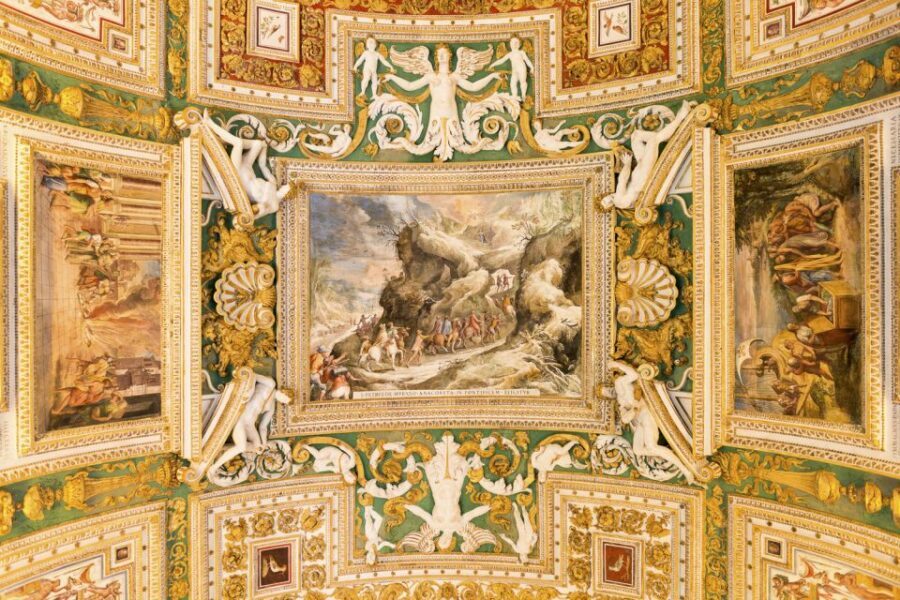
- Vatican Museums classics like the Gallery of Maps and the Torso of the Belvedere
- Sistine Chapel storytelling that explains what you’re seeing in the Creation and Last Judgment
- Scala Regia + Bronze Gate for a dramatic walk-down toward Saint Peter’s Square
- Free basilica access afterward, with a guided route to the metal detectors
Why this Vatican tour feels faster than DIY
The Vatican can punish unplanned days. Lines are long, signage is confusing, and the museums alone can swallow a whole morning. This tour tackles the biggest pain points up front: it includes skip-the-line tickets and a guide who already knows the flow through the Vatican Museums.
The other big value is rhythm. You’re not trying to read every room on your own. Instead, you move in an order that builds meaning: you see major sculpture highlights first, then tapestry and maps, then you hit the Sistine Chapel with the right context in your head.
And because the tour is about three hours, it’s easier to protect energy. You still get a full hit of the “wow” moments, without feeling like you need to live inside Vatican City all day.
You can also read our reviews of more museum experiences in Rome


Meet at Caffè Vaticano, then follow the guide’s route
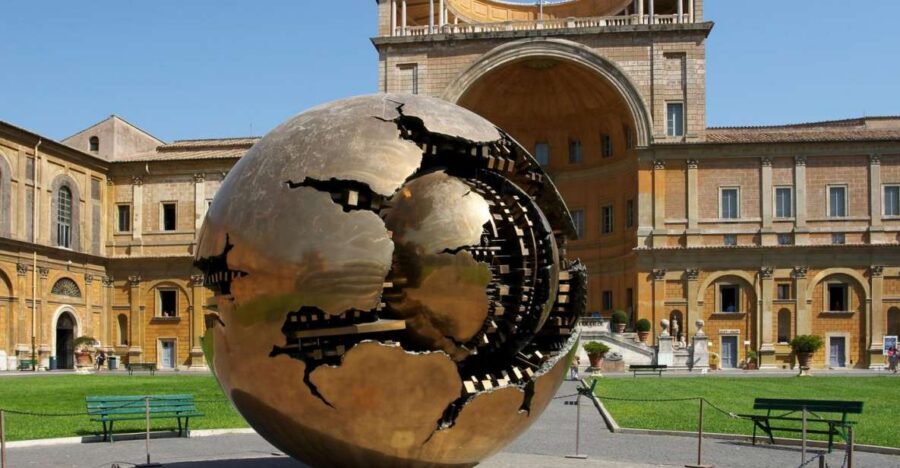
Your meeting point is Viale Vaticano 100, at the top of the steps next to Caffè Vaticano, opposite the entrance of the Musei Vaticani. Your guide will hold a sign with the tour operator’s name, so you can spot the group quickly.
This matters more than it sounds. Getting lost in Rome happens fast, and being late in Vatican City can turn into stress. When a tour starts at a clear landmark, it’s easier to arrive calm.
What to bring (and why):
- Passport or ID card (you’ll need it at security)
- Comfortable shoes (lots of walking on stone floors)
- Sunglasses and a camera
- If you’re sensitive to sound, note the tour uses headsets—helpful, but not always perfect in every room
What not to bring:
- Large bags/luggage (and don’t plan on cramming everything in)
- Pets
- Flash photography (camera is allowed, but flash isn’t)
- Weapons or sharp objects
- Sleeveless shirts (you’ll want a safer outfit for church areas too)
Vatican Museums route: Popemobile garage, maps, and the big-name sculptures
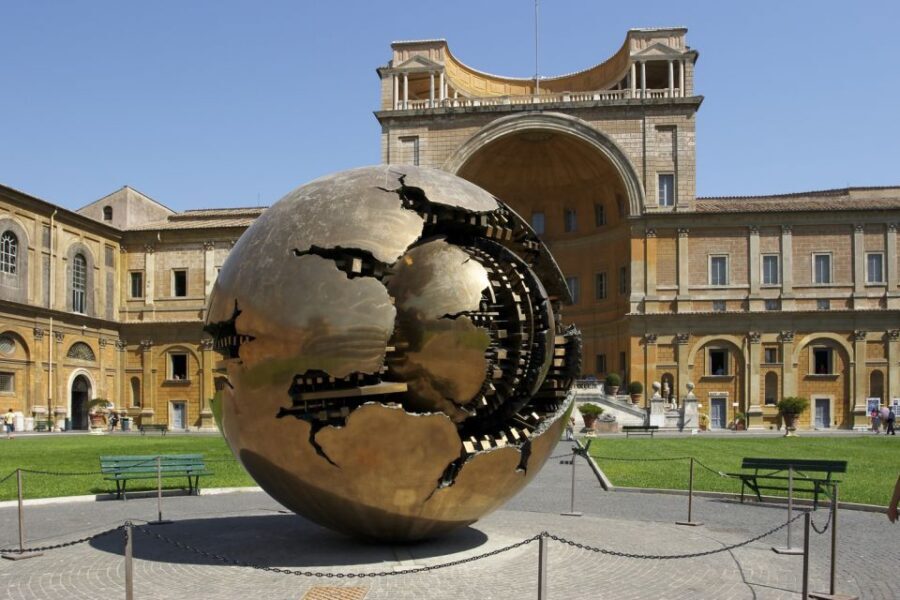
This is where a good guide pays off. The Vatican Museums aren’t just “big.” They’re a maze. The route here is designed to take you through a sequence of rooms that feel like chapters, not random stops.
You’ll spend about 2.17 hours in the museum section, moving through a collection of standout areas:
Carriage Gallery, aka the Garage of the Pope
This stop is fun because it’s practical and unexpected. You’ll see the Carriage Gallery, also called the Garage of the Pope, where the Popemobile is located. It’s not the stuff of marble fantasies—it’s the Vatican as a working institution. That contrast makes the rest of the art feel even more striking afterward.
Staircase of Momo and animal-filled rooms
Next comes the Staircase of Momo and then the Hall of the Animals. These aren’t always the first things people list when they talk about the Vatican, but they’re useful. They help you calibrate your eyes: sculpture, decoration, symbolism, and how the Vatican builds drama through architecture.




The sculpture “greatest hits”
Then you get several heavyweights in a tight sequence, including:
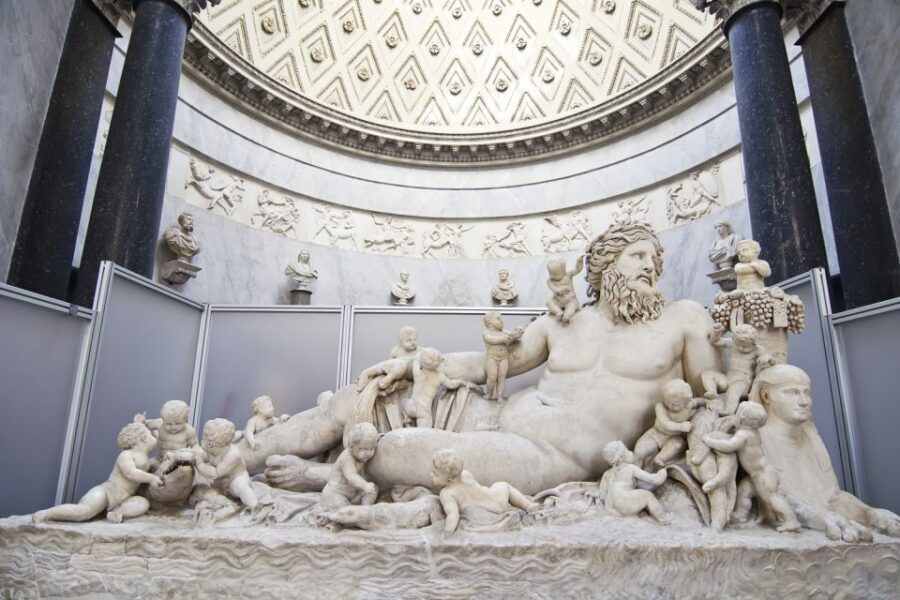
- Laocoon Group
- Torso of the Belvedere
- Bath of Nero
If you’ve ever stared at statues and thought, Okay, I get that it’s old, but where do I look, a guide solves that. The point isn’t just “name recognition.” It’s understanding why these works were famous and how artists used anatomy, movement, and expression to make stone feel alive.
Flemish Tapestries and the Rafael school design
You’ll also visit the Gallery of Flemish Tapestries, designed by the school of Rafael. This is a different kind of visual experience than marble. Tapestries bring detail at a human scale and show how art moved beyond paintings and sculpture into storytelling for rooms and courts.
The Gallery of Maps: a real showstopper for reading the details
The highlight many people remember is the Gallery of Maps. It’s a gem of a room because it’s information-heavy without being dry. You’re looking at a giant visual map world, and it’s the kind of thing you can’t really appreciate if you’re rushing or staring only at the first thing that catches your eye.
If you’re traveling with kids or anyone who gets museum fatigue, this is one of the best places to pause mentally. It gives you something to “decode” with your eyes.
Sistine Chapel timing and what your guide should help you see
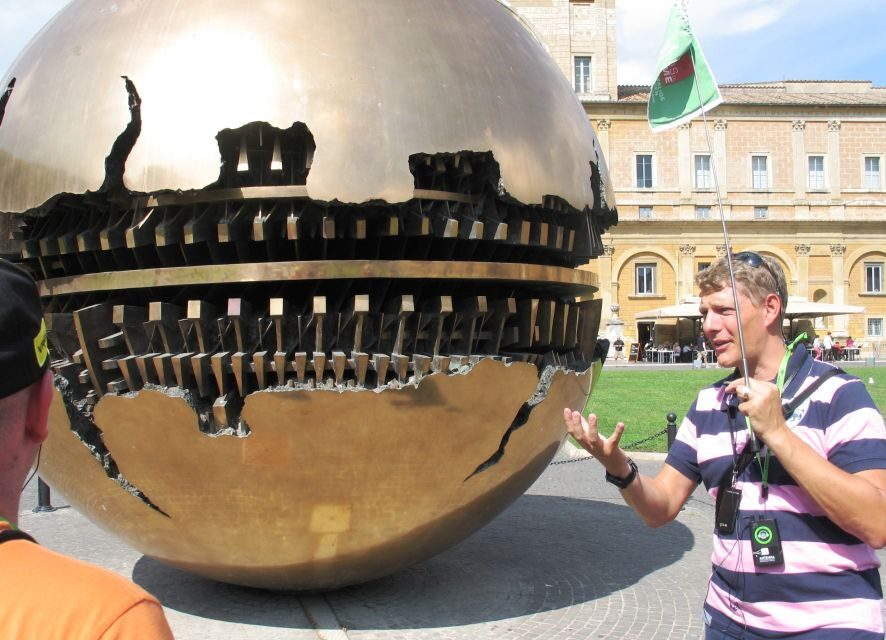
After the museums, you move into the Sistine Chapel, with about 20 minutes inside. That’s not long enough to be casual, so you want your brain ready for what you’re about to face: Michelangelo’s most famous ceiling work and, behind it all, a whole layer of religious and political meaning.
Here’s the key context you’ll hear:
- Pope Julius II put Michelangelo to work in 1508.
- The Creation Story fills the ceiling with more than 300 figures over an area of more than 500 m².
- About twenty years later, Michelangelo returned to paint the altar wall.
- That altar work is known as The Last Judgment, completed in 1541.
- The Sistine Chapel is also known as the place where a Conclave takes place.
So what does this mean for you in practice? It means you’ll look at the chapel like a narrative, not a mural. A good guide doesn’t just name sections. They point out relationships between figures, themes, and what’s happening composition-wise.
One practical thing: chapel rules and behavior matter here. No flash photography. Keep your shoulders covered (dress code applies). And once you’re inside, plan to keep your head up and your eyes moving in the way the guide explains.
If you’ve only ever seen photos of the ceiling, you’ll likely be surprised by how powerful it feels in person. The ceiling isn’t just huge. It’s dense with meaning.
Scala Regia, Bronze Gate, Swiss Guards, and the Saint Peter’s Square finish
After the Sistine Chapel, the tour doesn’t just deposit you somewhere nearby. You’ll leave the museums via the Scala Regia—the imposing staircase route toward Saint Peter’s Square—and then pass the Bronze Gate.
This is where the Vatican can feel like theater.
At the Bronze Gate, you’ll stand very close to the Swiss Guards. It’s one of those moments that’s brief but memorable, because the uniforms are so striking and the encounter feels immediate—no museum distance, no glass case, just the real presence.
Then you finish in Saint Peter’s Square after about 30 minutes of guided time there. You’re not stuck with your group the whole day. The guide bids you farewell and then shows you the way to the metal detectors so you can explore Saint Peter’s Basilica on your own.
Basilica afterward: what you’ll be able to do
Your guide will point you toward the route, and basilica entry is free. You enter through the Porta Santa.
If you want more, the tip is simple and practical: go up for a view from the dome. You’ll need to buy your ticket on the spot at the ticket office.
This is a smart split of responsibilities: the guided portion gives context and direction. You handle the rest at your pace.
Price and value: when €-level sights meet a practical guide plan
The price is $130.28 per person for a 3-hour experience, with key inclusions that directly reduce wasted time:
- Skip-the-line tickets
- Headsets
- A professional Dutch-speaking guide
That pricing makes sense when you treat time as money. The Vatican Museum queue can eat your morning. Cutting that queue isn’t just convenience—it’s sanity. Add in headsets, and you’re not relying on shouting over crowds, which is the usual problem on group tours.
Is it expensive compared to just buying tickets? Yes. But the Vatican isn’t a place where tickets alone guarantee understanding. The guide is doing the work of connecting what you’re seeing: the Carriage Gallery, major sculptures, tapestry, maps, then Michelangelo’s ceiling and altar narrative.
You’re paying for interpretation and an organized route, not just entry.
What to wear and pack for a smooth Vatican day
Dress code and security rules are where good plans win. If you show up in the wrong outfit, you’ll burn time fixing it—or worse, you might not get through.
For the church dress code:
- No bare shoulders for ladies if wearing shorts and skirts (skirts should be to the knee).
- Men should wear shorts to the knee or long pants.
- Avoid long items like umbrellas or selfie sticks.
Other practical rules:
- Bring your ID/passport
- Comfortable shoes are not optional
- Camera allowed, but flash photography is not
- Don’t carry large bags/luggage
One more reality check: this tour is not suitable for people with mobility impairments. If mobility is a concern, don’t assume you can “manage.” The Vatican has a lot of walking and uneven surfaces.
Who should book this Dutch-speaking Vatican tour?
This works best if you:
- Prefer a structured route in the Vatican Museums
- Want someone to explain the Sistine Chapel in a way that makes it easier to actually see what’s going on
- Are comfortable walking for a few hours
- Want a tour in Dutch specifically
It’s also a solid choice for adults who like art and context more than casual wandering. The Sistine Chapel alone can feel overwhelming. With a guide, it becomes a readable story.
If you’re traveling with kids, keep expectations realistic. A three-hour run through museums can feel long for younger visitors, especially in crowded galleries. The Sistine Chapel portion is short, but the lead-in museum time is substantial.
And because the tour uses headsets, if you’re picky about audio clarity, consider that the setup may not work perfectly for every person in every noisy room.
Should you book this Vatican Museum and Sistine Chapel Tour?
If your priority is seeing the big masterpieces while minimizing lines and confusion, I think this is a strong booking choice. The combination of skip-the-line access, a Dutch-speaking guide, and focused time in the Sistine Chapel is the right formula for a first (or early) Vatican visit.
Skip it if you:
- Need an accessibility-friendly format (this one isn’t suitable for mobility impairments)
- Want the basilica included as a guided stop (it’s not part of the guided package)
- Hate wearing headsets or need perfect audio in noisy spaces
Otherwise, book it. This is one of the better ways to turn the Vatican from a chaotic checklist into a guided story you can actually follow.
FAQ
What is the meeting point for this Vatican Museums and Sistine Chapel tour?
You meet at Viale Vaticano 100, at the top of the steps next to Caffè Vaticano, opposite the entrance of the Musei Vaticani.
What time does the tour start?
The duration is about 3 hours and you should check availability to see starting times.
How long do you spend in the Vatican Museums and Sistine Chapel?
The guided Vatican Museums portion is about 2.17 hours, and the Sistine Chapel visit is about 20 minutes.
What languages are offered?
The live tour guide speaks Dutch.
Is this a skip-the-line tour?
Yes. Skip-the-line tickets are included.
What is included in the price?
Included items are skip-the-line tickets, headsets, and a professional Dutch-speaking guide.
Is Saint Peter’s Basilica included with the guided tour?
No. The tour ends on Saint Peter’s Square. The guide shows you the way to explore Saint Peter’s Basilica on your own, and entry is free.
Where do you finish the tour?
The tour ends on Saint Peter’s Square.
What should I wear and watch out for inside churches?
There is a dress code: no bare shoulders for ladies, skirts should be to the knee, and men should wear shorts to the knee or long pants. Sleeveless shirts are not allowed.
Are photos and video allowed?
A camera is allowed, but flash photography is not permitted.
Is the tour suitable for people with mobility impairments?
No, it is not suitable for people with mobility impairments.