REVIEW · ROME
Rome Tour “the center of the world” with high quality electric bicycle!
Book on Viator →Operated by Noleggio Ebike & Monopattini elettrici Roma · Bookable on Viator
Rome feels faster when you pedal electric.
This 3-hour ride through the historic core is built around major ancient and street-level sights, with the Colosseum area never far off as you connect the dots from Roman power to everyday life. I like the electric bike setup because it lets you cover big ground without turning the day into a leg workout. You also get a mobile ticket and a plan for a smooth back-and-forth route that ends where you started.
My other favorite part is the small group size (up to 12), which keeps the pace manageable and the stops practical for photos and questions. One thing to consider: some stops don’t include admission, so you may need to budget a bit extra depending on what you want to enter versus just see from the outside.
In This Review
- Quick hits before you pedal
- Why an e-bike tour works so well for Rome’s “center of the world”
- Starting at Via Labicana: what the ride setup includes
- Roman Forum (Forum Romanum) and the Colosseum area: where power got real
- Circus Maximus in the Palatine–Aventine valley: racing, trade, and legend
- Antico Quartiere Ebraico (Rome’s Jewish ghetto): old roots, complicated meaning
- Campo de’ Fiori: a square with a backstory you can feel
- Fontana di Trevi: late Baroque drama with free entry
- Group size, guide style, and how the pacing feels
- Price and logistics: is $68.65 good value?
- Practical tips for your e-bike day in central Rome
- Who should book this tour?
- Should you book this Rome “center of the world” e-bike tour?
- FAQ
- How long is the Rome “center of the world” e-bike tour?
- How much does it cost per person?
- What stops are included?
- Are admission tickets included?
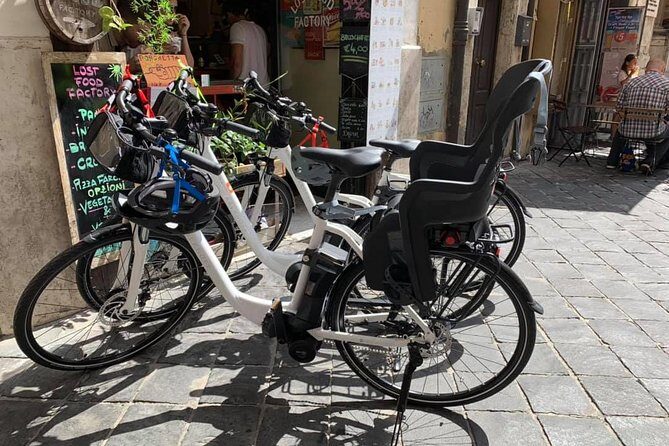
- What’s included with the e-bike?
- Where do you meet, and do you return there?
- What group size should I expect?
- Is free cancellation available?
Quick hits before you pedal
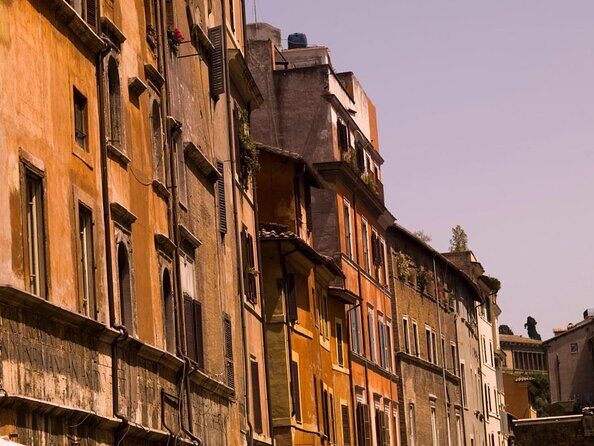
- E-bike power for a 3-hour loop through Rome’s tight, hilly historic center
- Small group (max 12) so you’re not fighting for space at every stop
- Helmet, padlock, rainproof gear, and a city map included for a smoother ride
- Landmarks with real context, from Roman Forum politics to Circus Maximus legends
- Fontana di Trevi is free on your route, helping you get a big payoff without extra fees
Why an e-bike tour works so well for Rome’s “center of the world”
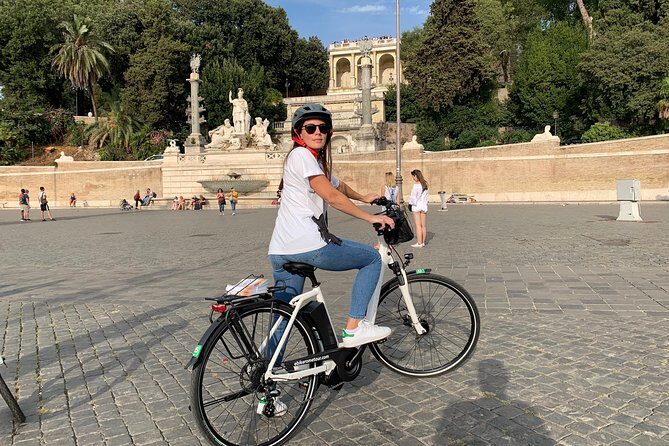
Rome’s historic center is a dream, but it can be a slog if you’re doing it all on foot. This kind of e-bike tour is a smart middle ground: you still move like a local through neighborhoods, but you get help with the energy drain that comes from Rome’s hills and long distances.
In just about three hours, you’ll hit a chain of stops that all relate to what made Rome feel like the center of the ancient world. You start in an area tied to government, law, religion, and the city’s top decisions. Then you roll into spaces tied to crowds and spectacle, and finally into piazzas and fountains that show Rome’s everyday rhythm.
The big value here is time. If you’re short on days, you want the map-filling highlights without spending your vacation hours stuck in “too tired to keep going” mode.
You can also read our reviews of more tours and experiences in Rome.

Starting at Via Labicana: what the ride setup includes
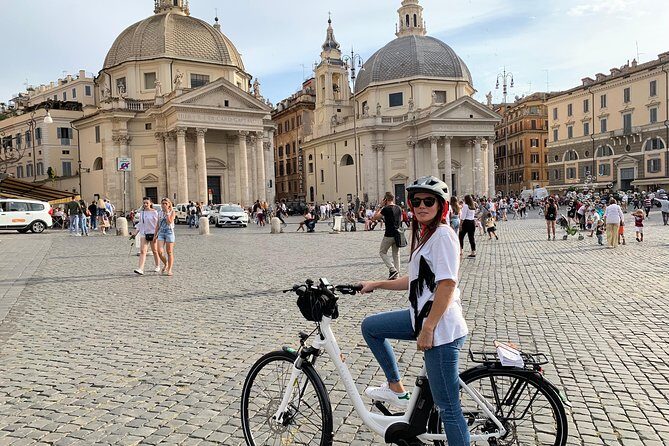
You meet at Via Labicana, 46 (00184 Roma RM) and the tour ends back at the same spot. That matters more than it sounds. When tours start and finish near the same point, you lose less time moving back across busy central streets.
You’ll also have the basics handled for you:
- helmet
- padlock
- rainproof setup
- city map
- an option for a seat for children up to 4 years
On the day, this means you can focus on the sights instead of hunting for gear or trying to figure out where to leave your bike. And because the tour uses a mobile ticket, you’re not digging for paper.
Also, the operator notes the tour is near public transportation. If your hotel is far from the center, that helps you plan your arrival without making the day harder than it needs to be.
Roman Forum (Forum Romanum) and the Colosseum area: where power got real
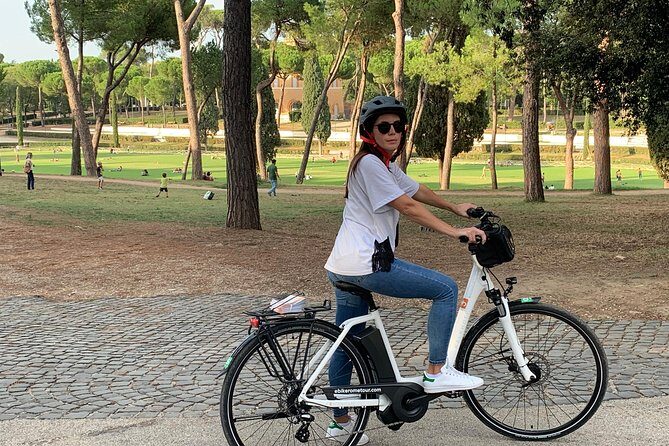
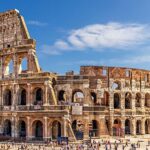
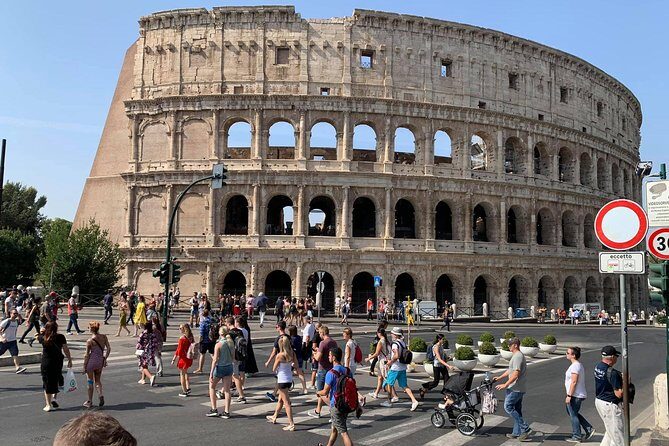
Your first major stop is the Roman Forum, the core archaeological zone that once served as Rome’s political, legal, religious, and economic nerve center. It’s also one of the best places to start because the scale of the remains gives you a sense of how Rome organized power.
Even if you’re not a professional ancient-stuff nerd, the layout helps you visualize how the city worked. You’re literally surrounded by layers of what different generations built, repaired, and replaced. The Forum is described as being enclosed by the Palatine Hill, Capitoline Hill, and the corridor toward the Colosseum, so you get that feeling that the city’s authority and its spectacle sat close together.
What I like about starting here on an e-bike day is that you can take your time at the edges. You’re not rushing across a museum floor. You can pause, look, and make sense of what you’re seeing as your guide connects the dots.
Possible consideration: this is an outdoor, archaeological environment. If you want to go deep into indoor spaces or pay for specific entries, you may run into situations where admission isn’t included for every stop. In general, plan for the idea that you might pay extra for entry-dependent experiences.
Circus Maximus in the Palatine–Aventine valley: racing, trade, and legend
Next up is Circus Maximus, the ancient Roman circus built for horse racing. What makes this stop feel different from the Roman Forum is the space itself. The setting is a wide valley between the Palatine and Aventine, which helps you picture crowds and motion across a broad flat area.
Circus Maximus is also tied to stories that Rome told about its early days—there’s a remembered mythical episode connected to the Sabine women during games called by Romulus in honor of the god Consus. Whether you treat legends as literal history or not, they’re part of why Romans loved staging public drama in big open spaces.
Here’s another detail I find useful: its proximity to the Tiber landing, where trade happened from long ago, meant the site had practical value beyond spectacle. That connection between entertainment and commerce is one of those Roman themes that keeps showing up.
Your tour time at this stop is listed at about 15 minutes. That’s enough to get the big-picture setting and let the guide tell the story without turning the day into a long stop-and-start grind.
Antico Quartiere Ebraico (Rome’s Jewish ghetto): old roots, complicated meaning
Then you ride into the Antico Quartiere Ebraico, Rome’s Jewish ghetto area. The ghetto is described as among the oldest in the world, with origins dating to a period 40 years after the one in Venice.
Even the word matters here. The description explains that the term comes from the Venetian idea of a foundry district—linked to the word gheto—and there’s also a possible link to a Hebrew meaning connected to separation. That kind of language history can help you understand why the neighborhood became more than just a place on a map.
In a short e-bike tour, you won’t turn this into a deep documentary stop. But you will get something that matters: context. You see how Rome’s historic center isn’t only about monuments. It’s also about communities shaped by laws, boundaries, and survival.
This stop is listed at about 20 minutes, and admission isn’t included in the tour info. So treat it as a walking-and-looking moment where you can absorb the neighborhood atmosphere while your guide gives you the background that most people miss.
Campo de’ Fiori: a square with a backstory you can feel
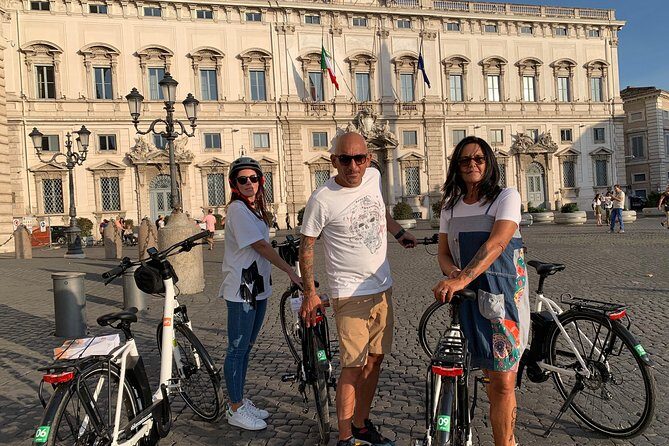
From the ghetto area you continue to Campo de’ Fiori. The name literally points you to the idea that the square wasn’t always a square. According to the description, until the fifteenth century, this was a kind of flowery meadow with gardens.
There’s also an interesting traditional angle in the story: some say it was named after Flora, tied to Pompey through a woman he supposedly loved, with a nearby theater connected to that legend. Traditions like that can be debated, but they do show you how people in Rome explain their own geography through myth and memory.
One practical reason this stop works well after the earlier ones: it brings the tour from ancient “power and games” into the feel of a lively urban square. Campo de’ Fiori is the kind of place where you can stand, look around, and get a sense of how daily Rome operates right next to the big archaeological zones.
You’re scheduled for about 20 minutes here, and again, admission isn’t included for this stop. So you’re not paying for a ticket to understand the place. You’re paying for a guide who gives the “why is it called that?” layer.
Fontana di Trevi: late Baroque drama with free entry
Finally, you reach Fontana di Trevi, and this part of the day is a big payoff. The Trevi Fountain is described as the largest and one of the most famous fountains in Rome.
The fountain’s story is almost as impressive as its size. It was built on the facade of Palazzo Poli (more properly called Palazzo Conti di Poli). The design path went through a competition held by Pope Clement XII in 1731, which was won by the French sculptor Lambert-Sigisbert Adam—but later the job passed to Nicola Salvi, with the work starting in 1732. Completion came in 1762 with Giuseppe Pannini, and the style is late Baroque.
Also, the description notes materials used: travertine, marble, plaster, stucco, and metals. That level of detail matters because it helps you look with intention. Instead of seeing one big photo spot, you can notice the craftsmanship and the different textures that catch light differently.
Good news for your budget: the Trevi stop lists admission free. You still get a structured visit time of about 20 minutes, which is just right for photos and for letting the guide’s explanation help you read the fountain like a story.
And yes, the Trevi Fountain can be crowded. But an e-bike tour format tends to make it easier to manage your time at the edges rather than getting stuck in a slow queue without context.
Group size, guide style, and how the pacing feels
This is where small-group e-bike tours often win. Your group is capped at 12 travelers, and that changes the whole vibe.
When you’re on a bike, you need space. When you’re stopping for photos, you need patience. A larger group can turn stops into a wave—everyone clusters, waits, and then surges forward. With a smaller group, you can breathe between stops and follow along more easily when the guide talks.
The reviews you provided also point to a strong guide impact. People highlight that the guide was fantastic and that stories made the history feel alive, not like a textbook read aloud. That matters because Rome history is everywhere. The difference is whether someone helps you connect what you see right now with what it meant then.
You’ll also feel the advantage of e-bike movement. The bikes help you keep momentum. So you’re not spending all your effort just getting from one location to the next.
Price and logistics: is $68.65 good value?
At $68.65 per person for a tour around three hours, the value comes from two places: transportation and efficiency.
You’re paying for:
- use of an electric bicycle
- helmet, padlock, and rainproof gear
- a city map
- guided time linking multiple major sights
You’re not paying for lunch, and you’re not paying for admission every time. The tour info explicitly says lunch is not included, and it lists admission not included for several stops (with Trevi being free in this route info). So your total day cost may go up if you decide to enter ticketed sites or add extras.
If you’re the type of traveler who likes to see a lot without turning the day into a endurance test, this price tends to make sense. If you only want one or two iconic stops and you’d be happier walking slowly at your own pace, you might feel like you’re paying for structure more than for content.
Practical tips for your e-bike day in central Rome
Here are the simple things I’d plan for so the ride feels smooth:
- Dress for quick stops and weather swings. The tour includes rainproof gear, but Rome weather can shift fast. Wear shoes you’re comfortable walking in for a few short segments.
- Be ready for mixed surfaces. Ancient areas and nearby streets can be uneven. Take it slow at transitions between viewing points.
- Assume some stops won’t be ticketed in the package. Fontana di Trevi is marked free, but other stops list admission as not included. If you want a specific interior experience at any stop, check what you need on the day.
- Use the map, but also listen to the guide. Rome is easy to get turned around in. Even with a map, the guide’s directions help you connect streets and viewpoints faster.
- Think about timing for photos. Each stop is around 15–20 minutes, so have your phone ready before you park the bike. A little prep saves time.
Finally, remember the goal of this format: get oriented, see the main symbols, and leave with a stronger sense of how the ancient and modern city connect.
Who should book this tour?
This is a great match for you if:
- you want an intro to Rome’s historic center without spending the day walking everywhere
- you like your sightseeing organized into short, story-driven stops
- you prefer a smaller group pace (up to 12)
- you want e-bike help to cover more ground in about three hours
It might not be the best fit if:
- you’re planning to spend lots of time inside ticketed museums at each stop
- you don’t feel comfortable riding a bike through busy urban areas
- you’re traveling on a tight budget that can’t flex for extra admissions
Should you book this Rome “center of the world” e-bike tour?
If you’re deciding between doing Rome’s highlights on foot or skipping structure, I’d lean toward booking this type of e-bike tour—especially if your schedule is tight. The combination of e-bike mobility, short high-impact stops, and a guide who connects the locations to what they meant makes it a strong first pass through central Rome.
Book it if you want a practical orientation day: Roman Forum power, Circus Maximus spectacle, the Jewish ghetto area’s deep historical context, Campo de’ Fiori’s square-with-a-story feeling, and the Trevi Fountain payoff.
If you hate cycling in city traffic or you’re hoping for ticketed interior time at every stop, you may feel constrained by the stop length and admission setup. In that case, a walking-focused plan might suit you better.
FAQ
How long is the Rome “center of the world” e-bike tour?
The tour lasts about 3 hours.
How much does it cost per person?
The price is $68.65 per person.
What stops are included?
The route includes the Roman Forum, Circus Maximus, Antico Quartiere Ebraico, Campo de’ Fiori, and Fontana di Trevi.
Are admission tickets included?
Admission is marked as not included for some stops (including Circus Maximus, Antico Quartiere Ebraico, and Campo de’ Fiori). Fontana di Trevi is listed as free. Lunch is not included.
What’s included with the e-bike?
The tour includes use of the bicycle, helmet, padlock, a city map, rainproof items, and a seat for a child up to 4 years.
Where do you meet, and do you return there?
You meet at Via Labicana, 46, 00184 Roma RM, Italy, and the tour ends back at the meeting point.
What group size should I expect?
The maximum group size is 12 travelers.
Is free cancellation available?
Yes. You can cancel up to 24 hours before the experience for a full refund.