REVIEW · PRIVATE
Heart of Rome: Private Walking Tour
Book on GetYourGuide →Operated by LivTours - We craft tours, you live them · Bookable on GetYourGuide
Rome hits you fast. This tour helps you see why. You start in the crush-free pocket near the Spanish Steps and then move through narrow lanes and small piazzas with a guide who puts the big monuments into plain, human context.
I like two things most: first, the private format means you can ask questions as you go, instead of just listening from the back. Second, the route stacks major sights—Pantheon, Trevi Fountain, and Piazza Navona—into a tight walk without the usual stop-and-start. The one thing to consider is the walking time: 2 hours in central Rome means cobblestones, plus a dress code for any place of worship you pass.
In This Review
- Key Highlights You’ll Actually Feel
- Why This 2-Hour Rome Walk Works So Well
- Value question: is $165.40 per person worth it?
- Where You Start: Spanish Steps Area Meets Real Street Rome
- Spanish Steps: More Than a Photo Stop
- Practical tip
- Trevi Fountain: Getting There With a Story in Your Head
- Gelato break: Rome’s best “reward for walking”
- Piazza Venezia: The Big Square Moment
- Pantheon: When the Most Famous Building Becomes Personal
- Important: Pantheon entry rules you should know
- Dress code note (worth a quick check)
- A Local Café Break: The Pace Stays Human
- Piazza Navona: Art, Energy, and Bernini’s Famous Fountain
- What You’ll Learn Along the Way (And Why It Changes the Walk)
- Who This Tour Fits Best
- Should You Book This Private Walking Tour?
- FAQ
- How long is the Heart of Rome private walking tour?
- Where does the tour start?
- What sites are included during the walk?
- Is Pantheon entry always included?
- What languages are available for the guide?
- Is this a private group tour?
- What should I wear for the tour?
Key Highlights You’ll Actually Feel
- Private guide for a focused, question-friendly walk (2 hours)
- Route built around big “must-sees” plus hidden-feeling side streets and little fountains
- Skip the ticket line for the Pantheon when entry is available
- A planned stop for gelato during the walk
- Ending in the artistic energy of Piazza Navona
- Tour runs in English, French, Spanish (and additional languages on request)
Why This 2-Hour Rome Walk Works So Well
A lot of Rome tours either try to cover everything or cover nothing. This one aims for the sweet spot: the headline sights, plus the smaller corners that make Rome feel like Rome. The pacing is built for walking without the long transit breaks, so you keep momentum and your brain stays “in the city” the whole time.
You also get something that matters more than people expect: a guide who can explain what you’re looking at while you can still see it. When you’re standing in front of the Pantheon or staring up at the façade details, the story lands differently than it does from a brochure. And since it’s private, your guide can adjust to your questions—history facts, architecture basics, or just how to avoid wasting time.
Value question: is $165.40 per person worth it?
At $165.40 per person for 2 hours, you’re paying for three things that add up fast in Rome: a dedicated private guide, skip-the-line help for the big-ticket sight, and a route that strings together major landmarks in one walk. If you’re traveling as a couple or small group and want the experience without wrestling with schedules and ticket queues, this price often feels more reasonable than the “cheap ticket, long lines” alternative.
Where the value can dip is when Pantheon entry isn’t available (more on that below). In those cases, the tour still delivers the walk and stories, but you should expect it to be more about viewing than getting inside.
Where You Start: Spanish Steps Area Meets Real Street Rome
You’ll meet at Babington’s Tea House, at the bottom of the Spanish Steps in Piazza di Spagna. This is a smart starting point because you’re positioned right where Rome’s energy begins—grand views nearby, but you can also slip quickly into quieter alleyways once the walk starts.
You begin by stepping away from traffic and crowd pressure. Your guide leads you into cobblestone streets and narrow lanes where the city feels more intimate. That’s not just scenery. It’s how Rome works. Stand in the right spot, and you see how a small turn in a street changes the whole mood.
If you’re the type who likes to get your bearings fast, you’ll probably appreciate the way your guide layers context early—so that later landmarks feel connected, not random.
Spanish Steps: More Than a Photo Stop
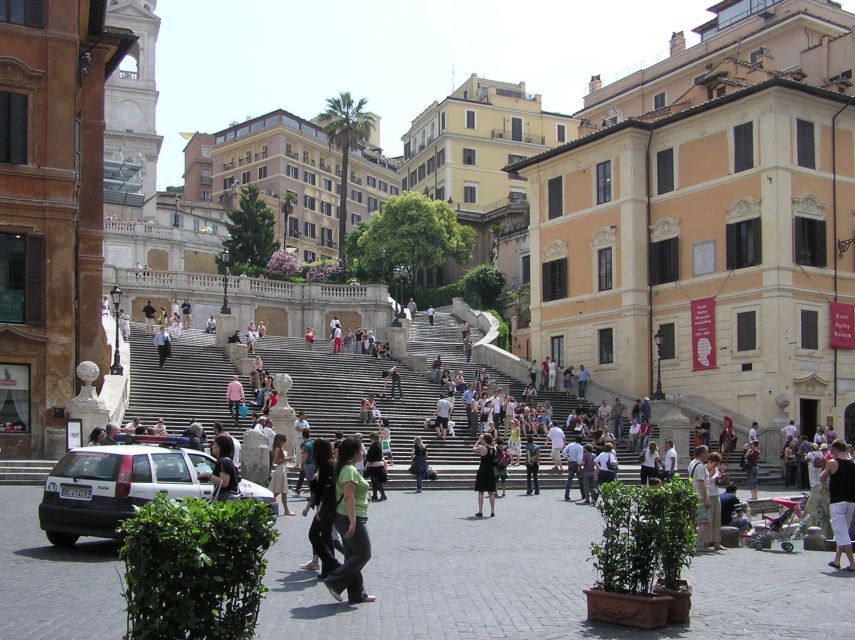
The first major sight on the route is the Spanish Steps. Instead of only treating it as a photo platform, your guide uses the surrounding area to set the stage—how people moved through Rome, why this zone became a social magnet, and what you’re actually looking at when you see the famous steps.
The practical advantage here is time and momentum. In 2 hours, you can’t afford to spend forever at one spot. This tour keeps you moving while still giving enough story to make the view memorable.
Practical tip
Wear shoes you can trust on cobblestones. You’ll be standing, walking, and occasionally pausing to look up.
Trevi Fountain: Getting There With a Story in Your Head
Next comes the Trevi Fountain. Your guide brings you into it as a destination with meaning, not just a background for coin tossing. You’ll admire it up close, then do the classic ritual—tossing a coin into the fountain for return to Rome.
The best part of Trevi on this kind of tour is the angle of arrival. Rome’s streets can feel like a puzzle box, and when you suddenly see something as famous as Trevi after turning into the right lane, it clicks. Your guide’s historical anecdotes about the nearby little fountains, buildings, and hidden piazzas help the fountain feel like a piece of a bigger city pattern.
Gelato break: Rome’s best “reward for walking”
After Trevi, the plan includes a stop at a favorite Roman gelateria. This isn’t a random food detour. It’s a good timing choice: you’ve already done the heavy sight stops, so the gelato acts like a reset, letting you keep going without feeling wiped out.
Piazza Venezia: The Big Square Moment
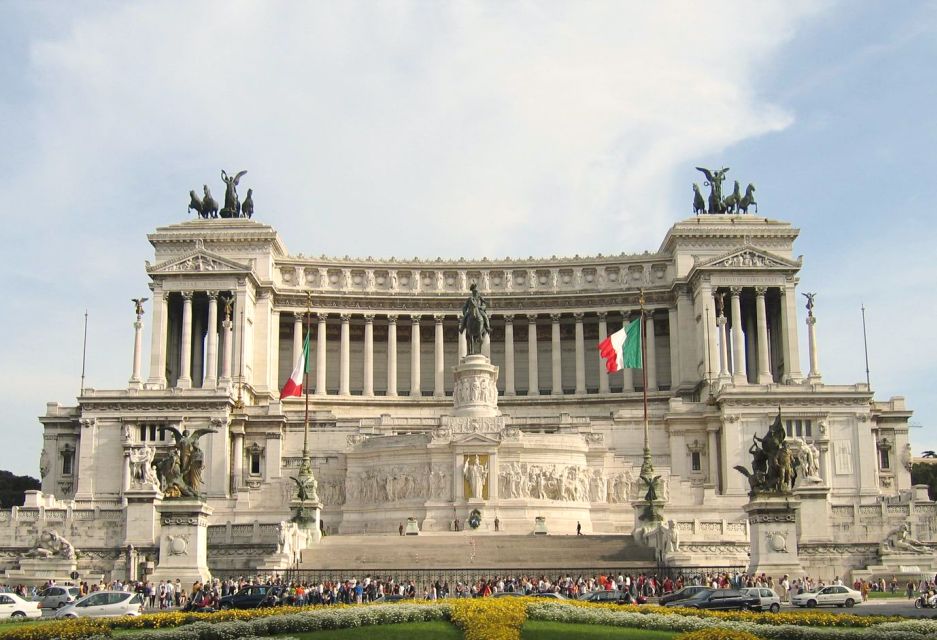
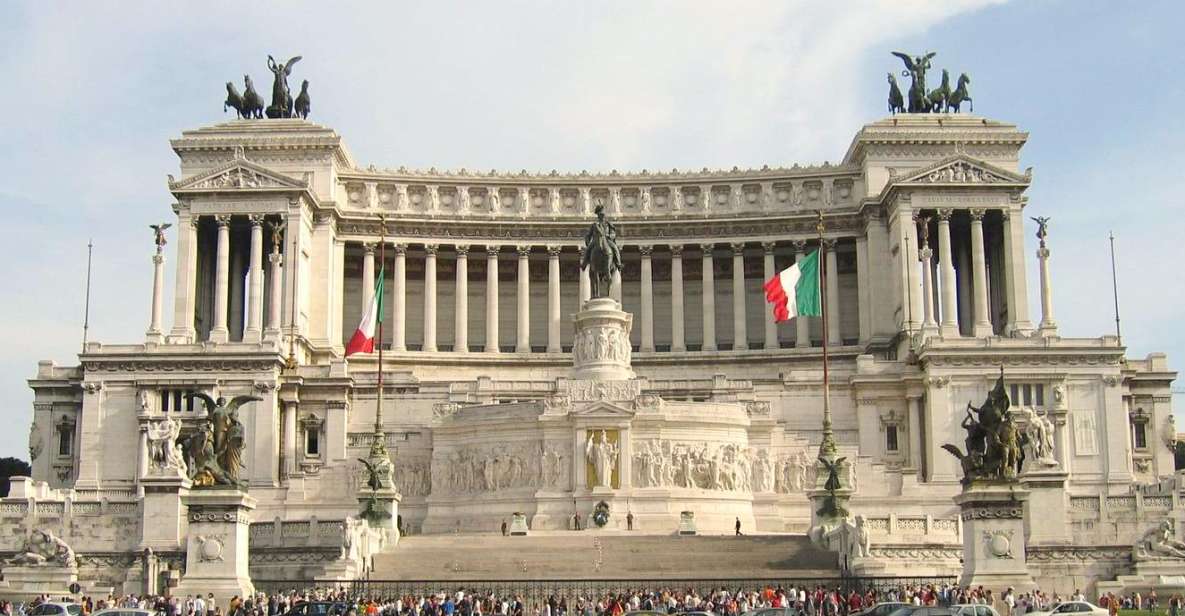
From Trevi, you move to Piazza Venezia. This is one of those places where Rome opens up and you can feel the shift from tight alleys to broad grandeur. Your guide walks you through what to notice visually and how the area fits into Rome’s changing eras.
Even if you don’t consider yourself a history person, this stop can still work because it trains your eyes. You start looking at relationships: where streets converge, how sightlines work, why certain spaces became ceremonial or strategic.
In short, Piazza Venezia helps you connect the dots between the “tourist Rome” icons and the city’s bigger urban logic.
Pantheon: When the Most Famous Building Becomes Personal
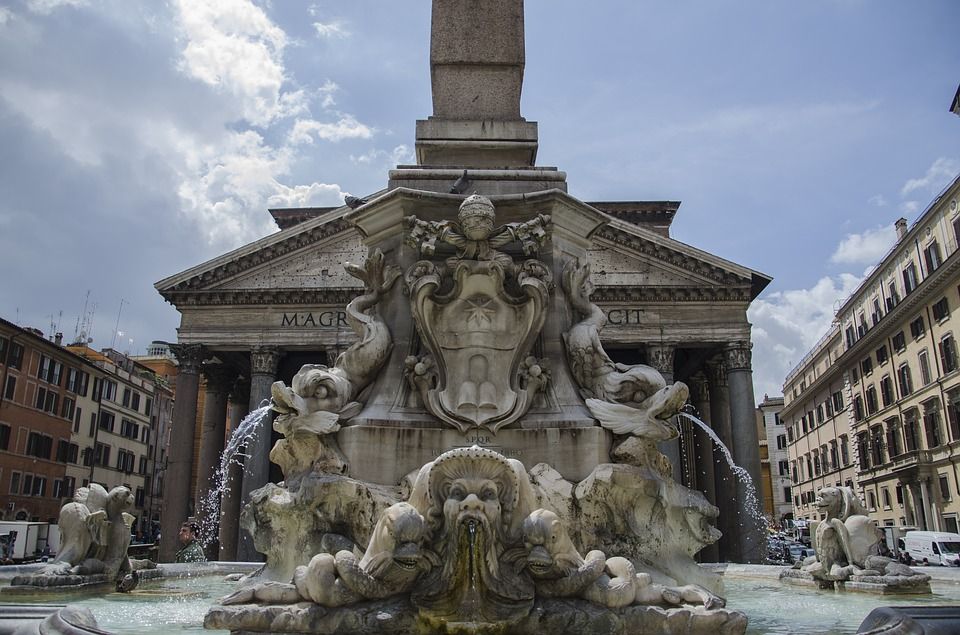
The highlight stop for many people is the Pantheon. Your guide brings you into position and explains what makes it special. This is the only completely intact pagan temple left in Rome, and that fact alone gives you a reason to pay attention to details instead of just admiring size.
Also, this tour includes a ticket-line skip feature. That matters because the Pantheon can eat time. Cutting queue time means more of your 2 hours goes to standing inside the atmosphere and less to waiting under umbrellas.
Important: Pantheon entry rules you should know
Pantheon entry is not included on the first Sunday of the month or during specific national holidays: April 25, June 2, and November 4. No refunds are issued if entry isn’t available under those conditions.
If your dates land on one of those times, plan for the experience to focus more on the exterior viewing and guide stories rather than entering.
Dress code note (worth a quick check)
If you do enter a place of worship, the requirement is strict: shoulders and knees covered (no tank tops or short dresses). If you’re unsure what counts, bring something light you can throw on. It can save your day.
A Local Café Break: The Pace Stays Human
Mid-walk, there’s a local café break. Think of it as a breathing spot—not a meal tour. In 2 hours, this is the kind of stop that helps you finish strong rather than feeling like you rushed through everything.
This is also when you can take advantage of the private guide again. If you have questions about what you should do next after the tour—food neighborhoods, what to see that day, or how to time another major site—this is the moment to ask.
Piazza Navona: Art, Energy, and Bernini’s Famous Fountain
The tour ends at Piazza Navona, after guided time there. This square is famous for its atmosphere: people watching, performers, and the feeling that Rome is actively alive instead of frozen for postcards.
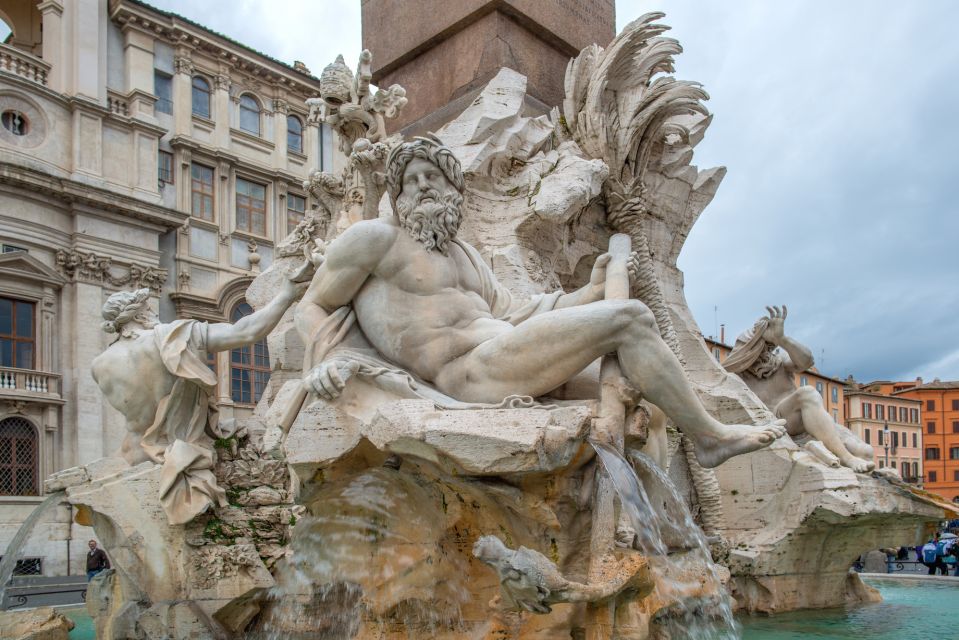
Your guide points out Bernini’s Four Rivers Fountain (the one often photographed from different angles because the figures and symbolism draw you in). Piazza Navona also tends to be where sidewalk art and music show you a different side of Rome—less museum, more street-life.
Finishing here is a smart move because it gives you an easy option after the tour: you can keep exploring on foot, linger for photos, or simply absorb the square without rushing back to transportation.
What You’ll Learn Along the Way (And Why It Changes the Walk)
This tour isn’t only about seeing. It’s about noticing. As you weave through cobblestone streets and small piazzas, your guide shares historical anecdotes about the fountains, buildings, and tucked-away corners you’d normally pass without understanding what you’re looking at.
That’s the value: you’ll stop treating Rome like a list. Instead, you’ll start seeing how one landmark connects to the next through urban design and time—how grand Baroque-era spaces relate to older layers, and why certain areas became popular gathering points.
And because you’re with a person, not an audio device, the stories can match your pace. If you want more detail, you can ask. If you’d rather move along, you can keep it light.
Who This Tour Fits Best
This is a great match if:
- you want a private walk rather than a crowded group shuffle
- you’re short on time but still want the major Rome icons
- you like explanations while you see the sights, not after you leave
- you appreciate small street moments as much as headline landmarks
It may be less ideal if:
- you dislike walking on uneven cobblestones
- you’re planning to visit on one of the days when Pantheon entry isn’t included
Should You Book This Private Walking Tour?
I’d book it if you want a well-paced 2-hour route that gives you the big Roman hits—Pantheon, Trevi Fountain, Piazza Navona—with a guide who helps you understand what you’re seeing as you walk. At $165.40 per person, the price makes sense when you value a dedicated guide, skip-the-line time at the Pantheon (when available), and a structured path through central Rome.
I’d double-check your dates if Pantheon entry is critical for you. On the first Sunday of the month or those national holidays (April 25, June 2, November 4), entry won’t be included, and there are no refunds for that change.
If your top priority is maximizing your time and getting the story behind the sights, this is a solid choice.
FAQ
How long is the Heart of Rome private walking tour?
The tour lasts 2 hours.
Where does the tour start?
You meet in front of Babington’s Tea House at the bottom of the Spanish Steps, Piazza di Spagna.
What sites are included during the walk?
The tour covers the Spanish Steps, Trevi Fountain, Piazza Venezia, the Pantheon, a local café break, and Piazza Navona.
Is Pantheon entry always included?
No. Pantheon entry is not included on the first Sunday of the month or during national holidays including April 25, June 2, and November 4 due to ticket availability.
What languages are available for the guide?
Spanish, English, and French are listed. Other languages (including Portuguese and Italian) may be available—request them under Additional notes if needed.
Is this a private group tour?
Yes. It’s a private tour with a live guide.
What should I wear for the tour?
Comfortable walking shoes are recommended. If you enter a place of worship, you need shoulders and knees covered (no tank tops or short dresses).