REVIEW · CASTEL SANTANGELO TOURS
Castel Sant’Angelo: skip the line guided tour – tiered price
Book on GetYourGuide →Operated by Rosy Smart City Tours · Bookable on GetYourGuide
Castel Sant’Angelo has a way of surprising you fast. This skip-the-line guided tour turns a famous fortress into a clear, walkable story, from tomb to prison to Renaissance residence. I especially like the spiral ramp climb across five levels and the way the tour saves time so you can actually enjoy the terrace views over Rome.
One thing to weigh: the visit involves lots of steps, and the elevator only covers a limited area. If you have mobility limits or back issues, this one may not be a good fit.
The tour runs with a live guide in English or French (private group), and one guide name you’ll hear here is Chris, described as making the castle history feel real and present. It’s a small, focused format, not a long, wandering museum shuffle.
In This Review
- Key highlights that make this tour worth your time
- Why Castel Sant’Angelo feels different from most Roman sights
- The route: what you’ll do in a 2-hour guided visit
- Climbing the spiral ramp across five levels
- Pope’s Apartment frescoes: art stops that make the climb meaningful
- The terrace view over Rome: when the sightseeing actually clicks
- What skip-the-line really changes (and what it can’t)
- Price and value: $169.93 per person with tiered pricing
- Meeting point and practical timing you should plan around
- Who this tour fits best (and who should skip it)
- The human touch: why the guide matters here
- Things not included that you may want to plan separately
- Should you book this skip-the-line guided tour?
Key highlights that make this tour worth your time
- Five levels via the spiral ramp: you experience the layout instead of just standing in one room
- Terrace payoff: Rome opens out in a way that photographs well and feels meaningful
- Pope’s Apartment frescoes: art stops are part of the route, not an afterthought
- Skip-the-line entry: you lose less time waiting and more time looking
- Private group feel: you get guidance geared to your pace
- English/French live guide: clearer context for what you’re seeing as you climb
Why Castel Sant’Angelo feels different from most Roman sights
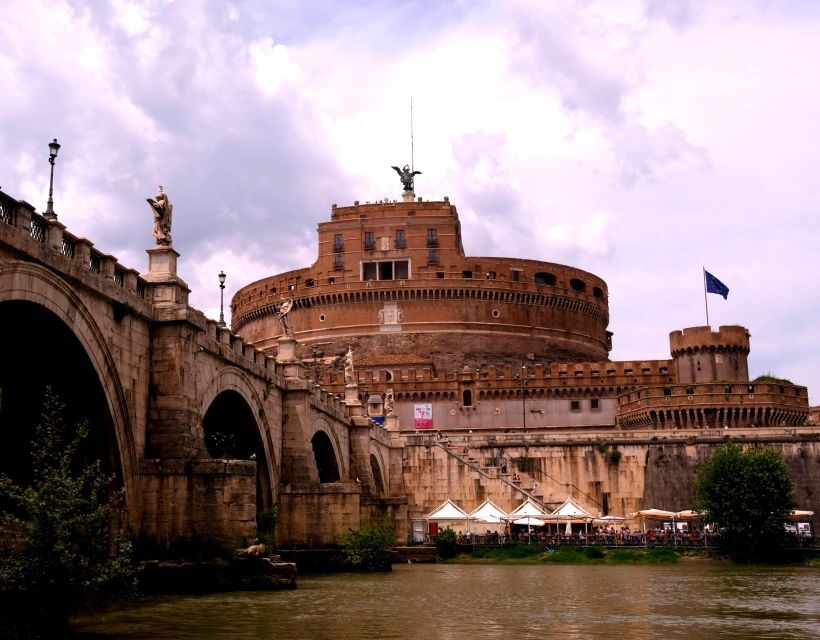
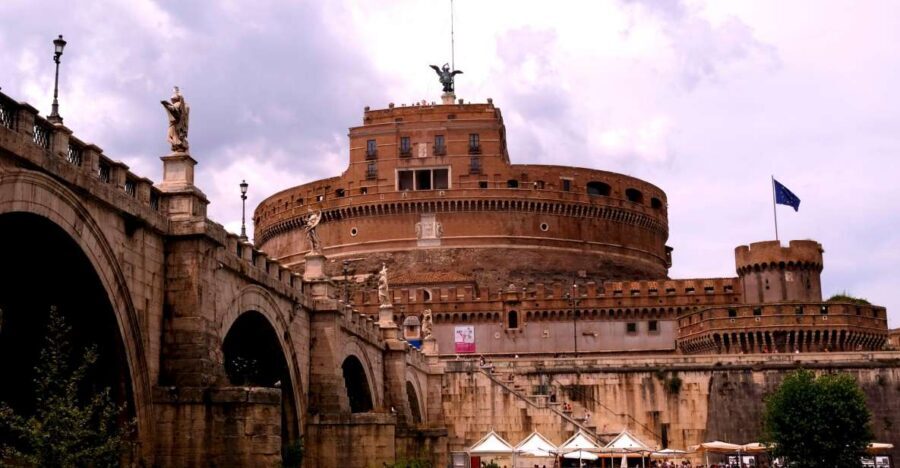
Most Roman landmarks give you one main story: empire, religion, or daily life. Castel Sant’Angelo is more of a shape-shifter. It starts as a funerary monument, commissioned as a tomb wanted by Emperor Hadrian in a more peripheral zone of ancient Rome. Then it gets a second job as a fortified bulwark protecting the city beyond the Tiber.
What I like about a guided visit here is that the building’s purpose keeps changing as you move through it. You’re not only seeing rooms and walls. You’re watching a timeline evolve in place: tomb, then fortress, then dark prison chapters, then a Renaissance residence phase linked to Michelangelo’s activity inside its walls, and later other prison use in the Risorgimento era.
Even if you only catch part of that storyline, the castle makes sense as you climb. The structure itself helps you follow the plot.
You can also read our reviews of more guided tours in Rome



The route: what you’ll do in a 2-hour guided visit
This is a 2-hour live guided tour with a private group. You meet the guide at the main entrance on the right, near the last angel statue. The activity ends back at the meeting point, so you’re not left figuring out where to go next.
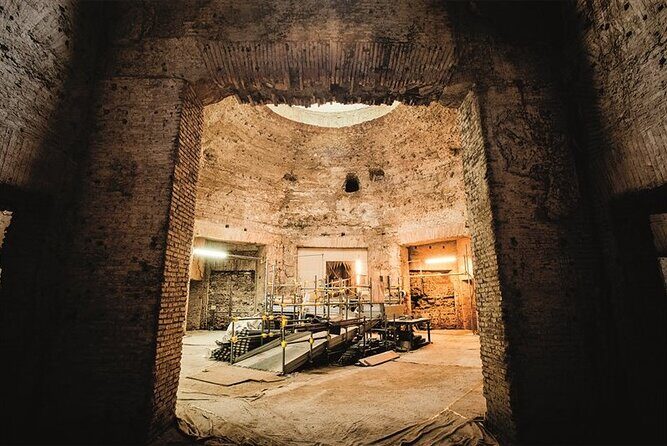
Inside, the tour’s pacing is built around movement, not just stopping. You’ll climb the spiral ramp that takes you through the castle’s five levels. That choice matters. A spiral climb naturally spaces out views and rooms, and it also helps you understand how the castle was designed to control space and movement over time.
Climbing the spiral ramp across five levels
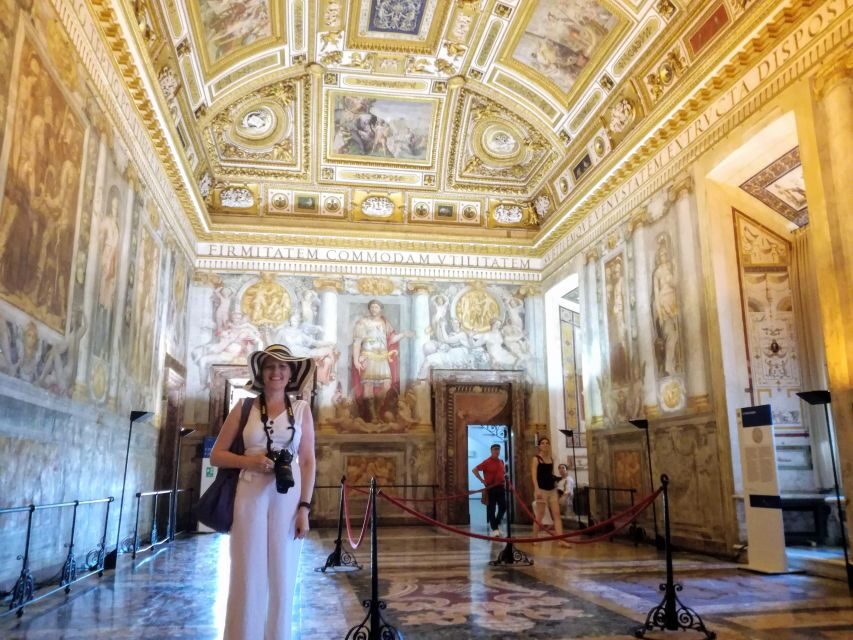
The big “how it feels” part of this tour is the spiral ramp. Five levels is a clear target, and it gives you a strong sense of progress. Instead of randomly popping into rooms, you experience how the castle stacks and how higher levels relate to earlier ones.
Here’s why that’s valuable for you as a visitor:
- You get a physical sense of scale. The castle isn’t only tall in theory; it becomes tall as you move.
- You avoid the common problem of museum fatigue. The climb gives the visit momentum.
- You build anticipation. Each level brings you closer to the views and the ceremonial spaces.
The one drawback is unavoidable: the tour involves climbing several steps. The elevator exists, but only for a limited area, and the tour information is blunt that relying on it won’t make the visit worthwhile. Plan accordingly.
Pope’s Apartment frescoes: art stops that make the climb meaningful
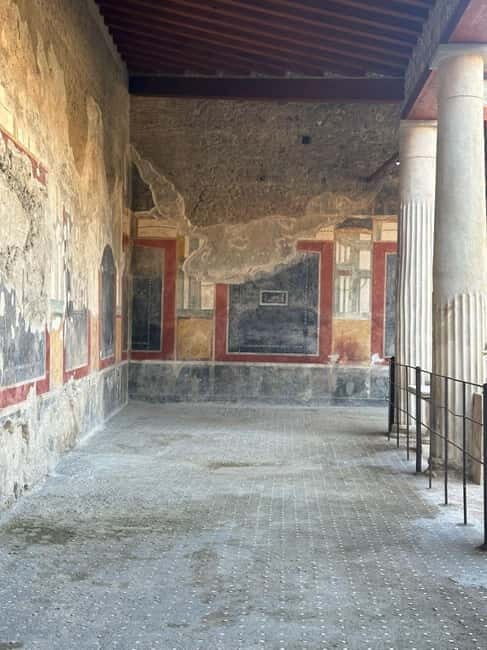
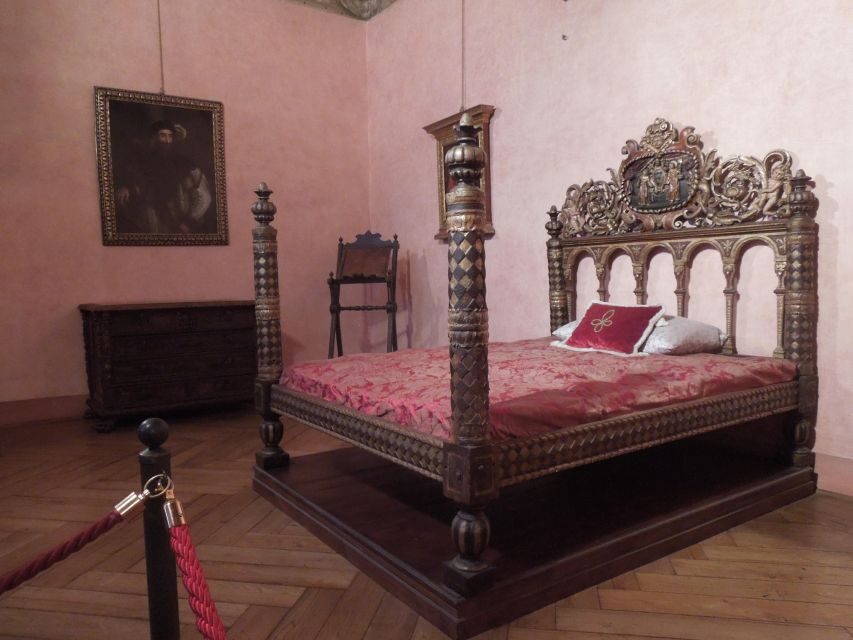
Among the highlights, the tour calls out the frescoes in the Pope’s Apartment. That’s a key contrast to the castle’s harder chapters. If you’ve only pictured a fortress, this is where the building shows its softer, more ceremonial side.
What you gain from having a guide point out these areas is simple: you’ll likely understand what you’re looking at while you’re looking at it. Frescoes are easy to see poorly if you don’t know where to aim your attention. With a live guide, you can slow down at the right moments and connect the art to the castle’s Renaissance role.
And because the route is tied to the climb, these art stops feel earned. The visit moves from “functional structure” to “expression of power and taste,” which is exactly what makes Castel Sant’Angelo unusual.
The terrace view over Rome: when the sightseeing actually clicks
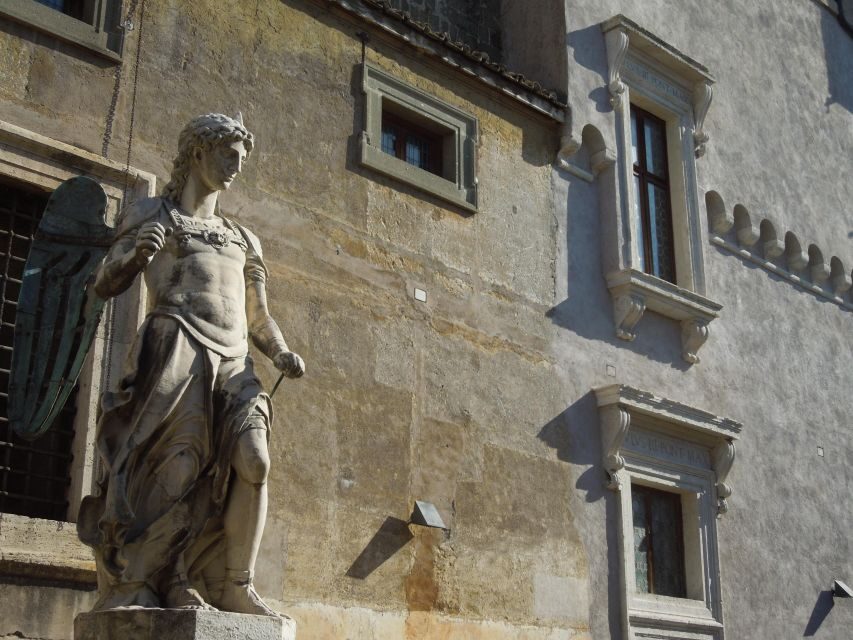
A terrace view can be one of those things that’s either great or just crowded. Here, the terrace is listed as a highlight, which usually means it’s built into the flow of the route rather than treated like a quick photo stop.
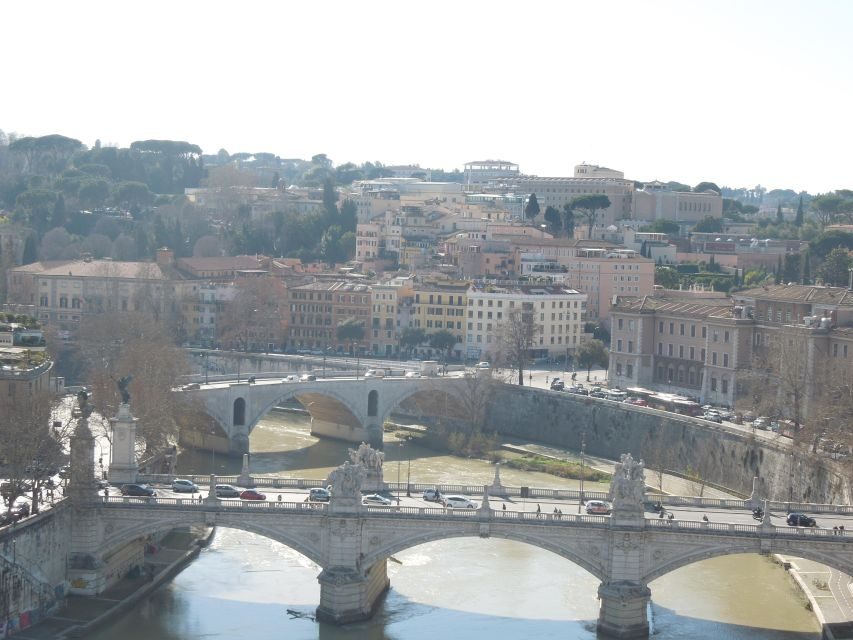
Expect the viewpoint to feel broad, with Rome opening out in a way that helps you orient yourself. That matters because the castle sits in an area that can feel disconnected if you’re only seeing Rome from street level. From above, you can connect the dots between the city and the Tiber-side location that made the castle strategically useful.
If you enjoy photography, this is the moment. If you prefer quiet, this is also your chance to pause and look slowly.
You can also read our reviews of more tours and experiences in Rome
- Skip-the-Line Group Tour of the Vatican, Sistine Chapel & St. Peter’s Basilica
★ 4.5 · 12,779 reviews




What skip-the-line really changes (and what it can’t)
You’re paying for a skip-the-line guided experience, and that’s a real quality-of-life upgrade in Rome. When you cut queue time, you keep your energy for the best parts: the five-level climb, the fresco focus, and the terrace.
Skip-the-line is not magic. You still spend time inside walking, climbing, and listening. But it does reduce one of the least fun variables: waiting. With a 2-hour tour, that’s important because you’re working with a time-boxed window.
Also, this is described as tiered pricing with a simple idea: the more you are, the less you pay. That’s a value signal. If you’re traveling with people you trust, it can make the overall cost easier to swallow.
Price and value: $169.93 per person with tiered pricing
The listed price is $169.93 per person. At first glance, that can feel steep for a castle. But you’re not just buying entry. You’re buying:
- A live guide (English or French)
- Skip-the-line entry
- A private group format
- A structured route that hits major highlights in about 2 hours
So the value question becomes: do you want guidance and time savings more than you want to wander independently? If you want the castle to feel like a coherent story as you climb, the guided format justifies a higher cost faster.
The tiered price note also matters. If you’re part of a group where the cost drops per person, the value gets more attractive quickly. If you’re solo, you’ll feel the price more.
Meeting point and practical timing you should plan around
You’ll meet the guide at the front of the main entrance on the right, by the last angel statue. Plan to arrive a little ahead so you can start on time without stress. The tour ends back at the same meeting point, which makes logistics easier when you’re planning your day around Castel Sant’Angelo.
The tour runs in sun or rain, so don’t assume you’ll get a dry day. Since you’re moving and climbing, bring a rain layer that won’t ruin your grip or slow you down.
What to bring is simple: passport or an ID card.
Who this tour fits best (and who should skip it)
This tour is clearly designed for people who can handle stairs. It’s not suitable for:
- People with back problems
- People with mobility impairments
- People over 220 lbs (100 kg)
That list is pretty direct, and you should trust it. If stairs are a risk for you, the limited elevator coverage makes this tour even harder to adapt.
If you’re comfortable walking uphill and climbing, you’ll likely enjoy the structure of the route. You’ll also get more out of the climb because the tour uses the movement to help you understand the castle’s changing roles.
Private group also helps. It’s easier for a guide to pace you and explain what you need without being stuck in a huge crowd flow.
The human touch: why the guide matters here
The experience provider is Rosy Smart City Tours, and one guide name that stood out in the feedback is Chris. The comments focus on storytelling and making the castle history feel alive, not like a list of dates.
That’s exactly what you want in a building like this. Castel Sant’Angelo’s story changes hands over centuries, and a good guide helps you follow that shift while you’re still looking at the walls and ceilings. If you’ve ever felt lost in big historic sites, you’ll appreciate that the tour is built around a guided narrative.
Things not included that you may want to plan separately
This tour includes the entrance ticket, but a few popular add-ons aren’t part of it:
- Passetto di Borgo is not included
- Food and drinks are not included
- No hotel pickup or drop-off is included
That means you should think ahead about meals and nearby breaks. Also, if Passetto di Borgo is on your must-do list, you’ll need a separate choice rather than expecting it inside this particular tour.
Should you book this skip-the-line guided tour?
Book it if you want a focused, time-efficient way to understand Castel Sant’Angelo instead of just walking around. The combination of skip-the-line entry, a five-level spiral ramp route, and highlighted stops like the Pope’s Apartment frescoes and the terrace views makes this a strong “greatest hits with context” option.
Skip it if stairs are a problem for you, because this tour depends on climbing and the elevator coverage is limited. Also skip it if you were hoping for Passetto di Borgo, since it’s not included.
If you’re deciding between an independent visit and this guided format, I’d lean guided for one reason: the castle’s purpose shifts constantly, and a live guide helps you connect the dots while you’re still in the building.
If your group is large enough to benefit from the tiered pricing, that’s another good reason to lock it in. It turns a pricey single-person outing into something that feels more balanced per person.