REVIEW · POMPEII DAY TRIPS
Rome to Pompeii & Herculaneum Trip with Hotel Pickup & Skip-the-line Tickets
Book on Viator →Operated by Orange Umbrella Tours · Bookable on Viator
Waking up early can pay off fast. This private Rome-to–Pompeii and Herculaneum trip uses an on-time hotel pickup and skip-the-line entry so you spend your morning inside the ruins, not stuck at gates. You’ll get a guided, art-historian style walk through the big stops in a single day.
Two things I like right away are the pairing of the ruins with an expert guide (the art-historian approach really changes how you read what you’re seeing) and the comfort factor: an air-conditioned minivan keeps the ride civilized.
One possible drawback to plan for: the time in each site is set—so if you crave extra wandering time or want to take everything slowly, you may feel the schedule is a bit tight.
In This Review
- Key Highlights You’ll Actually Feel on the Day
- A 7:30am Start That Makes the Whole Day Work
- Skip-the-Line Tickets + 2.5 Hours in Pompeii: The Highlights, Explained
- Chiesa di Sant’Ercolano and Herculaneum in Two Hours: Where the Visuals Hit Hard
- How the Art-Historian Guide Changes What You See
- Comfort, Transport, and the Rhythm of an 11-Hour Day
- Price and Value: What You’re Paying For
- Who Should Book This Tour (and Who Might Prefer Otherwise)
- Should You Book This Rome to Pompeii and Herculaneum Tour?
- FAQ
- What time does the pickup start?
- Is the tour private or shared?
- How long is the full day?
- Which ruins are included?
- How long is the guided time at each site?
- Are skip-the-line tickets included?
- What’s included in the ticket price?
- Is lunch included?
- Cancellation and passport (quick facts)
Key Highlights You’ll Actually Feel on the Day
- Skip-the-line access keeps the morning momentum instead of burning time in queues
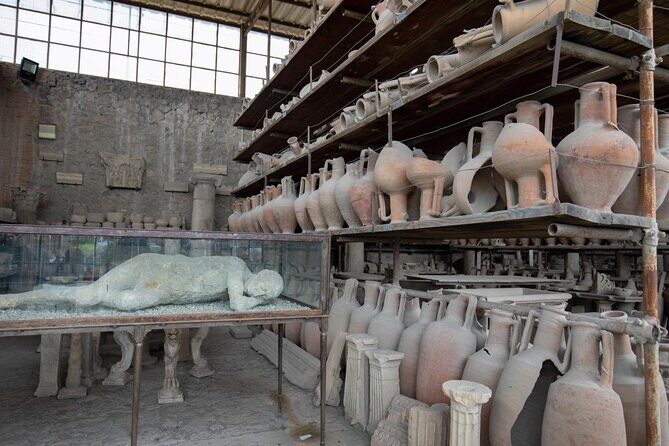
- Pompeii guided time (about 2.5 hours) covers the highlights without leaving you aimlessly lost
- Herculaneum guided time (about 2 hours) pushes you past the basics and toward details like paintings and woodwork
- Hotel pickup and drop-off means no logistics stress once your day starts
- Private format lets your group move together with your guide, not around other groups
A 7:30am Start That Makes the Whole Day Work
This is a full-day outing, roughly 11 hours long, built around an early start: you meet your driver at your hotel lobby at 7:30am. That timing matters more than it sounds. If you’ve ever visited major Roman sights, you know the day gets less fun as lines grow and energy drops.
The tour uses a private, air-conditioned minivan to get you to Campania, and you’ll have the same organized plan for the return drop-off. Because the day is tightly scheduled, pickup isn’t just convenience. It’s what protects your limited time inside Pompeii and Herculaneum.
A nice touch in the real-world runs I reviewed: drivers like Leonardo and Stefano are described as punctual and friendly, which helps the day feel smooth from the first handshake to the last drive back.
Practical tip: wear comfortable shoes. You’ll be walking through uneven ancient surfaces and long outdoor stretches even if the pace feels controlled. Also, since there’s no mention of an included lunch, bring a light snack mentality—at least plan for hunger.
You can also read our reviews of more tours and experiences in Rome



Skip-the-Line Tickets + 2.5 Hours in Pompeii: The Highlights, Explained
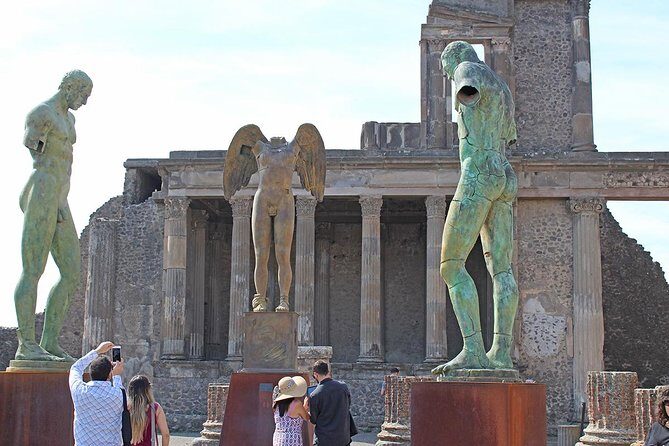
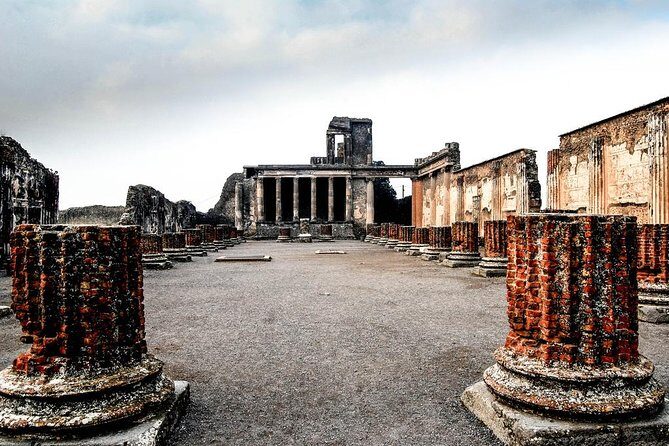
Pompeii is the headline, and this plan respects that. You get skip-the-line tickets and then a private guided tour of about 2.5 hours focused on the park’s highlights. Instead of trying to decode street names and building functions on your own, you’ll have an art-historian guide explaining what you’re looking at and why it matters.
What the “skip-the-line” part buys you is time for meaning. Waiting outside while your guide could be teaching you often turns a great day sour. Here, the goal is simple: get you inside, then move through Pompeii with guidance that points out details that most people miss when they’re just trying to survive the crowds.
The guide style seems to be the core strength of this tour. In documented experiences, guides such as Itali and Lalo were praised for spotting small things and connecting them to how daily life worked before the disaster. That matters in Pompeii because so much is broken, faded, and fragmentary. A good guide helps you stop treating the ruins like a pile of stones and start seeing them as a living town frozen in time.
Still, the schedule can feel like a sprint if you love deep reading. One downside shared from a past booking: the Pompeii portion felt rushed for someone who wanted more depth and extra time to linger. If that sounds like you, you may want to go in knowing the tour is built for “big picture + smart commentary,” not slow archaeology class.
What I’d do to balance that: treat Pompeii like a guided museum that gives you a map of what to revisit. During the tour, focus on absorbing the guide’s “why.” After the guided portion ends (and if you choose to spend more time before the next stop), you’ll know what to circle back to.
Chiesa di Sant’Ercolano and Herculaneum in Two Hours: Where the Visuals Hit Hard
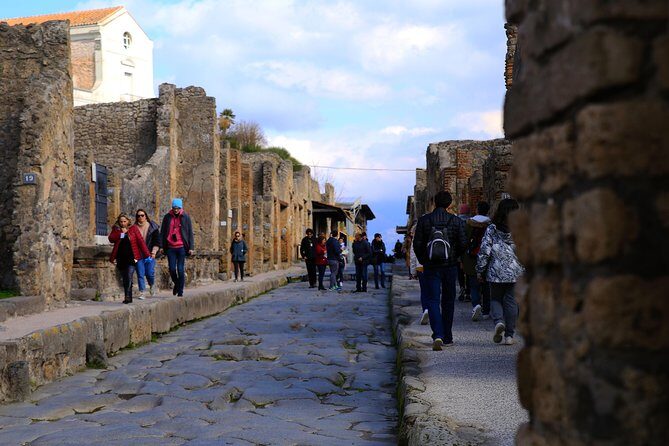
If Pompeii is the celebrity, Herculaneum is the show with the close-up. This day includes a second ruin stop with a private guided tour of about 2 hours at the Chiesa di Sant’Ercolano area. The timing is shorter than Pompeii, but the payoff can feel bigger because the guide can steer you toward the kind of preserved details that make Herculaneum special.
From the details people highlighted, Herculaneum is where you really get visual reminders of daily life. Past descriptions specifically mention paintings and woodwork, plus a 2000-year-old boat. That blend is why Herculaneum often feels more tangible than Pompeii even when you’ve done both.
This is also the stop where the guide impact shows up most. People noted that the guide pointed out how the town functioned before and during the tragedy, and that seeing the details with interpretation was far better than wandering on your own. That’s exactly what you want from a guided format: not just a route, but a way to read the scene.
One practical consideration: two hours moves quickly in an outdoor ruin complex. You’ll be walking and listening at the same time. If you’re the type who needs quiet pauses to soak it in, you might feel a bit of pressure during the guided portion. But if you want an efficient day that still feels meaningful, Herculaneum is the stop that makes that efficiency worth it.
If you travel with teens or younger kids who can lose patience with long lectures, this kind of guided “look here, notice this” tour style can work well because the details are visual and specific. Paintings, woodwork, and the boat connection give people something concrete to latch onto.
How the Art-Historian Guide Changes What You See
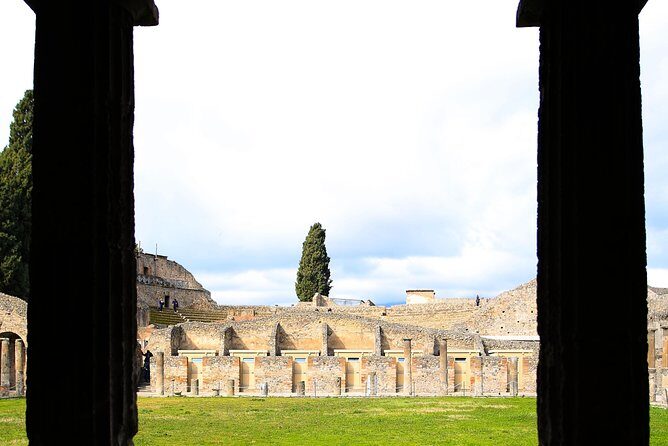
This tour isn’t just “someone leads you around.” It’s built around a professional art historian guide and a professional guide, with the explicit promise that you’ll get in-depth commentary rather than surface-level pointers.
And the difference shows up in what people say they learned. The best praise I saw centered on how the guide explained what the cities looked like, how different parts of the towns served different roles, and how the tragedy froze those differences in place. For example, one description compared life patterns—wealthy versus trades, and the role of mosaics—which is a great way to turn ruins into a social map.
Even the guide’s enthusiasm seems to matter. In one account, the guide’s passion made the experience feel calm and well paced. Another account made it clear that the guide was excited to share details in both Pompeii and Herculaneum, and that the guide actively answered questions rather than reciting a script and moving on.
Here’s how you should use the guide, even if you’re not chatty: when you hear a specific artifact description (like painting or woodwork), slow your eyes for a second and actually locate where the guide is pointing. Ruins can be visually confusing. Guided attention helps you avoid the common mistake of thinking you missed something when you actually didn’t know what to look for.
Quick note on language: the tour runs in English. If you’re a small group and want to ask follow-ups, the private format should make that easier than with a huge multi-language crowd.
Comfort, Transport, and the Rhythm of an 11-Hour Day
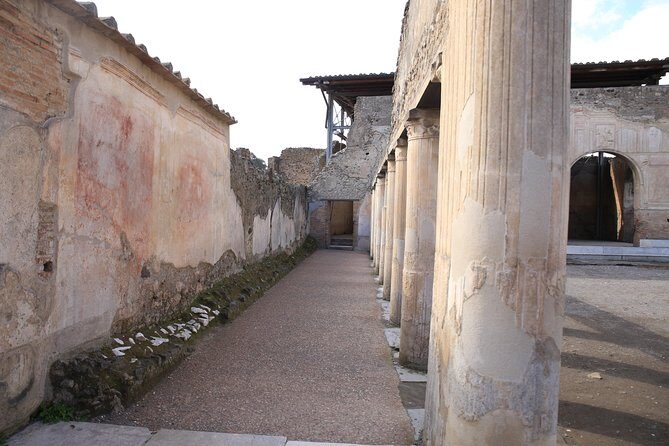
The transport plan is straightforward: hotel pickup and drop-off plus a ride in an air-conditioned minivan (and a private vehicle). In summer or shoulder seasons, the A/C detail is not small. Even if your walking time is guided, you’ll still feel better arriving with fewer temperature shocks.
Because the day starts at 7:30am and lasts around 11 hours, you should expect a “morning concentration, afternoon follow-through” rhythm. The two main site blocks are fixed (about 2.5 hours Pompeii and 2 hours Herculaneum). The rest of the time is the drive, meeting, and transitions.
Lunch is the one missing piece. The tour does not include lunch, so you’ll need your own plan. That doesn’t mean you’ll be stuck. It just means you should budget time and money for an actual meal at some point in the day, rather than hoping a snack will carry you.
If your group includes anyone who gets cranky without food (I speak from experience, not judgment), either bring a small snack before you leave or plan a nearby meal after you wrap up the guided stops. Also, bring water if you can. The day is long and outdoor.
One more practical angle: your day is private, meaning “only your group will participate.” That’s a quality-of-life feature. You’re less likely to feel like you’re getting dragged by other people’s slow pace or sped up by someone else’s urgency.
You can also read our reviews of more tours and experiences in Rome
- Skip-the-Line Group Tour of the Vatican, Sistine Chapel & St. Peter’s Basilica
★ 4.5 · 12,779 reviews



Price and Value: What You’re Paying For
The price is listed as $1,056.19 per person, which is not an impulse buy. So the real question isn’t whether it’s expensive. It’s whether you’re getting enough structure and savings to justify it.
Here’s where the value comes from:
- Skip-the-line reduces wasted time at entry, which is the big currency on a one-day itinerary.
- Private guided tours with a professional art historian style approach means you aren’t paying for transportation only—you’re paying for interpretation and time management.
- Hotel pickup and drop-off removes planning friction in Rome. That can save real stress, especially if you don’t want to coordinate trains or taxis.
If you’re comparing to other options, the question should be: does this tour help you get more out of Pompeii and Herculaneum in the same day than doing it on your own? The guide focus—especially the way people describe learning how life worked and what preserved details mean—suggests that the ticket isn’t mainly about “being there.” It’s about seeing the right things and understanding them faster.
One caution: the time in each site is fixed, and some people felt rushed. If you’re the kind of visitor who wants slow looking, consider whether a longer independent visit might suit you better. But if you want two major ruins sites handled in one organized day with minimal friction, this format is built for that.
Who Should Book This Tour (and Who Might Prefer Otherwise)
I think this tour fits best if you want a one-day plan that stays focused, starts early, and gives you guided meaning without spending your vacation time figuring out logistics.
It’s especially good for:
- People who want Pompeii and Herculaneum in the same day without splitting the schedule
- Groups that value a private format and a guide who will answer questions
- Anyone who prefers having direction in the ruins rather than self-navigating
It might be less ideal if:
- You want to roam freely and spend extra time on fewer buildings
- You feel uneasy when schedules are tight, since the guided blocks are time-boxed
If you’re traveling with kids, the tour notes that children must be accompanied by an adult. Also, the Herculaneum details people mentioned—paintings, woodwork, and the boat connection—are the kind of concrete, visual points that can hold attention better than pure ruin descriptions.
Should You Book This Rome to Pompeii and Herculaneum Tour?
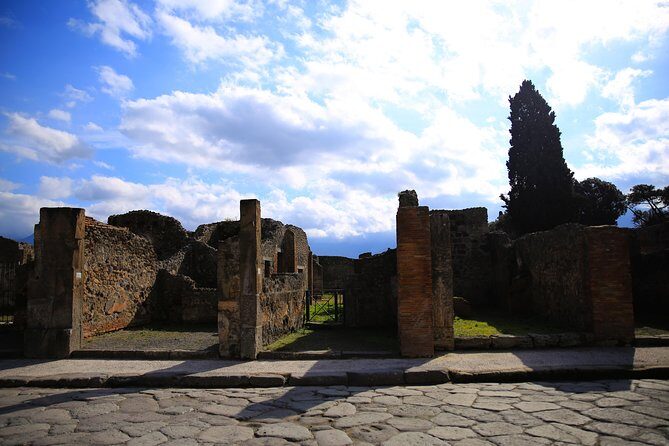
Book it if you want an efficient day with less stress: hotel pickup, skip-the-line entry, and a guide who explains what you’re seeing instead of leaving you to guess. The strongest argument here is the combination of structured guided time plus Herculaneum’s specific preserved details that become memorable when someone points them out.
Hold off or consider alternatives if you know you’ll resent feeling rushed. In that case, you might enjoy more time on your own at either Pompeii or Herculaneum instead of trying to do both in a tight schedule.
If you want a high-organization day that turns ruins into understandable scenes, this is a solid pick.
FAQ
What time does the pickup start?
Pickup begins at 7:30am. You meet the driver at your hotel lobby in Rome.
Is the tour private or shared?
It’s a private tour/activity, meaning only your group participates.
How long is the full day?
The duration is listed as about 11 hours.
Which ruins are included?
You visit Pompeii Archaeological Park and Herculaneum (linked to Chiesa di Sant’Ercolano).
How long is the guided time at each site?
Pompeii has about 2.5 hours of private guided touring, and Herculaneum has about 2 hours.
Are skip-the-line tickets included?
Yes. The tour includes guaranteed to skip the long lines.
What’s included in the ticket price?
Included items are a professional art historian guide, hotel pickup and drop-off, transport in an air-conditioned minivan/private vehicle, and admission tickets for the sites, plus a mobile ticket.
Is lunch included?
No. Lunch is not included.
Cancellation and passport (quick facts)
You can cancel for a full refund if you cancel at least 24 hours before the start time. A current valid passport is required on the day of travel.
You Might Also Enjoy

More Skip the Line in Rome
- Skip-the-Line Group Tour of the Vatican, Sistine Chapel & St. Peter’s Basilica
★ 4.5 · 12,779 reviews