REVIEW · PHOTOGRAPHY SESSIONS
Rome Street Photography Lesson
Book on Viator →Operated by Pollino Insider · Bookable on Viator
Rome can feel like a giant photo set. This lesson turns that feeling into real skills. You’ll meet your professional guide in the hip Trastevere area and spend about 3 hours practicing street photography while walking between iconic spots around Piazza Navona and Campo de’ Fiori.
Two things I really like: it’s a private tour, so you get hands-on guidance instead of vague group directions, and you’ll keep taking photos as you go, learning tricks to improve what you capture. One thing to consider: admission tickets aren’t included for the main stops, so plan for those costs if you want to go inside and shoot there.
In This Review
- Key Things to Know Before You Go
- Why Rome Street Photography Works So Well on Foot
- What a Private Lesson Changes (For Your Photos)
- Stop 1: Basilica di Santa Maria in Trastevere for Mosaics and Faces
- Stop 2: Campo de’ Fiori (and a Beer Shop Stop) for Street Scenes With Story
- Stop 3: The Pantheon for Clean Composition and the Best Light Test
- How the Route Builds Skills Instead of Just Checking Boxes
- Price and Value: Is $138.91 Worth It?
- Timing, Meeting Point, and How Long It Really Takes
- Who This Tour Suits Best (and Who Might Skip It)
- A Quick Word on the Guide: Luigi’s Teaching Style
- Should You Book the Rome Street Photography Lesson?
- FAQ
- How long is the Rome street photography lesson?
- Is this a private tour?
- Where does the tour start?
- Do I need to bring a camera?
- Are admission tickets included for the stops?
- What days and times does the tour run?
- What is the cancellation policy?
Key Things to Know Before You Go
- Private, photographer-led practice designed for improving your street shots, not just sightseeing
- Trastevere to the Piazza Navona area, with a route that mixes neighborhoods and landmark backdrops
- Bring your own camera so you can apply tips in the moment
- Stop timing is built around photos, with about 1 hour at each major highlight
- Admission tickets not included, which can affect how much you can photograph indoors
- Luigi’s praised for being professional and fun, so the experience stays light while you learn
Why Rome Street Photography Works So Well on Foot
Street photography in Rome is different from street photography in a cookie-cutter city. The “texture” is everywhere: ancient stone, bright plaster, small streets that funnel you toward a view, and constant human motion. This tour leans into that reality by building your practice around real locations you’ll recognize fast—then giving you enough structure to make your photos better instead of just taking lots of shots.
You start in Trastevere, a neighborhood that’s already visually busy. That matters because street photography improves when you’re in a place with lots of small moments to test your choices—where to stand, when to wait, how to frame movement, and how to keep the background from stealing attention.
The best part is that you’re not stuck with one type of scene. You’ll go from church mosaics to an open piazza area (Campo de’ Fiori) and then into the Pantheon. That mix forces you to practice different styles: details, people, street life, and architectural composition.
You can also read our reviews of more photography tours in Rome
What a Private Lesson Changes (For Your Photos)
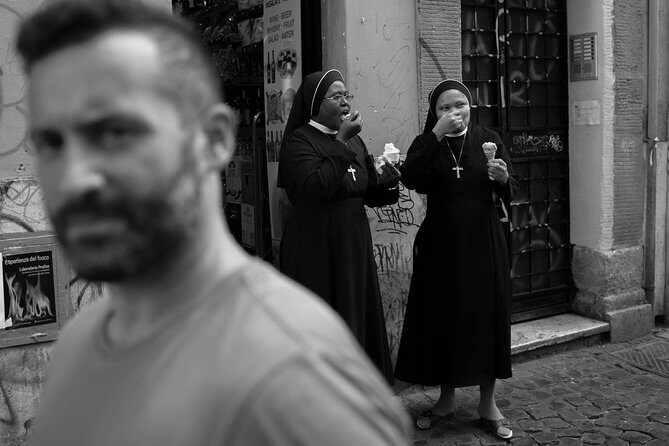
A private tour is more than a luxury label. It changes how fast you learn.
Instead of following a script and snapping whatever comes first, you’ll get targeted advice from your professional photographer guide. In a format like this, you can ask practical questions about what’s happening with your camera right now—why a shot looks flat, how to handle contrast in bright Rome light, or how to frame subjects so they look intentional instead of accidental.
The reviews praise the experience for being both professional and enjoyable, and that fits what you want from this kind of lesson. Street photography can get frustrating if your guide only points out sights. Here, you’re practicing skills while you’re out walking, so the learning has a short feedback loop.
You’ll also be taking photos throughout the walk. That’s crucial. If your “lesson” were mostly lecture time, you’d leave with theory and no habit. With hands-on practice, you build confidence quickly—especially if you’re not yet sure how to translate what you see into what your camera records.
Stop 1: Basilica di Santa Maria in Trastevere for Mosaics and Faces
The first stop is the Basilica di Santa Maria in Trastevere, one of the oldest churches in Rome. What makes it a great photography anchor is that it offers two strong visual targets in the same place: mosaics and human moments (people moving, pausing, and reacting).
You’re looking at layers of time. The church’s basic floor plan and wall structure date back to the 340s, with much of the structure placed in the 1140–43 period. Then there are the mosaics from the late 13th century by Pietro Cavallini, which are the kind of surface detail that rewards careful framing.
For your camera, this stop is ideal for testing close detail and interior contrast. Mosaics can be unforgiving if your exposure and angle aren’t working, so pay attention to how bright highlights fall on tesserae. Also think about composition: you can shoot the artwork as a pattern, or you can frame part of the mosaic with a person in the frame for scale and story.
Practical note: this is about 1 hour, and admission tickets aren’t included. If you want interior time for photos, factor in that you may need to buy tickets separately.
Stop 2: Campo de’ Fiori (and a Beer Shop Stop) for Street Scenes With Story
Next you’ll move into the Campo de’ Fiori area, named literally as field of flowers, and the name dates back to the Middle Ages when the area functioned as a meadow. That history matters for photography because the place has always been social space—not a quiet museum corner.
Campo de’ Fiori sits south of Piazza Navona, at the border between rione Parione and rione Regola. It’s also the kind of square where the rhythm shifts through the week, with a flourishing horse market that happened twice weekly—Monday and Saturday.
Today, you’ll feel that legacy through the street atmosphere. The tour includes a stop tied to Escape Room Campo dei Fiori & Beershop, so you’ll likely have a chance to photograph the area’s energy and the kind of casual scenes that street photography lives on. Even if your main goal is people and candid moments, being near a place like this helps because subjects move naturally—someone walking through, someone pausing, small group interactions.
This is the stop where you’ll benefit most from the lesson style: take photos, then adjust based on your guide’s feedback. Try different approaches:
- Shoot from lower angles to make buildings feel taller.
- Wait for small clusters of people instead of forcing a subject.
- Frame with the square’s edges so the image has structure, not just a random crowd.
Again, admission tickets aren’t included here, but the main value is the street practice time and the chance to apply what you learned in the church stop—this time on motion and mood.
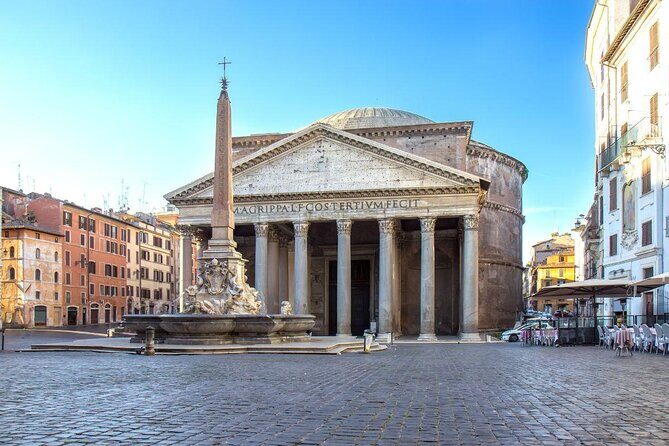
Stop 3: The Pantheon for Clean Composition and the Best Light Test
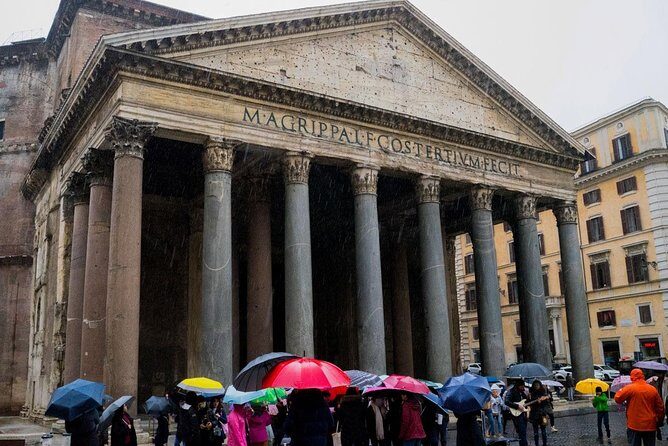
The Pantheon is a former Roman temple, now a church, and it’s one of the best-preserved ancient Roman buildings. It survived in large part because it stayed in continuous use over time, and since the 7th century it has been used as a church dedicated to St. Mary and the Martyrs (Sancta Maria ad Martyres), informally known as Santa Maria Rotonda.
If you’re practicing street photography, the Pantheon might seem like a sudden shift—until you treat it like a composition workout. Here’s why it’s powerful for camera skills:
- It’s extremely graphic. Straight lines and large architectural forms are easier to frame intentionally.
- It forces discipline. When the background is iconic and bold, you can’t hide behind luck—you have to aim.
- It’s a place where people and architecture meet. You’ll likely want to include a human element for scale and emotion.
The earlier temple on this site was commissioned by Marcus Agrippa during Augustus’s reign. That long timeline isn’t just trivia—it helps explain the mix of grandeur and familiarity people feel when they walk in. For photos, it means you’re not working with a generic “old building.” You’re working with a structure that has been visually relevant for centuries.
This is also about 1 hour, and admission tickets aren’t included. If you care about interior photography, plan on time for entry and your own slow “camera checks” before you commit to shots.
You can also read our reviews of more tours and experiences in Rome






How the Route Builds Skills Instead of Just Checking Boxes

One of the smartest things about this experience is the way the stops connect. You start with a detailed interior subject (Trastevere basilica), then shift to open public space (Campo de’ Fiori), then finish with one of Rome’s most iconic architectural interiors (the Pantheon).
That progression helps you practice different street photography “problems”:
- Indoors and detail-heavy: how to compose when the environment is complex
- Outdoors in a square: how to frame people and movement
- A monumental interior: how to maintain clean lines and avoid chaotic backgrounds
And because the tour is private, you can likely set your pace. If you want to spend extra moments testing an angle, the guide can respond. If you’re less confident, you can take guidance step-by-step. That is what you’re paying for with a private lesson: control over your learning.
Price and Value: Is $138.91 Worth It?
At $138.91 per person, you should judge this as a skill-building investment, not a bargain ticket. Here’s why it can still be good value:
- You’re getting a private photographer guide for about 3 hours.
- You bring your own camera and get practice with continual photo-taking.
- The route includes major Rome landmarks, so you’re not paying just for a walk through one area.
- The experience is built to help you create better photos, not just see sights.
The main “value friction” is admissions. Since admission tickets aren’t included at the main stops, your total trip cost may rise depending on what you choose to enter and photograph. Still, this doesn’t automatically reduce value. It just means the lesson itself is priced for the guide and the practice time, not entrance fees.
If you’re a total beginner who wants a quick confidence boost, you may feel the cost more sharply. If you already take photos but feel stuck at the same style or the same framing choices, this is the kind of session that can make a noticeable difference fast.
Timing, Meeting Point, and How Long It Really Takes

This tour runs in a morning window: Monday through Friday, 10:30 AM to 12:00 PM (with the overall experience listed at about 3 hours). The exact start location is the Province of Rome, and the practical takeaway is simple: plan to show up ready to walk in the Trastevere area and use public transport if that’s easiest for you.
Because it’s mobile ticketed, you won’t need to hunt for printed vouchers. Keep your phone charged. Rome sidewalks are forgiving, but you’ll still want comfy shoes—especially if you’re planning to take lots of photos as you go.
Who This Tour Suits Best (and Who Might Skip It)
This works best for you if:
- You want to learn street photography techniques in a real place, not just read tips
- You’re bringing a camera and want practice you can apply immediately
- You like a route that mixes neighborhood feel (Trastevere) with landmark scale (Pantheon)
- You’d rather get personal feedback than follow a group schedule
It may be less ideal if:
- You want a slow, unstructured tour focused mainly on time inside sites
- You dislike paying separate admission tickets at major stops
- You don’t plan to take many photos (since the lesson is built around shooting often)
A Quick Word on the Guide: Luigi’s Teaching Style
One of the standout praised aspects is the guide. In the reviews, Luigi is described as professional and an exemplary person, and the group notes they both had fun and learned in his company. That combination matters. A street photography lesson can feel awkward if the vibe is stiff. With Luigi’s approach, you’re more likely to relax enough to shoot confidently—and that often leads to better photos.
If you like guides who explain and adjust, this is a strong fit.
Should You Book the Rome Street Photography Lesson?
Yes, I think you should book it if you want your Rome photos to look like you made choices, not just lucky shots. The private format, the guided practice, and the mix of Trastevere, Campo de’ Fiori, and the Pantheon create a rare combo: instruction you can apply right away in front of real subjects.
Skip it only if you’re mainly looking for a standard sightseeing walk or you don’t want to pay additional admission tickets for indoor stops. If you’re okay with those trade-offs, you’ll likely come away with a better eye—and a camera full of images that feel more intentional.
FAQ
How long is the Rome street photography lesson?
It lasts about 3 hours.
Is this a private tour?
Yes. It’s a private experience with only your group participating.
Where does the tour start?
You meet in Rome’s Trastevere neighborhood, with the meeting point listed in the Province of Rome.
Do I need to bring a camera?
Yes. Bring your own camera so you can practice and take numerous photos with your guide.
Are admission tickets included for the stops?
No. Admission tickets are not included for the stops listed in the experience.
What days and times does the tour run?
The opening hours listed are Monday through Friday from 10:30 AM to 12:00 PM.
What is the cancellation policy?
You can cancel for a full refund up to 24 hours in advance of the experience start time.
If you tell me your current camera (phone, DSLR, mirrorless) and your skill level, I can also suggest what to focus on during the three stops so you get the most out of the lesson.