REVIEW · CITY TOURS
Rome: Stadium of Domitian Entry and City of Rome Audioguide
Book on GetYourGuide →Operated by OPERA ROMANA PELLEGRINAGGI · Bookable on GetYourGuide
Rome always gives you another angle.
This combo is interesting because you’re not just looking at ruins. You’re starting at the Stadium of Domitian with a reserved entry, then continuing into a self-paced walk guided by the city’s spiritual and architectural story.
Two things I really like: you get guaranteed access (reservation-based), and the “Heart of Rome” experience comes with a virtual audioguide in six languages you can run on your phone. One consideration: the audio part depends on your smartphone setup, since you’ll need to download the Vatican&Rome app and have headphones ready.
In This Review
- Key things to know before you go
- Why this Domitian Stadium + Heart of Rome combo works
- Finding Stadio di Domiziano and what to bring
- Entering the Stadium of Domitian (and what you should expect)
- Skip-the-line logic: smartphone ticket check-in
- The Heart of Rome audio guide: how it changes the walk
- What the audio story is designed to do
- Languages you can choose
- Using the tour like a pro: phone setup, pace, and headphones
- A realistic look at the “not included guide” format
- What makes the Stadium stop valuable before you walk Rome’s heart
- Timing and pacing for a calm day in Rome
- Price and value: what $17 really buys you
- Who should book this (and who should skip it)
- A quick reality check from past experiences
- Should you book this Rome Stadium + Heart of Rome audio experience?
- FAQ
- How long is this experience?
- Where do I meet for the tour?
- What’s included in the price?
- What languages are available for the audio guide?
- Do I need to download an app to listen to the audio?
- Is this tour suitable for wheelchair users or mobility impairments?
Key things to know before you go
- Reserved entry to the Stadium of Domitian means you’re not fighting for access
- Smartphone ticket check-in keeps the process quick
- “Heart of Rome” audioguide in 6 languages (Italian, English, French, Spanish, German, Portuguese)
- Small group up to 10 participants, so it stays manageable
- No guide is included, so you’ll rely on the audio and on-site help from a greeter
- Comfortable walking is required, and it’s not suitable for wheelchair users or people with mobility impairments
Why this Domitian Stadium + Heart of Rome combo works
Rome can feel endless. This experience gives you a clear structure: begin in a real, specific Roman space (the Stadium of Domitian), then shift into a guided stroll through the city’s “heart” using an audio storyline.
I love that the first part is not vague. You’re visiting a named site with entry included, and you’re starting with a ticket that’s handled in a modern way—your smartphone. Then the second part turns Rome into a walk-with-purpose, not a wander-with-no-threads situation.
The price—$17 per person—is also a big clue about the format. This isn’t a long, escorted tour with a full guide speaking for hours. It’s a smart-value plan where the heavy lifting is done by reserved admission and a built-in audio route.
You can also read our reviews of more city tours in Rome



Finding Stadio di Domiziano and what to bring
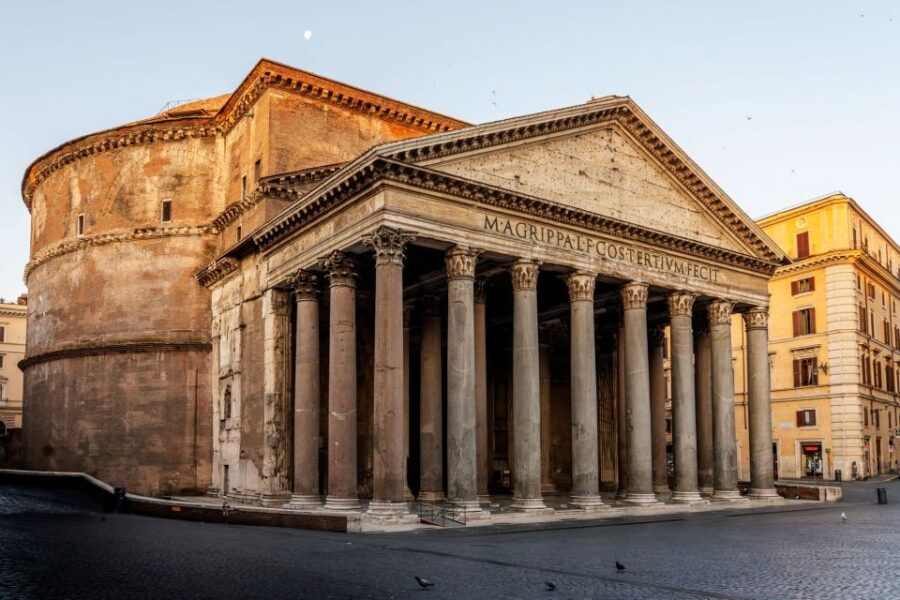
Your meeting point is straightforward: Stadio di Domiziano on Via di Tor Sanguigna. You’ll want to get there a bit early because you’ll be dealing with your entry process and getting set up for the audio.
Bring:
- Comfortable shoes (you’ll walk)
- Headphones (needed for the audio)
- A charged smartphone (the tour is smartphone-dependent)
Also note what’s not allowed:
- Food and drinks
- Baby carriages
That may sound like housekeeping, but it matters. It keeps the visit flowing and avoids the typical crowd bottleneck problems when people try to eat or linger with strollers.
Entering the Stadium of Domitian (and what you should expect)

The star move here is simple: you get Stadium of Domitian entry fee included, and the tour description emphasizes guaranteed access by reservation. In Rome, that “guaranteed” part is worth real attention. It often makes the difference between a smooth visit and a frustrating scramble.
What will you see? The Stadium of Domitian is a major Roman structure, and the audio experience is designed to connect it to Rome’s later layers—Christian testimonies, saints and martyrs, and centuries of art shaped by spirituality and architecture.
So even if you’re not a specialist in Roman venues, the point isn’t just to admire the space. The point is to understand how one period leaves marks that later generations reuse, reinterpret, and build around.
One optional detail you might encounter: an extra VR add-on (around €5) is mentioned by a visitor as worth it. The core ticket clearly covers entry and the audio components, but if you see VR offered on-site, treat it as a bonus rather than the main event.
Skip-the-line logic: smartphone ticket check-in
This experience is built around modern ticket handling. You’ll show your ticket on your smartphone, and the listing highlights skip the ticket line.
In practical terms, that means you should:
- Keep your confirmation/ticket accessible in your phone before you arrive
- Avoid last-minute screen searches on spotty data
Is this perfect? Nothing in Rome is perfect. But smartphone check-in generally speeds things up when compared with paper vouchers or slow desk transfers.
If you like to move fast and hate standing still, this format fits your style.
The Heart of Rome audio guide: how it changes the walk
After the Stadium visit, you’ll switch into the “Heart of Rome” portion. This is a virtual audio guide delivered through an app and played using your own headphones.
Here’s the key: to listen, you need to download the Vatican&Rome App from the App Store or Play Store. That means your pre-day prep is part of the experience, not an afterthought.






What the audio story is designed to do
The audio is not random facts. It’s framed as a walk that retraces symbolic Roman Empire memories scattered across streets and squares, then connects them with Christian testimonies—the faith of the Martyrs and Saints—and the way art and architecture carry that spirituality forward.
In my view, that’s the real value of this style of tour. You’re not just looking. You’re learning what to look for next. You get prompts that help you notice the visual cues that normally slide past when you’re sightseeing on pure autopilot.
Languages you can choose
You can use the audio guide in:
- Italian
- English
- French
- Spanish
- German
- Portuguese
So if you’re traveling with someone whose English is shaky, you’re still set. You’re not stuck with one language and hoping for the best.
Using the tour like a pro: phone setup, pace, and headphones
Because the audio is virtual, your experience depends on simple tech habits.
Do this before you leave your hotel or apartment:
- Download the Vatican&Rome App ahead of time
- Charge your phone
- Bring functioning headphones
Then do this on-site:
- Start the audio section at the right time (after the Stadium visit)
- Walk at a pace that lets you listen without feeling rushed
Small group up to 10 participants also helps you move without chaos. Even though it’s not an escorted guided walk, you’ll likely still benefit from the human presence of the host/greeter (Italian and English) for orientation.
A realistic look at the “not included guide” format
One thing to understand: this tour includes entry and audio, but a guide is not included.
That doesn’t mean you’re completely on your own. The greeter/host exists for practical help, and the audio guide covers the interpretive content.
But it does mean you should calibrate your expectations:
- If you love Q&A and spontaneous history explanations, you might miss that.
- If you like learning in bite-sized chunks at your own speed, this is a good match.
I tend to prefer audio when I’m trying to avoid rigid group timing. You can pause, re-listen, or speed up when a street is less interesting to you.
What makes the Stadium stop valuable before you walk Rome’s heart
The staging is smart: you begin at a specific Roman monument, then you go into the broader city story.
That helps your brain organize the layers. You start with a Roman Empire setting, then the audio steers you through later Christian and artistic threads. It’s easier to connect “then and now” when your first reference point is a real structure you entered.
Also, the Stadium part provides a concrete “anchor” for the day. Without that, the Heart of Rome audio could feel like a general roaming guide. With the anchor, you know you’re building toward understanding Rome in layers.
Timing and pacing for a calm day in Rome
The tour is valid for 1 day, with starting times depending on availability. In practice, that flexibility helps you choose a time when Rome is easier to manage.
If you’re the type who likes to sightsee before the city fully loads up, pick a morning start when you can. If you hate mornings, choose a later slot and treat it as your “main story” activity while other sights can be lighter and shorter.
Either way, the experience is designed to be walkable and self-directed after the Stadium. It’s not a marathon. But you still want energy for steps and standing.
Price and value: what $17 really buys you
At $17 per person, you’re paying for three practical things:
- Stadium entry
- Stadium audio support
- Heart of Rome audio support
What you’re not paying for is a live, full-time guide. And that’s exactly why this price is achievable.
So the value question becomes: do you want interpretation via audio, rather than a speaking human guide? If yes, this is strong value because the audio is the main “teacher” here.
Also, the skip-the-line / reservation angle can be a hidden value driver. Even a short wait in Rome can drain half your momentum. This setup is built to reduce that.
My practical advice: if you’re already comfortable reading signs, following a smartphone route, and walking steadily, $17 looks like a fair deal.
Who should book this (and who should skip it)
This tour combo is a good fit if you:
- Like small groups and calm logistics
- Prefer self-paced learning via audioguide
- Want a structured way to understand Rome’s Roman-to-Christian-to-artistic layers
- Want a plan that’s cheaper than a full guided day
It’s less suitable if you:
- Have mobility impairments or use a wheelchair (not suitable)
- Have claustrophobia (not suitable)
- Struggle with phone-based experiences (because it’s smartphone and app dependent)
Also keep in mind that the rules (no food/drinks, no baby carriages) suggest a more “move and listen” style than a slow sit-down visit.
A quick reality check from past experiences
The rating is 4.3 with 12 reviews, and the overall tone is positive. The strongest praise points to a calm visit and lots of information, with one person specifically calling it soul-soothing after bigger crowds like the Colosseum and Vatican Museums.
There are two cautionary notes worth respecting:
- One review says the Rome audioguide wasn’t received, suggesting you should verify audio access once you’re on-site.
- Another review describes trouble with tickets working, leading to a detour between offices.
Those issues don’t automatically mean you’ll face them. But they do point to a simple best practice: keep your booking details ready, double-check the audio app is installed and working, and don’t assume the phone setup will magically be fine on the spot.
Should you book this Rome Stadium + Heart of Rome audio experience?
If you want a budget-friendly, low-stress Roman day with reserved Stadium access and a guided storyline you can play in your own pace, I’d book it.
Skip it if you want a classic live guide, or if phone/app dependence stresses you out. And if you’re sensitive to tight or enclosed environments, take the not-suitable warning seriously.
My final take: this is a smart way to see Domitian’s Stadium and then connect the dots across Rome using a multilingual audio route. It’s especially good for travelers who like their history delivered with structure, but not trapped inside a slow moving group.
FAQ
How long is this experience?
It’s listed as 1 day.
Where do I meet for the tour?
Head to Stadio di Domiziano on Via di Tor Sanguigna.
What’s included in the price?
Your ticket includes the Stadium of Domitian entry fee, plus Stadium of Domitian audio guide and the Heart of Rome audio guide.
What languages are available for the audio guide?
The Heart of Rome audio guide is available in Italian, English, French, Spanish, German, and Portuguese.
Do I need to download an app to listen to the audio?
Yes. To listen to the audio guide you need to download the Vatican&Rome App.
Is this tour suitable for wheelchair users or mobility impairments?
No. It’s listed as not suitable for people with mobility impairments and wheelchair users.