REVIEW · ROME
Navova square underground with audioguide
Book on Viator →Operated by onceuponatimetours · Bookable on Viator
Rome’s sports relic is underground.
This visit takes you below Piazza Navona to see what’s left of the Stadio di Domiziano, then an English audioguide puts it all into context from ancient Greek games to Imperial Rome. I like that it’s built for real learning, not just pass-and-glance sightseeing—there are panels and 3D video to help you connect the ruins to the story of Roman sports.
I also like the freedom built into the format: you’re not locked into a group’s timetable. The main drawback is simple—at about 45 minutes, it’s a focused stop. If you want a long, wandering museum-style outing, you may wish you had more time.
In This Review
- Key things to know before you go
- Piazza Navona below street level: what makes it different
- Stadio di Domiziano ruins: the sports angle you’ll remember
- The audioguide experience: English narration plus visuals
- Time, pace, and where 45 minutes fits into your day
- Price and logistics: what value you’re really paying for
- Who should book this underground stadium visit
- Should you book Navona’s underground stadium with audioguide?
- FAQ
- How long is the Navona Square Underground visit?
- Is the audioguide available in English?
- Is admission included in the price?
- Do I need to print anything, or is a PDF ticket enough?
- Is this visit suitable for most people?
- What happens if the weather is poor?
- Can I cancel for free?
Key things to know before you go
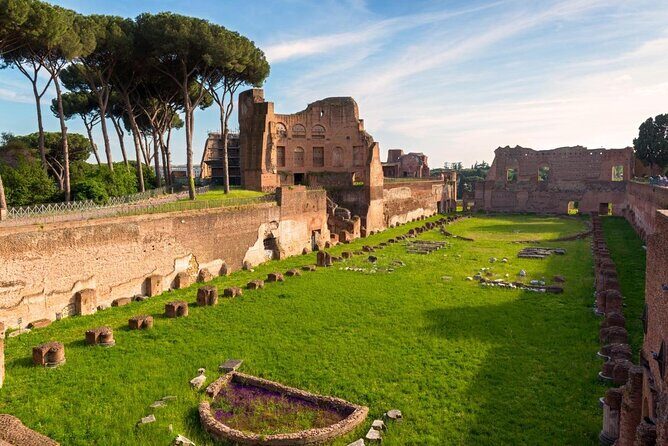
- Go 5 metres down under Piazza Navona to the excavations from the Roman Empire
- See a rare surviving masonry stadium—the first and only example known in Rome
- Use an English audioguide with child-friendly panels and 3D video support
- Admission is included, so you can plan around entry without scrambling
- Explore at your own pace, since there’s no set tour schedule to follow
- The underground site opened to the public in 2014, so the presentation is made for visitors
Piazza Navona below street level: what makes it different
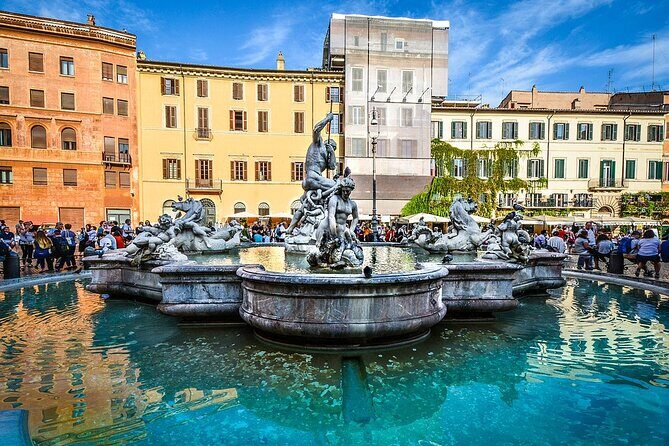
Most people treat Piazza Navona as a quick stop—marble, fountains, photos, move on. This turns the volume down and the depth up. You descend to an archaeological space located about 4.50 metres below street level, where you’re seeing the archaeological layer rather than the show on top.
That shift matters. When you’re at street level, you get the geometry and the atmosphere of the piazza. Underground, you get the “how it worked” feeling—stonework, structure, and scale. The place helps you understand that Piazza Navona wasn’t always the baroque showpiece you see today. It sat above an earlier world.
What I find especially useful is that the experience is designed to be self-guided. That means you can pause when something clicks—like the idea that Roman sports weren’t just entertainment, but also public life and status. You’re free to move at a steady, comfortable pace rather than trying to keep up with a group.
And because the site is specifically connected to Domitian and Roman sport, your visit doesn’t become a generic “ruins are cool” moment. You go in knowing what you’re looking at, and the audio narration does the connecting work.
You can also read our reviews of more tours and experiences in Rome.



Stadio di Domiziano ruins: the sports angle you’ll remember
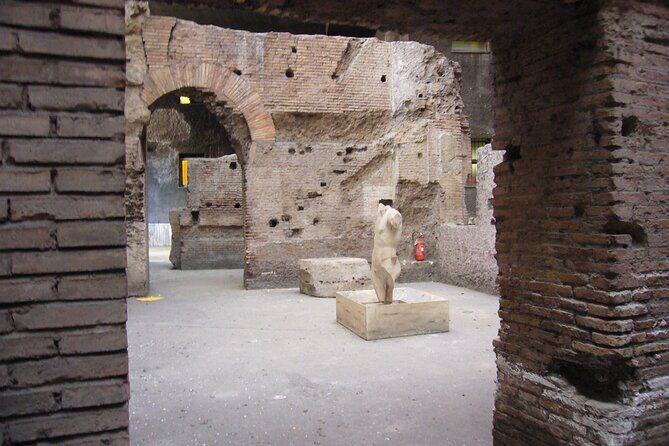
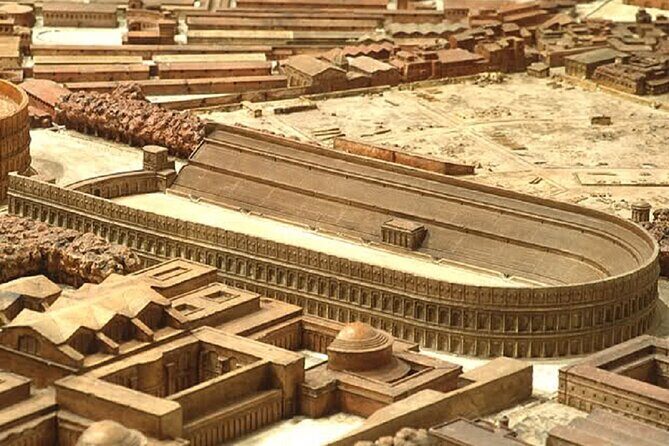
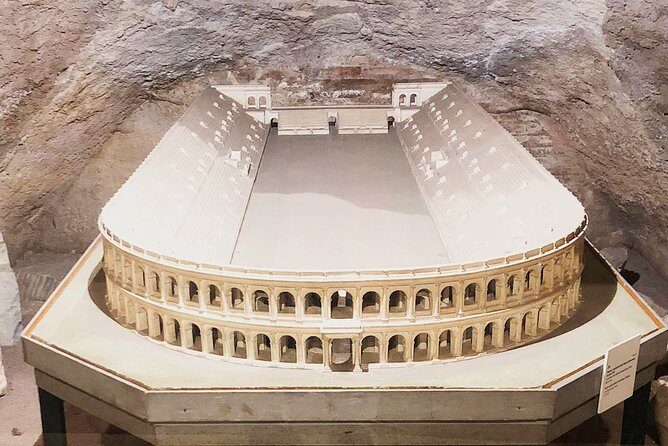
This is centered on the Stadio di Domiziano, the ancient stadium associated with Piazza Navona. The underground remains are all that’s left of an early masonry stadium—an unusual survival story, and part of why the site is worth your time.
Here’s the standout fact you’ll hear and see: this underground structure is described as the first and only example of a masonry stadium known in Rome. That’s not trivia. It’s a clue about why archaeologists take this place seriously, and it’s also a way to read what you’re standing near. You’re not looking at a random pile of stones; you’re looking at the footprint of a specific kind of Roman architecture used for public sports.
The stadium angle also changes how you understand Rome’s entertainment. Ancient games weren’t only about spectacle. They were tied to culture, training, public identity, and how emperors and cities showed power. With the narration connecting sports practices from ancient Greece to Imperial Rome, you get a timeline—not just a static artifact.
Practical note: the ruins sit under the piazza, so your brain keeps one foot in two worlds. You may look up at the street level indirectly as you listen, then look down at what remains. That contrast is part of the magic, and it’s why this works well even for people who think they don’t care about sports history.
The only reason I’d call this a “might not” for some people is if you’re expecting a big, walk-through ruin complex like you’d get elsewhere. This is more focused: you’re going to key spaces, and the payoff is the story plus the atmosphere of being underground.
The audioguide experience: English narration plus visuals
The heart of this activity is the audioguide, available in English. You’re not just hearing a voice; you’re getting support from panels and 3D video, including content intended for kids. Even if you’re an adult, that child-friendly structure can be a bonus. It usually means the explanations are clearer and less jargony.
What I like most about an audioguide format here is that it’s built for different rhythms. You can listen straight through, or you can treat it like a choose-your-own-pace documentary: stop, read a panel, watch the 3D element, then continue when you’re ready.
The narration also focuses on the connections that matter for this site:
- the history of Roman sports and games
- how sports practices evolved from ancient Greece to Imperial Rome
- what makes this stadium and the Piazza Navona location significant
That mix helps you avoid a common problem with underground sites: you see the stone, but you struggle to attach meaning. Here, the audio does that job. You’ll likely find the “why this exists” part becomes easier to grasp, especially once you understand the stadium’s relationship to the piazza above.
Also, since the experience is described as about 45 minutes, the guide is probably paced to fit. That’s a good thing. You’re not stuck with a long audio loop where the story slows down just as you’re getting your feet.
Time, pace, and where 45 minutes fits into your day
The visit is listed at about 45 minutes (approx.). In Rome terms, that’s a sweet spot. Long enough to feel like you learned something, short enough to keep your day from collapsing under the weight of too many stops.
You’ll likely appreciate the way this site supports an easy schedule. You can fit it between other Piazza Navona plans, or you can use it as a weather-friendly counterpoint when the city is hot or crowded above. Being underground naturally cools things down, and it gives you a break from the noise of street-level traffic.
The other big benefit is control. The experience is designed so you can explore at your own pace and skip the pressure of tour timing. That matters if you tend to stop often—at signs, in shadows, or when a detail looks different from different angles.
A small heads-up: because it’s a guided-by-audioguide experience rather than a “wander anywhere” museum, you’ll want to arrive with a mindset of following the flow. If you go in expecting endless rooms and countless pathways, you might feel like you ran out of space too soon. But if you like structured storytelling with freedom to pause, the time allotment is likely to feel right.
If your schedule is tight, this is still a doable add-on because it’s compact and the entry setup is meant to be quick—more on that next.
Price and logistics: what value you’re really paying for
The price is listed at $25.53 per person, and the big value pitch is practical: admission is included, and you can skip potential ticket lines. In a city where waiting can eat half your afternoon, “entry without friction” has real value, even if you’re the type who normally likes to buy tickets on the spot.
But there’s a fair caution too. One frustration that comes up with any paid entry timed in advance is that online prices can feel higher than the baseline on-site ticket you might see in person. If you’re comparing, watch for how presale pricing and booking fees show up in the final number you pay. Your purchase price can include service fees and taxes, which can make it look like you’re overpaying even when the underlying admission is legitimate.
So here’s the decision rule I’d use:
- If you hate lines, want certainty, and like locking in entry early, this format can be worth it.
- If your schedule is flexible and you’re comfortable gambling on availability, buying at the desk might be cheaper.
Either way, the audioguide and included admission are part of what you’re paying for. You’re not paying just to get inside; you’re paying to get the audio storytelling experience tied to the site.
Logistics are also pretty straightforward: you receive your ticket as a PDF and show it at the entrance. Confirmation is received at booking. The site is also described as near public transportation, which matters in Rome where walking is often unavoidable but routing can still be painless.
One more practical note: the experience is said to require good weather. That doesn’t mean the underground will suddenly disappear, but it does mean your visit may be rescheduled if conditions aren’t right. If you’re planning tightly around one day, keep that flexibility in mind.



Who should book this underground stadium visit
This is a great match for people who like history that has a specific angle. If you’re the type who enjoys sports as a social window—how games connected to culture and power—this should feel satisfying. The narration is focused on the stadium and the evolution of sports practices, and the setting helps you visualize the real environment rather than treating it like a photo-op only.
It also works well for families, at least in structure. The experience includes audioguide content for children, plus panels and 3D video. Even if you’re not traveling with kids, that usually means the explanations are clearer and easier to follow.
It’s also a solid choice when you want a change of pace. Rome can burn your brain on museums that overlap in themes. Here you’re stepping into something different: a sports venue from the Roman era, preserved and presented underground.
Who might skip it:
- If you’re chasing huge, sprawling ruins with lots of walking. This is more focused.
- If you already know you’ll spend more time reading long-form museum text than listening to audio. The experience is built around the audioguide format, so your enjoyment will depend on whether that suits you.
Should you book Navona’s underground stadium with audioguide?
If you want a short, smart Roman experience that’s tied to a real place and a specific story, I think this is a strong pick. The combination of included admission, an English audioguide, and the fact you’re looking at the remnants of a masonry stadium you can actually stand near makes it a good use of time.
I’d book it when:
- you want to avoid time-wasting ticket lines
- you like self-paced learning
- you’re excited by the idea of Roman sports and public entertainment
- you want a cool-down break below Piazza Navona
I’d think twice when:
- price comparisons matter a lot to you and you’re comfortable buying on-site
- you need a longer, more expansive visit than about 45 minutes
If those tradeoffs work for you, this is one of the more memorable ways to see Piazza Navona beyond the surface—by going where the story actually sits: under your feet.
FAQ

How long is the Navona Square Underground visit?
It’s listed at about 45 minutes (approx.).
Is the audioguide available in English?
Yes, the experience is offered in English.
Is admission included in the price?
Yes. Admission ticket is included.
Do I need to print anything, or is a PDF ticket enough?
You’ll receive the ticket in PDF format. You show it at the entrance.
Is this visit suitable for most people?
It’s stated that most travelers can participate.
What happens if the weather is poor?
The experience requires good weather. If it’s canceled due to poor weather, you’ll be offered a different date or a full refund.
Can I cancel for free?
Yes. Free cancellation is available up to 24 hours in advance for a full refund.