REVIEW · ROME
Rome: St. Paul’s Within the Walls Church Opera Arias Ticket
Book on GetYourGuide →Operated by Musica&Musica srl · Bookable on GetYourGuide
One church, one orchestra, and the famous arias. This Opera Concerto brings Italian lyrical music into St. Paul Within the Walls, a Gothic Revival-style church that makes even a greatest-hits program feel special.
I especially love the music-to-venue fit here: the church setting supports strong voices and clean sound, so the melodies land fast. The second big win is the cast and ensemble: Orchestra I Virtuosi dell’opera di Roma perform with internationally known singers, tackling big favorites from Verdi, Puccini, Mozart, Bizet, and more.
One thing to consider: seating varies a lot. If you care about being closer to the staging, go for Category A or VIP—Category B can mean you’re farther back.
In This Review
- Key highlights to know before you go
- St. Paul Within the Walls: Why This Church Makes Opera Feel Different
- Tickets, Seats, and Voucher Exchange: How to Avoid the Usual Headaches
- What You’ll Hear: The Most Famous Arias, Act by Act
- Act 1: Big Verdi, Rossini speed, Mozart elegance, Puccini emotion
- Act 1 also includes variety that keeps the ear fresh
- Act 1 finale: Verdi’s love-tinged celebration
- Act 2: Bizet and Italian heartbreak, plus a Rigoletto turning point
- The Musicians and Voices: What Makes This Orchestra Different
- Real Opera or Greatest Hits? Setting Your Expectations
- Value for Money: Why $29 Can Be a Good Deal in Rome
- Who This Concert Is Best For (and Who Should Skip It)
- Should You Book This St. Paul Within the Walls Opera-Arias Ticket?
- FAQ
- Where do I exchange my voucher?
- How long is the concert?
- What kind of program is it?
- Are there different seating options?
- Is transportation included?
- Is the venue wheelchair accessible?
- Are pets allowed?
- What language is the concert experience in?
- Is the program fixed or can it change?
Key highlights to know before you go
- St. Paul Within the Walls acoustics: a church space built for projection, not pop-volume listening
- Arias across major Italian composers: Verdi, Puccini, Rossini, plus Mozart and Bizet
- Two seating categories plus VIP: choose A or B, or upgrade for VIP with skip-the-line-style time saving
- Act-style concert pacing: Act 1 and Act 2 with recognizable overtures and set-piece arias
- A real opera-instrument lineup: violin, cello, piano, flute, clarinet, and horn plus vocal soloists
- Short, focused night out: about 1.5 hours, not a full multi-hour opera marathon
St. Paul Within the Walls: Why This Church Makes Opera Feel Different
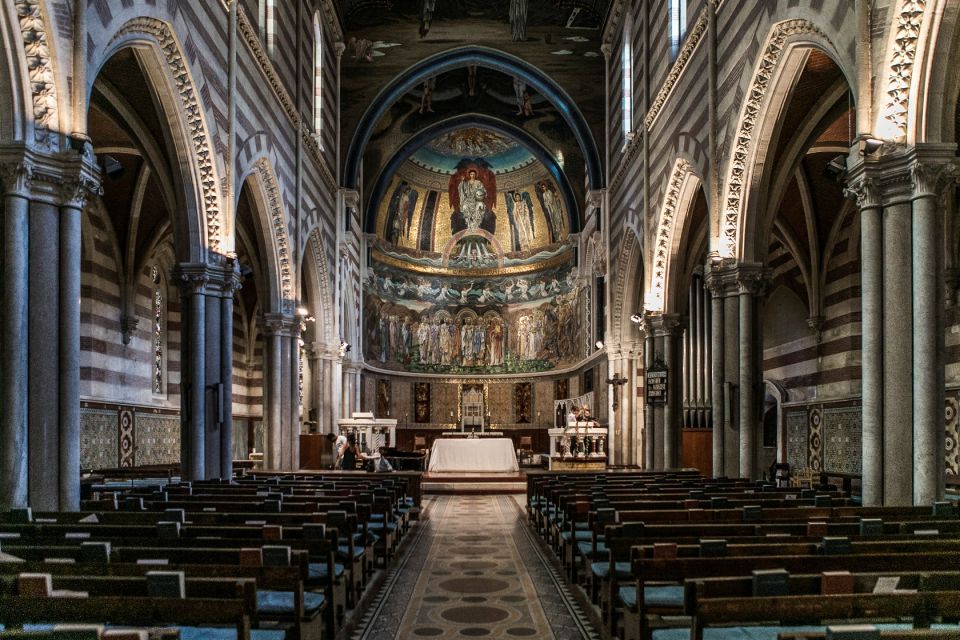
Rome has plenty of concerts, but this one has a built-in advantage: the performance happens inside St. Paul Within the Walls. The church’s Gothic Revival architecture gives the whole night a “cathedral for music” feeling, and the shape of the room helps carry voices clearly.
For you, that means you don’t need to be an opera scholar to enjoy it. The program leans on the best-known lyrical set pieces, and the venue helps you catch the emotional shading—whether it’s the soaring line in a famous Puccini aria or the bright momentum in a Rossini number.
Also, this is an excellent “Rome evening” when you want culture without the stress of a late-night commitment. At 1.5 hours, you can still enjoy dinner afterward and not feel like you’re losing your whole night.
You can also read our reviews of more tours and experiences in Rome.

Tickets, Seats, and Voucher Exchange: How to Avoid the Usual Headaches
This is the kind of ticket where logistics matter because you’ll arrive at a church, exchange a voucher, and then take your seat.
Here’s what you should plan for:
- You must exchange your voucher at the St. Paul Within the Walls ticket counter before the concert begins.
- You’ll have Category A or Category B seating, and you can upgrade to VIP seats for a more time-efficient entry experience.
Seat distance is the one practical detail that can make or break your enjoyment. One of the clearest pointers from past attendees is that A tickets are worth it if being nearer to the action matters to you. Category B can place you quite far from the staging area, which is fine if you’re focused only on sound, but less ideal if you like watching singers’ expressions and stage movement.
A small extra note from the seating experience: you can often choose the section but not the exact seat. That’s not unusual in church concerts, but it does mean showing up early gives you a better chance to pick a better section.
What You’ll Hear: The Most Famous Arias, Act by Act
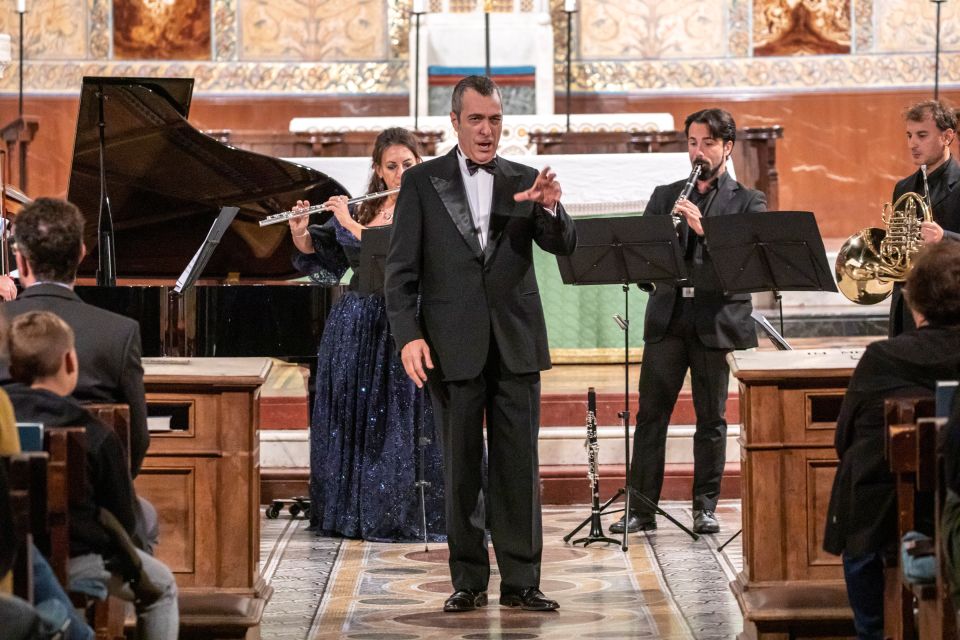
This concert is structured like a compact opera journey: Act 1, Act 2, and a wrap-up with more signature moments. The big idea is straightforward—hear the famous pieces you already recognize, with enough variety to feel like more than just a greatest-hits playlist.
Also, the program is listed as subject to change, so treat it as a “these composers and famous arias are coming” promise, not a rigid script.
Act 1: Big Verdi, Rossini speed, Mozart elegance, Puccini emotion
Act 1 starts with Verdi’s drama and theme-driven music, then moves through well-known highlights:
- Verdi: La Traviata (Preludio), and Nabucco with Va’, pensiero
- Rossini: Il barbiere di Siviglia including Largo al factotum della città and Una voce poco fà
- Mozart: Don Giovanni with Là ci darem la mano
- Puccini: Tosca with E lucean le stelle
If you’re new to opera, Act 1 is the easiest “entry point.” You’ll recognize rhythms, choruses, and the big emotional cues even if the story isn’t what you’d normally follow in a full-length production.
Act 1 also includes variety that keeps the ear fresh
The program doesn’t stay in one mood. You get:
- Rossini’s clever, fast phrasing
- Mozart’s social, lyrical duet feel
- Puccini’s emotional peak moment
Offenbach appears too with I racconti di Hoffmann and Barcarola, which tends to feel smooth and scenic—music that sounds like it’s floating.
Act 1 finale: Verdi’s love-tinged celebration
It closes with more from La Traviata, including Libiamo ne’ lieti calici. That’s the kind of aria that gives you “opera party” energy, even in a quiet church setting.
Act 2: Bizet and Italian heartbreak, plus a Rigoletto turning point
Act 2 shifts into the sort of operatic worlds people love most:
- Bizet: Carmen with the famous Entr’acte and Quando me’n vo’ plus Toreador
- Verdi: Rigoletto with La donna è mobile
- Mascagni: Cavalleria rusticana with the Intermezzo
- Puccini: Tosca with Vissi d’arte
- Mozart: Le nozze di Figaro with Non più andrai, farfallone amoroso
- Rossini: Il barbiere di Siviglia with Zitti, zitti, piano , piano
Act 2 is where the concert often feels most satisfying, because you get multiple “recognition moments” in succession—songs you might have heard in movies, commercials, or cultural references. That recognition matters: it turns opera from something abstract into something you can track.
The Musicians and Voices: What Makes This Orchestra Different
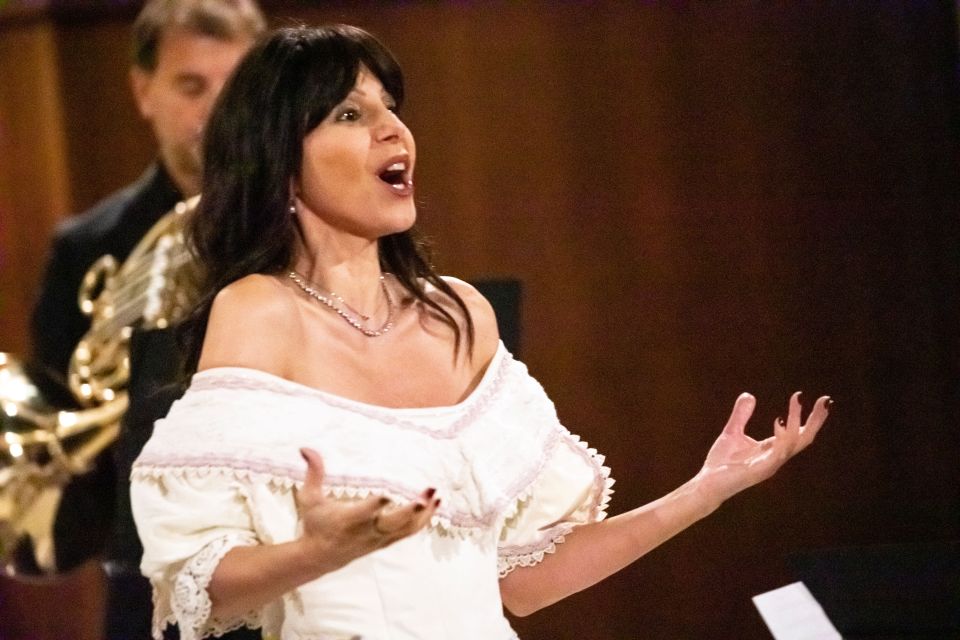
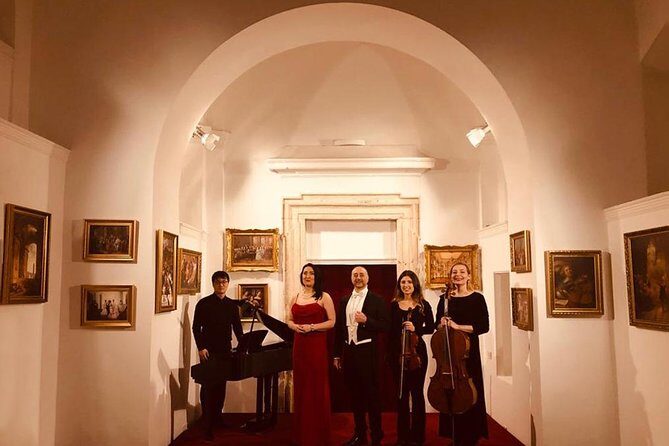
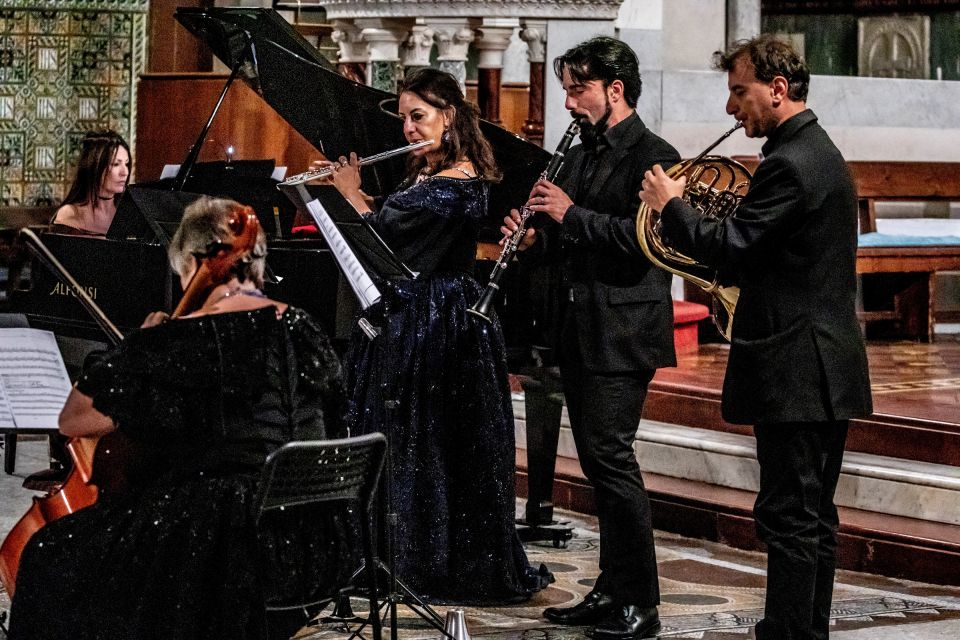
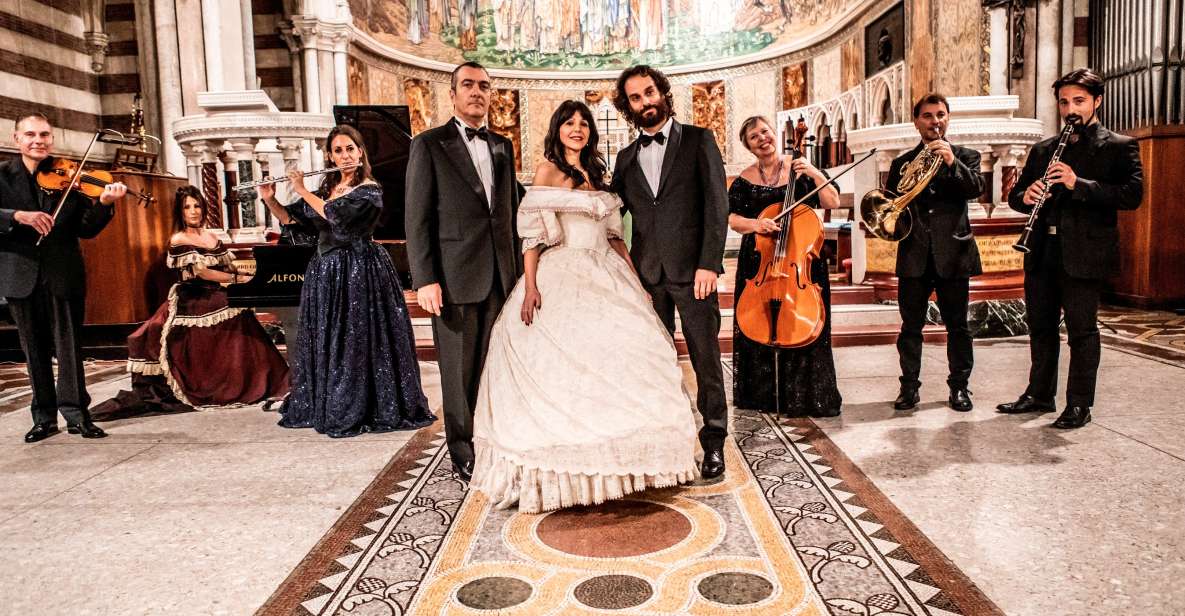
What helps here is the combo: you’re hearing Orchestra I Virtuosi dell’opera di Roma with vocal soloists (soprano, tenor, baritone) and a focused instrumental group.
The ensemble includes:
- violin, cello, piano
- flute, clarinet
- horn
That specific mix gives you crisp textures. In plain terms: you’ll hear the melody lines and accompaniment clearly, and the voices don’t get buried.
The group is described as formed by professors from prestigious Italian conservatories, which matters to your listening experience. You can often tell in this setting—tight ensemble work, clean transitions between numbers, and a sense that everyone knows exactly how to shape dynamics so the church carries the sound properly.
And the singers matter too. Past audience comments emphasize strong voices and a performance that feels disciplined, not random or casual. That aligns with the idea of an opera repertoire focus, especially in Italian lyrical tradition.
Real Opera or Greatest Hits? Setting Your Expectations
Let’s keep it honest: this ticket is not for a full staged opera. It’s an opera concert of famous lyrical arias and key scenes, with orchestral playing and vocal soloists.
One reviewer-style takeaway you can use: if you’re looking for full story acting and full opera structure, this may feel more like the best moments presented in sequence. If you want the voice-led side of opera—big arias, overtures, duets, and memorable set pieces—this works very well.
Here’s how to judge it for yourself:
- If you want plot-heavy opera with full staging, look elsewhere.
- If you want the emotional highlights and vocal fireworks in a shorter, lower-stress format, this is a smart choice.
Value for Money: Why $29 Can Be a Good Deal in Rome
At $29 per person for about 1.5 hours, you’re not paying for a high-end restaurant experience. You’re paying for a quality vocal-and-orchestral night in a historic church.
What you should weigh:
- You’re getting a focused program with multiple famous composers (not just one school or one opera).
- You’re getting the benefit of venue acoustics—this isn’t a generic hall where sound gets swallowed.
- There’s an option to upgrade to VIP for a smoother arrival.
In Rome, the price point here is what makes it a good “value culture” plan. You can add this on without forcing your whole schedule to revolve around it. And because the show is short, you’ll likely still have energy for walking afterward.
Just remember: if your priority is closeness and sightlines, the best value might shift toward Category A or VIP, not the cheapest seats.
Who This Concert Is Best For (and Who Should Skip It)
This concert makes sense if you:
- like classical music but want an approachable entry point
- want a compact evening plan that doesn’t eat your whole night
- enjoy Italian lyrical traditions (Verdi, Puccini, Rossini)
- appreciate hearing famous pieces in a setting designed for strong acoustics
You might be less satisfied if you:
- only care about fully staged opera with full story presentation
- need very comfortable seating for long periods (some church seats can feel stiff)
- plan to arrive late and miss the chance to pick a better section
Also, it’s worth knowing what the vibe is like. The venue is a church, and that means weather and room comfort can factor in your experience. If you’re sensitive to heat, consider dressing in breathable layers.
Should You Book This St. Paul Within the Walls Opera-Arias Ticket?
Yes, if you want an easy, high-reward opera evening in Rome. This is the kind of event that works even when you’re not an opera superfan, because the repertoire is built around recognizable arias and emotional moments. And the church acoustics are a big reason it feels more than “just a performance.”
Book it if:
- you want a short classical night with major composers
- you’re excited to hear iconic pieces like E lucean le stelle, Vissi d’arte, and La donna è mobile
- you care about sound and vocal impact more than full staging
I’d choose Category A or VIP if:
- you don’t want to be stuck far from the staging area
- you like watching expressions and stage movement, not just listening
Skip it if:
- you’re specifically hunting for a fully staged opera production with full narrative structure
If you’re flexible, go for it. This is a clean, classy way to spend an evening in Rome—voices, orchestra, and that church space doing what it’s meant to do.
FAQ
Where do I exchange my voucher?
You need to exchange your voucher at the St. Paul Within the Walls ticket counter before the concert begins.
How long is the concert?
The duration is about 1.5 hours.
What kind of program is it?
It’s an Opera Concerto featuring the most famous lyrical arias, performed by Orchestra I Virtuosi dell’opera di Roma.
Are there different seating options?
Yes. You can choose Category A or Category B seating, and there are also VIP seats available.
Is transportation included?
No. Transportation is not included.
Is the venue wheelchair accessible?
Yes, the activity is wheelchair accessible.
Are pets allowed?
No, pets are not allowed.
What language is the concert experience in?
The languages are listed as Italian.
Is the program fixed or can it change?
The program may be subject to change.