REVIEW · ROME
Rome: Small-Group Tour of Caracalla Baths and Circus Maximus
Book on Viator →Operated by TOURIKS · Bookable on Viator
One-hour-to-learn-lots is a rare gift. This trip pairs Caracalla Baths—one of Rome’s best-preserved ruin complexes—with a quick, story-led walk at Circus Maximus, where you stand where chariot races once roared. You’ll get headphones so the guide’s narration stays clear as you move.
I especially like two things: the local archaeologist-style guidance (you’re not just reading stones) and the fact that entry to Caracalla is handled for you, so you lose less time at ticket kiosks. The main thing to watch is pacing: the Baths take most of the time, while Circus Maximus is brief, and part of Circus Maximus is seen from outside railings.
In This Review
- Key things you’ll notice on this tour
- Price and logistics: what you’re really paying for
- Where the tour starts and ends (and why that matters)
- Terme di Caracalla: Rome’s best-preserved bath city
- What you learn about ancient “spa life” (beyond the basics)
- Engineering details you can actually picture: underfloor heating
- Mosaics, geometry, and the visual language of the baths
- Circus Maximus: what you can see in a short, story-heavy stop
- Headsets and audio clarity: why your guide voice stays with you
- The guide factor: archaeologists, doctors, and memorable delivery
- When this tour is a great fit (and when it isn’t)
- Weather and comfort tips for an outdoor-heavy Rome day
- So should you book it?
- FAQ
- How long is the Rome tour of Caracalla Baths and Circus Maximus?
- Is admission included for both sites?
- What’s included in the tour price besides the guide?
- Where do I meet, and where does the tour end?
- How big is the group?
- Do I need to bring anything for walking?
- What if it rains or weather is bad?
Key things you’ll notice on this tour
- A professional archaeologist guide leads you through what the baths were for, not just what’s left standing
- Prebooked admission for Caracalla helps you skip some ticket-line friction
- Sterilized headsets make it easier to hear the commentary clearly while walking
- A max group size of 10 keeps questions easy and the vibe calmer than big tours
- Circus Maximus gets a shorter stop—great context, limited time on-site
Price and logistics: what you’re really paying for
At $78.64 per person for about 1 hour 30 minutes, you’re paying for three concrete upgrades: a guide who explains the site in plain language, included admission to Caracalla Baths, and headsets so you don’t have to keep turning your head to hear.
This is also a smart choice if you’re trying to avoid the Rome “I’m standing here, now what?” problem. Caracalla is impressive, but it’s not as self-explanatory as the Colosseum. A guide helps you read the building like a map.
Group size matters too. With a maximum of 10 travelers, you’re more likely to get answers to your questions, and it tends to feel less rushed.
You can also read our reviews of more tours and experiences in Rome.



Where the tour starts and ends (and why that matters)
You meet at Viale Aventino, 3, 00153 Roma, then you finish inside the Baths of Caracalla area. That end point is useful because you can keep exploring after the guided portion without backtracking.
The tour is near public transportation, and the walking is described as moderate. Still, wear comfortable shoes. Uneven ground is part of the deal on Roman ruins, and you’ll want good footing.
Also note the age rule: if you’re traveling with someone under 18, they need valid ID or proof of ID.
Terme di Caracalla: Rome’s best-preserved bath city
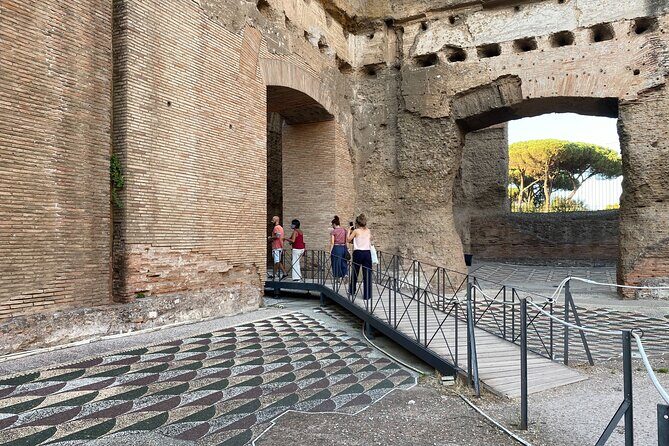
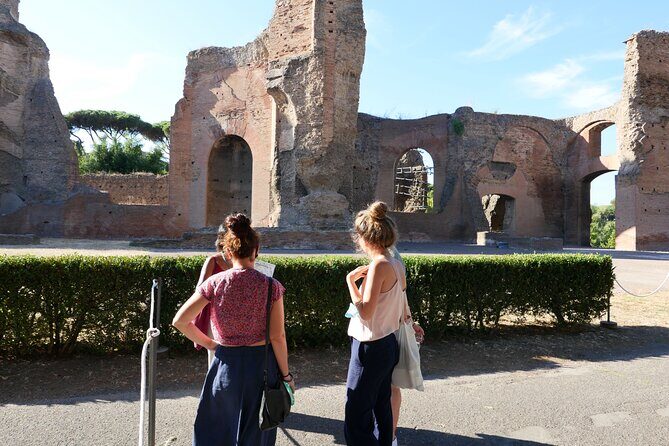
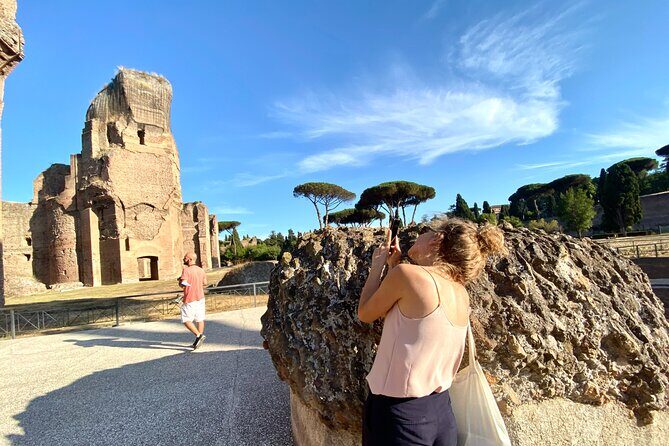
This is the star of the show. Caracalla Baths are massive, and the complex is still sturdy enough that you can sense scale even with only parts surviving. One of the big wins here is how the guide frames the place as a whole day of Roman life, not just a pile of walls.
Think of it like an ancient wellness campus. The narration walks you through the typical flow of a Roman day at the baths in the 3rd century AD—what people did, what spaces were used for, and why the building was a kind of social machine as much as a hygiene machine.
Because this is one of the most preserved bath complexes in Rome, the site gives you more to work with visually than you’d get at more fragmented ruins. And that’s exactly where a good guide pays off.
What you learn about ancient “spa life” (beyond the basics)
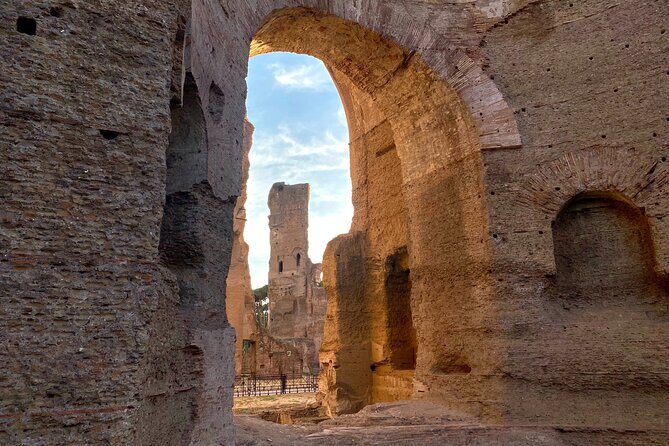
One reason I like this tour format is that the guide turns the ruins into behavior. You’re not just hearing that there were hot and cold areas—you’re hearing how the system worked and what it meant to the people using it.
You’ll hear about the range of services offered as part of daily bathing and wellness routines. And you’ll get the real sense that the baths weren’t a quick splash. They were built for a full routine that blended comfort, care, and social time.
In a small group, it’s easier to follow the logic as you move room to room. You start seeing patterns—how the layout supports movement between different temperatures and functions.
Engineering details you can actually picture: underfloor heating
Caracalla’s engineering is one of the big reasons the place feels alive. You’ll hear about the labor-intensive underfloor heating system—how the heat was managed to create different temperatures across rooms.
This is the kind of detail that changes how you look at ruins. Instead of thinking, That wall is old, you start thinking, Somebody really worked out how to make this work every day.
If you’ve visited other Roman sites where the technical bits are easy to miss, this one is designed to help you notice the heating approach and the practical engineering choices behind it.



Mosaics, geometry, and the visual language of the baths
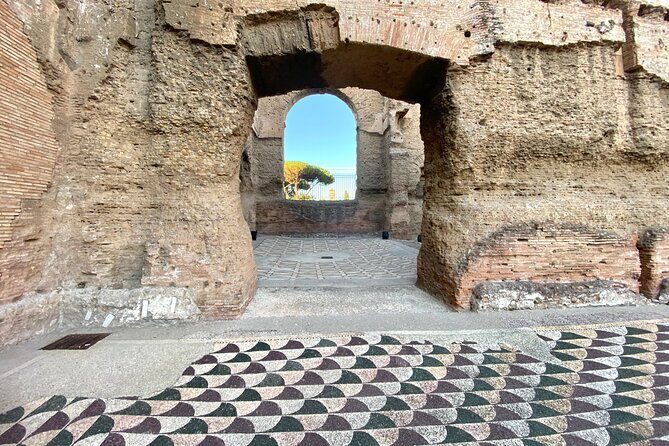
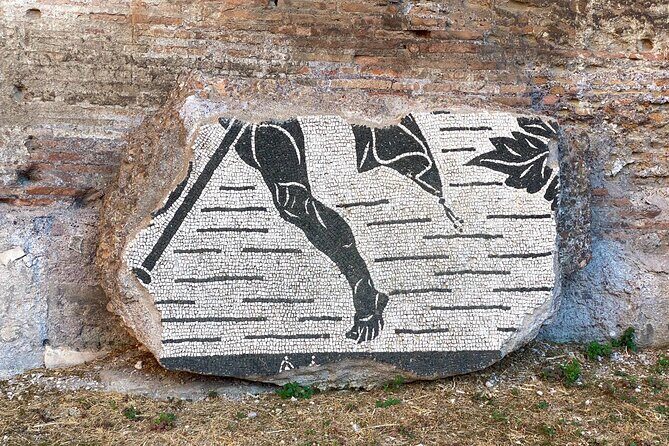
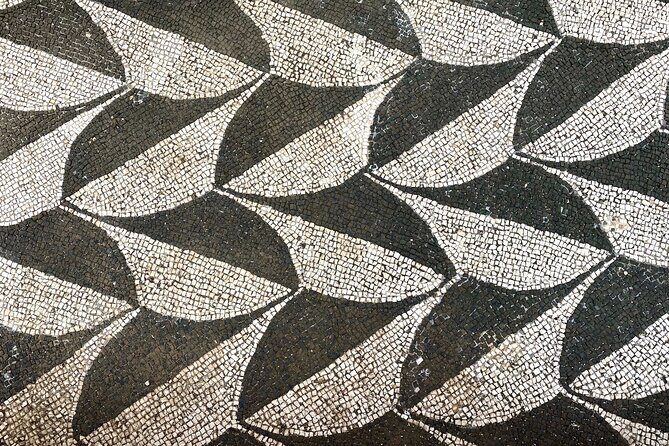
You’ll also be guided to the mosaic motifs found across the complex. The guide helps you look at what’s patterned, where the geometry shows up, and why decoration mattered in spaces meant for leisure.
One caution from a critical note: some visitors flagged that some mosaic elements may be recreations rather than purely original fragments. So if your expectation is that every colorful surface is from ancient times exactly as-is, adjust that mindset.
Still, even with that caveat, the mosaics you see help explain the baths’ “experience.” This wasn’t just utilitarian architecture. It was designed to look good while you moved through it.
Circus Maximus: what you can see in a short, story-heavy stop
After Caracalla, you head to Circus Maximus, the huge venue for public games. You’ll be standing near where the track once ran, and the guide uses that ground to tell the story of the Ludi—multi-day celebrations with big public energy.
In 30 minutes, the goal isn’t deep exploration. It’s context. You’ll walk through imagination with things like chariot races and other spectacles as part of the Roman public scene.
One downside to be aware of: the Circus segment is short. Some people felt it was mostly seen from outside railings, and others wished it went deeper into the site. If you’re expecting an on-site, hands-on dig into remains the way you might at a museum, set expectations low and enjoy it for what it is: a quick history bridge.
Headsets and audio clarity: why your guide voice stays with you
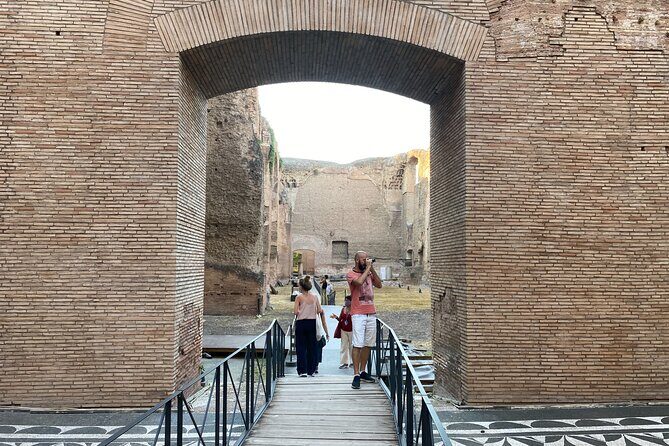
A practical highlight here is the sterilized headsets. As you walk, you don’t have to compete with wind, footsteps, or distance. It keeps the tour more relaxing, and it helps the guide keep telling the story without pausing to repeat themselves.
This also helps with language variety. Some people noted a guide can be harder to understand sometimes, but the headset system is built for clarity. If you want to ask questions, you can do it without turning the entire tour into a group conference call.
The guide factor: archaeologists, doctors, and memorable delivery
This tour leans hard on guide quality, and the names you might be paired with (depending on your date) include Lars, Giorgio, Sam, Robin, Gabriel, Sarah, Manolo, and Anestis.
A standout example from the guide roster: Gabriel, described as a Doctor in Archeology, explains details so well that you can follow the “why” behind the design, not just the dates and names. Other guides are described as friendly and relaxed, with a steady rhythm that makes it easy to ask questions.
The small-group structure helps here. When there are fewer people, the guide can respond more directly to what you’re curious about.
When this tour is a great fit (and when it isn’t)
If you want Roman history that feels physical, this works well. Caracalla is a site where you need help reading it. The guide provides that, and the headset system keeps everything understandable while you move.
It’s also a good pick if you dislike crowds. Caracalla is far less chaotic than the headline sites, and the pacing here usually leaves you with the sense you’re learning something real rather than being swept along.
On the other hand, if your top priority is Circus Maximus specifically, you might feel disappointed by the short stop. And if your ideal tour is “long and exhaustive at each site,” consider pairing this with something else so Circus Maximus gets more time on your schedule.
Weather and comfort tips for an outdoor-heavy Rome day
This experience requires good weather. Both Caracalla and the Circus area involve time outdoors, and Rome weather can change fast.
There’s also a real-world risk here: heavy rain and thunderstorm warnings can affect safety and scheduling. In at least one case, the tour was described as getting canceled early due to very heavy rain, which matches the idea that you should plan with weather flexibility.
Bring what you need for comfort: comfortable shoes, water, and a layer you can handle quickly. If storms show up, don’t assume it’ll be a simple “carry on” day.
So should you book it?
Yes—if you want a calmer, smaller-group way to see Caracalla properly. This tour’s value comes from the archaeology-guided explanations, the prebooked entry, and the fact that you’re set up to hear the story clearly with headsets.
Book it if you’re curious about how Romans lived, worked, and relaxed in the same place. And book it if you’re happy with Circus Maximus as a short, high-impact stop where you leave with context rather than a long on-site deep scan.
Skip it or pair it with something else if Circus Maximus is your main obsession. Also, consider weather-dependent planning since the experience is tied to outdoor conditions.
FAQ
How long is the Rome tour of Caracalla Baths and Circus Maximus?
It runs for about 1 hour 30 minutes total, with around 1 hour at Caracalla Baths and about 30 minutes at Circus Maximus.
Is admission included for both sites?
Caracalla Baths admission is included. Circus Maximus admission is free for this experience.
What’s included in the tour price besides the guide?
The price includes a professional archaeologist guide, entrance fees to Caracalla Baths, and sterilized headsets so you can hear commentary clearly. On-site assistance is included too.
Where do I meet, and where does the tour end?
You meet at Viale Aventino, 3, 00153 Roma. The tour ends inside the Baths of Caracalla at Viale delle Terme di Caracalla, 00153 Roma.
How big is the group?
The tour has a maximum of 10 travelers.
Do I need to bring anything for walking?
There’s a moderate amount of walking, so wear comfortable shoes.
What if it rains or weather is bad?
The experience requires good weather. If it’s canceled due to poor weather, you’ll be offered a different date or a full refund.
If you’d like, tell me your travel dates and what you’re most excited about (baths, mosaics, Roman games, or engineering), and I’ll help you fit this into a smart Rome day plan.