REVIEW · CASTEL SANTANGELO TOURS
Rome Skip-the-Line Shared or Private Tour Castel Sant’Angelo
Book on GetYourGuide →Operated by Touriks · Bookable on GetYourGuide
Rome has a talent for making tombs feel theatrical. Castel Sant’Angelo is one of the best examples. You get skip-the-line entry to Hadrian’s Mausoleum and the chance to understand how it shifted from imperial burial site to a fortress used by the Popes. Two things I’d bet you’ll enjoy: the chance to catch the views from the upper terrace and the guided walk through the “darker side” of the building’s symbolism—tombs, corridors, and strange art details. The one catch to keep in mind: you don’t get access to the Passetto di Borgo tunnel itself (the Vatican connection is explained, but not entered).
A big reason this tour works well is the guide format. You’ll hear clearly with sterilized headsets, and the on-site guidance helps you move without wasting time in a maze. It’s also a nice fit for different travel styles, since it runs as shared or private/small group options, and the language coverage includes English, German, French, Italian, Portuguese, and Spanish. I’ve seen a strong pattern in guide feedback tied to people like Sara, Rosy, and Stephanie: they tend to set a good pace and make the story feel clear, not like a lecture you survived.
In This Review
- Key things to know before you go
- Enter Castel Sant’Angelo with time saved
- Ponte Sant’Angelo: the perfect warm-up
- Skip-the-line entry: how this tour keeps you moving
- Hadrian’s Mausoleum: where imperial power becomes stone
- Papal corridors and rooms: the fortress era
- The art you’ll actually remember (grotesques and trompe-l’oeil)
- Paul III’s Gran Loggia: a moment of drama
- The secret Vatican passage: what you get and don’t get
- Ending on the upper terrace: the view payoff
- Tour pacing: what the 75 minutes feels like
- Shared vs private: who this suits best
- Price and value: is $78.17 worth it?
- What to bring (and what to avoid)
- Booking call: should you do this tour?
- FAQ
- How long is the Castel Sant’Angelo skip-the-line tour?
- Does the tour include skip-the-line tickets?
- Is Passetto di Borgo access included?
- What stops are included during the tour?
- What’s included in the price?
- What languages are the guides available in?
- Where do we meet the guide?
- Is the tour wheelchair accessible?
- What should I bring and wear?
- What’s the price for this tour?
Key things to know before you go
- Skip-the-line entry helps you start seeing instead of waiting.
- Ponte Sant’Angelo makes a great warm-up before the fortress.
- Hadrian’s tomb + papal corridors show how one building changed roles.
- Gran Loggia of Paul III and the art tricks (including trompe-l’oeil effects) reward close attention.
- The Vatican escape route is discussed as a secret passage, but Passetto access isn’t included.
- You finish with upper terrace panoramas, where the fresh air does its job.
Enter Castel Sant’Angelo with time saved
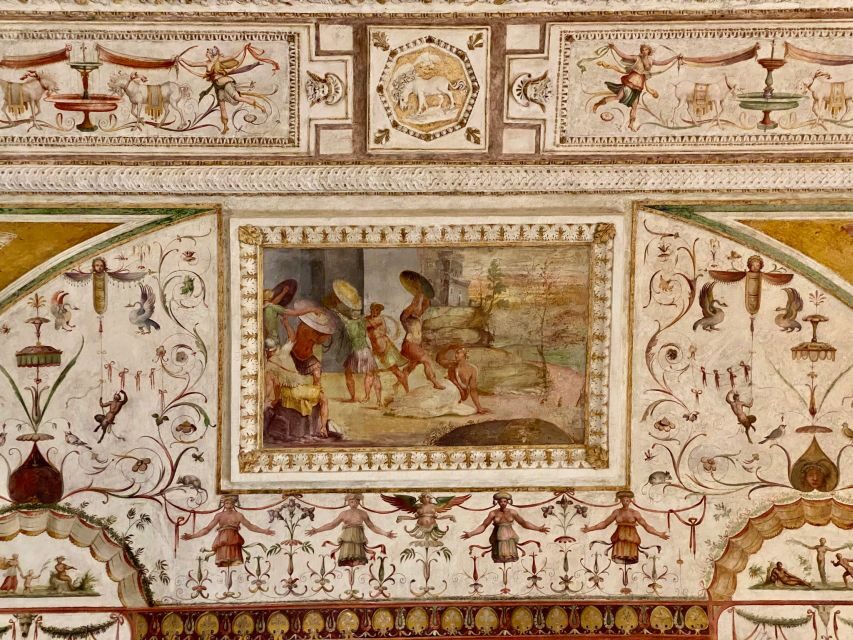
Castel Sant’Angelo is not a “quick photo stop.” It’s a thick, layered structure that tells you Rome’s story in chapters. This tour respects that. The big practical win is pre-booked skip-the-line entry, so you’re not stuck standing around while other people slowly discover what you came for.
Once inside, the building’s layout makes more sense when you have a guide. Without one, it’s easy to get lost in corridors and artwork and then leave with a vague sense of impressive walls. With a guide, you learn what each area is for and why the Popes kept using it long after it started as a mausoleum.
And yes, the place has that Rome trait: it’s beautiful, but it’s also a little unsettling. You’re looking at funerary power, defensive architecture, and later religious control, all stacked into one site.
You can also read our reviews of more private tours in Rome



Ponte Sant’Angelo: the perfect warm-up
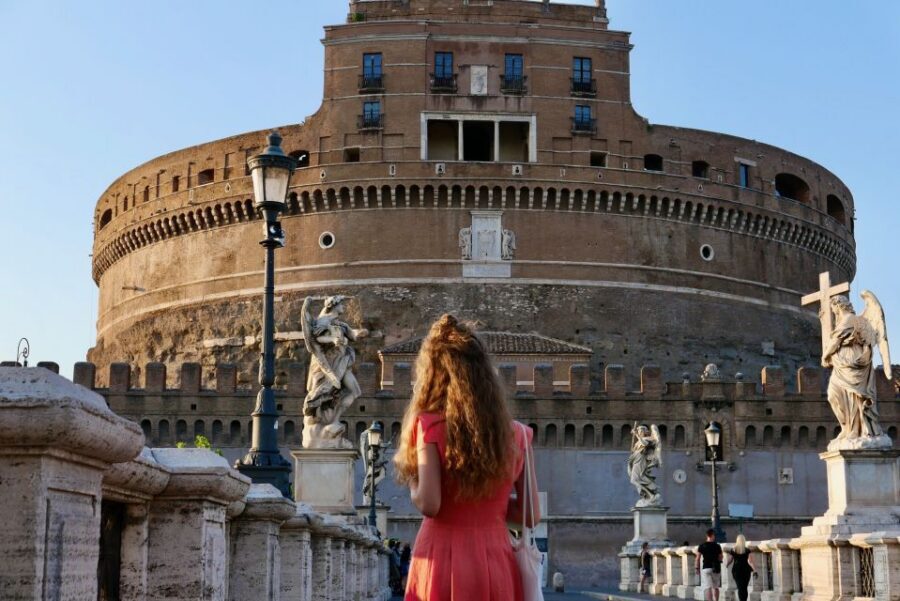
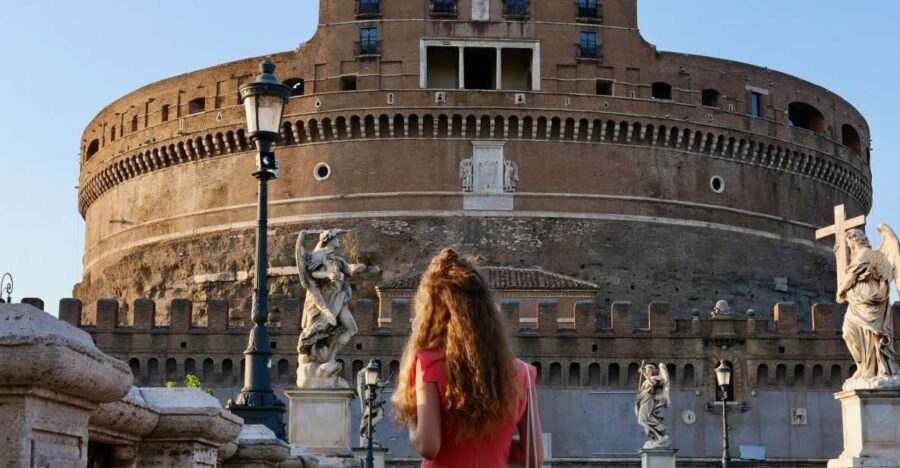
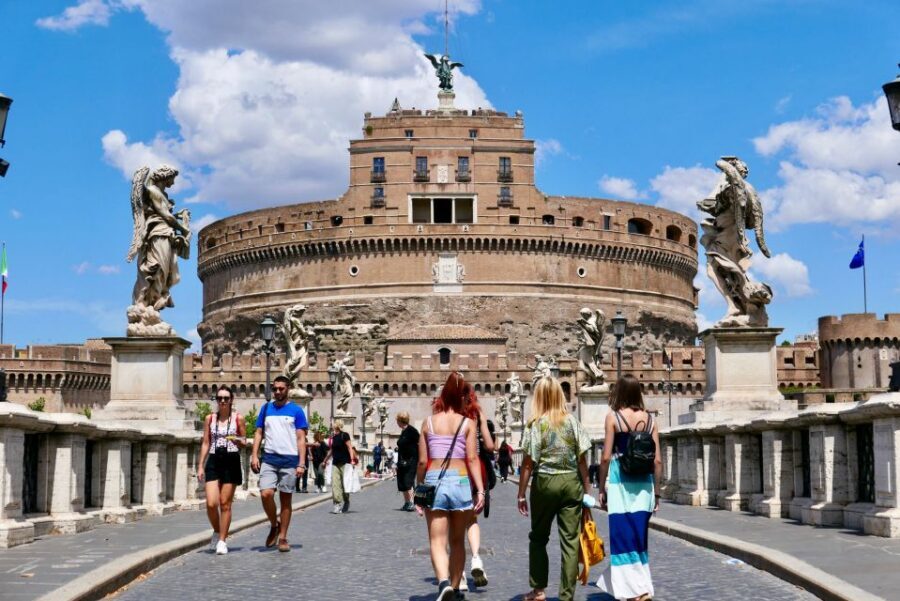
Your tour starts at Castel Sant’Angelo by the bridge. Then you hit Ponte Sant’Angelo for about 15 minutes with your guide. This matters because the bridge is part of the story, not just a road to get you to the next stop.
This is also where you’ll learn about the bridge and its statues. Even a short bridge segment helps you connect what you see outside with what you’ll soon encounter inside the castle—especially the way Rome uses symbols in public spaces. Think of it as getting your bearings fast, so the fortress stops feeling random once you cross the threshold.
Practical tip: wear comfortable shoes. The route is on foot, and you’ll want sure footing before you climb and weave deeper into the site.
Skip-the-line entry: how this tour keeps you moving
The tour is listed at 75 minutes total, with about an hour inside Castel Sant’Angelo plus time for the bridge stop. That schedule is tight enough to feel efficient, but it still includes the key zones people come for.
Here’s the value in that: you’re getting a guided “highlight circuit” instead of spending your time interpreting on your own. The guide does the heavy lifting—explaining what you’re looking at and the symbolism behind it—while the headsets help you follow along without craning your neck to hear.
Also, the tour includes full on-site assistance. That sounds generic, but in practice it means you’re less likely to lose your group or stumble through the entry process. Rome sites can be confusing at ground level. This reduces stress.
Hadrian’s Mausoleum: where imperial power becomes stone
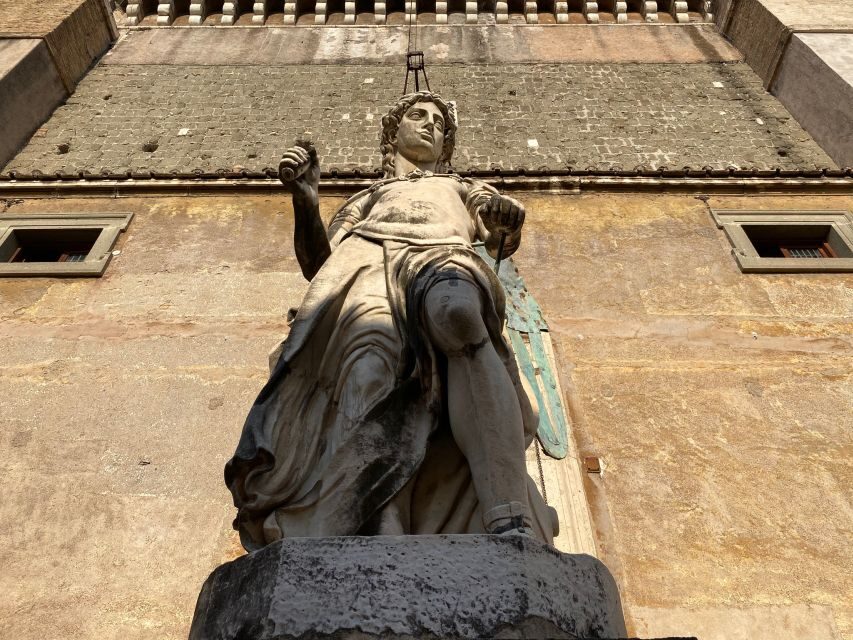
Castel Sant’Angelo is also known as Hadrian’s Mausoleum, and your inside tour starts with that identity in mind. You’ll explore the area tied to Emperor Hadrian’s tomb—an original function that’s still visible in the building’s structure and symbolism.
This part is compelling because it’s not just “a monument.” It’s a physical statement. The mausoleum was built for dynastic burial and imperial legacy, so it carries the weight of status. When you walk through, you start to understand how Rome liked to make its power feel permanent.
You’ll also get context for what the building becomes later. The tour frames Castel Sant’Angelo as a shift from mausoleum to fortress. That arc is a big part of why the tour feels more than museum browsing.
Papal corridors and rooms: the fortress era
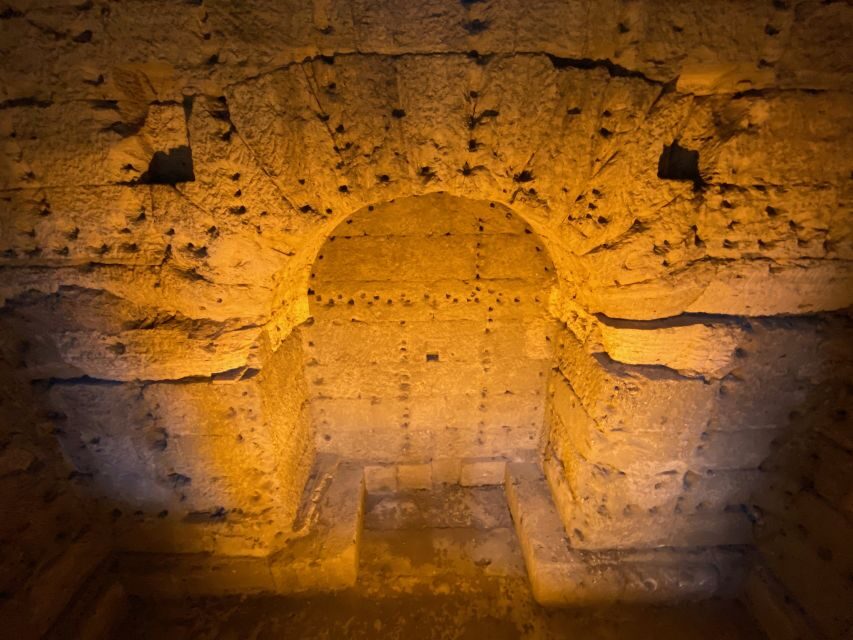
After the tomb elements, you move into the papal corridors and papal rooms. This is where the building’s “second life” becomes real.
The Popes used the structure as a fortress later on, and your guide helps you see the logic: passages, rooms, and defensive architecture built around control and movement. Instead of thinking of the site as a dead tomb, you start thinking of it as an active system—spaces connected for purpose.
You’ll also hear about a few standout areas tied to specific Papal-era choices, including the Gran Loggia of Paul III. When your guide calls out what to look for, it’s easier to notice the blend of authority and theatrical design that turns this into more than a defensive box.
You can also read our reviews of more tours and experiences in Rome
- Skip-the-Line Group Tour of the Vatican, Sistine Chapel & St. Peter’s Basilica
★ 4.5 · 12,779 reviews



The art you’ll actually remember (grotesques and trompe-l’oeil)
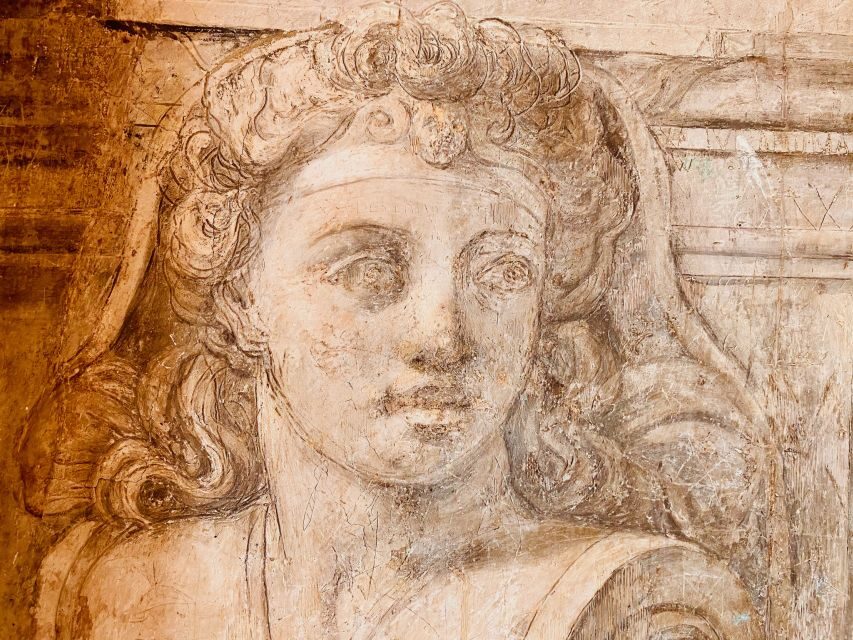
One of the most useful parts of a guided visit is getting told what matters visually. This tour includes time for the frescoes and statues, plus attention to the more eerie motifs—grotesque designs and illusionistic trompe-l’oeil painting.
If you’ve ever walked past a wall painting in a hurry and wondered why it looked odd, this is the fix. Your guide points out the kinds of tricks artists used to fool the eye. And you’ll come away with a better sense of how the Popes and artists used visual effects to create atmosphere, not just decoration.
Rome is full of “pretty” sites. Castel Sant’Angelo adds something else: a mood. The art helps you feel it.
Paul III’s Gran Loggia: a moment of drama
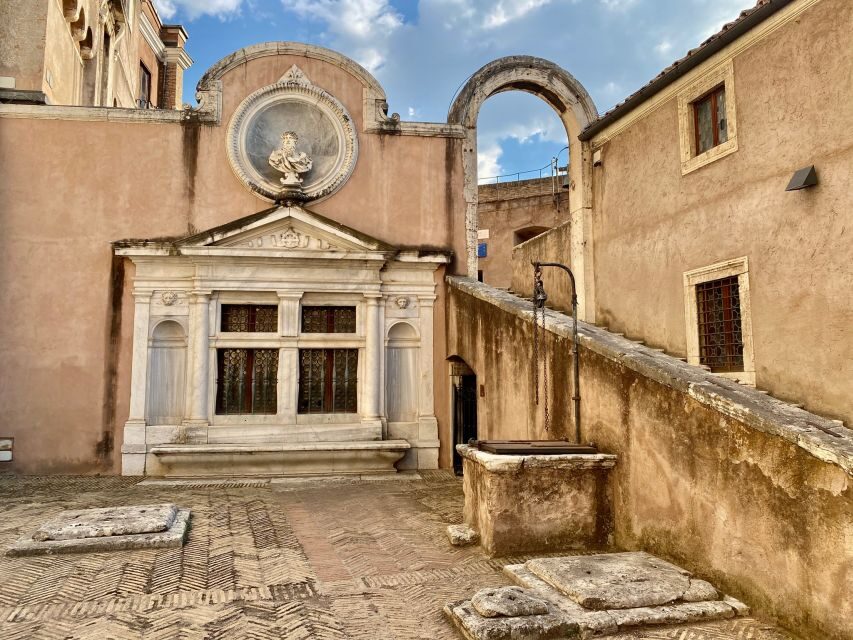
The Gran Loggia of Paul III is one of those spaces that can feel “just another room” if you’re rushing. On this tour, it gets treated as a key stop.
Loggias are about views and presence—places where you can look out while being seen. So it fits the story: this castle isn’t only defensive. It’s also a stage for power and messaging.
If you like learning how architecture shapes behavior, you’ll probably enjoy this segment more than you expect. Your guide’s job here is to connect the design to the politics of the time. That turns the space from scenery into an explanation.
The secret Vatican passage: what you get and don’t get

Castel Sant’Angelo is famous for its connection to the Vatican via a secret route called the Passetto di Borgo. The tour highlights the secret passage that connects the castle to the Vatican, but there’s an important limitation: access to the Passetto di Borgo is not included.
So how do you handle that, as a reader? Here’s the practical way to think about it:
- You’ll learn about the connection and its significance.
- You just won’t enter the tunnel itself on this specific tour.
That still makes sense for many visitors. The connection is part of the castle’s identity, so understanding it adds a lot to the experience. Just don’t book with tunnel entry expectations.
Ending on the upper terrace: the view payoff
The tour ends at the upper terrace, and that’s not an afterthought. It’s the moment when everything clicks: the history is inside, but the scale is outside.
You’ll soak in one of the better panoramic views of Rome from up high. And since the terrace is open to the air, it gives you a breather after walking through corridors and rooms. It’s a good time to look in multiple directions and try to orient yourself—Rome has a lot of overlap between neighborhoods, and height helps.
If you’re the type who likes a final “reward moment,” this ending works well. You don’t just leave with facts. You leave with an image.
Tour pacing: what the 75 minutes feels like
This tour is built to be efficient. You have:
- a short warm-up at the bridge,
- about an hour inside Castel Sant’Angelo,
- then you wrap at the terrace.
That means you’re not spending half a day here, but you also aren’t getting a skim. For many people, this is the sweet spot when you’re juggling a Rome itinerary with multiple “must-sees.”
One note: the site involves walking on site and the tour is listed as partially wheelchair-accessible. If mobility is a concern, it’s worth checking how the “partial” access lines up with your needs before you go.
Shared vs private: who this suits best
This activity offers private or small groups, plus shared options. Here’s how I’d decide:
- Choose shared if you want a guided experience at a lower per-person cost and you’re fine traveling with others.
- Choose private/small group if you prefer a slower Q&A rhythm or you want more control over how the guide answers your questions.
Either way, the languages cover a wide range, which is a big deal when you’re trying to understand frescoes, symbolism, and architecture without translation gaps.
Price and value: is $78.17 worth it?
At about $78.17 per person for roughly 75 minutes, the value comes from three things:
- Skip-the-line entry saves you time at a site where waiting can eat your morning.
- Live expert guidance turns the building into a story you can follow.
- Headsets improve the odds you’ll actually understand the guide, even in busier sections.
If you were to do Castel Sant’Angelo on your own, you could still see plenty. But you’d spend more time figuring out what you’re looking at and where the key parts are. This tour is priced for people who want the “why” as much as the “what.”
For short Rome itineraries, that efficiency is money well spent.
What to bring (and what to avoid)
Keep it simple. Bring:
- a passport or ID card
- comfortable shoes
And avoid bringing:
- weapons or sharp objects
- food and drinks
- alcohol and drugs
This kind of site rule set is normal for major attractions in Rome, but it still matters because it affects how much you can carry and whether you’ll be slowed down at checks.
Booking call: should you do this tour?
I’d book this if you want a guided hit at Castel Sant’Angelo that gives you context fast—especially if you’re pressed for time or you dislike waiting in lines. The ending on the upper terrace is a real payoff, not just a polite finish.
I’d think twice if your top priority is physically entering the Passetto di Borgo tunnel. This tour is clear that tunnel access isn’t included. In that case, you’d want a different option that specifically includes the passage itself.
If you’re aiming for value, the headsets, skip-the-line entry, and tight pacing make it a strong choice. Also, the guide experiences associated with people like Sara, Rosy, and Stephanie point to a common theme: clear explanations and a pace that doesn’t leave you behind.
FAQ
How long is the Castel Sant’Angelo skip-the-line tour?
The tour duration is listed as 75 minutes, including time at Ponte Sant’Angelo and inside Castel Sant’Angelo.
Does the tour include skip-the-line tickets?
Yes. You get skip-the-line entry with pre-booked entry included.
Is Passetto di Borgo access included?
No. Access to the Passetto di Borgo is not included on this tour, though the connection is discussed.
What stops are included during the tour?
The tour includes a guided stop at Ponte Sant’Angelo (about 15 minutes) and a guided visit inside Castel Sant’Angelo (about 1 hour). It ends back at the meeting point.
What’s included in the price?
Included items are a live expert guide, skip-the-line entry ticket, sterilized headsets, and full on-site assistance.
What languages are the guides available in?
Guides are available in German, French, English, Italian, Portuguese, and Spanish.
Where do we meet the guide?
Meet your guide in front of the entrance of Castel Sant’Angelo by the bridge. Look for a staff member holding a yellow Touriks sign.
Is the tour wheelchair accessible?
It is listed as partially wheelchair-accessible.
What should I bring and wear?
Bring passport or ID and wear comfortable shoes.
What’s the price for this tour?
The price is listed as $78.17 per person. Starting times vary based on availability.