REVIEW · CITY TOURS
Rome: Scavenger Hunt For Kids with Prizes around City Center
Book on GetYourGuide →Operated by Marco Tours and Experiences · Bookable on GetYourGuide
Kids move fast, and so does Rome. This family-focused hunt turns three headline sights into a playful route where you solve riddles, complete challenges, and chase photo moments. You’ll start at the Spanish Steps, then head to Trevi Fountain and the Pantheon, with activities designed to keep kids focused without turning the day into a lecture.
I really like how teamwork is built in. The challenges reward staying together and thinking like a group, which matters when you have different energy levels. One other thing I’d call out: in past groups, the guide Bruno has been singled out as super kind and playful, and that tone helps kids who get bored easily stay engaged.
One consideration before you book: entrance fees are not included. So think of this as a fun, exterior-and-stories route through major monuments, with learning built around what you see on the street, not guaranteed museum entry.
In This Review
- Key highlights at a glance
- A 2.5-Hour Family Loop Through Rome’s Big Three
- Where You Meet by Piazza Mignanelli (and Why It Helps)
- Spanish Steps Clues: Turning a Stairscape Into a Game
- Trevi Fountain Games: Coins, Symbols, and Quick Photo Missions
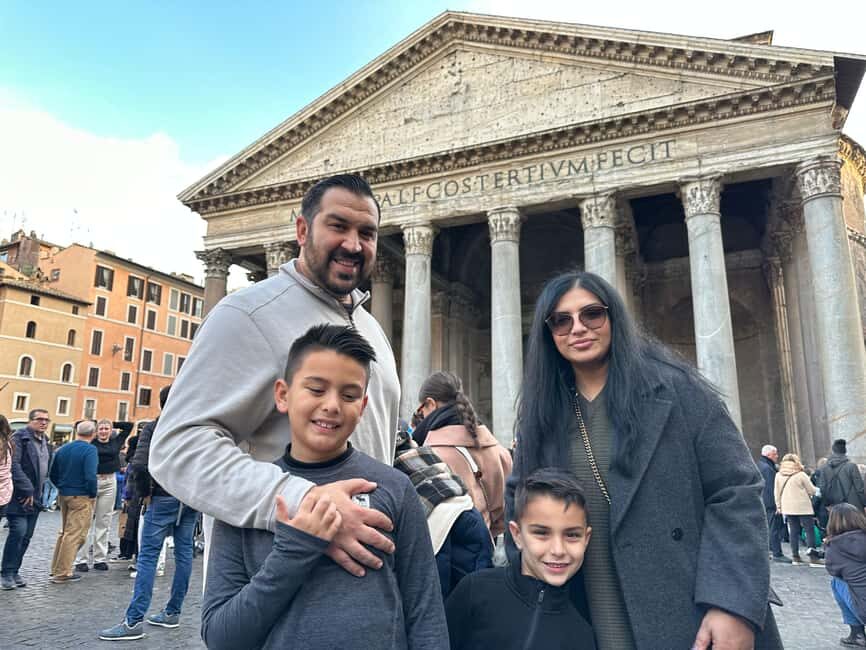
- Pantheon Puzzles: Learning History Through the Columns
- Side Streets and Piazzas: Rome Beyond the Postcard Shots
- What the Private Guide Does (Even When the Hunt Is Self-Guided)
- Price and Value: Is $22 Worth It?
- What to Bring for Comfortable Walking
- Who This Rome Kids Treasure Hunt Fits Best
- Should You Book This Rome Kids Treasure Hunt?
- FAQ
- How long is the Rome kids scavenger hunt?
- Where do we meet the guide?
- Where does the activity end?
- Which landmarks are included in the treasure hunt?
- Is the guide available in English?
- Is the treasure hunt self-guided?
- What’s included in the price?
- What is not included?
- What should we bring?
- Is this tour suitable for wheelchair users?
Key highlights at a glance
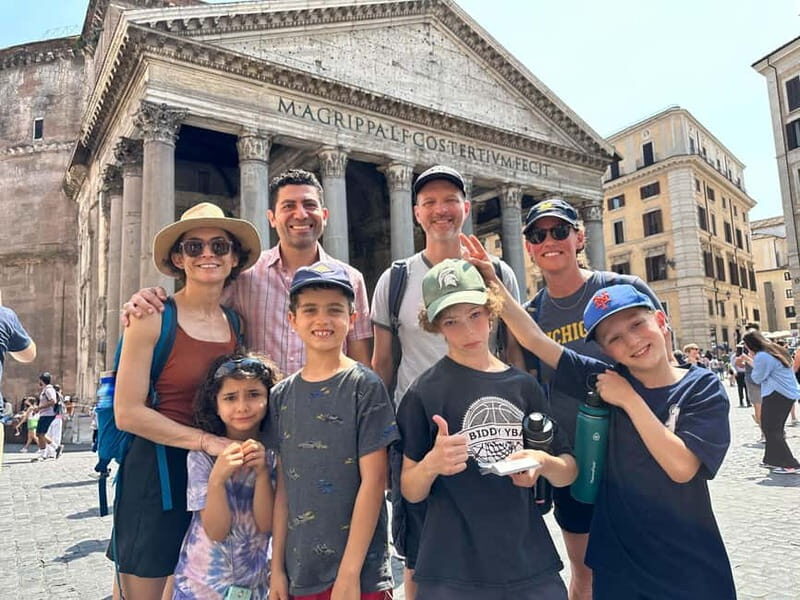
- Spanish Steps to Trevi Fountain to Pantheon in about 2.5 hours, with a clear family route
- Riddles and clue-hunting that get kids moving and collaborating
- Coin-count and symbol games at Trevi Fountain plus photo challenges to break up walking
- Pantheon-history puzzles that use the building’s look and age as the inspiration
- A private English guide who keeps the experience lively, with Bruno praised for playful engagement
A 2.5-Hour Family Loop Through Rome’s Big Three

This is the kind of Rome outing that works because it has a mission. Instead of drifting from sight to sight, you follow a treasure hunt that strings together the Spanish Steps, Trevi Fountain, and the Pantheon. The time window is short enough for kids to stay interested, but long enough that you actually feel like you explored something, not just posed for photos.
What makes the route feel worth your time is how the activity matches the setting. The Spanish Steps become the starting puzzle arena, Trevi Fountain turns into a game stop, and the Pantheon is used for history-based riddles. The result is a day that gives you architecture and culture, but in kid language: look closely, answer fast, work together.
The hunt also includes extra clues and challenges along the way, including stops in charming piazzas and narrow alleyways. That matters because Rome isn’t only its famous backdrops. A good family walk helps you notice the smaller streets that make the city feel real.
Finally, the day is structured around keeping everyone involved. Parents don’t have to hover over every answer, and kids don’t feel like they’re dragging adults through a checklist.
You can also read our reviews of more city tours in Rome



Where You Meet by Piazza Mignanelli (and Why It Helps)
You meet your guide at the Column of the Immaculate Conception in Piazza Mignanelli. Starting in a recognizable central spot makes the whole day easier, especially with children who might be hungry, bored, or just plain excited (all at once).
This start point also helps you avoid the common early-morning chaos of trying to locate the correct meeting place while families are regrouping. Once you meet up, the hunt is set in motion, and you keep moving through Rome’s center as a team.
The tour ends back at the meeting point. That loop matters more than you might think. With kids, you’re not negotiating a one-way route back to transit or planning how everyone gets back together at the end. It’s a clean start and a clean finish.
Because it’s an outdoor walking experience, I’d strongly recommend starting early to reduce crowd pressure. Not because it’s more scenic (even though it is), but because crowds slow down puzzle solving. The hunt works best when you can take your time to find clues without getting squeezed.
Spanish Steps Clues: Turning a Stairscape Into a Game
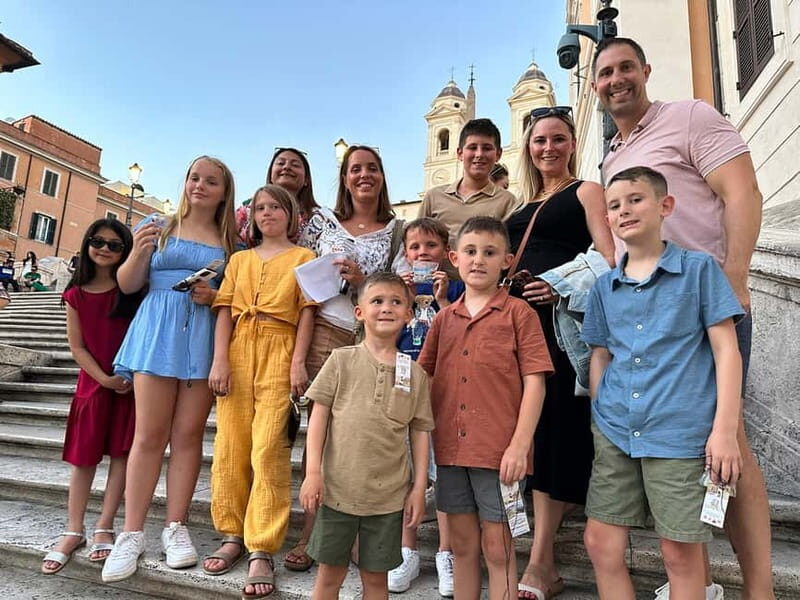
The Spanish Steps are famous for a reason: they’re instantly recognizable and easy to rally kids around. Here, they’re not just the place you stand and take a photo. At the start, you climb these historic steps and receive the first clue, hidden among the steps.
That tiny detail is what makes the Spanish Steps feel like an actual adventure. Kids don’t just look up; they search. They race to solve riddles while they’re climbing, which turns a potentially slow, tired walk into forward momentum. And adults get something too: you’re constantly looking around and absorbing the city views instead of watching the clock.
There’s also a practical upside. The steps set the pace for the entire hunt. If kids are engaged early, they’re more likely to stay patient at Trevi Fountain and the Pantheon, where you’ll do different types of challenges.
In a city where families often run out of patience halfway through a sight list, this is a clever way to buy time. You’re basically front-loading the fun.
Bring water and a hat here. The route is outdoors, and a short heat wave in Rome can make even the most enthusiastic clue-hunter lose steam fast.
Trevi Fountain Games: Coins, Symbols, and Quick Photo Missions
Next up is Trevi Fountain, and this is where the hunt shifts from climbing energy to puzzle-and-observation energy. The challenges include games like counting the coins thrown into the fountain. It sounds simple, but kids love counting games because they feel in control of a task that’s also tied to the spectacle.
You’ll also be hunting for hidden symbols carved into the fountain’s architecture. That’s a smart move for families because it asks kids to look at details rather than just stare at the main view. It turns the fountain from a crowd magnet into something interactive.
Photo challenges are part of the mix too, which helps break up walking and keeps the experience moving at a kid-friendly pace. Rome has plenty of spots where adults stop for two minutes and accidentally stay for twenty. With planned photo moments, you’re more likely to keep the day flowing.
One more thing: Trevi can be busy. Starting early helps, but even then, you may feel the normal center-city crowd. The hunt approach helps you stay patient, because you have something to do while waiting for a decent moment to see the fountain clearly.
If you’re traveling with kids who need variety, Trevi Fountain delivers it: counting, looking for symbols, and taking photos, all without requiring museum tickets.
Pantheon Puzzles: Learning History Through the Columns
The Pantheon part of the hunt leans into history, but it does it through riddles rather than speeches. The idea is that you piece together riddles inspired by the Pantheon’s history, then test creativity and observation skills as you solve puzzles along the way.
What I like here is the way it uses the setting. The Pantheon’s famous columns and architecture are built into the learning. You’re not asked to memorize facts. Instead, you’re encouraged to notice details, connect clues, and learn fun facts as you go.
The Pantheon is described as a 2,000-year-old marvel in the experience outline, and that’s the kind of fact that lands better when it’s tied to a puzzle. Kids remember what they find, not what they’re told.
This is also a good moment for parents who want the day to be meaningful. Adults tend to get restless when they’re just following a kid activity for the sake of it. Here, the Pantheon challenges are clearly designed to make the architecture feel like part of the game, not just a backdrop.
If your kids can do short bursts of thinking (even better if they like riddles), this section is likely to be a highlight.






Side Streets and Piazzas: Rome Beyond the Postcard Shots
A big part of why this hunt feels like more than a simple sight tour is that it adds time for Rome’s in-between spaces. Along the way, you’ll discover small piazzas and narrow alleyways while searching for more clues and completing additional challenges.
That matters for families because it adds variety to the walking route. It also helps the city feel less like a set and more like a living place where people actually walk, meet, and linger.
You’ll see how the hunt is structured to keep you engaged between major landmarks. Instead of saying, Okay next, and marching straight to the next big name, there’s a rhythm to it: clue, challenge, move, clue again.
These side stops can also help you manage energy. If kids burn out at a large open area, the calmer alleyway pace can reset them. If they’re bouncing off the walls, a new clue can redirect that energy into something focused.
For parents, these in-between moments are where photos often turn out best. Not because Rome needs extra filters, but because children are doing something, not just posing.
What the Private Guide Does (Even When the Hunt Is Self-Guided)

The experience includes a private guide, and the guide is English-speaking. The hunt is described as self-guided, which in practice usually means the kids are solving and moving through the challenges while the guide stays close enough to get you started, keep the structure clear, and keep the story flowing.
This balance is important. With families, you need enough guidance to avoid confusion and lost energy. But you also need kids to feel ownership of the clues. The format here aims for both: guided setup, then active puzzle solving for the group.
From the reviews, one consistent theme is that the guide makes a difference. Bruno specifically has been praised as very kind, playful, and engaging. The feedback also points out that the hunt keeps young children from getting bored, which is exactly what you want for a two-and-a-half-hour Rome plan.
So if you’re worried this might feel like homework on the street, don’t. The activities are built to keep kids working at a pace that feels fun, not stressful.
Also note: this isn’t suitable for wheelchair users. The walk is part of the point, and the streets and steps can be uneven.
Price and Value: Is $22 Worth It?
At $22 per person, this hunt is priced like an activity, not a full-on museum day. Entrance fees are not included, and meals and transportation aren’t included either. That could be a deal-breaker if your goal is to enter paid attractions. But if your goal is to experience Rome in a family-friendly way that stays fun and structured, the value looks better.
Here’s what your money buys:
- A planned route connecting major sights
- Interactive tasks like riddles, puzzle challenges, and photo moments
- A private English guide to keep the experience moving
- A format that’s explicitly made for kids, with group problem-solving
For families, structure is often the biggest hidden cost in travel. Without it, you end up paying in frustration: long lines, wandering, meltdowns, and wasted time. This hunt replaces wandering with a game plan.
And for adults, it also offers something useful: you’re learning architecture and history through observation prompts. The Pantheon and Trevi Fountain challenges are the kind of “look closer” activities that make sightseeing stick.
The best way to think about the price is this: you’re paying for a smoother, more kid-proof way to see the big names of central Rome in a short window.
What to Bring for Comfortable Walking
This is an outdoor, walking-heavy experience. The basic kit is simple, and I’d treat it like non-negotiables:
- Comfortable shoes
- A hat
- A camera (photo challenges are part of the hunt)
- Sunscreen
- Water
You’ll be moving between landmarks, including the Spanish Steps. Even if your route is only 2.5 hours, Rome walking can add up fast when you’re also pausing for clues.
If your family tends to snack constantly (or at least wants the option), plan to buy a quick drink or snack separately. Meals aren’t included, so don’t count on a built-in stop.
One more tip: bring a little patience. The best puzzle-solving happens when kids can slow down and look. Crowds can be real, so starting early can make those clue moments easier.
Who This Rome Kids Treasure Hunt Fits Best
This is a strong pick if you’re traveling with children who:
- like puzzles, riddles, and scavenger-style games
- do better when they’re moving and working toward small goals
- get bored on long sightseeing days
It’s also a good choice for adults who want their day to include learning, but without formal museum pacing. The experience uses the Spanish Steps, Trevi Fountain, and Pantheon in a way that turns architecture into clues. That’s why reviews highlight that it’s fun for kids and enjoyable for adults too.
It’s not a great match if your group needs step-free movement or wheelchair access. It also may not satisfy you if you were specifically hoping for monument interiors, since entrance fees aren’t included.
If you’re coming with mixed ages, the structure helps. The challenges keep younger kids busy, while adults can enjoy the culture-and-details angle rather than just “waiting for kids to finish.”
Should You Book This Rome Kids Treasure Hunt?
I’d book it if you want a family activity that actually works in the center of Rome. The biggest strength is the combination: famous landmarks plus kid-focused challenges that keep the group together and moving at a fun pace. With a private English guide and a hunt format that rewards teamwork, it’s a practical way to make sightseeing feel like play.
I wouldn’t book it if you’re aiming for museum or inside-monument tickets as the main event. Entrance fees are not included, so plan on paying separately if you want access beyond the street-level experience.
If your kids like games and you want a clear 2.5-hour plan that covers the Spanish Steps, Trevi Fountain, and the Pantheon, this is the kind of Rome day that feels worth repeating in photos later.
FAQ
How long is the Rome kids scavenger hunt?
The experience lasts about 2.5 hours.
Where do we meet the guide?
Meet your guide by the Column of the Immaculate Conception in Piazza Mignanelli.
Where does the activity end?
The hunt ends back at the meeting point.
Which landmarks are included in the treasure hunt?
You’ll visit the Spanish Steps, Trevi Fountain, and the Pantheon.
Is the guide available in English?
Yes, the live tour guide provides the experience in English.
Is the treasure hunt self-guided?
The treasure hunt is described as self-guided, designed for families and children to solve the challenges as they go.
What’s included in the price?
Included are the interactive treasure hunt experience and a private guide.
What is not included?
Entrance fees to monuments and museums, meals and drinks, and transportation to and from the attractions are not included.
What should we bring?
Bring comfortable shoes, a hat, a camera, sunscreen, and water.
Is this tour suitable for wheelchair users?
No. The experience is not suitable for wheelchair users.
If you want, tell me your kids’ ages and your walking tolerance, and I’ll help you decide whether this route timing and format will feel easy or stressful for your group.