REVIEW · CITY TOURS
Rome on Wheels: Experience the City with a Vespa Tour
Book on Viator →Operated by MY VESPA TOURS · Bookable on Viator
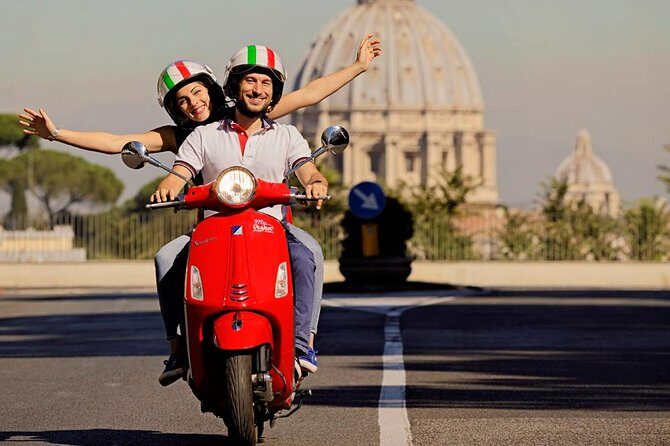
Rome moves at scooter speed. This Vespa tour is built for people who want to see a lot of Rome quickly, with a detailed audio guide and stops timed for big-picture views, not long museum lines. You’ll glide through classic landmarks and vantage points that you’d struggle to stitch together on foot.
I especially like the way the route mixes headline stops with viewpoint moments. The tour also includes complimentary souvenir photos plus bottled water, so you’re not hunting for extras right in the middle of sightseeing.
The main drawback is practical: driving in Rome can feel intense. If you choose the self-driven option, you need real scooter skill, not just a few minutes of practice, and you should expect traffic to be part of the experience.
In This Review
- Key things that make this Vespa tour worth your time
- Why a Vespa tour works for seeing Rome quickly
- Meeting at Via Cavour 80: simple start, no hotel pickup
- Palatine Hill: where Rome’s story starts (and the views help)
- St. Peter’s Basilica and the Vatican area: big art, big energy
- Colosseum in motion: fast entry, iconic arches
- Gianicolo Hill panoramas and Fontana dell’Acqua Paola
- Circus Maximus: ancient speed, modern calm
- Buco della Serratura keyhole: a quick magic moment
- Driving your own Vespa vs riding with a guide: safety is the real topic
- The audio guide and included photos: learning without stopping your flow
- Price and value: is $235.92 a fair deal for Rome’s tight routes?
- Who this Vespa tour fits best
- Should you book Rome on Wheels with My Vespa Tours?
- FAQ
- How long is the Rome on Wheels: Experience the City with a Vespa Tour?
- Where do I meet, and where does the tour end?
- Is there an audio guide, and is it in English?
- What’s included in the price, and what’s not included?
- Do I need a license to drive the Vespa?
- Is free cancellation available?
Key things that make this Vespa tour worth your time
- Small group size (up to 15) for easier pacing and photo stops
- English mobile audio guide that helps you keep moving while you learn
- Colosseum stop with free admission ticket on the listed itinerary
- Gianicolo Hill panorama + Fontana dell’Acqua Paola for classic Rome views
- Buco della Serratura keyhole framing St. Peter’s Basilica
- Souvenir photos and bottled water included so you can focus on the ride
Why a Vespa tour works for seeing Rome quickly
Rome is famous for three things: ruins, churches, and viewpoints. The problem is getting from one to the next without spending your day in slow-moving transit or getting stuck in the wrong direction on foot. A Vespa-style tour solves that by turning travel time into sightseeing time.
You’re also getting a very Rome-only way of moving through the city. The best moments aren’t only at monuments. They’re at the street-level angles and the quick turns where the city suddenly opens up—especially near the hills and around the Vatican area.
For first-time planning, this is a smart way to get your bearings fast. A good route lets you leave the tour knowing what you want to return to later on foot, when you can linger.
You can also read our reviews of more city tours in Rome
Meeting at Via Cavour 80: simple start, no hotel pickup
The tour starts and ends back at Via Cavour, 80 (near Basilica di Santa Maria Maggiore). There’s no hotel pickup, so you’ll want to be confident finding the meeting point on your own using nearby public transport.
This matters more than people think. A Rome day can melt away if you lose time getting oriented. With a fixed start location and an end back at the same spot, your afternoon planning stays easier.
Expect the total time on the ground to be about 3 to 4 hours. It’s not a slow, meandering ride. It’s a “cover the highlights” format.
Palatine Hill: where Rome’s story starts (and the views help)
Your first major stop is Palatine Hill, one of Rome’s Seven Hills and strongly linked to the legend of Rome’s beginnings. It’s the kind of place where you can stand among archaeological remains and immediately understand why this area mattered—because it sits above the city and gives you an instant sense of scale.
What you’ll like here is the combination of history + perspective. You’re not just reading about ancient power. You’re physically in the place that overlooks much of what came later.
Possible downside: Palatine can be busy, and the tour format means you’ll need to treat your time there as a short but focused stop. If you’re the type who wants to linger for a long time at each ruin, plan to come back on another day when you have more time.
St. Peter’s Basilica and the Vatican area: big art, big energy
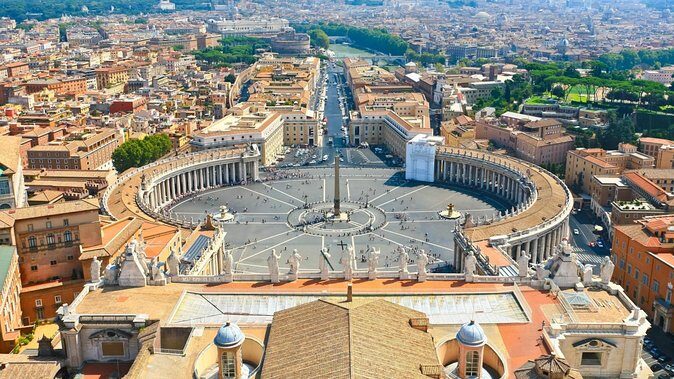
Next up is St. Peter’s Basilica in Vatican City—often described as the largest church in the world. Even if you’re not religious, it’s a masterclass in Renaissance architecture and sheer visual confidence, especially the dome attributed to Michelangelo.
This is also a stop that tends to define the trip for many people. St. Peter’s isn’t just something you look at. It’s the kind of building where your brain keeps recalibrating scale. A Vespa tour helps because you can reach this area as part of a route rather than as a standalone ordeal.
What to consider: Vatican-area sightseeing can be crowded. The tour keeps the pace moving, so you’ll get a strong first hit, but you probably won’t do the full deep-dive you might do on a dedicated church visit.
Colosseum in motion: fast entry, iconic arches
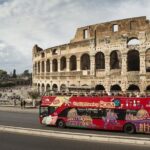
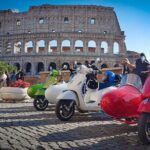
The Colosseum is the “yes, you must see it” stop. The tour lists the Colosseum admission ticket as free for the scheduled stop, and the time on site is about 10 minutes. That’s not long, but it’s long enough to walk in, absorb the shape, and spot the arches and scale that make this place so instantly recognizable.
Here’s what this stop is best for:
- getting the full mental image of the arena from the right angles
- snapping a few photos without spending hours in the wrong line
- pairing it with the surrounding story the audio guide is designed to deliver
The tradeoff is obvious: if you want to read every detail or do a slow route around every section, 10 minutes won’t satisfy you. But if your goal is a smart overview that tells you what you want to revisit, this timing makes sense.
You can also read our reviews of more tours and experiences in Rome

Gianicolo Hill panoramas and Fontana dell’Acqua Paola
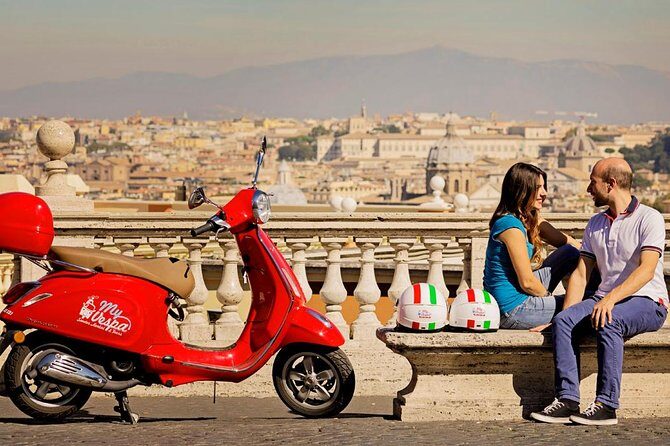
The tour then heads to Colle del Gianicolo, also called Janiculum Hill. This is one of those places where you feel Rome as a whole city, not just a list of monuments. The itinerary gives you about 15 minutes here, which is just enough to get the best views and let the city settle into focus.
You’ll also find Fontana dell’Acqua Paola, a well-known baroque fountain at the hill. Even if fountains aren’t usually your thing, this one works because it’s tied to the viewpoint. It’s a strong “stand and look” moment.
A practical note: viewpoints often mean uneven ground and lots of photo attempts. Keep your gear simple and your timing flexible so you don’t lose time in the small bottlenecks that happen naturally at scenic spots.
Circus Maximus: ancient speed, modern calm
Next is Circo Massimo, described as the largest ancient chariot racing stadium in Rome, built to hold over 150,000 spectators. Today, it’s a public park where you can imagine the speed and spectacle that once filled the space.
The cool part of this stop is how it teaches you to see traces. From the outside, it can look like just a big open area. With the right explanation, you start mapping the shape of the original arena in your head.
Time on this stop is about 10 minutes. That’s enough to connect the dots and get a memorable photo or two, but again, it’s not designed for a long historical walking loop.
Buco della Serratura keyhole: a quick magic moment
One of the most charming stops is the Buco della Serratura keyhole at Piazza dei Cavalieri di Malta. The idea is simple and clever: you look through a keyhole and see St. Peter’s Basilica framed by greenery.
This is exactly the type of small, visual detail that makes a short tour feel special. It’s not a giant monument. It’s a perspective trick. And it gives you a souvenir image that looks almost impossible if you only knew Rome from postcards.
Time here is about 10 minutes. The key is to be ready to move quickly and take your shot when your turn comes, since the moment is quick by design.
Driving your own Vespa vs riding with a guide: safety is the real topic
This tour has a major fork: the self-driven option. If you plan to ride your own scooter, the rules are clear. You need good driving experience with scooters or motorcycles. “I’ve driven a few times” isn’t enough. A category A license (motorcycles/scooters) or category B (cars) is required.
That’s not bureaucracy. It’s the difference between feeling confident in Rome traffic and feeling stressed. Rome traffic can be unpredictable, and scooter movement has its own rhythm. One review captured the honest vibe: it’s not the place to learn.
If you’re nervous, another option is to ride with the guide. Several people praised guides for taking things slow, especially when someone hadn’t been on a Vespa in years. There are also mentions of newer helmets and a safety-first mindset with careful pacing.
My practical advice: be honest about your comfort level before you choose. If you’re the least bit unsure, ride with the guide. You’ll still get the full route, and you can enjoy the city instead of managing stress.
The audio guide and included photos: learning without stopping your flow
The tour’s standout support is the detailed audio guide. It’s in English, delivered via a mobile ticket setup. That combination matters because Rome isn’t always easy to read from a moving scooter. The guide gives you context while you’re actually passing the sites, not after you’ve already missed the “why it matters” moment.
You also get souvenir photos. This may sound like a small add-on, but it changes how the day feels. Instead of stopping to coordinate your own camera timing every few minutes, you can just enjoy the view and let the tour handle the photo moments.
Bottled water is included too. That’s another quiet value win in a city where a last-minute bottle can feel expensive and inconvenient once you’re already in motion.
Price and value: is $235.92 a fair deal for Rome’s tight routes?
At $235.92 per person, this isn’t a cheap “walk-and-learn” tour. So you should judge it by what you get that you can’t easily buy another way.
Here’s the value math that makes sense:
- You’re paying for transport around Rome in a way that gets you between distant areas quickly.
- The stops cover a top-sights mix: Palatine Hill, St. Peter’s Basilica, Colosseum, Gianicolo, Circus Maximus, and the keyhole view.
- It includes practical costs like fuel and a local tour escort/host.
- Colosseum admission is free for the listed stop.
- You get support that reduces hassle: audio guide + souvenir photos + bottled water.
- The group size is capped at 15, which helps the pacing.
Where it may not feel worth it: if you already have a plan to spend most of your day at each site slowly, you might prefer a walking tour or public transport day with longer time per location. But if your Rome window is short and you want an efficient hit of iconic sights plus viewpoints, this price is closer to “you’re buying time and access to a route” than “you’re buying a lecture.”
Also, the average booking is about 43 days in advance, which is a good hint that the schedule can fill. If you want a specific date, I’d treat it as something to lock in earlier rather than later.
Who this Vespa tour fits best
I think this is a great fit if you:
- want a fast overview of major Rome highlights in one half-day
- like seeing the city from street level and viewpoints, not just from plazas
- want an audio guide that helps you understand what you’re looking at while you move
- appreciate small-group pacing (up to 15)
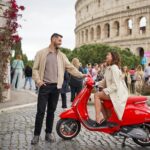
It’s also a good fit for couples or solo visitors who enjoy photos and want the tour to handle the “get it captured” moments.
It’s less ideal if you:
- know you won’t enjoy traffic or tight driving conditions
- need long stays at monuments
- want a museum-style experience with lots of time to wander
Should you book Rome on Wheels with My Vespa Tours?
If you’re asking whether to book, ask yourself one thing: do you want Rome as a quick, high-impact route, or Rome as a slow, site-by-site day? This tour is built for the first option.
For the money, you’re paying for motion, timing, and a route that includes both the obvious icons and the more clever viewpoints like the Buco della Serratura keyhole. Just be honest about riding comfort. If you’re confident behind the handlebars, the self-drive option can feel thrilling. If not, riding with the guide is a calmer way to enjoy the same highlights.
If your schedule is tight and you want to leave Rome with strong mental photos of where everything is, this is a smart booking.
FAQ
How long is the Rome on Wheels: Experience the City with a Vespa Tour?
The tour lasts about 3 to 4 hours.
Where do I meet, and where does the tour end?
You meet at Via Cavour, 80, 00184 Roma RM, Italy, and the tour ends back at the same meeting point.
Is there an audio guide, and is it in English?
Yes. The tour includes a detailed audio guide, and the experience is offered in English.
What’s included in the price, and what’s not included?
Included items are souvenir photos, bottled water, tour escort/host, and fees like taxes and fuel surcharge. Food and drinks are not included, and there is no hotel pickup or drop-off.
Do I need a license to drive the Vespa?
If you choose the self-driven option, you need good driving experience and a license with category A (motorcycles/scooters) or category B (cars). The minimum age is 18.
Is free cancellation available?
Yes. You can cancel up to 24 hours in advance for a full refund.