REVIEW · HIKING & TREKKING
Rome: Mini hike to the ancient Parco degli Acquedotti
Book on GetYourGuide →Operated by Hike with Nature of Sal · Bookable on GetYourGuide
Aqueducts in the middle of real Rome? That’s the feeling you get on this mini hike—part city stroll, part time travel—ending in the Park of the Aqueducts, where stonework and nature share the same space. I love how the route starts in Pigneto and then slowly turns into something more wild, with aqueduct lines pulling your eyes down a long, unreal perspective.
The guide here, Sal, keeps the whole walk easy to follow and genuinely interesting, with stories that connect engineering, the human need for water, and the living world around you. One thing to think about up front: this is a moderate walk over about 9 km (5.5 miles) with uneven terrain, and it runs rain or shine—so you’ll want proper shoes and a steady pace.
In This Review
- Key points before you go
- Pigneto to the Park of the Aqueducts: how this hike feels
- Meeting outside Pigneto: plan for a one-way finish
- The route through neighborhoods: where the aqueduct story starts
- Porta Furba and the café break: keep energy up
- Torre Fiscale Park: the in-between moment
- Parco degli Acquedotti: why the views feel surreal
- Sal, the guide: conversation that stays useful
- What the 3-hour time frame really means
- Price and value: what $53 buys you
- Difficulty and who should consider skipping
- What to bring: simple gear that makes the day better
- Weather: rain or shine, and how to handle it
- Should you book this hike?
Key points before you go
- Pigneto start, Giulio Agricola finish: It’s a one-way walk, so plan your next transport
- Sal’s mix of history and nature: Roman water engineering plus what’s growing along the route
- Surreal aqueduct + greenery scenes: Clear days can bring a mountain backdrop
- Small group (max 10): Easier pacing on an urban-to-wild route
- Photographer-friendly perspectives: From macro details to long wide vistas
- Café stop included: A real break mid-hike, not just a quick pause
Pigneto to the Park of the Aqueducts: how this hike feels
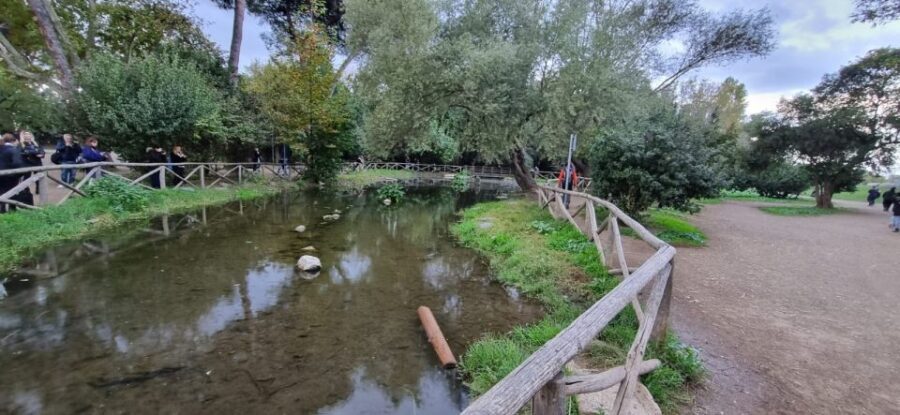
This isn’t the Rome you see from a bus window. You start in the lively, trendy neighborhood of Pigneto, and the walk gradually shifts from streets and small green pockets into the bigger feeling of the Parco degli Acquedotti. It’s the kind of route that makes you look sideways more than forward—at walls, water channels, plants, and textures that don’t belong together until you see them all in one frame.
The best part is how the aqueduct story doesn’t sit in a museum. You’re walking along the same idea—water made possible by human planning—while the landscape does its own slow work. Even if you know the basics about Roman aqueducts carrying water by gravity, the park setting makes the engineering feel practical, not just impressive.
You can also read our reviews of more hiking tours in Rome

Meeting outside Pigneto: plan for a one-way finish
Your tour starts right outside Pigneto subway station (C-Line). You’ll meet near one of the station exits—helpful detail: one exit is near a grocery store called Conad, while the other faces a bridge. Aim to arrive about 15 minutes early so you can get grouped up and start without stress.
This is a one-way experience. You’ll finish close to Giulio Agricola (A-Line), specifically ending at Via Lemonia, 214, 00178 Roma RM. That matters because you’ll likely need a quick ride back to your hotel or next stop. The upside? You’re not doing a round-trip shuffle. You’re moving through different parts of the city and ending in a park.
The route through neighborhoods: where the aqueduct story starts
Right after you begin, the guide leads you along Via del Pigneto and then into Parchetto Condiviso del Mandrione. These aren’t just filler stops. They help set the pace and the tone: you’re transitioning from city life into a quieter sense of space, while the tour keeps pointing out how humans and nature share the same “timeline.”
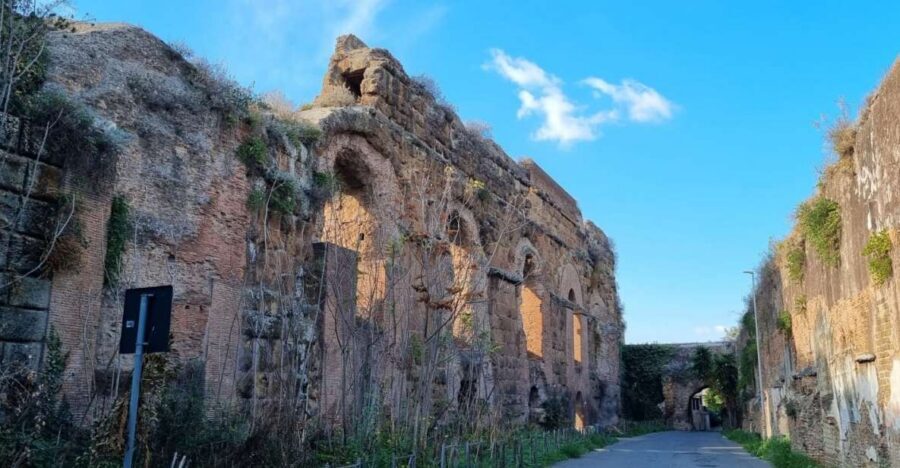
Then you head along Via del Mandrione, with guided stops that set up what you’re going to see later. The value here is that you’re not dropped into the park with a history lecture only. You get context as you walk, which makes the bigger aqueduct views later land harder.
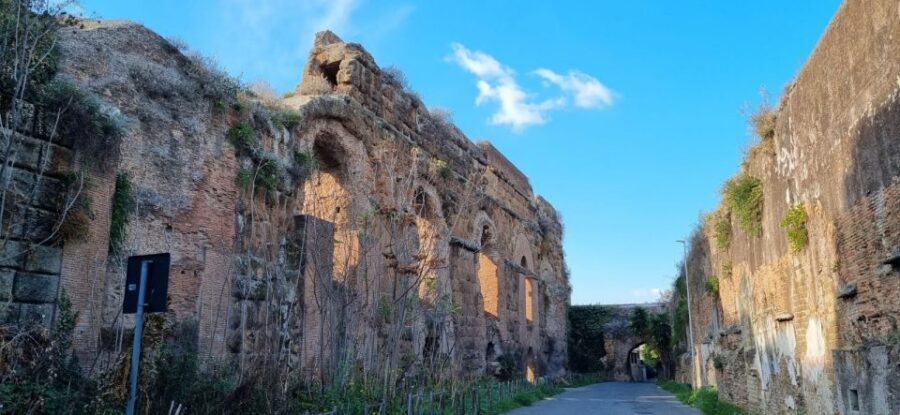
You’ll also pass Porta Furba (or Arco di Sisto V). This is the kind of place that makes you slow down without realizing it. An ancient gate like this is a reminder that Rome’s infrastructure wasn’t just about water. It was about movement, control, and connecting parts of the city—then and now.
Porta Furba and the café break: keep energy up
At some point in the middle, the hike includes a local café break. This is smart on a practical level: you’re covering roughly 9 km with uneven ground, and you want a pause before the park portion really takes hold.
From what you can expect in the guide’s style, the breaks are also tied to comfort. On hot days, Sal is attentive about staying in the shade and managing water breaks—so you don’t feel like you’re constantly “pushing through.” On your end, you’ll still do your part: bring the water you’re told to bring and wear footwear that won’t hate you by hour two.
Torre Fiscale Park: the in-between moment
Before the main event, you’ll spend time in Torre Fiscale Park. Think of it as the in-between space where the hike starts to feel more like a walk in a natural area than a route through urban blocks.
This segment is useful because it softens the transition. You go from gates and streets to the sensation of being inside a larger historical landscape. It’s also where you start noticing the details the guide wants you to see—things like how materials and structures sit next to living plants, and how the route’s shape pulls your attention forward.
If you like photography, this is a nice setup. One of the tour highlights people mention is the mix of macro details (small textures and close-up angles) and big long views (aqueduct lines stretching into the distance). Torre Fiscale Park is the kind of stop where both styles work.






Parco degli Acquedotti: why the views feel surreal
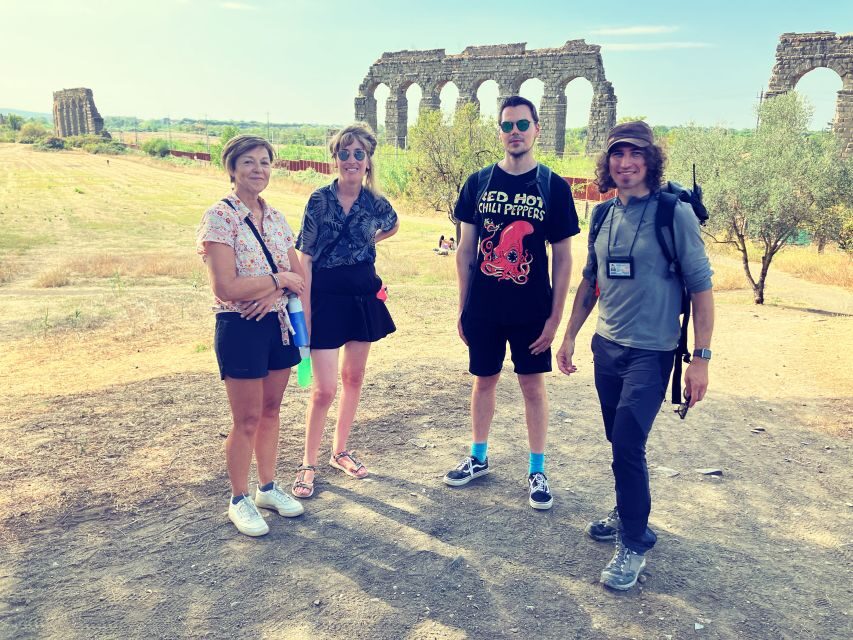
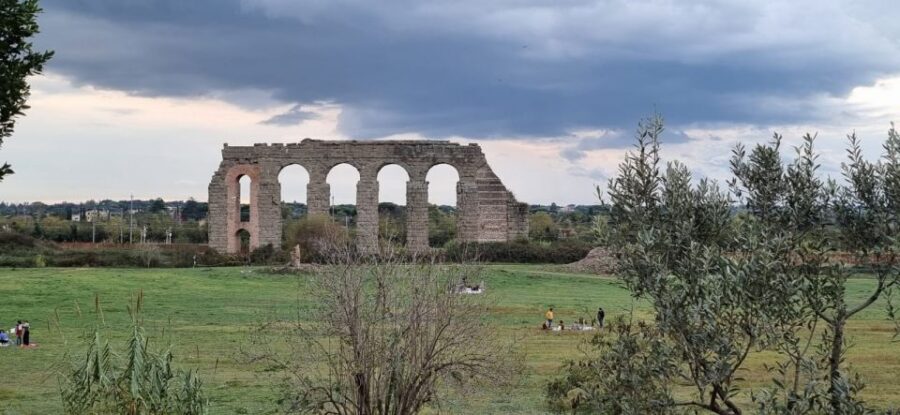
Now you’re at the heart of it: the Parco degli Acquedotti. The park’s main magic is the mix—ancient architecture and real nature in the same frame. You see stonework that once carried water, while the surroundings look like the land has been doing its own thing for a long time.
On good-weather days, there can be a mountain backdrop, which makes the whole aqueduct corridor look even more dramatic. Even without that, the long lines of the aqueduct remain the star. They guide your eyes, and they make you feel the distance—like you’re seeing a system, not just a monument.
You’ll also learn the history behind the aqueducts and how they changed life in Rome. The core idea is simple and powerful: Roman engineering solved a basic problem—reliable water—and that solution shaped how people lived, grew cities, and built communities. Walking there turns a concept into something physical.
Sal, the guide: conversation that stays useful
Sal is the name you’ll hear, and it’s not just for branding. People come away talking about how he connects a lot of dots without making it feel like a classroom. His approach blends history, fauna and flora, and engineering—so you’re not only hearing about stones, you’re also noticing what lives around those stones.
It’s also the kind of guiding that respects the group. In hot weather, the focus on shade and water breaks makes a difference. You feel the tour is paced for real people doing real walking, not just for a theoretical “average guest.”
And if you enjoy guides who can talk naturally, Sal’s style is built for that. One reason people rave (in the best way) is that the tour feels like a guided walk you’d happily keep chatting on, not a strict script you’re forced to follow.
What the 3-hour time frame really means
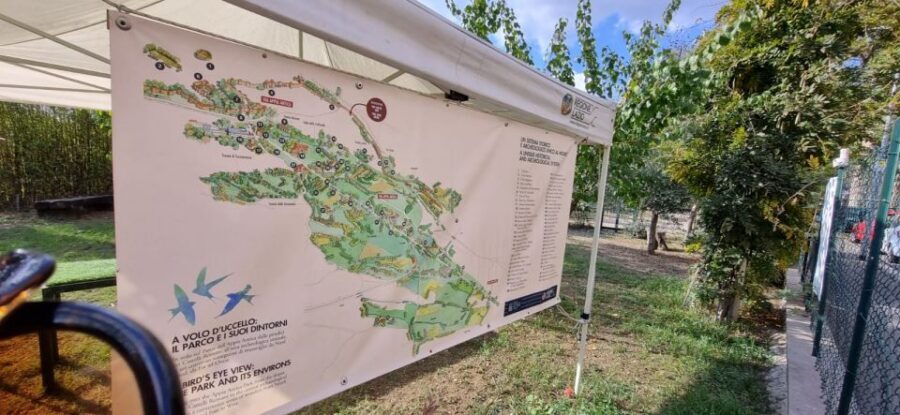
Three hours sounds short until you remember it includes guidance, stops, and at least one café pause. This walk is about 9 km / 5.5 miles on uneven terrain, so your time is going to be spent moving, not waiting.
That also means you should manage your expectations. You’re not touring Rome like you’re reading a guidebook cover-to-cover. You’re getting a concentrated dose of one specific theme—aqueducts and their environment—plus a city-to-park transition that most day trips miss.
Because it’s a small group capped at 10 participants, you’ll typically get a more personal experience and easier pacing. If you like photos, you’ll also get time to stop, look up, and frame shots without feeling like you’re constantly sprinting to catch up.
Price and value: what $53 buys you
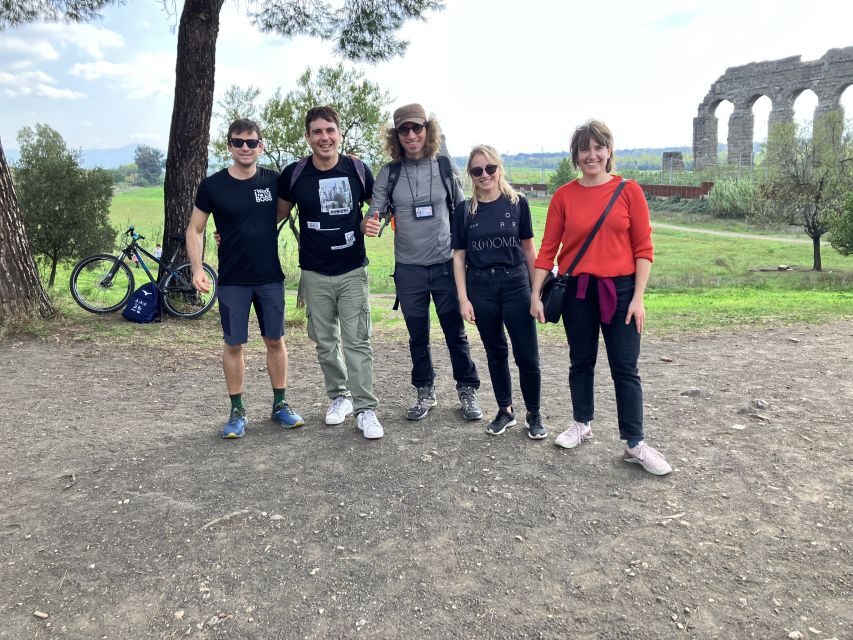
At $53 per person for about 3 hours with a professional English-speaking guide, the value comes from three things: interpretation, logistics, and access to the “in-between” spaces.
First, you’re not just walking in the park—you’re getting guided explanations of the aqueducts and how people historically used them. Second, the hike is one-way with a real route through different neighborhoods, so you experience more than the park alone. Third, small group size keeps the hike comfortable enough to actually enjoy the scenery rather than survive it.
If your goal is to see aqueducts but you also want the why—not just the what—this price makes sense.
Difficulty and who should consider skipping
This hike is rated moderate and includes uneven terrain. You’ll cover about 9 km, and you should show up with comfortable walking or hiking shoes. Sandals and flip-flops are not allowed, and on or after rainy days, you’ll especially feel why the shoe advice matters.
It’s also not suitable for:
- wheelchair users
- people with heart problems
- people with respiratory issues
- people over 95 years
On kids, the rule is that children must be 14+ and accompanied by adults. If you’re traveling with younger kids, this likely won’t fit your schedule.
What to bring: simple gear that makes the day better
The tour gives clear guidance, and you should take it seriously. Your basics:
- 1.5 liters of water
- comfortable walking shoes (hiking shoes are best, especially after rain)
- clothing suited for an urban hike
Recommended extras:
- raincoat
- sunscreen and a hat (sun and rain both matter)
- a comfortable backpack
- trail snacks
Optional:
- hiking poles
- electrolytes
- sunglasses
This is one of those walks where small prep pays off. If you show up under-shod, under-hydrated, or under-dressed, the Roman aqueduct views won’t fix that.
Weather: rain or shine, and how to handle it
The hike runs rain or shine. That doesn’t mean miserable for everyone, but it does mean you should dress for damp ground and changes in light.
If the weather is nice, you’re more likely to get that mountain backdrop. If not, you still get the aqueduct corridor—and those close textures can be especially interesting in softer light. Either way, your job is to wear shoes that can grip and clothes that won’t trap you in sweat.
Should you book this hike?
Yes, if you want a Rome outing that feels local and practical—not just another set of famous ruins. This is a strong choice when you care about how the city worked: how aqueducts supported life, how the land around them changed over time, and how nature and stone share space.
You might skip it if you can’t comfortably walk about 9 km on uneven ground, you need wheelchair access, or you’re sensitive to heat. Also, because it’s one-way from Pigneto to Giulio Agricola, make sure you’ve planned your ride back before you commit.
If you do book, come ready to walk, bring the water, and expect a guide-led experience that mixes Roman engineering with real nature—with Sal bringing it all together in an easy, conversation-friendly way.