REVIEW · HIKING & TREKKING
Free Urban Trekking with an Archaeologist
Book on Viator →Bookable on Viator
Rome looks 2,000 years older.
This 3D phone walk uses augmented reality to show the Colosseum and Roman Forum, then pairs it with street-level archaeology from the guide Anastasia. I love how the route mixes obvious icons with quieter corners like the Jewish Ghetto, Tiber Island, and Testaccio, so you feel like you are learning Rome, not just scanning it. I also like that the stops are short and paced well for picture breaks, with time to ask questions as you go.
The only real catch is physical effort. The route includes uphill and downhill sections, so bring flat, comfy shoes and plan for a bit of climbing, especially around the Aventine.
In This Review
- Key takeaways before you go
- Price and logistics for this 10-person archaeologist trek
- Teatro di Marcello: the theater that feels like a medieval castle
- Ghetto Ebraico di Roma: Jewish Quarter streets, ancient form, and real food energy
- Isola Tiberina: legends on the Tiber’s small island
- Bocca della Verità and Santa Maria in Cosmedin: truth test meets St. Valentine
- Foro Boario: early temples, marble that survives, and why it matters
- Aventine’s Giardino degli Aranci: the Orange Garden view and the St. Peter’s trick
- Buco della Serratura: the Keyhole of the Knights of Malta in a state-within-a-city
- Testaccio: a real Roman neighborhood with market life and a mystery hill
- Piramide Cestia: Egypt-style architecture in Rome’s one surviving pyramid
- How to get the most from the phone AR and the guide’s storytelling
- Who this Rome walking tour is best for
- Should you book this archaeologist-led Rome trek?
- FAQ
- How much does the tour cost?
- How long is the tour?
- Is the tour offered in English?
- What is the maximum group size?
- Do I need a mobile ticket?
- Where is the meeting point and when does it start?
- Does the tour end at the same place?
- What kind of physical fitness do I need?
- What should I bring with me?
- What happens if the weather is bad?
- Can I cancel for a full refund?
Key takeaways before you go
- 3D augmented reality on your phone brings the Colosseum and Roman Forum into focus while you walk.
- Led by an archaeologist named Anastasia with a max group size of 10 people.
- Short stops (about 15–30 minutes each) keep you moving and reduce museum fatigue.
- Fun Rome stories, including fish-tax-style trivia and talk about marble recycling.
- You hit major areas plus lesser-known streets like the Jewish Ghetto and Testaccio.
- You get hands-on moments at Bocca della Verità and a view-based payoff at Giardino degli Aranci.
Price and logistics for this 10-person archaeologist trek
For $3.61 per person, you are mostly paying for a guided experience—an archaeologist leader plus the phone-based augmented reality content. The good news: the listed stops are marked free admission, so you are not stacking ticket costs on top of the walk. The duration is about 3 to 4 hours, and that length works well in Rome, where “one more thing” can turn into a long, late-day stumble.
This runs in English with a mobile ticket, and it’s limited to 10 travelers. The meeting point is at Gusto Massimo Bar Bistrò di TIZIANO DI M. E. F. S.r.l., Via del Circo Massimo 5a, 00153 Roma. It starts at 10:00 am and ends in a different location, so check your map before you start the walk.
Because the tour includes uphill and downhill sections, moderate fitness is recommended, and good shoes are non-negotiable. Bring sun protection (hat, sunglasses, sunscreen in summer) plus water. And if weather turns bad, the guide can change or cancel—then you’ll be offered a different date or a full refund.
You can also read our reviews of more hiking tours in Rome

Teatro di Marcello: the theater that feels like a medieval castle
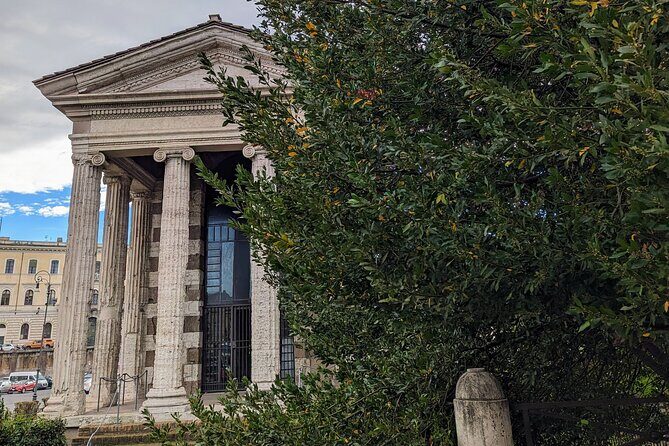
Teatro di Marcello is the first stop, and it’s a smart warm-up. You already know Roman amphitheaters and gladiators; here you get a different kind of building: a theater for actors and stage decorations. The best part is the look. The structure gives you that unexpected, castle-like medieval vibe, and the guide explains what you are seeing and why it ended up this way.
This is also where the tour’s “Rome in layers” theme clicks. You are standing in a place that still carries its Roman form, but the surroundings make it feel like a different era. It’s a quick 20-minute stop, so you get the context without getting stuck in one spot for ages—ideal early in the morning when your legs still feel fresh.
If you love architecture details, this stop rewards close looking. If you’re expecting a long, ticketed interior, manage expectations: this is a walking history lesson centered on what you can observe outside.
Ghetto Ebraico di Roma: Jewish Quarter streets, ancient form, and real food energy
Next you step into the Ghetto Ebraico di Roma, a neighborhood shaped by centuries of community life. The focus here is how ancient architecture and Jewish cultural identity survived and adapted, with a medieval charm you can feel in the streets. You’ll get about 20 minutes to walk, listen, and orient yourself in a part of Rome that many visitors skip after they finish the big-name sights.
What I like about this stop is the balance. It’s not only “facts on stone.” It’s also about how the neighborhood works today—especially around food. Since Rome’s best “history” is often how people keep living in the same places, this stop makes the past feel connected to lunch plans.
Practical tip: wear shoes that handle uneven pavement. The streets can be compact and busy, and you’ll want your footing while you pause for photos and explanations.
Isola Tiberina: legends on the Tiber’s small island
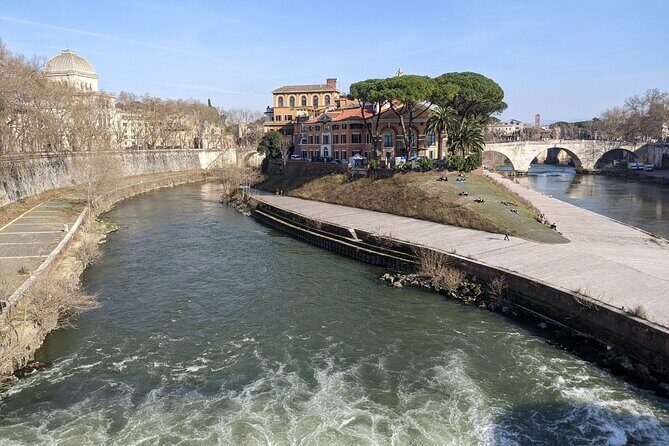
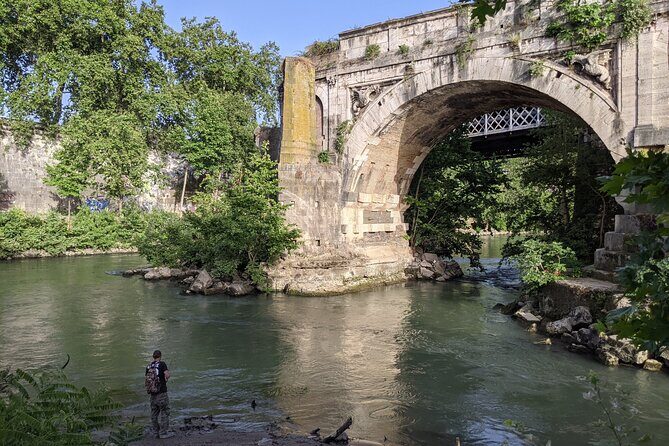
Isola Tiberina is one of those places that makes Rome feel playful and mythic. You’re on a tiny island in the Tiber, and the guide builds in the legends and significance tied to the city’s earliest inhabitants. There’s even a wink at the idea that new true Romans are born here every day—cheesy, yes, but it lands because it reminds you that Rome’s history includes people, not just buildings.
This stop is 20 minutes, which is just enough time to get the story and get oriented to the river setting. The point isn’t to linger like a beach day. It’s to understand why this spot mattered, and why it still feels distinct from the rest of the city.
If you’re in Rome on a hot day, this can be a nice breathing break. You’re not trapped in a museum room, and the Tiber air can help.
Bocca della Verità and Santa Maria in Cosmedin: truth test meets St. Valentine
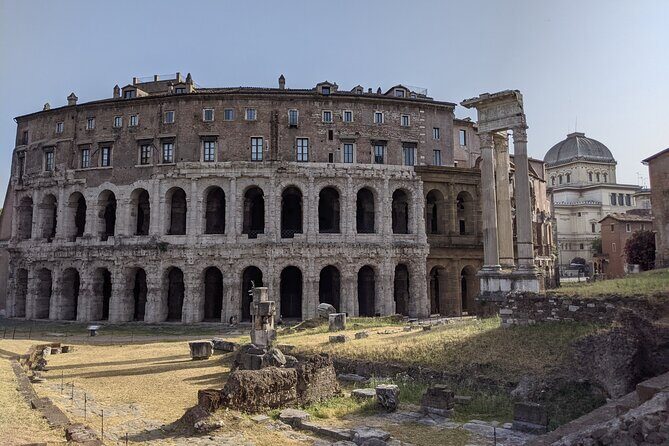
Then you hit Bocca della Verità, famous for its truthfulness ritual. You’ll have about 20 minutes here, enough time for the classic moment and the surrounding context.
Right next to that is the medieval church of Santa Maria in Cosmedin, where the tour notes that relics of St. Valentine rest. This is the kind of stop that works even if you are not a hardcore religious-history person. The setting is photogenic, the story is approachable, and the guide connects the medieval layer to what came before.
One small consideration: expect some foot traffic around the area. The tour keeps things moving, but you’ll still want to be patient as people take turns at the famous spot.






Foro Boario: early temples, marble that survives, and why it matters
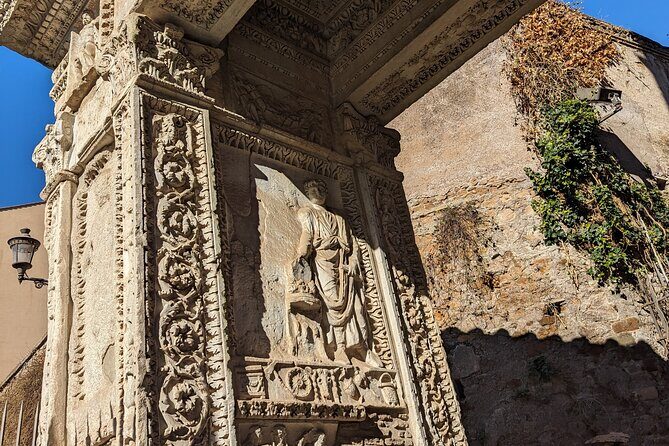
At Foro Boario, you shift into the early Roman world. The walk focuses on typical early Roman temples and includes a look at the first temple in marble that is still well-preserved. The guide also shares why the marble has held up so well—one of those details that sounds like trivia until you realize it explains how Rome built to last.
This stop is about 20 minutes, and it’s a good time to slow down. You can use the story to “read” the building materials around you, instead of just staring at one facade.
For value, I like that this section isn’t only about big-ticket landmarks. It’s where you learn Rome’s engineering logic in plain language. The guide also threads in entertaining connections—like conservation and recycling themes—so it feels like a living city, not a dead one.
Aventine’s Giardino degli Aranci: the Orange Garden view and the St. Peter’s trick
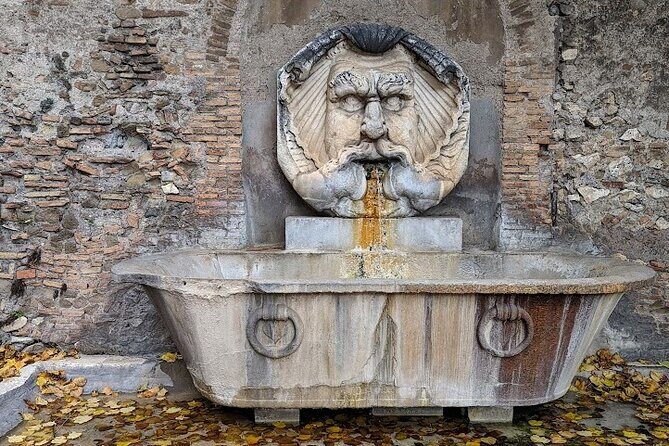
Now for one of the most payoff-heavy stretches: Giardino degli Aranci on the Aventine Hill. You ascend, you get the panoramic outlook, and you deal with one of Rome’s best-known optical illusions. As you approach, St. Peter’s Basilica seems to shrink. The guide explains the effect, and suddenly a “photo trick” becomes a lesson in perspective and why you should not trust your eyes.
This stop is 20 minutes, which is perfect for a couple of photos and a moment to breathe. You’ll be able to connect this view with what you’ve seen earlier—how each hill or river bend shaped the city’s growth.
Keep an eye on the shade. If the sun is strong, this can be warmer than it looks from street level. Sunscreen and a hat aren’t optional here.
Buco della Serratura: the Keyhole of the Knights of Malta in a state-within-a-city
Next is one of my favorite kinds of Rome moments: a small opening with a big story. At Buco della Serratura, you peer through the keyhole of the Priory of the Knights of Malta. What you see is linked to the Sovereign Military Order of Malta, described on this tour as maintaining its own sovereign territory within the heart of Rome—a unique state within a state.
This stop is about 20 minutes, and it’s built around curiosity. You do not need special context to enjoy it; the guide sets the scene as you wait your turn at the keyhole and explains why this odd political setup matters.
Practical note: line-of-sight means you’ll likely stand still for a moment. If you struggle with standing for long periods, use this time to stay hydrated and adjust your clothing layers.
Testaccio: a real Roman neighborhood with market life and a mystery hill
At Testaccio, the tour turns the volume down from the main tourist pull. The point is to escape the crowds and experience Rome as lived-in: ancient history meeting modern life in an authentic neighborhood.
You’ll have about 30 minutes here, which helps because this is not a “look and leave” stop. You can walk through the market area, take in colorful street art, and learn about a mysterious hill that holds a secret from Rome’s ancient past. The guide’s job is to connect those physical details to the bigger story, so your brain stops treating it like background noise.
This is also where the tour feels most adult-friendly. If you enjoy people-watching, casual street atmosphere, and normal everyday rhythms, Testaccio delivers.
Piramide Cestia: Egypt-style architecture in Rome’s one surviving pyramid
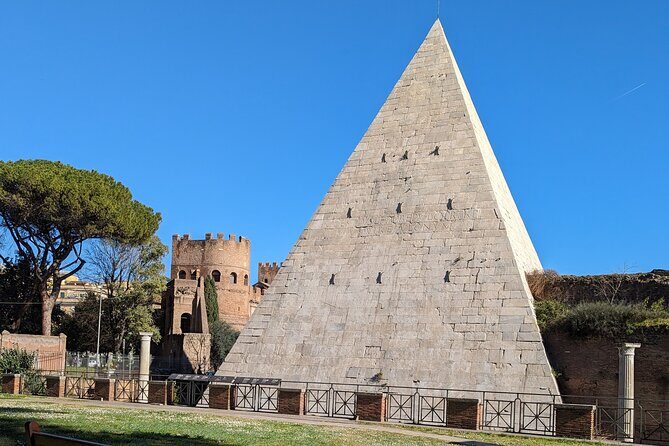
To close, you visit Piramide Cestia, a standalone pyramid that survives as one of Rome’s rare monuments tied to Egyptian influence. It’s described as the lone survivor of Rome’s fascination with Egyptian culture, once part of a larger set of similar structures. You’ll learn about the taste of a wealthy Roman magistrate and how this fits the city’s wider habit of mixing styles.
This stop is shorter—about 15 minutes—so treat it like a final punctuation mark. Look at the shape, then let the guide’s explanation make the architecture feel less random.
If you want one last photo before your walk ends, this is an easy spot to grab it. If you are tired, it’s short enough that you can still enjoy it without feeling trapped.
How to get the most from the phone AR and the guide’s storytelling
The standout feature here is how the guide uses your phone to create 3D augmented reality views of the Colosseum and Roman Forum while you are walking. That means you can connect what is missing on the street level with what used to fill the city—like time-lapse, but in real time.
To make it work smoothly, I suggest you:
- Keep your phone charged before you start.
- Be ready to stand still briefly during AR prompts.
- Ask questions if something feels confusing; the guide is used to tailoring explanations on the fly.
The stories are also a big deal. You’ll hear entertaining details, including themes like fish-tax-style history and recycling that helps you understand how Romans thought about resources. Those anecdotes make the big names feel human.
And since the group is small (max 10), the guide can keep an eye on pace and timing. You should finish feeling informed, not rushed.
Who this Rome walking tour is best for
This tour is a great fit if you like city walking that mixes major sites with quieter areas. It works well for first-time visitors who want a smart introduction and for repeat visitors who are tired of doing the same photo circuit.
It’s also ideal if you enjoy archaeology explanations in everyday language, plus hands-on moments like Bocca della Verità and the keyhole at Buco della Serratura.
Skip it only if you hate walking hills or you want a fully ticketed, inside-the-monument day. This is a route with free admission stops and phone-based AR context, not a schedule packed with museum interiors.
Should you book this archaeologist-led Rome trek?
I’d book it if you want value, variety, and a guide who connects the dots between Roman structures and the neighborhoods around them. The price is low for what you get: an archaeologist leader, small group size, short stops, and phone 3D AR that helps you visualize the Colosseum and Roman Forum without getting stuck in a lecture hall.
I would hesitate only if you know you cannot handle a walking route with hills. If you can wear comfortable shoes and you’re okay with several short stops spread across central Rome, this is one of those experiences that makes the city feel freshly alive.
FAQ
How much does the tour cost?
The tour costs $3.61 per person.
How long is the tour?
It runs about 3 to 4 hours.
Is the tour offered in English?
Yes, it is offered in English.
What is the maximum group size?
The tour has a maximum of 10 travelers.
Do I need a mobile ticket?
Yes, the tour uses a mobile ticket.
Where is the meeting point and when does it start?
The meeting point is Gusto Massimo Bar Bistrò di TIZIANO DI M. E. F. S.r.l., Via del Circo Massimo, 5a, 00153 Roma. The start time is 10:00 am.
Does the tour end at the same place?
No. The activity ends in a different location.
What kind of physical fitness do I need?
You should have a moderate physical fitness level. The route includes uphill and downhill sections.
What should I bring with me?
You should bring a bottle or cup for water, wear flat and comfortable shoes, and plan for layered clothing and sun protection in summer.
What happens if the weather is bad?
The guide reserves the right to change or cancel due to weather. If it’s canceled because of poor weather, you’ll be offered a different date or a full refund.
Can I cancel for a full refund?
Yes. You can cancel up to 24 hours in advance for a full refund. If you cancel less than 24 hours before the start time, the amount paid is not refunded.