REVIEW · MUSEUMS
Vatican: Sistine Chapel and Vatican Museums Small Group Tour
Book on GetYourGuide →Operated by EcoArt Travel · Bookable on GetYourGuide
A trip to the Vatican gets easier fast. This small-group tour uses skip-the-line access and an English-speaking Vatican insider to help you move through the complex without wasting your precious time. I especially liked the small group size (10 max), which makes the guide’s explanations feel personal rather than rushed.
The biggest consideration is physical: this tour isn’t suitable if you can’t climb and descend stairs on your own. You’ll also be expected to follow strict dress and bag rules, so plan your outfit and packing accordingly.
In This Review
- Key things I’d circle before you book
- Skip-the-line Vatican entry that actually saves time
- Small-group size: why 10 people matters in the Vatican
- Meeting point details that keep things stress-free
- Your first glimpse: photo stop in Vatican City
- Courtyard of the Pigna: a huge ancient vibe in one stop
- Cortile del Belvedere: where the Vatican organizes masterpieces
- Gallery of Maps: power, geography, and art in one long room
- Gallery of Tapestries: slow down for texture and detail
- Cabinet of the Masks: a weirdly memorable, very human stop
- Raphael Rooms: paintings with an extra layer of meaning
- Sistine Chapel: quiet, awe, and rules you must follow
- Dress code, bags, and camera rules: don’t let policy steal your day
- Price and value: is $112.15 worth it?
- Who this tour fits best (and who should consider another option)
- Should you book this Vatican Museums and Sistine Chapel tour?
- FAQ
- How long is the tour?
- What is the group size?
- Does the tour include skip-the-line access?
- Is an English-speaking guide included?
- What are the main places you’ll see?
- Where do I meet the guide?
- What should I wear?
- Are photos allowed?
- Can I bring a backpack or large bag?
- What if the Sistine Chapel is closed?
Key things I’d circle before you book
- Skip-the-line entry to the Vatican Museums and Sistine Chapel area
- Up to 10 people for better guide attention and a calmer pace
- A Vatican insider guide who sets up the story before the quiet Sistine experience
- You hit the big rooms efficiently, from the Courtyard of the Pigna to the Raphael Rooms
- Photo rules are mostly relaxed—except inside the Sistine Chapel
- First Access option can get you in earlier for a less crowded start
Skip-the-line Vatican entry that actually saves time
The Vatican can feel like a maze when you’re stuck outside with everyone else. The value here is simple: you’re not spending your visit bargaining with long lines. With the tour’s “fastest-possible access,” you get to start sightseeing with your energy intact instead of losing your momentum to crowd control.
What makes this especially smart is how the plan matches the Vatican’s reality. The museums aren’t just one gallery—they’re a whole system of rooms. If you arrive late or start with long delays, you end up sprinting. Here, you’re guided through key sections in about 2.5 hours, which is a good window if you want the highlights without turning the day into a blur.
And because you’re in an English-speaking group with a guide, you’re not guessing what you’re looking at. The guide isn’t just reciting names; they give you context so the art lands with more meaning.
You can also read our reviews of more museum experiences in Rome


Small-group size: why 10 people matters in the Vatican
“Small group” can mean a lot of things, but here it’s capped at 10 participants. In the Vatican, that matters because the spaces you’ll be in are crowded even when everything is going smoothly. With a larger group, you tend to get dragged along at the back with no room to see. With 10 people, your guide can slow down when a room needs it.
You also get a better rhythm for questions. The guide’s role is important because once you reach the Sistine Chapel, talking is forbidden. So the tour’s approach is to front-load the understanding before you step into that strict quiet space.
One more practical benefit: a smaller group is easier to manage with the Vatican’s rules. You’ll be walking, stopping for photos, and moving through rooms where attire and bags can cause problems if you ignore the details.
Meeting point details that keep things stress-free
You’ll meet your guide on the steps at the corner of Via Tunisi and Viale Vaticano, directly in front of Via Tunisi 4. The representative should be holding a flag with the green EcoArt logo.
This is the kind of detail that sounds small until you’re standing in the wrong spot with a map that’s confidently wrong. Do yourself a favor: arrive early enough to spot the flag and get settled before your group starts moving.
The tour ends back at the same meeting point, so you don’t have to figure out how to get yourself across Vatican City afterward.
Your first glimpse: photo stop in Vatican City
Before the museums fully swallow you up, there’s a quick moment in Vatican City. You’ll have a short photo stop and then a guided introduction for about 10 minutes.
This early pause works well because it gets your bearings. Even if you’ve seen pictures for years, seeing the spaces in real scale makes the rest of the route feel less random. It’s also a nice breather before the museum flow picks up.
Courtyard of the Pigna: a huge ancient vibe in one stop
One of the first interior highlights is the Courtyard of the Pigna, often remembered for its dramatic scale and its connection to ancient Rome. You’ll have time for photos and a guided visit here, then you’ll move onward.
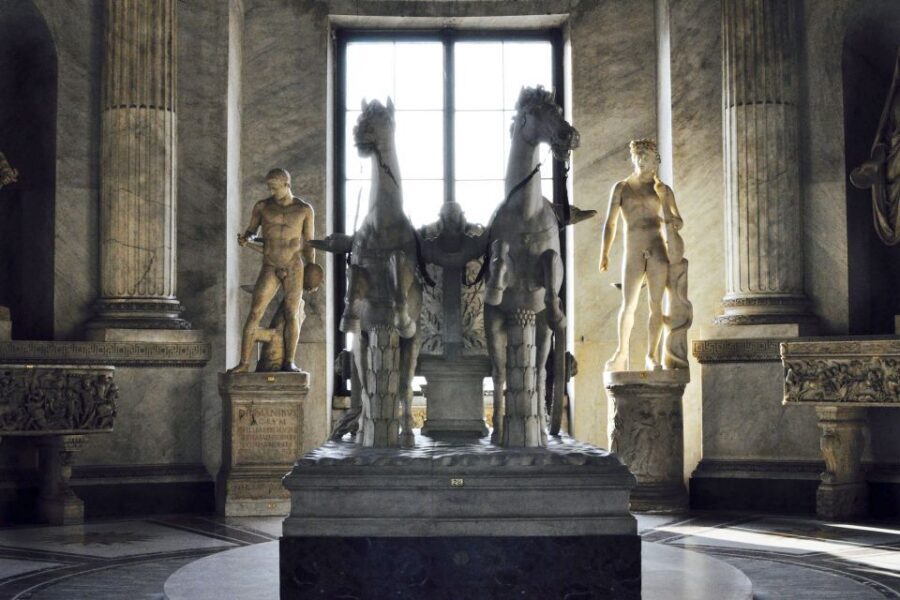
The draw of this courtyard is how it sets tone. The Vatican Museums aren’t only about Renaissance frescoes. They’re also about centuries of collecting and re-using classical forms. If you’re the type who likes to understand why a place looks the way it does, this stop helps you catch the thread early.
Practical tip: you’ll be on your feet. Comfortable shoes matter because even short stops can include uneven surfaces and standing while the group listens.




Cortile del Belvedere: where the Vatican organizes masterpieces
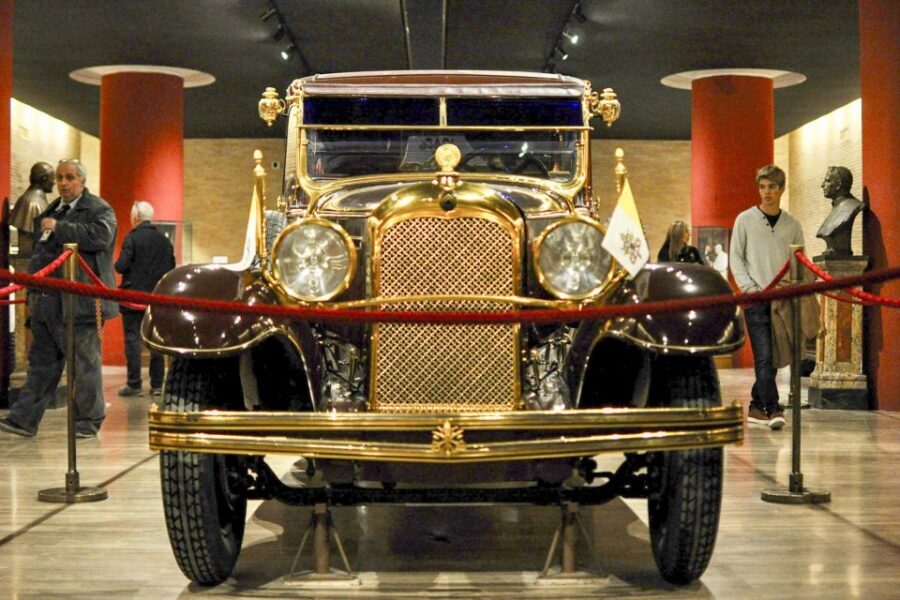
Next up is the Cortile del Belvedere, another courtyard that helps you understand how the Vatican turns architecture into a museum tool. The guide points out what you should notice, and you’ll have time to look around and take photos.
The main benefit here is pacing. Courtyards give your brain a reset. You can step back, orient yourself, and then walk into more enclosed galleries with your sense of direction returning.
A small caution: because you’ll be moving from courtyard to courtyard, you don’t want to treat this tour like a casual wander. The value is in the guided flow.
Gallery of Maps: power, geography, and art in one long room
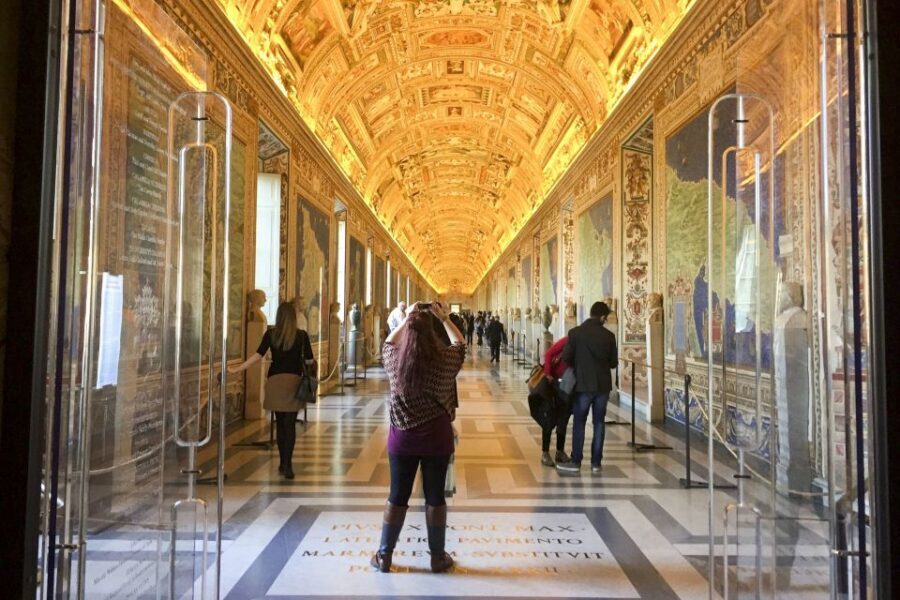
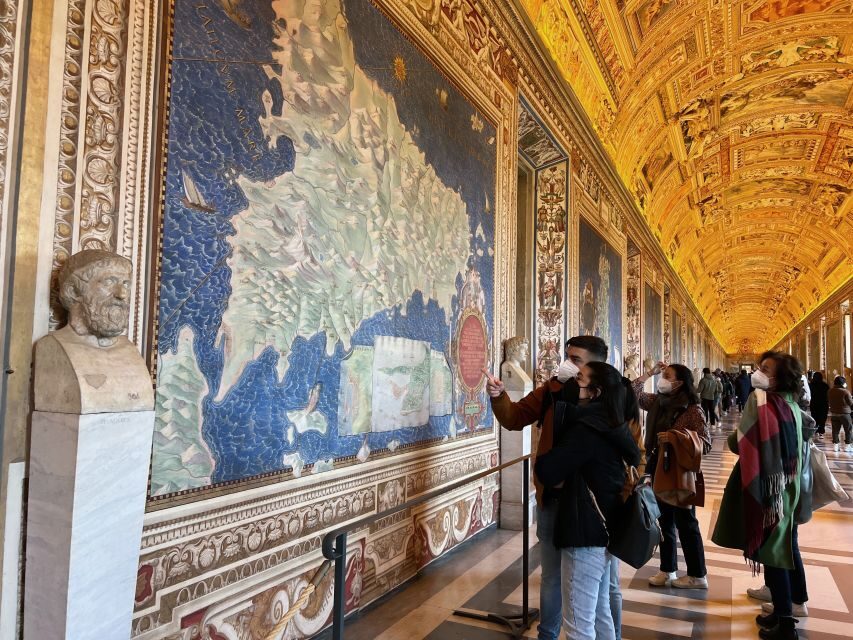
Then you get to one of the most distinctive museum spaces on the route: the Gallery of Maps. You’ll spend about 30 minutes here with guided time plus photo stops.
What’s cool about this room is that it mixes art and political storytelling. You’re not just looking at pretty things—you’re looking at how the world was imagined, cataloged, and presented at a moment in history when maps were also statements of influence.
Because the guide is there, you’ll likely understand what the room is doing beyond the obvious visuals. And when the guide’s narration connects the geography to the Vatican’s broader role, the gallery becomes more than a “check it off” stop.
Gallery of Tapestries: slow down for texture and detail
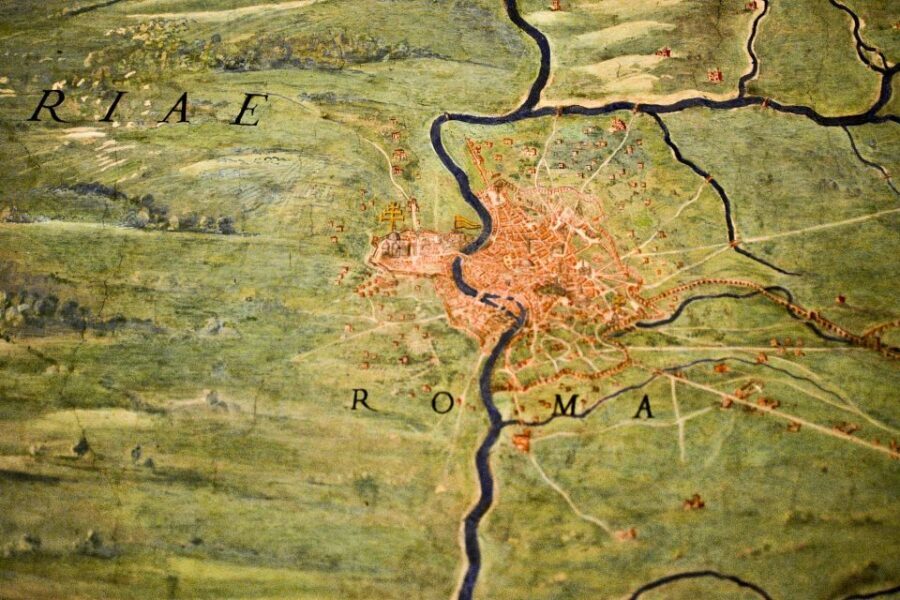
After the maps, you’ll move to the Gallery of Tapestries for about 10 minutes. It’s shorter than some other stops, so don’t expect to take your time like you would in a quiet chapel during your lunch break.
Still, it’s worth the attention. Tapestries are designed to be seen up close, and the room’s setup encourages that “look, then look again” feeling. The guide’s context helps you notice patterns and themes instead of just admiring craftsmanship at a distance.
If you’re rushing, you’ll miss the point. Try to let this be the place where you take one extra minute.
Cabinet of the Masks: a weirdly memorable, very human stop
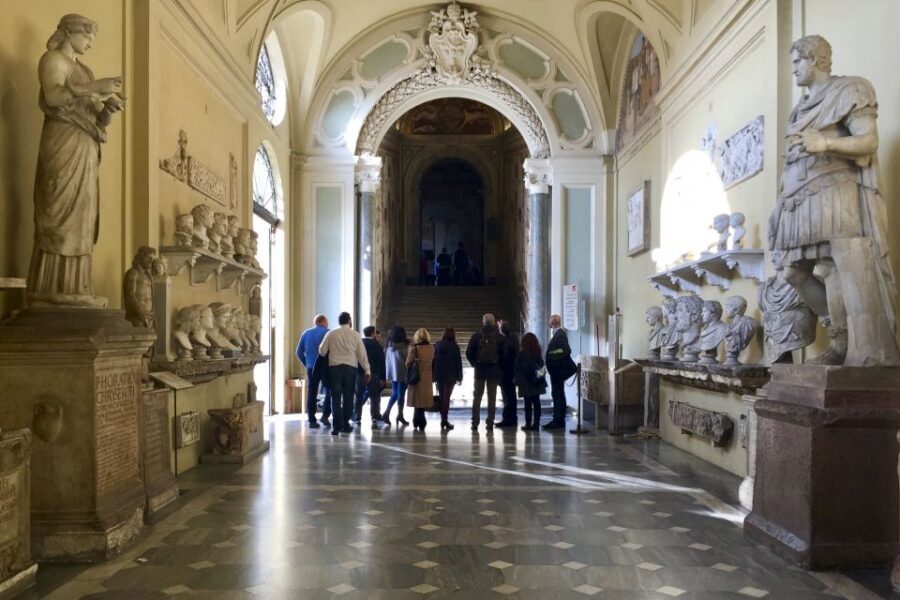
The Vatican Museums Cabinet of the Masks is next. You’ll have a guided visit (about 10 minutes) plus a photo stop.
This is one of those collections that surprises people. Masks can feel like a side show until you understand what they represent—performance, identity, theatrical tradition, and symbolism. Even if you don’t read every label, a guide can give you enough context to make the room click.
This is also where the small-group format really shows: the guide can point out what matters fast, without the group getting lost.
Raphael Rooms: paintings with an extra layer of meaning
The Raphael Rooms are a major anchor of this tour, with a guided visit and walk time built in. If you’ve ever looked at Vatican art online, there’s a good chance Raphael is part of what you’ve seen.
These rooms work because they’re not just “famous ceilings.” They’re structured spaces meant to be experienced in sequence, and the guide helps you understand what you’re seeing—especially how themes connect across rooms.
What I like here is that you’re not left alone with a crowd and a loud audio guide. With a live guide, you can pick up the themes and symbolism that make Raphael’s work more than just skill.
Sistine Chapel: quiet, awe, and rules you must follow
Finally, you reach the big one: the Sistine Chapel. The tour includes a guided explanation before you enter because once you’re inside, talking is forbidden.
That pre-chapel setup is not a “nice-to-have.” It’s the difference between staring at paintings like a poster and actually understanding what you’re looking at: who’s represented, what’s being emphasized, and why the scene is arranged the way it is.
Photo-wise, the rule is clear: photos are allowed in almost all museum rooms, but the Sistine Chapel itself is the exception. If you bring a professional-grade camera or anything bulky, you risk issues at entry. Think simple and follow the rules.
Important timing note: the Sistine Chapel may be closed from April 28 until the end of the conclave due to the passing of Pope Francis. The tour would still run, but it would not include the Sistine Chapel during that closure period. If seeing the Sistine Chapel is your top priority, check the opening status before you commit.
Dress code, bags, and camera rules: don’t let policy steal your day
This is a practical tour, so the museum rules matter. The big ones you should plan for:
- Dress code: shoulders and knees must be covered to enter the Vatican Museums.
- No shorts, short skirts, or sleeveless shirts.
- No large bags or backpacks.
- No professional cameras inside.
- No bulky or clearly professional photo/video gear (tripods and large videocameras aren’t permitted).
It’s easy to think you’ll be able to “make it work,” but Vatican entry staff tend to be firm. If you’re unsure what counts as large, assume it might be rejected—pack light.
Also, bring a passport or ID card. You’ll want it for identification.
And yes, there are stairs. This isn’t described as suitable for mobility impairments or wheelchair users, so be honest with yourself about your stamina.
Price and value: is $112.15 worth it?
At $112.15 per person, this isn’t the cheapest way to do the Vatican. But it’s also not priced like a luxury fantasy. For me, the value case is strongest if you care about time and interpretation.
You’re paying for three things that are hard to replicate on your own:
- Skip-the-line access (time savings in a high-demand site)
- An English-speaking insider guide (context changes how the art lands)
- Small group limits (10 max means less waiting and less getting separated from the group)
If you were planning to wander solo, you’d need to handle timing, crowd flow, and figuring out what to prioritize. Here, that work is done for you, and you still see a meaningful slice of the museums in 2.5 hours.
If you’re the kind of visitor who loves a free-form route and doesn’t want structure, you might feel rushed. But if you want a smart, efficient visit with a guide explaining the big stuff, this is a solid use of money.
Who this tour fits best (and who should consider another option)
This experience fits best if:
- You want high-impact highlights without losing half your day in queues.
- You like art history context delivered in plain language.
- You prefer a manageable group size.
- You can handle walking and stairs independently.
You should think twice if:
- You need wheelchair access or have mobility limits that affect stair climbing.
- You hate strict museum rules around clothing and bags.
- You’re hoping for a long, slow museum drift with lots of unstructured time.
Should you book this Vatican Museums and Sistine Chapel tour?
I’d book it if you’re aiming for a clear plan, fewer crowds, and strong guidance—especially with the small-group cap. The route covers key rooms that many first-timers feel they must see, and the guide-led setup for the Sistine Chapel is exactly how to make that moment more than a quick photo opportunity.
On the other hand, if your schedule is tight around potential Sistine Chapel closures or if stairs are a problem for you, you’ll want to adjust your plans. For everyone else who can follow the rules and likes expert storytelling, this is a practical, good-value way to tackle one of Europe’s toughest ticket lines.
FAQ
How long is the tour?
The tour duration is listed as 2.5 hours. Starting times can vary, so you’ll want to check availability.
What is the group size?
The tour is a small group limited to 10 participants.
Does the tour include skip-the-line access?
Yes. It includes the fastest-possible access to the Vatican Museums and Sistine Chapel, helping you avoid the ticket line.
Is an English-speaking guide included?
Yes. The tour includes an English-speaking Vatican insider guide.
What are the main places you’ll see?
You’ll visit key areas of the Vatican Museums and then the Sistine Chapel. Stops listed include the Courtyard of the Pigna, the Hall of the Maps, the Gallery of Tapestries, the Cabinet of the Masks, the Raphael Rooms, and the Sistine Chapel.
Where do I meet the guide?
Meet your guide at the steps on the corner of Via Tunisi and Viale Vaticano, in front of Via Tunisi 4. The representative holds a flag with the green EcoArt logo.
What should I wear?
To enter the Vatican Museums, your shoulders and knees must be covered. Shorts, short skirts, and sleeveless shirts are not allowed.
Are photos allowed?
Photos are permitted in almost all rooms of the Vatican Museums, except for the Sistine Chapel. Inside, avoid professional or bulky equipment.
Can I bring a backpack or large bag?
No. Luggage or large bags are not permitted, and backpacks are also not allowed on this tour.
What if the Sistine Chapel is closed?
The information provided states that the Sistine Chapel will be closed from April 28 until the end of the conclave. Tours will still run, but they will not include the Sistine Chapel during that period.