REVIEW · PRIVATE
Rome: In the Footsteps of Bernini Private Tour with Transfers
Book on Viator →Operated by Eyes of Rome · Bookable on Viator
Bernini is everywhere in Rome. This private 3-hour route connects the dots between his fountains, sculpture, and church art so you stop treating Baroque Rome like a random photo stop. I like the official private guide who turns familiar landmarks into a story you can actually follow, and I like that hotel pickup and drop-off are handled for stays within the Aurelian Walls. The main drawback to weigh: at $375.97 per person, it is a splurge versus self-guided wandering, so it makes the most sense if you enjoy having someone explain what you’re seeing.
The pace stays tight, which is great for focus, but it also means you’ll want comfortable shoes and a cooperative attitude toward stairs and church rules. You’ll hit major Bernini territory around Ponte Sant’Angelo, Piazza Navona, and key churches tied to his angels and sculpture. One practical consideration: some monuments can be closed or under restoration during the Jubilee, so keep an eye on any last-minute messages.
In This Review
- Key Things You’ll Notice on This Bernini Route
- Why Bernini in Rome Makes More Sense With a Guide
- Hotel Pickup and Transfers: Smooth Start, Limited Radius
- The 3-Hour Plan: How the Stops Fit Together
- Ponte Sant’Angelo Angels: Where Bernini Meets Hadrian
- Piazza Navona and Bernini’s Fountain Impact
- Fontana dei Quattro Fiumi: Allegory You Can Actually Read
- Spanish Steps and the Barcaccia Fountain: Early Baroque Theatre
- Via della Mercede and Bernini Palace: Where Influence Lives Off the Main Stage
- Sant’Andrea delle Fratte: Two Angels, One Story
- Piazza Barberini and the Triton Fountain’s Dramatic Water
- Santa Maria della Vittoria and The Ecstasy of Saint Teresa
- Dress Code: The Rule That Can Make or Break Church Visits
- Price and Value: Is $375.97 Worth It?
- Who This Tour Fits Best
- Should You Book This Bernini Private Tour?
- FAQ
- How long is the Rome: In the Footsteps of Bernini Private Tour with Transfers?
- What is the price per person?
- Is hotel pickup and drop-off included?
- Are admission tickets included for the stops?
- Do I need to follow a dress code?
- Is this a private tour?
- What if monuments are closed during the Jubilee?
- Cancellation: can I get a refund?
Key Things You’ll Notice on This Bernini Route
- A private guide who can connect the dots across fountains, angels, and Baroque design
- Hotel transfers inside the Aurelian Walls so you spend less time herding yourself through Rome
- Big sights, short linger time that keeps you from getting stuck in a single square
- Indoor payoff at Santa Maria della Vittoria with The Ecstasy of Saint Teresa in the Cornaro Chapel
- Church dress code is enforced with shoulders and knees covered
Why Bernini in Rome Makes More Sense With a Guide
Bernini’s work can feel like sensory overload if you simply stroll from one attraction to the next. He designed for movement: water that flows like theatre, angels that look ready to step off stone, and chapels meant to pull your eyes to one exact moment.
On this private tour, you get a guided lens that helps you notice patterns quickly. That is the real value of doing a focused Bernini route in just a few hours: you don’t just see Baroque. You learn why it was built to work on people.
This is also a smarter way to spend limited time. Rome is full of famous names, but it’s easy to miss the smaller Bernini connections that make the larger masterpieces feel intentional rather than accidental.
You can also read our reviews of more private tours in Rome

Hotel Pickup and Transfers: Smooth Start, Limited Radius
Hotel pickup and drop-off are included, but only for accommodations within the Aurelian Walls. That matters because Rome’s center is huge on foot and tricky to navigate with luggage or heat, and transfers can remove a lot of daily friction.
If your hotel is within that boundary, you can show up, meet your guide, and get moving without figuring out the “right” station or bus route. If you’re farther out, you may need to handle getting to the meeting point on your own since transportation between sites is not included.
Also plan on some walking between stops. The tour does not list vehicle transport between locations, so you should treat this as an organized walk with stops, not a trolley ride.
The 3-Hour Plan: How the Stops Fit Together
This tour runs for about 3 hours, and it is structured as a sequence of high-impact Bernini moments. Many of the stops are listed with short on-site time, often around 10 to 20 minutes, which keeps the day moving but still gives you time to pause, ask questions, and understand what you’re looking at.
A lot of these sites are outdoors and free to enter as noted for the route. The inside moments you do get are chosen carefully, so you’re not burning time on random church doors.
Here’s how the route reads as a whole: you start at Rome’s angel entrance, move into Baroque public drama in the squares, step into stair-and-fountain theatre near Piazza di Spagna, then head toward churches where Bernini’s influence stays visible even after the original context changes.
Ponte Sant’Angelo Angels: Where Bernini Meets Hadrian
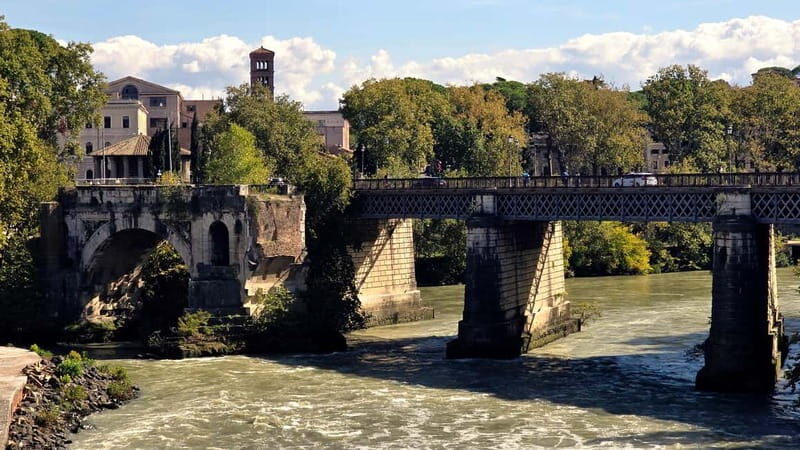
Your first stop is Ponte Sant’Angelo (St. Angelo Bridge), originally built by Emperor Hadrian in 134 AD. The star detail for this tour is that the angels along the bridge were overseen by Gian Lorenzo Bernini in the 17th century.
Even if you’ve seen photos of the statues, they land differently in person. From a distance they look decorative; up close they feel part of a religious and emotional sequence. Your guide’s job here is to help you read what the angels are doing in the story—why they crown the bridge and why that matters as you move through Rome.
You’ll usually only spend about 15 minutes here, so my advice is to take the first minute to pick one direction and commit to it: look, listen, then look again. It’s the best way to turn a short stop into real understanding.
Piazza Navona and Bernini’s Fountain Impact
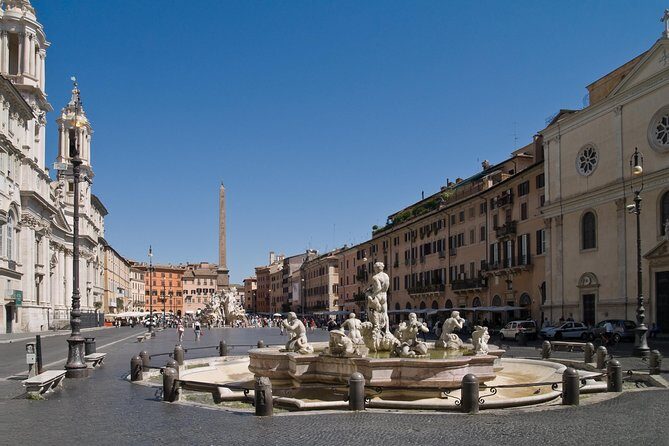
Next comes Piazza Navona, one of Rome’s most famous Baroque squares. The key connection for Bernini fans is that the piazza is known for fountains linked to Bernini, while nearby architectural masterpieces are associated with Francesco Borromini. The shape of the square also follows the footprint of an ancient Roman stadium, which helps you feel Rome’s layers under your feet.
In about 15 minutes, you can appreciate the big idea: Baroque Rome didn’t just decorate old spaces—it treated them like stages.
A practical note: this square can be busy at peak times. A private guide helps because you don’t just stand where everyone stands. You can position yourself for better sightlines and make sense of what’s in front of you without playing “where is the main viewpoint?”






Fontana dei Quattro Fiumi: Allegory You Can Actually Read
At Fontana dei Quattro Fiumi, the guide focus is on allegory—those statues representing four major rivers from different continents. Bernini’s Baroque style here isn’t only about drama. It’s about symbols and storytelling.
You’ll typically get around 15 minutes. That’s plenty if you use it like this: look at one river representation first, then let the guide connect it to why it’s placed here, then step back and check how the whole fountain works as one composition.
The best part is realizing how “art in public” was never neutral. It was meant to teach, impress, and make people linger.
Spanish Steps and the Barcaccia Fountain: Early Baroque Theatre
You’ll then head to the Spanish Steps, known for its sweeping design of 135 steps connecting Piazza di Spagna to Piazza Trinità dei Monti. Yes, it’s famous. But the more useful way to experience it is to watch how the spaces behave: it’s a built-in meeting point and a built-in viewing platform.
After that, you drop down to Fontana della Barcaccia, the boat-shaped fountain at the foot of the steps. It is attributed to Pietro Bernini and his son Gian Lorenzo Bernini. This one is special because it’s not just decorative: it commemorates the tragic flooding of the Tiber in 1598 and it supplies passersby with fresh drinking water.
This stop is listed at about 10 minutes, which means you should keep your eyes moving. Look at the “sinking ship” form, then look again at the water and stone relationship—Baroque artists were obsessed with making the material feel alive.
Via della Mercede and Bernini Palace: Where Influence Lives Off the Main Stage
You’ll pause on Via della Mercede, a street that holds a connection to Bernini in the heart of Rome’s Baroque world. This is one of those stops that might seem quieter than the squares, but that’s exactly why it works.
From a guide, you can learn how Bernini’s influence wasn’t limited to a single showpiece fountain. His ideas show up in how the city looks and functions, and that shows on streets like this where grand art is near, but not always the first thing your eye catches.
Then you visit the ancient Bernini Palace on Via della Mercede. The tour frames it as being deeply tied to Bernini’s life and work—formerly his residence—so it acts like a physical reminder that the art world behind Baroque masterpieces had an everyday address.
Short stop, high payoff if you like context.
Sant’Andrea delle Fratte: Two Angels, One Story
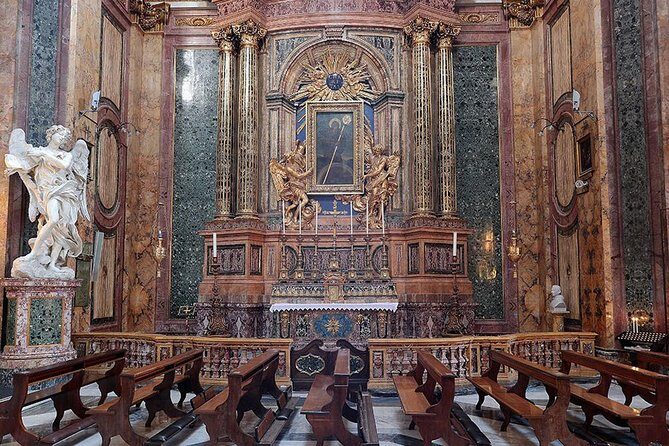
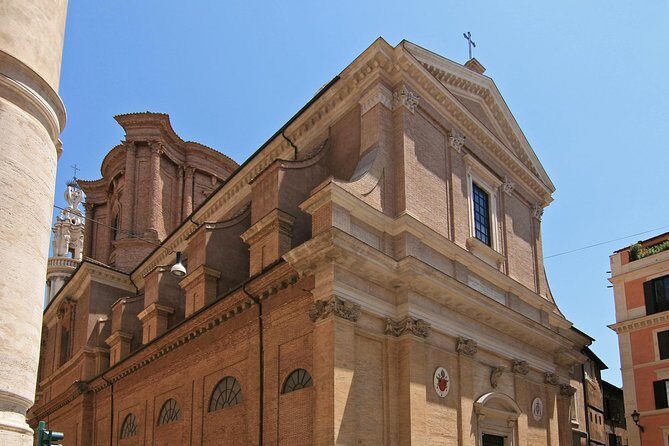
Next is Basilica di Sant’Andrea delle Fratte, a 17th-century church with Baroque details and a calmer interior mood than the surrounding streets.
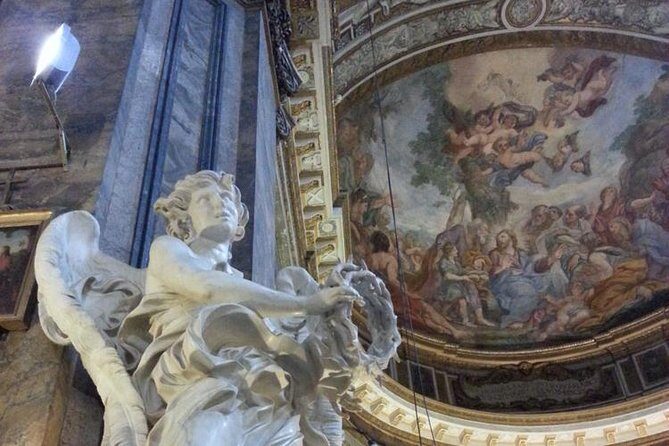
The standout link here is that the basilica houses two angel statues originally sculpted by Bernini for Ponte Sant’Angelo, later placed in this church. That’s a powerful way to understand Bernini’s work as adaptable: an artwork can belong to one location, then take on a new meaning when moved.
Plan for about 15 minutes. In a church, the biggest mistake is trying to “finish the photos fast.” Instead, take a moment to let the room settle you, then focus on the angel connection your guide highlights. It turns a quick visit into an earned one.
Piazza Barberini and the Triton Fountain’s Dramatic Water
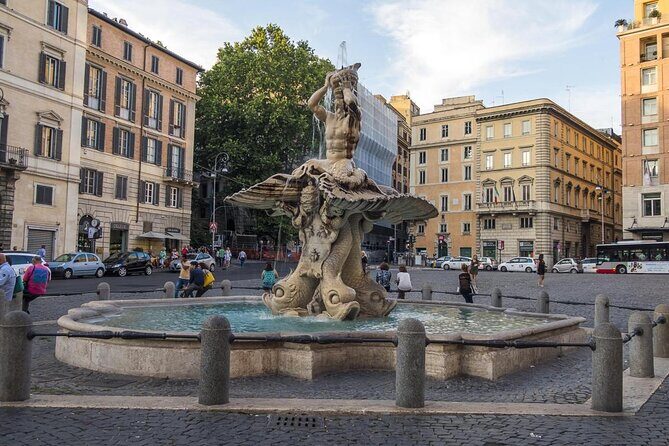
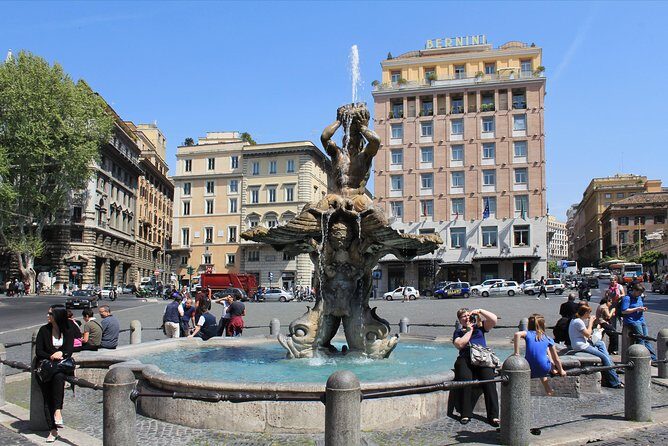
In Piazza Barberini, the center point is the Triton Fountain, commissioned by Pope Urban VIII. It’s a classic Bernini move: you get mythology, motion, and theatrical detail all at once.
The next stop is the Fontana del Tritone itself. It features Triton blowing water through a conch shell, supported by four dolphins. The effect is not subtle; it’s meant to command attention.
You’ll have around 10 minutes here. If you’re tempted to rush, don’t. Pick one angle where you can see the whole group, then rotate your position slightly. Water details are best caught by small shifts in viewpoint.
Santa Maria della Vittoria and The Ecstasy of Saint Teresa
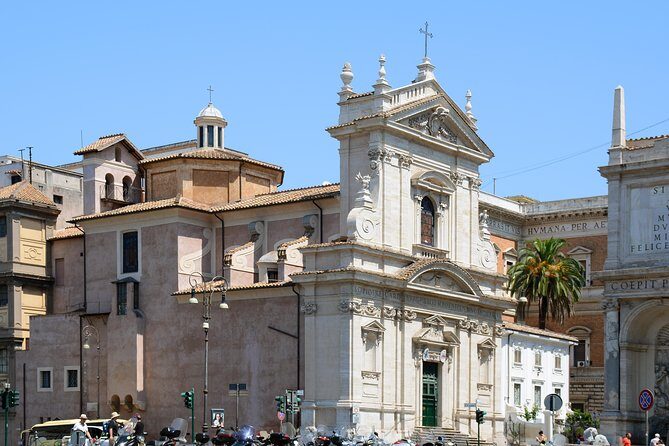
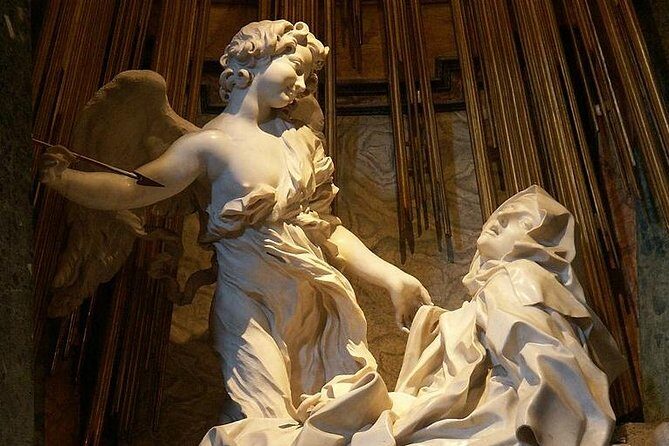
The final major art stop is Santa Maria della Vittoria, famous for housing Bernini’s Ecstasy of Saint Teresa in the Cornaro Chapel. This is the moment where the tour’s focus really pays off.
This church visit is listed at about 20 minutes. That extra time matters because Baroque sculpture is meant to be read like a scene. You’ll want time to understand the composition and why the chapel setting is part of the effect.
If you care about how art makes people feel something—wonder, tension, devotion—this is the stop that will stick in your memory after you leave the neighborhood. You’re not just looking at a famous piece. You’re seeing the stagecraft of Baroque religion.
Dress Code: The Rule That Can Make or Break Church Visits
This is a practical tour tip: a dress code is required for places of worship and selected museums. That means no shorts and no sleeveless tops. Your knees and shoulders must be covered for both men and women.
Rome in warm months can make this feel annoying, but it’s also simple. I recommend packing a light layer you can put on quickly. If you ignore the rule, you risk refused entry, and that can turn a well-planned tour into a half-day of waiting.
Price and Value: Is $375.97 Worth It?
$375.97 per person is not a cheap afternoon. So you should only book this if you’ll use the guide time in a high-value way.
Here’s the value math that matters:
- You’re getting an official private guide for about 3 hours.
- You’re getting hotel transfers included if you’re within the Aurelian Walls.
- Many stops are listed with free admission tickets in the route schedule, so you’re paying mainly for expertise and timing, not entrance fees.
- You’re not doing this by map-and-museum roulette, which is a real time saver in central Rome.
If you prefer learning by yourself, this might feel overpriced. If you like having someone explain why Bernini made the choices he made, and you want to connect Ponte Sant’Angelo to Santa Maria della Vittoria without gaps, then the price starts to make sense fast.
Who This Tour Fits Best
This tour is a strong match if you:
- want a Bernini-focused Rome day rather than a general highlights tour
- enjoy asking questions and getting answers in plain language
- value private pacing over rushing between crowds
- are staying central enough to qualify for hotel transfers within the Aurelian Walls
It might be less ideal if:
- you hate walking and want nonstop vehicle transport between sights
- you don’t want to deal with church dress rules
- you want a long, slow meander with lots of free time to wander off script
Should You Book This Bernini Private Tour?
If you’re the type of traveler who sees a famous fountain and then wonders why it looks the way it does, book this. The route is built to connect Bernini’s public art and his religious art without making you chase clues all day.
My short decision guide:
- Book it if you want expert explanations and a tightly planned 3-hour hit of Bernini’s major Roman moments.
- Think twice if $375.97 per person feels too steep, or if your itinerary depends on flexible, unstructured wandering.
One last thing: the Jubilee can affect closures or restoration status. If you get a message about changes, treat it as normal Rome weather and adjust quickly. The tour’s whole point is focus—so keep that focus, even if a stop shifts.
FAQ
How long is the Rome: In the Footsteps of Bernini Private Tour with Transfers?
The tour lasts about 3 hours.
What is the price per person?
The price is $375.97 per person.
Is hotel pickup and drop-off included?
Yes, transfers from and to your hotel are included if your accommodation is located within the Aurelian Walls.
Are admission tickets included for the stops?
The route lists admission tickets as free for the listed stops.
Do I need to follow a dress code?
Yes. For places of worship and selected museums, you must cover knees and shoulders. No shorts or sleeveless tops.
Is this a private tour?
Yes. It is private, and only your group participates.
What if monuments are closed during the Jubilee?
Some monuments may be under restoration or closed due to extraordinary celebrations during the Jubilee. You should pay attention to any messages sent about potential changes.
Cancellation: can I get a refund?
You can cancel for free up to 24 hours in advance for a full refund. If you cancel less than 24 hours before the start time, the amount paid is not refunded.