REVIEW · FOOD
Rome: Eat Like a Roman Ghetto & Campo de’ Fiori Food Tour
Book on GetYourGuide →Operated by Hili srl · Bookable on GetYourGuide
Street food and secrets in Rome. This Rome food tour pairs classic Roman bites with real neighborhood stories as you walk from the area of Piazza Navona toward Campo de’ Fiori and the Jewish Ghetto. You’ll taste the kind of food Romans actually order on the go, then get the context that turns snacks into a map of the city.
I love the way the menu stays practical and varied. You’ll sample supplì, Roman-style pizza, and artisanal gelato, plus the signature Jewish Ghetto dish, Carciofo alla Giudia (fried artichoke).
One big consideration: this tour is not suitable for vegans and it’s also not for people with gluten intolerance, so if your diet is strict, you’ll want to double-check with the guide ahead of time.
In This Review
- Key Things You’ll Actually Care About
- Why Campo de’ Fiori and the Jewish Ghetto Work So Well Together
- Your Walking Route: Piazza Navona Area to the Ghetto Streets
- Stop-by-Stop Tastings: The Roman Bites You’ll Actually Remember
- Panini with porchetta
- Supplì (deep-fried rice balls)
- Roman-style pizza
- Fried artichokes: Carciofo alla Giudia
- Artisanal gelato to close
- Morning-only added tasting: olive oil, truffle, and vinegar
- Campo de’ Fiori: Market Time When You Can See Ingredients, Not Just Plates
- Jewish Ghetto Highlights: Portico d’Ottavia and Carciofo alla Giudia
- Landmark Walk-Bys: Julius Caesar, Teatro Marcello, and Pantheon Views
- The Gelato Finale at Gunther Gelateria
- Price and Value: Is $36 Worth It?
- Who This Tour Fits Best (And Who Might Want Another Option)
- Quick Tips So You Enjoy Every Bite
- Should You Book It?
- FAQ
- Where do I meet the guide?
- How long is the tour?
- What does the tour cost?
- What food tastings are included?
- Is there a market stop?
- Are vegetarian options available?
- Are vegans or gluten intolerance accommodated?
- What languages are offered?
- Is it wheelchair accessible?
- Should you book? (Quick decision)
Key Things You’ll Actually Care About
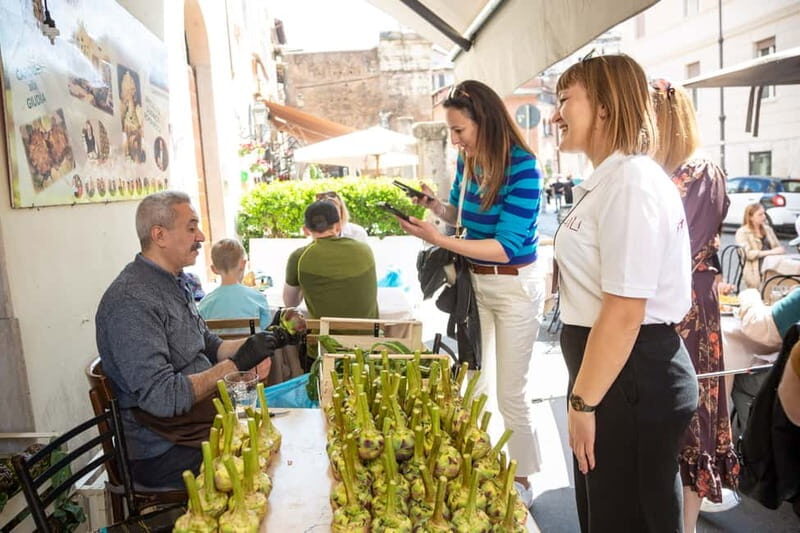
- Campo de’ Fiori market stop (morning only): you get a front-row look at local produce and ingredients before the food starts.
- Jewish Ghetto food highlight: expect the famous fried artichokes, the kind you’d be hard-pressed to recreate at home.
- Licensed English-speaking local guide: the stories connect what you eat to what you see on the street.
- A smart 2.5-hour pace: walking plus multiple tastings without turning your day into a marathon.
- Finish with gelato near major sights: you end with a sweet win close to central landmarks.
- Clear dietary notes: vegetarian options exist, but vegans and gluten intolerance need caution.
Why Campo de’ Fiori and the Jewish Ghetto Work So Well Together
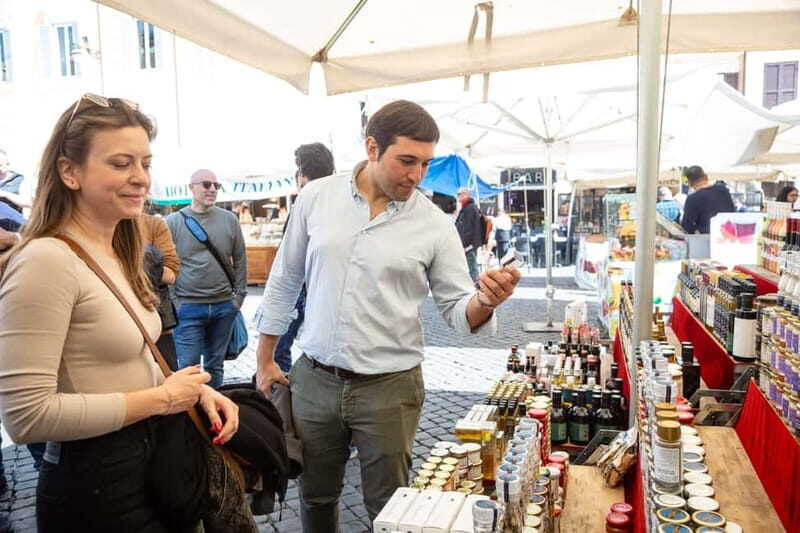
This tour hits two parts of Rome that feel different the second you turn a corner. Campo de’ Fiori is your energy zone, with the open-air market vibe and lots of foot traffic. Then the pace shifts as you enter the Jewish Ghetto area, where the food feels linked to tradition, migration, and survival—stories you can sense in the streets.
What makes this pairing valuable is that it keeps the day from feeling like “just eating.” You’re not only sampling Roman favorites; you’re also learning why these foods belong here, and how the neighborhoods shaped local tastes. That’s the difference between a food walk and a food tour with memory.
You’ll also walk past landmarks that many visitors see from the outside while on the way somewhere else. Here, they’re part of your route, so the sights and the snacks share the same timeline.
You can also read our reviews of more food & drink experiences in Rome


Your Walking Route: Piazza Navona Area to the Ghetto Streets
You start at the fountain in Piazza di San Simeone, right in the city center. From there, the tour threads through a series of nearby stops on foot—some you’ll pass quickly for orientation, and some you’ll linger near for stories and photos.
A few route highlights you should expect along the way:
- Chiostro del Bramante (you pass by it briefly)
- Piazza and Passetto del Biscione
- Portico d’Ottavia and sights around the Jewish Ghetto
- Teatro Marcello
- Largo di Torre Argentina, connected to the story of Julius Caesar’s assassination
- A pass near the Pantheon
- The gelato finish at Gunther Gelateria
This matters because you’re not stuck in a single neighborhood for the entire 2.5 hours. You get a compact Rome sampler: market streets, ghetto lanes, and major-sight surroundings, all within walking distance.
Practical note: there’s a mix of quick passes and tasting stops, so wear shoes you trust for uneven pavement. You’ll be on your feet the whole time, and the route is designed to keep moving.
Stop-by-Stop Tastings: The Roman Bites You’ll Actually Remember
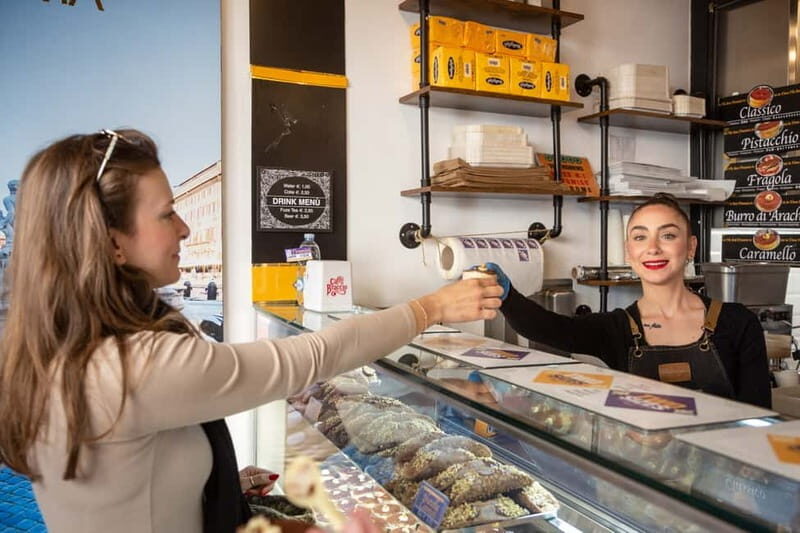
The tour is built around five food tastings, and the menu is focused on what you’d want to eat even if you weren’t on a tour. You’re not just getting “samples” of random things. You’re getting the Roman classics that show up again and again in local ordering habits.
Here’s what you can plan around:
Panini with porchetta
You’ll start with a savory hit: a panini with porchetta, the kind of comfort food that tastes simple but isn’t. This is a good first tasting because it sets the tone: salty, hot, and very Roman.
Vegetarian options are available here, so if you don’t eat meat, you’ll still get a filling first stop rather than being left with bread and hope.
Supplì (deep-fried rice balls)
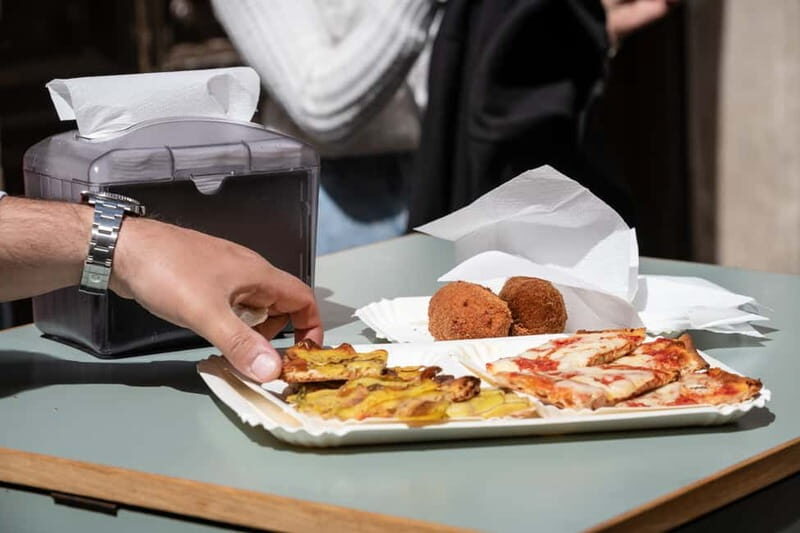
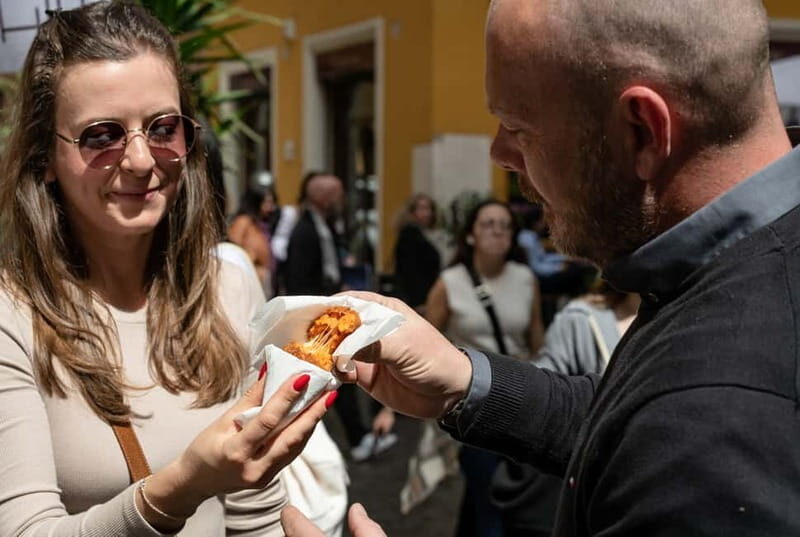
Next comes one of Rome’s most famous street foods: supplì. These deep-fried rice balls are crispy on the outside and soft inside, often with a molten, melty center. It’s the sort of snack that makes you stop walking and actually pay attention.
This is also one of those foods that’s hard to find done well unless you know where to look. On a guided route, you get the “right version,” not just any fried thing.
You can also read our reviews of more tours and experiences in Rome




Roman-style pizza
You’ll also taste Roman-style pizza—the thin, sliceable kind rather than the thick, doughy styles people sometimes expect. It’s a smart pairing with the fried foods because it gives you a different texture and a lighter feel, especially if you’re spacing your bites.
Fried artichokes: Carciofo alla Giudia
In the Jewish Ghetto area, you’ll hit the signature dish: Carciofo alla Giudia—fried artichokes. The method and flavor are unique, and this is one of the most distinctive tastings on the whole route.
Even if you think you don’t like artichokes, this is the preparation that changes minds. It’s crisp, intensely flavorful, and very much tied to the area’s food identity.
Artisanal gelato to close
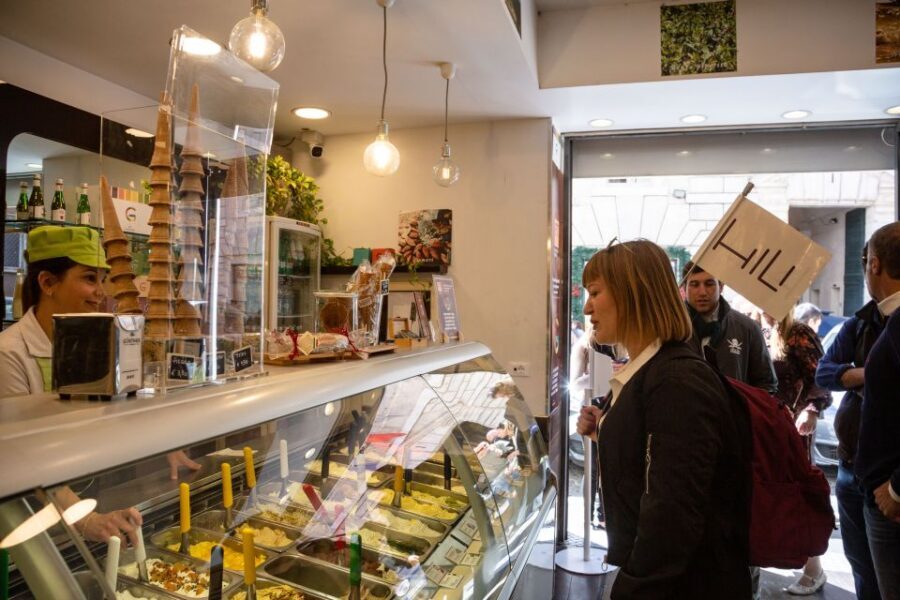
You end with artisanal gelato at Gunther Gelateria. Ending with gelato is a classic move for a reason: it resets your palate after fried and salty bites, and the taste lingers when the tour is done.
If you’ve been walking all morning, the gelato finish feels like a reward you earned. And because it’s near a central landmark area, it works well as a launchpad for the rest of your day.
Morning-only added tasting: olive oil, truffle, and vinegar
If you’re on a morning tour, you’ll include a tasting of olive oil, truffle, and vinegar. You’ll also have a market stop tied to this timing, which is where you’ll start to notice how ingredients shape the day’s flavors.
If you’re booking an afternoon or evening slot, you still get the core street-food tastings. The morning-specific pieces are a bonus, not the foundation.
Campo de’ Fiori: Market Time When You Can See Ingredients, Not Just Plates
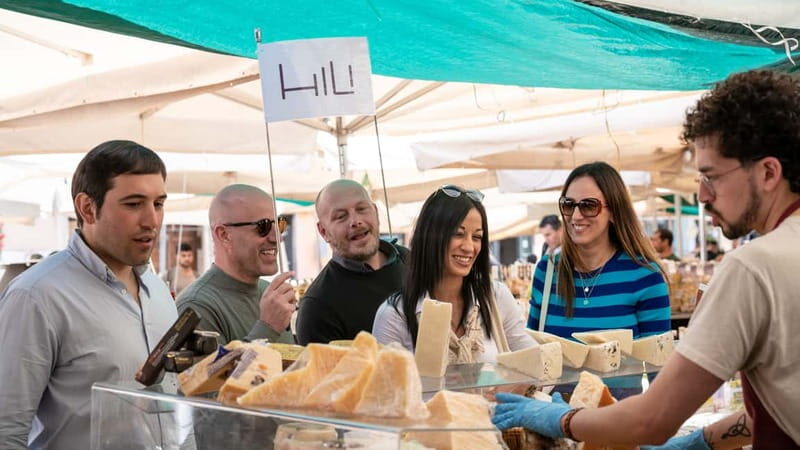
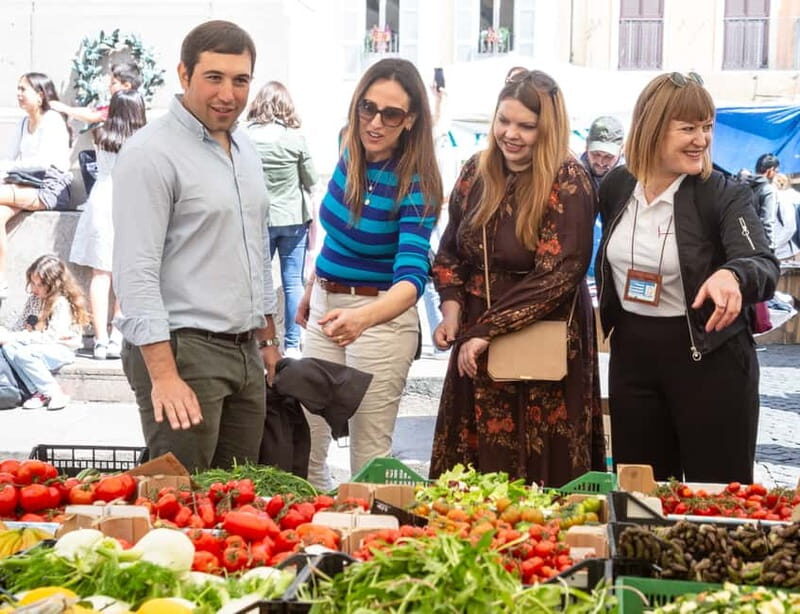
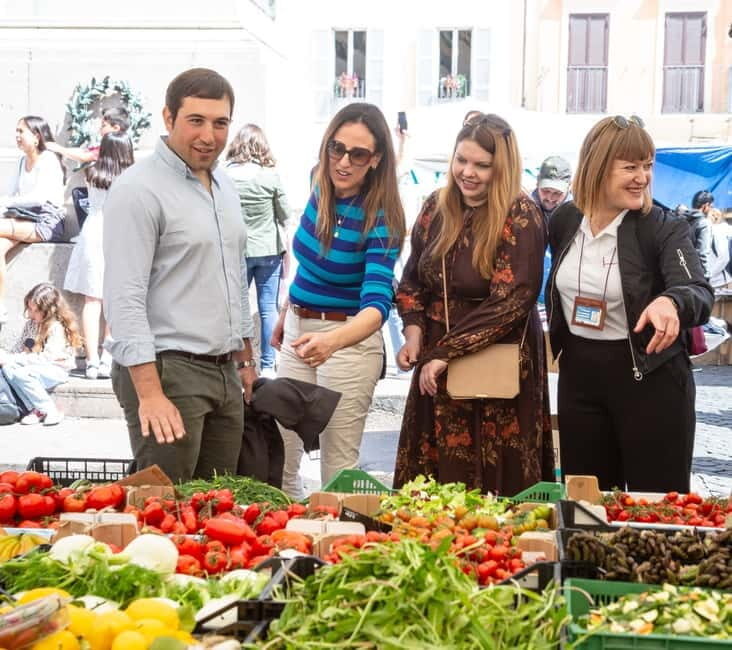
If you choose a morning departure, you’ll visit Campo de’ Fiori and its local market. This is more than a scenic stop. It’s where the tour helps you understand why Roman food tastes the way it does.
You’ll spot ingredients that show up later in sauces and toppings, and you’ll get a sense of what’s being sold that day. Then the tour shifts from observing ingredients to eating the results.
Even if you’re not a big market person, this stop is worth it because it gives you a practical reference point. After this, you’ll be better at noticing what’s fresh and what’s local when you’re strolling on your own later.
Jewish Ghetto Highlights: Portico d’Ottavia and Carciofo alla Giudia
The Jewish Ghetto portion is where the tour gets its most memorable emotional context. Portico d’Ottavia and the surrounding streets make the walking feel like you’re following a living archive.
What you’ll taste here is the big draw: Carciofo alla Giudia. Fried artichokes are not just a snack; they’re tied to tradition and to how communities preserved identity through food.
And the guide’s job is to connect that dish to the neighborhood you’re standing in. You’ll hear stories that turn a plate into a place, which is exactly the point of adding history to a food tour.
Look for the small details as you walk: architectural shapes, street patterns, and the way the area feels set apart from the surrounding lanes. You don’t need to be a historian to feel the difference.
Landmark Walk-Bys: Julius Caesar, Teatro Marcello, and Pantheon Views
A good food tour doesn’t just stop at restaurants. It uses the route to teach you how the city is layered.
On this walk, you’ll pass important sights including Teatro Marcello and Largo di Torre Argentina. That last one matters because it ties to the story of Julius Caesar’s assassination, the kind of dramatic moment Rome repeats in legends and names.
You’ll also pass near the Pantheon, plus other spots like Turtle Fountain and Piazza and Passetto del Biscione. Some of these are quick passes, so don’t expect long museum-style time. But you’ll come away with a better sense of geography—how these places relate to each other in real walking distance.
This is where the tour becomes a value-add beyond food. Even if you plan to see major sights later, it helps to have a mental map first.
The Gelato Finale at Gunther Gelateria
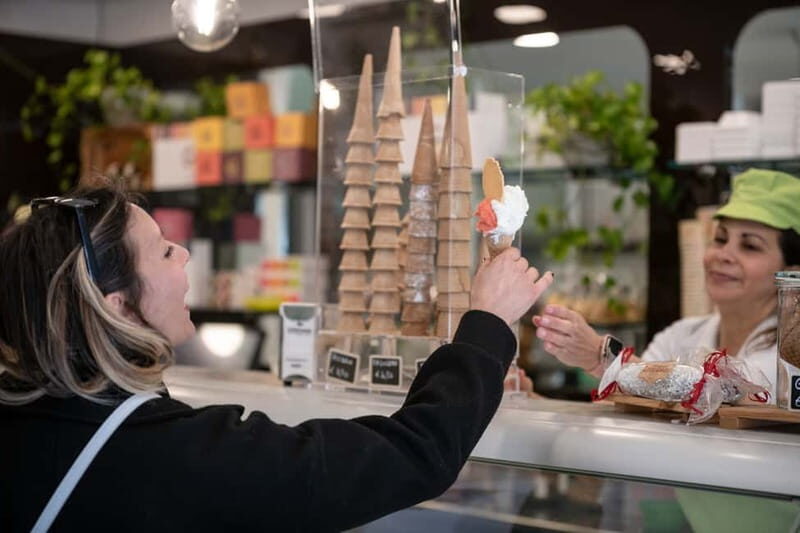
You finish at Piazza di S. Eustachio, and the sweet stop is at Gunther Gelateria. That pairing is good planning: you get your gelato at a recognizable spot near central Rome, so you can keep exploring without backtracking.
Since you’ve just done fried foods and savory bites, gelato works as a palate reset. It also lets you end on something simple and deeply Roman without adding another heavy meal.
If you’re the type who likes to compare flavors, this is the time to do it. You’ll already understand what flavors you liked earlier, so gelato can become the final “summary” of the day’s tastes.
Price and Value: Is $36 Worth It?
At $36 per person for about 2.5 hours and five tastings, this is priced like a classic city-center food tour. The real question is whether you’re getting more than food.
You are: you’re paying for a guided walking format that combines tastings with neighborhood context. Without a guide, you’d still find food, but you’d likely miss the logic that connects each bite to its place—especially for something like Carciofo alla Giudia and the ghetto-area background.
Also, the tastings are the kind that add up quickly if you order them separately. Supplì, pizza, fried artichokes, and gelato aren’t cheap “single bite” items when you’re doing it on your own, and you’d have no guarantee you were hitting the best version of each.
So yes, the price looks fair for the time and the number of food stops. It’s not just a snack parade; it’s a structured way to try a lot of Roman street food in a short window.
Who This Tour Fits Best (And Who Might Want Another Option)
This tour is best for you if you like food plus context. If you want to taste Roman street food while also hearing why certain dishes belong in the Campo de’ Fiori and Jewish Ghetto areas, this is a strong match.
It’s also a good choice early in your trip. Doing it up front helps you learn what Roman-style food should taste like, so your later meals become smarter. You’ll have names in your head, and you’ll know what to look for.
Who might need to think twice:
- If you’re vegan, this tour isn’t suitable.
- If you have gluten intolerance, it’s also not suitable.
- If you need a very slow-paced experience with lots of seating, the walking + tasting format may feel tight.
Vegetarian options exist, which makes it easier for many diets. Still, if you have allergies or dietary restrictions, tell the provider when you book so the guide can plan the right swaps.
Quick Tips So You Enjoy Every Bite
A few simple moves will make this tour feel smooth instead of rushed:
- Go in with an empty stomach energy. The tastings add up fast.
- Bring comfortable walking shoes. You’re on foot the whole time.
- If you have allergies, communicate early. The guide can’t help with what you don’t share.
- Plan to buy drinks separately. Drinks aren’t included, so save water for breaks.
- If you can, choose a morning slot to get the market stop and the olive oil, truffle, and vinegar tasting.
Finally, treat it as both food and orientation. By the end, you’ll know where you are, what neighborhoods feel like, and what to order next without guessing.
Should You Book It?
Book this Rome food tour if you want a compact, guided way to eat your way through Campo de’ Fiori and the Jewish Ghetto, with standout Roman bites like supplì, porchetta panini, Roman pizza, Carciofo alla Giudia, and gelato. The $36 price makes sense when you factor in the tastings plus the way the guide connects food to place.
Skip or choose a different format if you’re vegan or need gluten-free options. The tour’s menu structure doesn’t fit those requirements based on what’s stated for suitability.
If you’re flexible with timing and enjoy walking, this is the kind of experience that turns Rome from a list of sights into a route you can actually picture and repeat.
FAQ
Where do I meet the guide?
Meet your guide at the fountain in the center of Piazza di San Simeone.
How long is the tour?
The tour lasts 2.5 hours.
What does the tour cost?
The price is $36 per person.
What food tastings are included?
You’ll taste panini with porchetta, supplì, Roman-style pizza, fried artichokes (Carciofo alla Giudia), and artisanal gelato. Morning tours also include a tasting of olive oil, truffle, and vinegar.
Is there a market stop?
Yes. Campo de’ Fiori and the local fruit market are part of the experience, and the market stop is morning only.
Are vegetarian options available?
Yes, vegetarian options are available.
Are vegans or gluten intolerance accommodated?
No. This tour is not suitable for vegans and not suitable for people with gluten intolerance.
What languages are offered?
The tour guide speaks English.
Is it wheelchair accessible?
Yes, it is listed as wheelchair accessible.
Should you book? (Quick decision)
If you want Roman street food plus real neighborhood context in one efficient walk, this is a strong pick. If you’re vegan or need gluten-free, look for a different tour that clearly fits your dietary needs.