REVIEW · CYCLING TOURS
Rome E-Bike Small Group Tour of the Appian Way with Private Option
Book on Viator →Operated by LivTours · Bookable on Viator
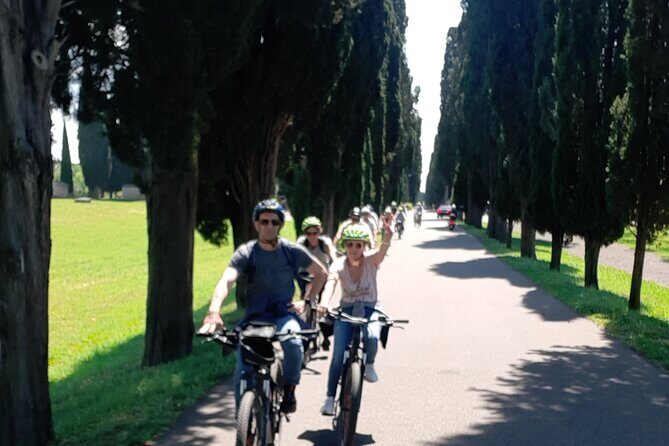
Wheels, ruins, and fresh air. This Rome Appian Way e-bike tour takes you out of the city crush and onto one of the ancient world’s most important roads, with stops that connect the dots between Roman power and daily life. I like that it is paced for real sight-seeing, not a sprint, and that the route includes iconic landmarks plus quieter areas you usually miss.
My favorite part is the human one: the guides, like Enrico and Massimo, bring the sites to life with clear explanations and frequent, small stop-offs to help you actually understand what you’re looking at. You also get the benefit of a tight group size, with a max of six riders, which keeps the experience calmer and easier to manage.
One thing to consider: even with electric assist, you’ll bike on older surfaces and some cobblestones can be bumpy, plus there can be short bits of traffic on the road. If you want effortless cruising the whole time, this might feel like more work than you expect.
In This Review
- Key highlights worth planning around
- Why this Appian Way e-bike route feels like a Rome cheat code
- Starting at Circus Maximus: Palatine Hill views without the footrace
- Caracalla’s Baths: massive Roman engineering, up close
- Riding the Appian Way: why 312 BC still feels present
- Ancient mausoleum stop: the scale of Roman remembrance
- Porta San Sebastiano, Temple of Romulus, and the villas: empire at the edges
- Porta San Sebastiano
- Temple of Romulus
- Villa di Massenzio and Villa dei Quintilii
- Catacombs park stop: you see the setting, then you plan your own visit
- What the e-bike does (and doesn’t) change about the effort
- Pace, traffic, and safety: how the guide keeps it calm
- Guides who make the history make sense: Enrico, Massimo, and more
- Price and value: $192.29 for three hours that actually move
- Who should book this Appian Way e-bike tour
- Should you book the private option?
- FAQ
- FAQ
- How long is the Rome Appian Way e-bike tour?
- What is included in the tour price?
- Does this tour include a guided catacombs visit inside underground spaces?
- Is the Appian Way ride difficult even with an e-bike?
- What group size should I expect?
- What languages is the tour offered in?
Key highlights worth planning around
- Six people max means you get more attention and less waiting around.
- E-bike assist helps you keep a steady pace on older stone surfaces.
- Circus Maximus to Caracalla ties together two major Roman eras in a single ride.
- Appian Way built in 312 BC gives you real context for why Rome mattered.
- Porta San Sebastiano and ancient villas show Rome’s edge of empire, not just the center.
- Catacombs park stop without inside access lets you plan an optional self-visit afterward.
Why this Appian Way e-bike route feels like a Rome cheat code
Rome has a way of turning your day into lines, crowds, and the constant question of what’s next. This tour flips the script. You start with big, famous sights in view, then you move outward where the air feels different and the road tells its own story under your wheels.
The value here is practical: you’re paying for a planned route, a professional local expert guide, and a real bicycle ride that covers serious ground in about three hours. That’s a good match for people who want ancient Rome without spending the whole day hopping between distant monuments.
The other big reason it works: a small group of six. On a bike tour, that matters. Fewer people means fewer slowdowns, fewer bottlenecks at turns, and more chances for the guide to stop and explain without everyone getting separated.
You can also read our reviews of more cycling tours in Rome
Starting at Circus Maximus: Palatine Hill views without the footrace
You meet at Via dei Cerchi, 59 (00186 Roma RM). From there, the tour kicks off near Rome’s biggest ancient stadium, where you get a strong first hit of scale. The view toward Palatine Hill and the idea of imperial life around it helps you frame what you’re about to ride toward.
This first stretch is not just a warm-up. It’s the moment the guide can set the map in your head: who held power, how Romans organized public life, and why the Appian Way became so important later. If you’ve only seen Rome as a postcard collection, this opening helps it click into a connected world.
Expect to get brief orientation first. Then you’re off, following the route toward major sites like Caracalla, with the guide steering you through what to look for and why it matters.
Caracalla’s Baths: massive Roman engineering, up close
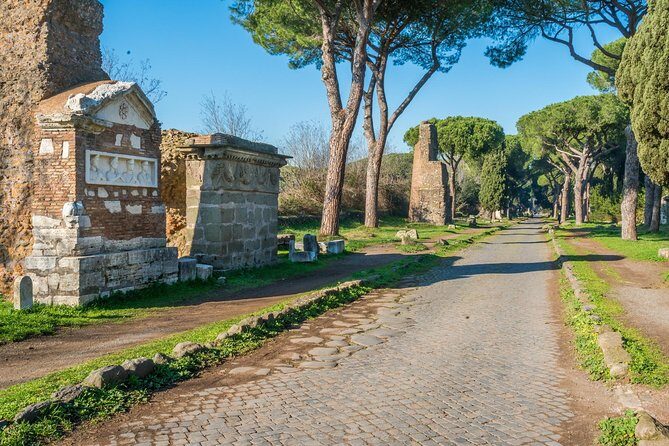
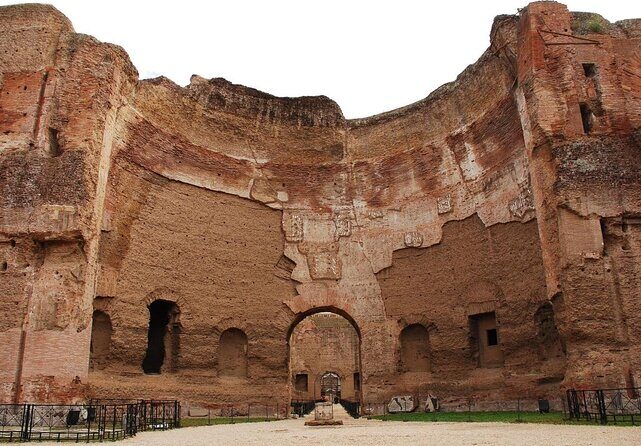
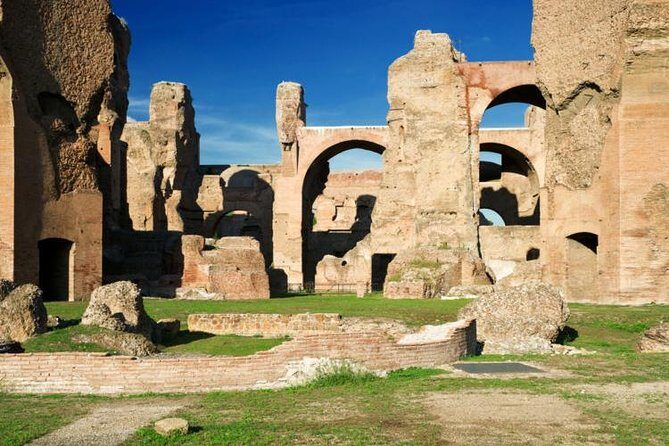
Next you roll past the Thermal Baths of Caracalla, described as the second largest set of baths in Rome. Even if you’ve never studied Roman architecture, you can still feel what these baths were: social space, public theater, and a machine built for comfort.
Here’s the practical advantage of biking: you don’t just see a monument from one angle like you might on foot. You glide by, get landmarks in context, and then you move on. The guide can point out the big ideas—size, purpose, and how baths fit into Roman routine—without turning the stop into a long detour.
The baths also set up a theme for the rest of the ride. You’re watching how Rome used infrastructure to shape everyday life. That theme becomes much stronger once you get onto the road itself.
Riding the Appian Way: why 312 BC still feels present
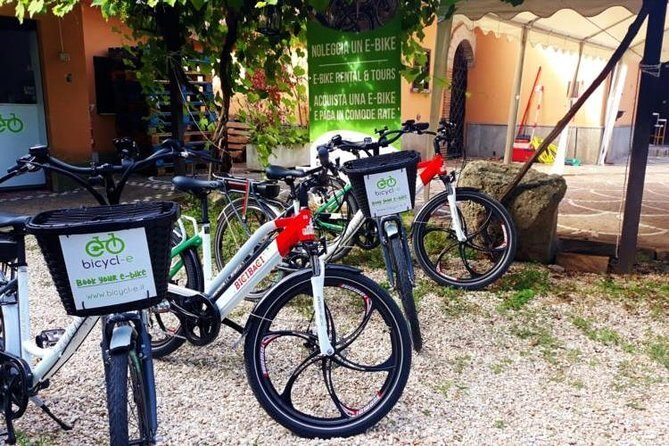
Then comes the main event: covering a large portion of the Appian Way, a highway built as far back as 312 BC. The guide frames it as a lifeline of the Roman Empire. That phrasing can sound dramatic, but you’ll understand it quickly when you’re on the actual corridor that helped Rome move people, goods, and authority.
This is where the e-bike changes the experience. The route includes older stone, and the assist helps you keep momentum so you don’t spend the whole tour fighting your bike. You still get the satisfaction of effort. It’s not a motorized sightseeing ride where you never work at all.
From what you’ll see along the way, the Appian Way isn’t just a road. It’s a timeline. Ruins, tomb space, and remnants of villas tell you how Rome planned its future while building on its past.
One note you’ll be glad you heard: parts of the Appian Way can feel tougher because of larger cobblestones. With a good guide, the trick is timing and control—how you ride the rough sections and where you pause to stay balanced. The best part is that the guide keeps you from guessing.
Ancient mausoleum stop: the scale of Roman remembrance
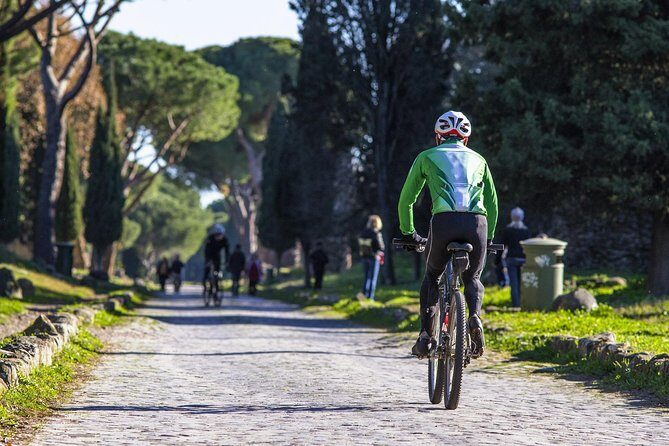
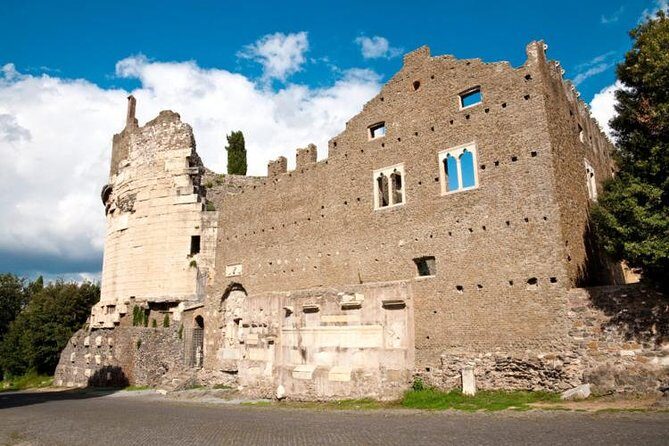
As you continue, the tour includes a stop at one of Rome’s most important and most ancient mausoleums. This is a different kind of Roman site than the baths or the road. It’s about memory and status—how families marked place and power long after their era ended.
On a bike tour, you often miss the emotional weight of tombs because you’re moving too fast. Here, the stop is built into the route. You get a chance to slow down, look carefully, and understand what you’re seeing rather than just snapping a picture and rolling out.
The mausoleum stop also connects to the wider cemetery landscape you ride past afterward. It’s all part of the same story: Rome’s edge of empire, where the living and the remembered stood in the same corridor of space.
You can also read our reviews of more private tours in Rome




Porta San Sebastiano, Temple of Romulus, and the villas: empire at the edges
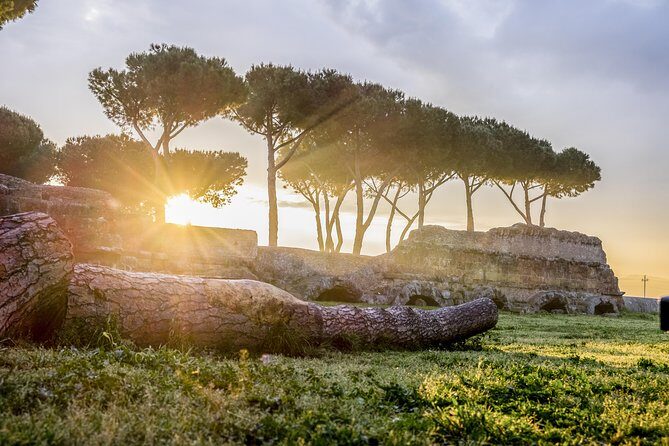
After the mausoleum, the tour shifts into an area that feels more open and less frantic than central Rome. You ride by Porta San Sebastiano and also cover sites like Temple of Romulus and Villa di Massenzio, plus Villa dei Quintilii.
These stops matter because they show Rome beyond the biggest headline monuments. A city like Rome didn’t run only on forum-sized drama. It ran on roadside infrastructure, residences, and structures that reflected wealth and power at the perimeter.
Porta San Sebastiano
Porta San Sebastiano gives you a sense of boundary. Gates are always about control: who enters, who exits, and why. Seeing it from the bike window gives you a more dynamic sense of the space than a static viewpoint.
Temple of Romulus
This is the kind of stop that rewards attention. The guide can point out details and connect them back to the larger themes you already heard on Circus Maximus and Caracalla. You’ll likely leave with a better sense of how Roman religious spaces overlapped with everyday city structure.
Villa di Massenzio and Villa dei Quintilii
The villas help you understand that the outskirts weren’t empty. They were active real estate for status and comfort. These stops add texture, turning the ride into something closer to a guided walk through different layers of the empire.
And yes, you’re moving on a bike, so you get a steady rhythm: ride, stop, explain, ride again. That rhythm is a big reason the tour feels efficient without feeling rushed.
Catacombs park stop: you see the setting, then you plan your own visit
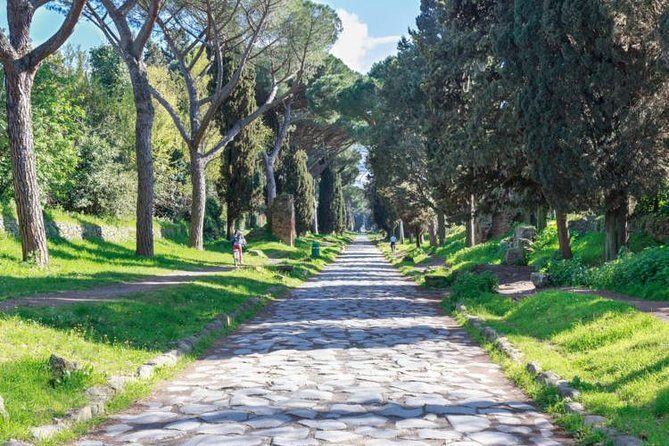
The tour also includes a ride by the park connected with the Church of San Callisto and Church of San Sebastiano, with an explanation of how the catacombs extend underground. The key catch is simple: this experience does not include a guided tour inside the catacombs.
That’s actually a plus for many people. You get the context—what the spaces are, why they matter—without locking yourself into an inside schedule. If you want to go deeper, you can plan your catacombs visit on your own afterward with a tour that matches your interests and time.
If you prefer not to add anything extra, you can still enjoy this stop as a history lesson and a powerful visual pause.
What the e-bike does (and doesn’t) change about the effort
Electric assist is the star of this trip, but it’s not a magic wand. You’ll still be biking, and the tour recommends moderate physical fitness for riding on the Appian Way, especially because of uneven stone.
Here’s how to think about it:
- If you’re comfortable on a bike for a few hours and can handle some bumps, you’ll likely find it manageable.
- If you’re nervous about balancing on rougher surfaces, give yourself a moment early on to get used to the bike and ask the guide for a calm approach during the toughest sections.
- If you want a harder ride, you might be able to choose a standard mountain bike instead of relying more on the motor, depending on what your group setup allows.
The tour is also described as family-friendly, so that suggests the pace and bike support are built to be reasonable for mixed groups, as long as everyone can handle the basics.
Pace, traffic, and safety: how the guide keeps it calm
A bike tour can feel stressful if the route is chaotic. Here, the pattern is more controlled than you might expect. There may be some traffic during parts of the ride, but the guide is responsible for how the group navigates it.
In real terms, what that means for you is this: you don’t have to second-guess every intersection. The guide helps with adjustments and safety when needed, and they keep the group together with a plan for when to pause and when to roll.
You’ll probably notice the difference most once you get out of the dense, center-city area. The ride tends to feel quieter and more open once you’re moving along the ancient corridor.
Guides who make the history make sense: Enrico, Massimo, and more
One reason this tour gets such strong reviews is that the guides consistently bring a friendly, animated style. You may be guided by Enrico, Massimo, Brando, Alice, Andy, or another expert, depending on the day.
What to look for while you’re riding: the guide stops often, explains with clarity, and connects what you see to how Romans lived and built. That’s especially important on the Appian Way, where the connection between ruins and story can be easy to miss if you’re just looking at stones.
If you like your tours to feel like a conversation rather than a lecture, this is the format that fits.
Price and value: $192.29 for three hours that actually move
At $192.29 per person for about three hours, you’re paying for more than a ride. You’re paying for:
- a small group capped at six
- professional local expert guidance
- the e-bike and bicycle use
- access to a route built around specific key stops, including Caracalla, Porta San Sebastiano, Temple of Romulus, and major villa areas
Whether it’s worth it depends on your style. If you’re the type who walks slowly, reads details, and wants time to ask questions, the small group and guide-led stops can feel like a smart investment. If you already know you’ll just want quick photos and minimal explanation, you might prefer a simpler self-guided route.
But for most people trying to see more than the obvious center sites without turning their legs into dust, this price can make sense—because the bike does the heavy lifting and the guide does the interpretation.
Who should book this Appian Way e-bike tour
You’ll likely love this if you:
- want a break from central Rome crowds
- enjoy learning Roman context while you ride
- like short stops that help you understand what you’re seeing
- prefer a small group over larger bus-style tours
- can handle moderate effort on older surfaces
You might want to rethink if you:
- have trouble biking on rough cobblestones or uneven roads
- want a strictly car-free, traffic-free experience the whole time
- are aiming for a long catacombs-focused tour inside underground spaces
Should you book the private option?
There is a private tour option available, and the private version is described as going at your own pace. That can be a big deal if you’re traveling with kids, if you want extra time at specific stops, or if you just prefer a lower-stress format where nobody else sets the rhythm.
The private option also tends to be worth it if your group includes people with different energy levels and you want more flexibility. Since the core tour is about riding and guided stops, private time can translate into more meaningful explanations and fewer pacing worries.
FAQ
FAQ
How long is the Rome Appian Way e-bike tour?
It lasts about 3 hours.
What is included in the tour price?
You get bicycle use, a professional local expert guide, and e-bike tour stops including Baths of Caracalla, Porta San Sebastiano, Villa di Massenzio, Temple of Romulus, Appian Way and park, and Villa dei Quintilii.
Does this tour include a guided catacombs visit inside underground spaces?
No. The tour includes a stop with information about the catacombs and the area above them, but it doesn’t include a guided tour through the catacombs. You can visit them on your own afterward if you want.
Is the Appian Way ride difficult even with an e-bike?
Electric bikes assist with pedaling, but you should still have moderate physical fitness because parts of the route include older surfaces and some cobblestones.
What group size should I expect?
The tour is limited to a maximum of 6 travelers. There is also a private option available.
What languages is the tour offered in?
The tour is offered in English, French, Spanish, Portuguese, and Italian. You should specify your preferred language under additional notes if you want something other than English.