REVIEW · CATACOMBS TOURS
Rome: Domitilla Catacombs and St. Clemente Underground
Book on Viator →Operated by Eyes of Rome · Bookable on Viator
Rome’s underground tells a better story. This private tour links Catacombe di Domitilla and the multi-layered San Clemente al Laterano in one smooth 3-hour plan, with a guide to explain what you’re seeing instead of you guessing in the dark. You’ll also skip the stress of mapping transit on your own with private, 2-way transfers from central Rome.
I like the way the schedule gives you real payoff: frescoes, tombs, and underground churches in the catacombs, then a guided walk through San Clemente’s stacked periods. I also love the calm, private format—pickup, drop-off, and time to ask questions. One possible drawback: you’re going below street level, so comfort depends on how you handle enclosed spaces and changeable light in underground areas.
In This Review
- Key things to know before you go
- Rome’s underground time travel: what makes this tour work
- Pickup and transfers: the real value of a private format
- Stop 1: Domitilla Catacombs and what 400 AD frescoes tell you
- What to watch for at Domitilla
- Stop 2: San Clemente al Laterano’s underground layers—why this place feels unique
- The Colosseum-area advantage
- How the 3-hour flow fits into a Rome day
- Crowds, questions, and that calm feeling that matters
- Price and value: is $459.61 worth it?
- Who should book this Domitilla and San Clemente underground tour?
- Should you book it?
- FAQ
- How long is the Domitilla Catacombs and San Clemente underground tour?
- Are admission tickets included?
- Do I get pickup and drop-off in Rome?
- Is this a private tour?
- Can I choose a morning or afternoon tour time?
- What sites are included in the tour?
- Is free cancellation available?
- What are the requirements if I’m traveling with minors?
Key things to know before you go
- Two famous underground sites, one guided flow across about 3 hours with admission included at both stops
- Private transfers from central Rome to save time and avoid city navigation
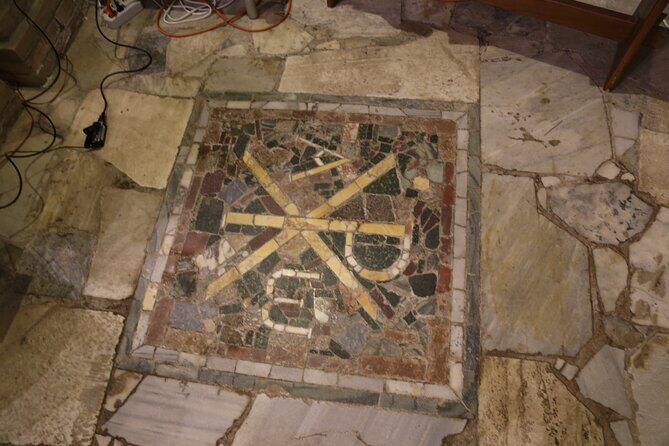
- Domitilla’s early Christian art focus with paintings dating to around 400 AD
- San Clemente’s layered timeline from older Roman eras up to early Christianity, all underground
- Choose morning or afternoon to fit the rest of your Rome day
- Mobile ticket + private group so you’re not sharing the experience with strangers
Rome’s underground time travel: what makes this tour work
This is one of those Rome experiences where the city above you is loud, but the story below is quiet—and much clearer. You’re not just touring tunnels. You’re walking through physical layers of Roman life: burial traditions, early Christian worship, and the way sacred spaces were reused and rebuilt over centuries.
The best part is that the tour organizes the complexity for you. Roman history can feel like a blur when you’re moving on your own. Here, you get a guide’s through-line: what the space was used for, when it changed, and why those changes mattered to the people living then. That’s what turns a set of underground rooms into an actual understanding of Rome.
Also, you can plan your day without losing half of it to logistics. With pickup and drop-off from your central Rome address, you’re not spending your limited sightseeing energy figuring out buses, lines, or meeting points.
You can also read our reviews of more tours and experiences in Rome.


Pickup and transfers: the real value of a private format
For a tour that’s literally underground, getting to the start point matters. This experience includes private 2-way transfers from your central Rome address, which cuts the usual stress: you don’t have to cross town on your own schedule, and you’re less likely to arrive rushed. If your plan includes Colosseum-area sights, this helps you cluster your day without wasting time.
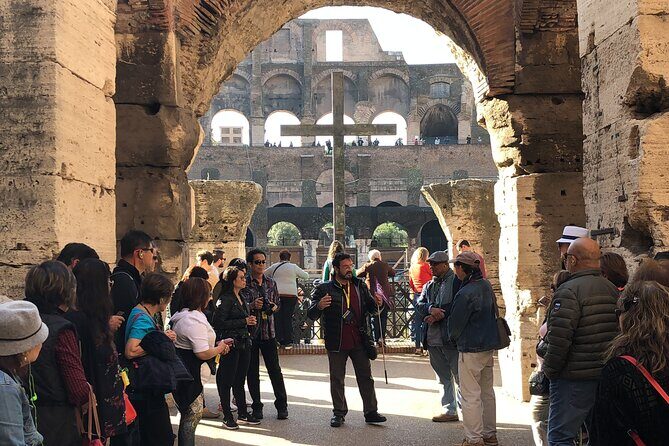
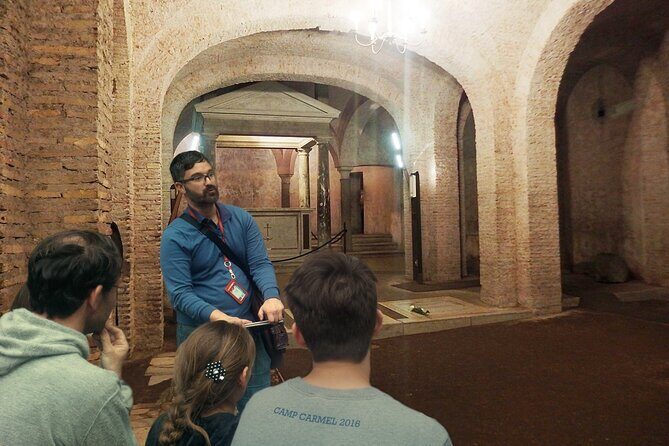
You also get the comfort of a private setup where your group is the only group participating. That’s a big deal in sites like these, because questions come up constantly. With a private guide, you can ask what something means—like a painting, a burial space, or how one layer relates to another—without feeling like you’re holding up a crowd.
One practical bonus: the tour uses a mobile ticket, so you’re not scrambling over paperwork when you’re already juggling time underground. It sounds small, but it’s the kind of detail that keeps the day smooth.
Stop 1: Domitilla Catacombs and what 400 AD frescoes tell you
The Domitilla Catacombs (Catacombe di Domitilla) are famous for early Christian life—but the story starts earlier than most people expect. The catacombs are part of a wider network: there are 40 separate underground areas spread across the Rome vicinity. And long before the Christian associations, the underground spaces were used across communities, reaching back toward traditions associated with the Etruscans.
The big “wait, really?” moment is that burial practices evolved over time. In Roman imperial periods, cremation and burial customs shifted. Burials became more fashionable in line with earlier traditions, and that’s where the catacombs gained their long-lasting role.
Now to the part you’ll actually remember visually: the art. Domitilla is especially important for art history because it contains paintings dating to around 400 AD. When you’re standing in an underground environment, those frescoes don’t feel like museum art. They feel like messages left by real people who lived in a world of risk, faith, and secrecy.
You’ll spend about 1 hour 30 minutes here, and since admission is included, you can focus on the interpretation rather than juggling tickets. A guided visit also helps you connect what you see—frescoes, tombs, and underground churches—to the timeline you’re building in your head.
What to watch for at Domitilla
Underground spaces can affect your viewing. Light is different. Surfaces can look darker or more muted than you expect. A good guide helps you “read” the location rather than just look at it, and this is exactly where that guidance matters.
Also, plan for the fact that 90 minutes underground can feel like it goes fast, especially when the guide is explaining multiple layers of meaning. If you tend to get fatigued in enclosed spaces, consider choosing the time of day when you’re least tired.
Stop 2: San Clemente al Laterano’s underground layers—why this place feels unique
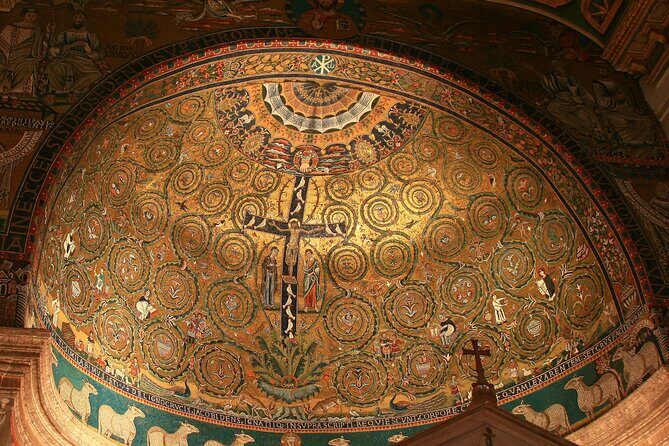
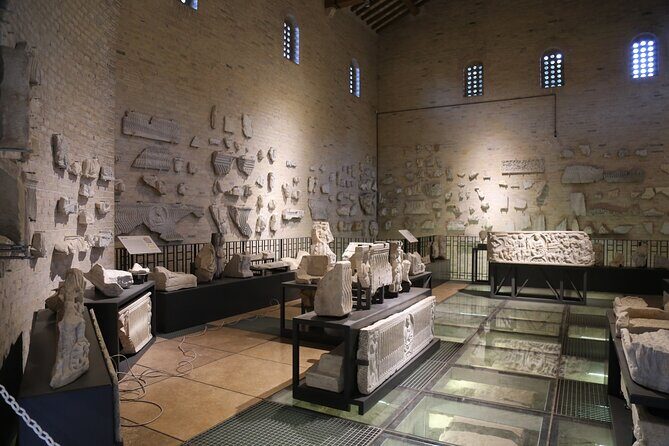
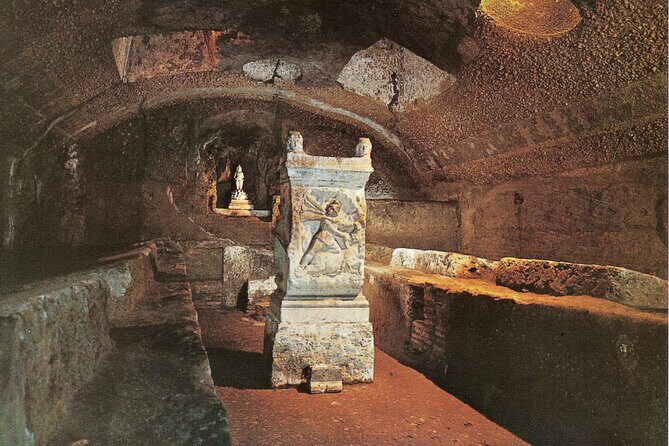
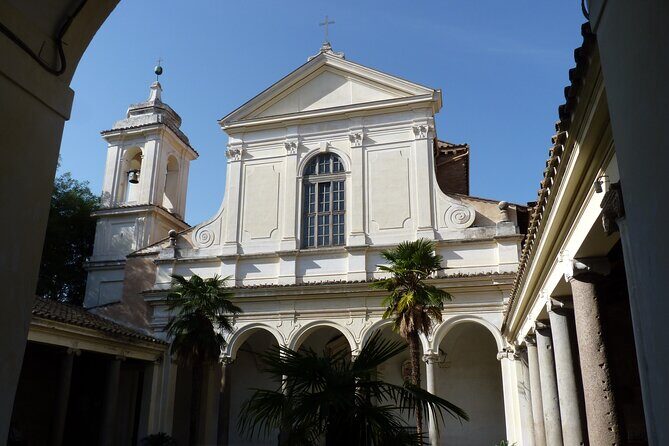
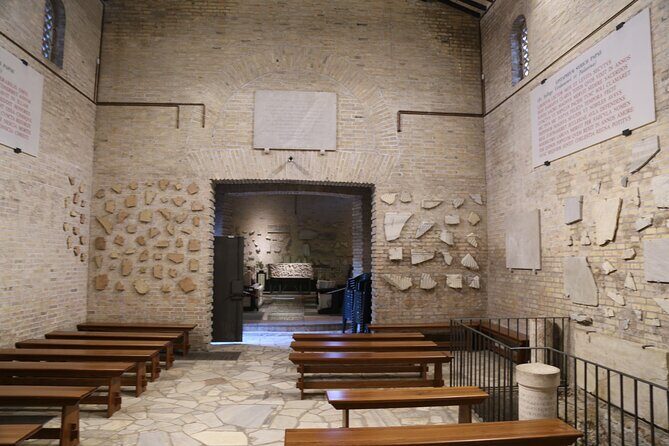
San Clemente al Laterano is one of those Rome churches where the building is basically a history machine. What makes it special is that it has two underground levels—and those levels relate to very different periods.
Here’s the timeline to keep in mind while you visit:
- The lowest level dates back to the Republican era, around 509–27 BC.
- The middle level is believed to date to about 392.
- The church you see above connects the whole story together, dedicated to Pope Clement (with the site’s name tied to him).
What you’ll get from the guided portion is the sense of continuity and reuse. The experience isn’t just “ancient ruins under a church.” It’s the way one place kept getting repurposed, rebuilt, and reinterpreted as the city changed.
This stop is also about contrast. Domitilla is known for early Christian underground spaces tied to art and burial practice. San Clemente gives you a vertical timeline: older Roman eras below, then later layers closer to early Christian worship and the transition into that world.
You’ll spend another 1 hour 30 minutes here, with admission included. Altogether, this is what makes the tour efficient: both stops are substantial, and both are guided, so your time isn’t chopped into “just enough to say you went.”

The Colosseum-area advantage
San Clemente is located behind the Colosseum area. That matters because it makes it easier to pair with other nearby sights. If you’re spending time around the Colosseum anyway, this tour can fit without forcing you to crisscross the city later.
How the 3-hour flow fits into a Rome day
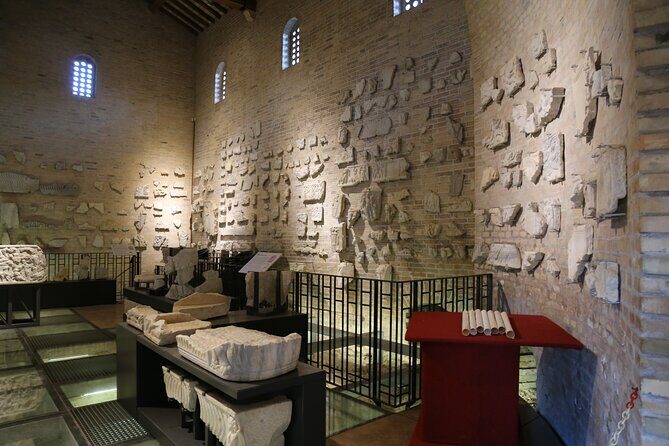
This tour runs about 3 hours. That’s a helpful length: long enough to feel like you did something meaningful at both sites, but short enough to leave room for daylight plans above ground.
Choosing a morning or afternoon time slot is more than convenience. Underground sites can feel more comfortable when you’re not already stressed from an earlier day of crowds. Morning tours can also help if you want your hardest-to-timing experience done before the afternoon rush.
Pacing is another reason this combo works. Two stops, each about 1.5 hours, means you’re not being rushed through either catacombs or San Clemente. You get time for explanation and for you to actually look at details like frescoes and structural features.
Crowds, questions, and that calm feeling that matters
Rome has a talent for turning your best plan into a crowd-management project. This is a private experience, and that changes the vibe fast. You’re not fighting for space, and your guide can focus on your group rather than speed-running content to keep up with others.
One thing that shows up in top-rated experiences like this: guests value being able to ask questions and get straight answers. In underground locations, it’s usually the “small” questions that make the big difference—Why here? What changed? How do these layers connect? A private format makes those conversations easier.
If you have mobility concerns, the private transfers can also help you avoid long, unplanned walking detours. Still, because these are underground sites, it’s smart to think about how you handle uneven footing and enclosed environments in general.
Price and value: is $459.61 worth it?
At $459.61 per person, you’re paying for three things at once: expert interpretation, admission for both sites, and private round-trip transfers from your central Rome address.
If you were to DIY, you’d still need timed entry, tickets, and a guided explanation to make sense of what you’re seeing—especially at San Clemente with its layered periods and at Domitilla with its art and burial context. And without pickup, you’d be spending time and attention on navigation instead of the experience itself.
This tour is also value-leaning for the kind of experience it delivers. You’re getting two major underground destinations in one guided package, each with about 90 minutes on-site. That’s not just convenience—it’s time you can reuse elsewhere in your day.
The private element usually matters most when you care about comfort, questions, and avoiding crowd friction. If you want a quiet, guided underground day with no logistics headaches, the price starts to make a lot more sense.
Who should book this Domitilla and San Clemente underground tour?
I’d look at this tour if you want a guided, structured look at underground Rome without adding planning stress. It’s also a strong fit if:
- You like understanding what you’re seeing, not just checking boxes
- You want to keep your day efficient with pickup and drop-off
- You prefer a private group experience where questions are welcome
- You’re interested in early Christian art, tomb spaces, and multi-era Roman layering
It’s less ideal if your sightseeing style is purely spontaneous with short, flexible stops and you don’t want to commit to a fixed schedule. But with a 3-hour window and clear highlights at both locations, most people find it feels workable.
Should you book it?
Yes—if you want to see two of Rome’s best underground stories in one calm, private day. The combination of Domitilla’s early Christian frescoes around 400 AD and San Clemente’s stacked Roman layers is exactly the kind of “Rome is under Rome” experience that benefits from a guide.
I’d book it especially if you’d rather not spend your energy on transit and meeting points, and if you like the idea of being in a smaller, question-friendly setting. If enclosed spaces or underground environments are a concern for you, pick the time slot when you feel best, and go in with realistic expectations about lighting and comfort.
FAQ
How long is the Domitilla Catacombs and San Clemente underground tour?
It lasts about 3 hours total, with around 1 hour 30 minutes at each stop.
Are admission tickets included?
Yes. Admission tickets are included for both the Domitilla Catacombs and the Basilica of San Clemente.
Do I get pickup and drop-off in Rome?
Yes. The tour offers private 2-way transfers from your central Rome address.
Is this a private tour?
Yes. It’s private, and only your group participates.
Can I choose a morning or afternoon tour time?
Yes. You can choose either a morning or an afternoon tour to plan your day.
What sites are included in the tour?
You visit the Catacombe di Domitilla and the Basilica of San Clemente al Laterano (with its underground levels).
Is free cancellation available?
Yes. You can cancel for a full refund up to 24 hours in advance of the experience’s start time.
What are the requirements if I’m traveling with minors?
Any reservation that includes minors under 18 must be accompanied by at least one adult, and bookings made exclusively by unaccompanied minors aren’t accepted.