REVIEW · COLOSSEUM TOURS
Rome: Colosseum, Roman Forum and Palatine Hill Group Tour
Book on GetYourGuide →Operated by Tour in the City - Travel Agency Rome - · Bookable on GetYourGuide
Some places hit harder than photos.
This Colosseum, Roman Forum, and Palatine Hill tour turns ancient stone into real stories, with either a live English-speaking guide or a self-guided option using a multilingual audio app. I love the fast-track entrance plus headset system, because you spend less time stuck behind rope barriers and more time looking at what actually mattered. I also love how the stops connect into one trip: the Colosseum, then the Forum power center, then Palatine Hill where emperors lived. One drawback to plan around: the Colosseum security name-and-ID checks can still add waiting, and in the hottest months the tour is shorter.
If you like your Rome with clear explanations, this works.
The pacing is built for a short visit, with time for photo moments at key monuments and panoramic looks from the best-preserved viewing areas. I like that the experience scales to you: guided for structure and narration, or audio for flexibility when you want to move at your own speed. Just know it is not wheelchair accessible, and the site rules are strict about bags and items.
In This Review
- Key things that make this tour a smart choice
- Is this the best way to see Colosseum, Forum, and Palatine Hill fast?
- Price and value: what that $28 really covers
- Guided tour versus self audio: pick the right mode for your style
- Live guided option (best if you want a story with the stones)
- Self audio-guided option (best if you like freedom)
- Meeting points, security checks, and timing reality
- Entering the Colosseum: fast-track lines and what to notice inside
- Gladiator battles and Roman engineering: the stories behind the mechanism
- Photo stops at the power monuments: Constantine, Titus, and Maxentius
- The Roman Forum: where politics looked like theater
- Palatine Hill: the emperor-viewpoint side of Rome
- What to bring, what not to bring, and how to avoid delays
- Who should book this Colosseum, Forum, and Palatine Hill tour?
- Should you book this tour?
- FAQ
- How long does the tour last?
- Is fast-track entrance included?
- What’s included in the guided tour option?
- Do I need a guide for the self audio option?
- Which languages are available?
- Where do I meet the group?
- What do I need to bring?
- What items are not allowed at the sites?
- Is the tour wheelchair accessible?
- What if I arrive late to the meeting time?
Key things that make this tour a smart choice
- Fast-track entry to the Colosseum, Palatine Hill, and Roman Forum, so you avoid the longest lines.
- Two formats: live guided tour with headsets, or a self-guided multilingual audio tour with 44 points of interest.
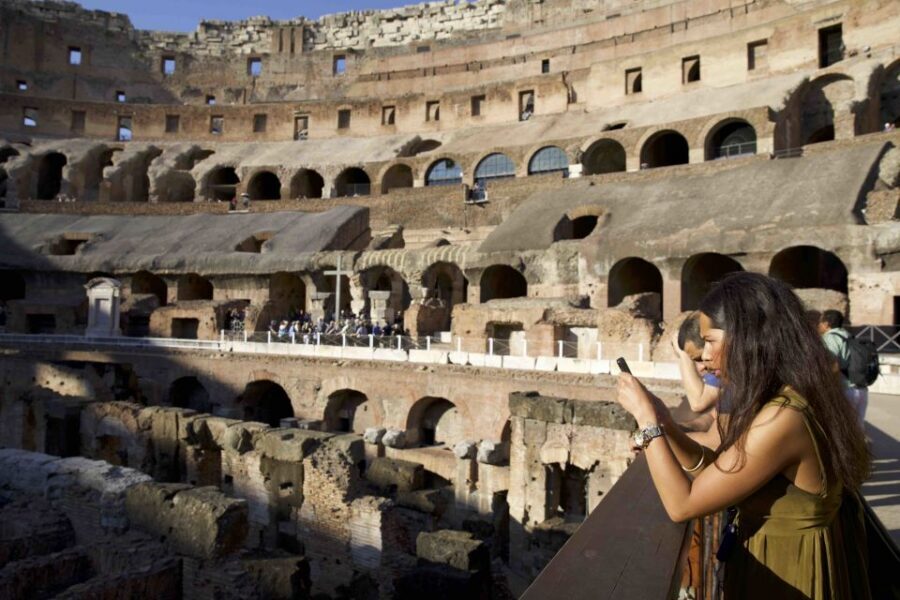
- Inside-the-Colosseum viewpoint time, including the best view zone on the upper tiers.
- Forum + Palatine Hill in one run, so you see the political Rome and the imperial Rome back-to-back.
- Well-paced monument stops, including arches like Constantine and Titus plus Senate-area ruins.
- Practical on-site detail, from Roman engineering to gladiator entertainment mechanics.
Is this the best way to see Colosseum, Forum, and Palatine Hill fast?
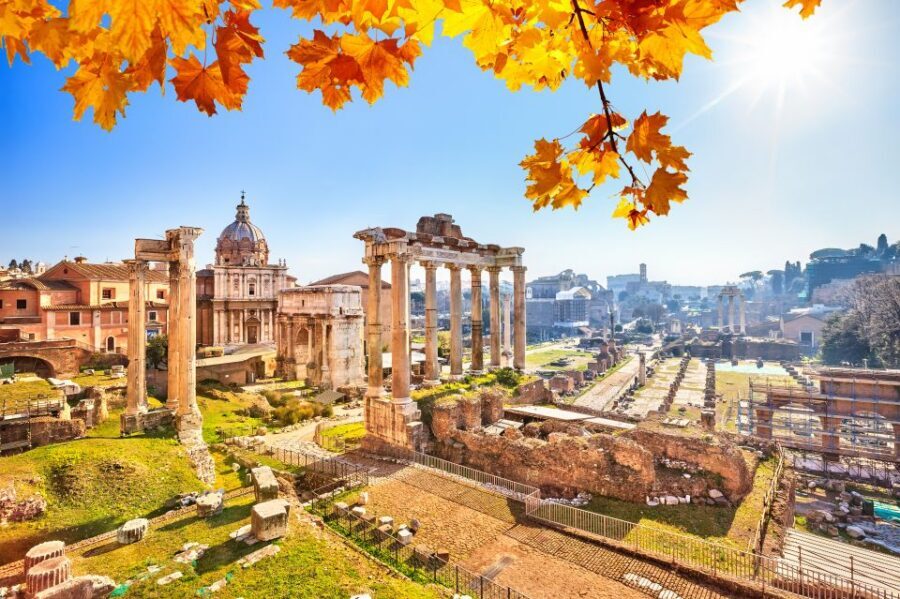
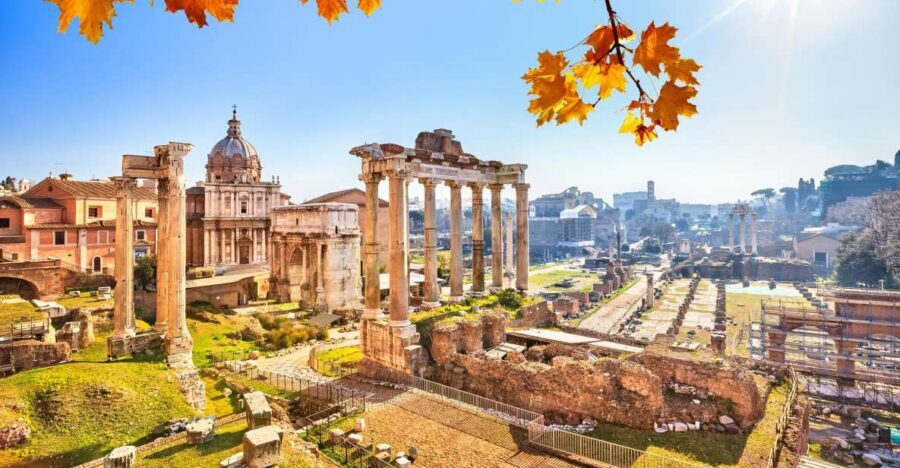
Rome’s “big three” are close on a map, but they can feel miles apart if you do them separately. This tour keeps the momentum. In a few hours you get the stadium spectacle of the Colosseum, the political heart of the Roman Forum, and the hill-top power base of Palatine Hill.
What makes it work is the logic. You start in the Colosseum, then move through the surrounding monuments that shaped Roman public life, and finally climb to Palatine Hill for the viewpoint angle you can’t get from street level.
You can also read our reviews of more tours and experiences in Rome.



Price and value: what that $28 really covers
The listed price is $28 per person, and it’s worth understanding how that breaks down. The adult ticket cost is 18 euros for the Colosseum, Palatine Hill, and Roman Forum. The extra amount is for the services layered on top: a professional guide (for the guided option), a headset system, staff support, and taxes.
So you’re not just paying for entry. You’re paying for time saved and context added. With a live guide, that context matters at sites where ruins can look like random broken columns unless someone points out what you’re actually looking at.
Guided tour versus self audio: pick the right mode for your style
You basically have two ways to do this.
Live guided option (best if you want a story with the stones)
This format uses an official, licensed guide and a headset system. That makes a big difference in noisy tourist zones, and it helps you keep track without constantly asking the person next to you what you’re seeing.
It also means you get a single, coherent narrative: Roman Republic politics and monuments, then how the Colosseum was engineered for staged entertainment. If you like asking questions and getting fast answers, guided is usually the better call.
Self audio-guided option (best if you like freedom)
If you choose the self-guided option, you download and use a multilingual storytelling audioguide on your smartphone. It includes 44 points of interest, with audio in English, Chinese, German, French, Italian, Polish, Spanish, and Portuguese (availability depends on the option). You still get the fast-track ticket, which is a huge practical win.
Just be ready for the tradeoff: you won’t have a person to adapt the pacing for your questions. Also, mobile device and headphones are not included, so you need to come prepared.



Meeting points, security checks, and timing reality
The tour offers multiple starting location options, depending on what you book. The listed options include Piazza di San Clemente, Clivo Argentario 1, and Via Labicana 96. Your exact meeting point can vary by option, so don’t guess. Use Google Maps and double-check the spot before you head out.
Colosseum security is one of those “don’t assume it’ll be quick” situations. They check names and IDs for each visitor, and that can make the wait longer than you expect. Arriving on time matters a lot here. If you arrive late, you can’t join or reschedule because tickets can’t be amended or canceled.
In July and August, the tour runs for about 2 hours due to excessive heat. That’s not a small detail. It affects how much you’ll see and how fast the pace feels, especially on stone steps.
Entering the Colosseum: fast-track lines and what to notice inside
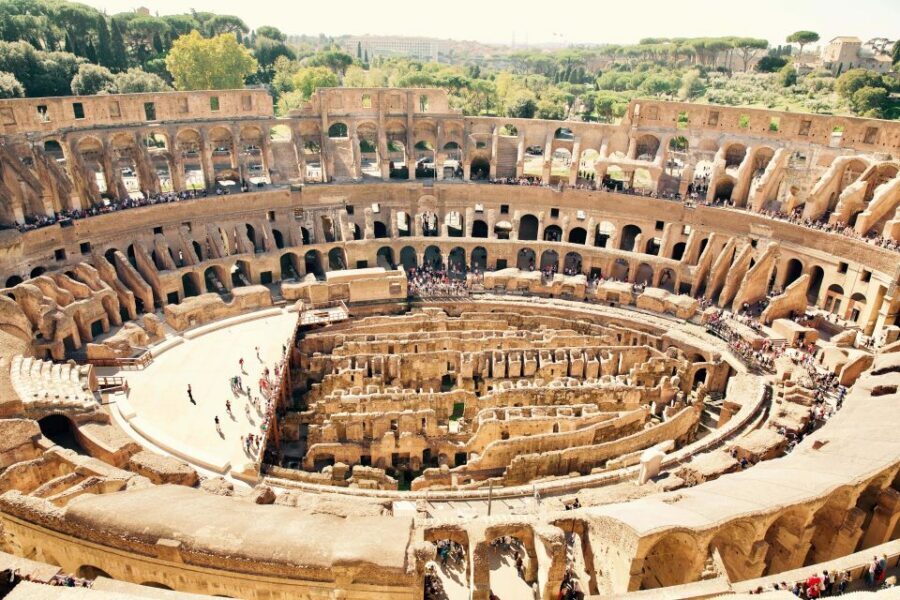
The biggest practical advantage here is the separate entrance and fast-track entry. Before you even step inside, you get a description of the Colosseum from the outside. That helps your brain “place” what you’ll see once you cross the threshold.
Inside, the focus isn’t just on the arena floor fantasy. You’re guided to the right places to understand the design. The tour includes the story of construction techniques, then moves into how the shows were made possible.
One thing I like about this setup is that you get time for views. The plan includes panoramic viewpoints from the best-preserved area of the Colosseum and includes time on the second tier for views.
Gladiator battles and Roman engineering: the stories behind the mechanism
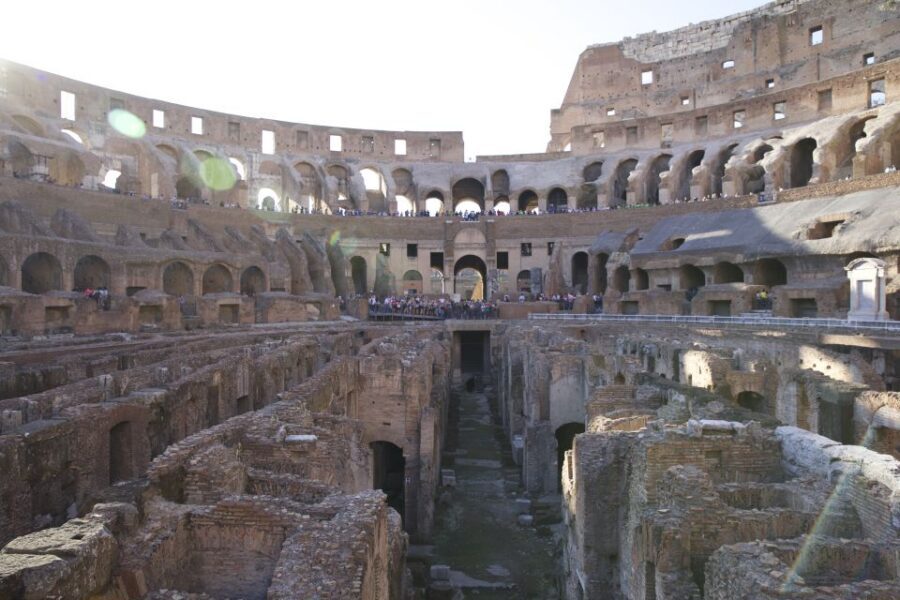
The Colosseum is often treated like a single attraction. But the best tours explain it as a machine built for controlled spectacle.
Expect stories about gladiators, wild animal entertainments, and how the crowd experience was staged. You’ll hear about systems and mechanisms used to animate the games, including references to trapdoors and how the show could be choreographed.
The engineering angle is one of the standout parts of this experience. Roman builders weren’t just stacking stone. They created a structure with the ability to support complex entertainment operations and move large crowds through an organized space.
If you’re the type who loves when the explanations point to the physical evidence, this is where you’ll feel the tour deliver. You’re not only hearing what happened. You’re looking at where it could happen.
Photo stops at the power monuments: Constantine, Titus, and Maxentius
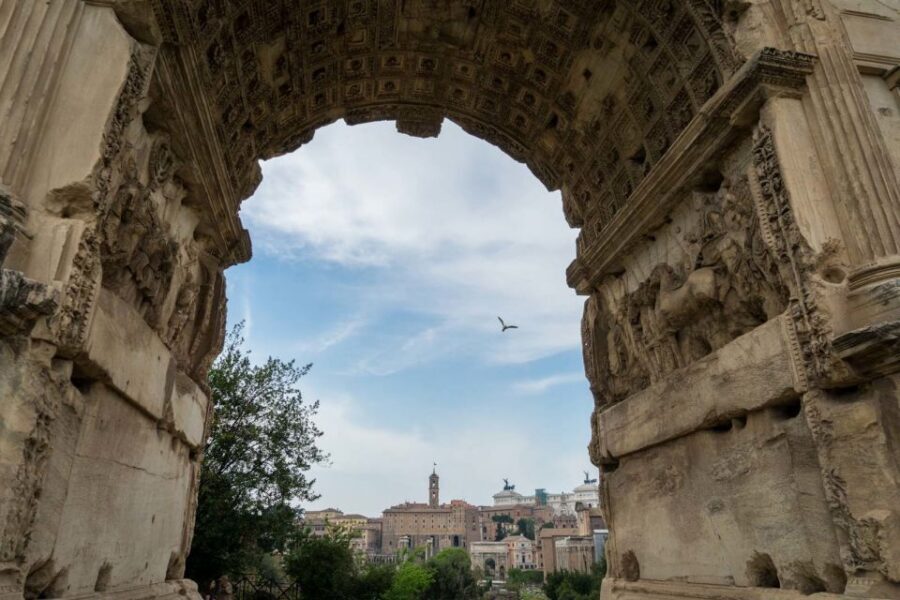
After the Colosseum, you shift into the Roman Forum zone and nearby monument streets. There are multiple short stops designed to give you context and photos without wasting time.
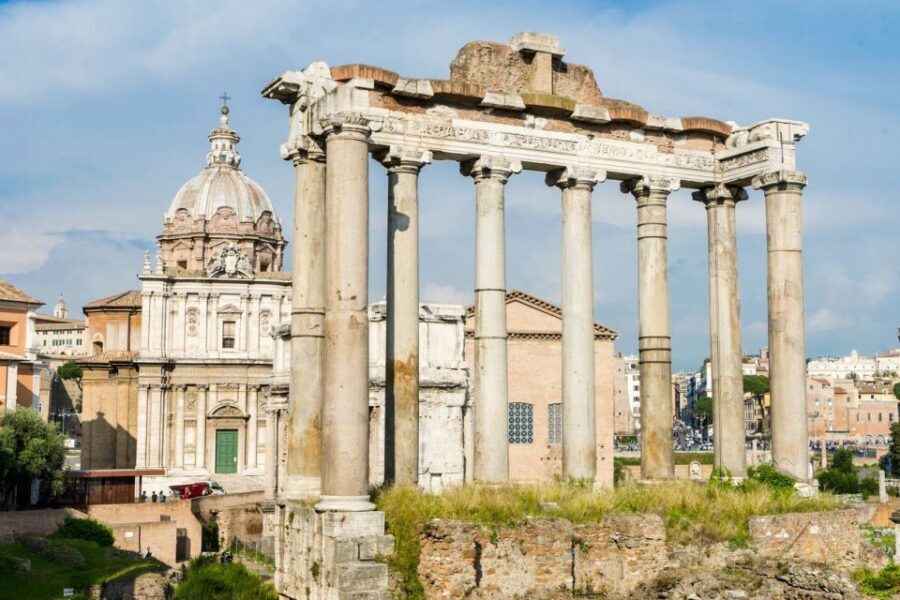
You get an Arch of Constantine photo stop and then move into the Forum area. Later, there’s an Arch of Titus photo stop, plus time to see structures like the Basilica of Maxentius and the Temple of Antoninus Pius and Faustina.
These aren’t random detours. Each arch and building is a symbol of Roman authority and public life. When you see them in sequence, the theme becomes clear: Rome advertised power in stone, and it did it repeatedly.
The tour includes walk time between stops. That means you’ll also get little scenic breaks on the way, not just straight-line marching.
The Roman Forum: where politics looked like theater
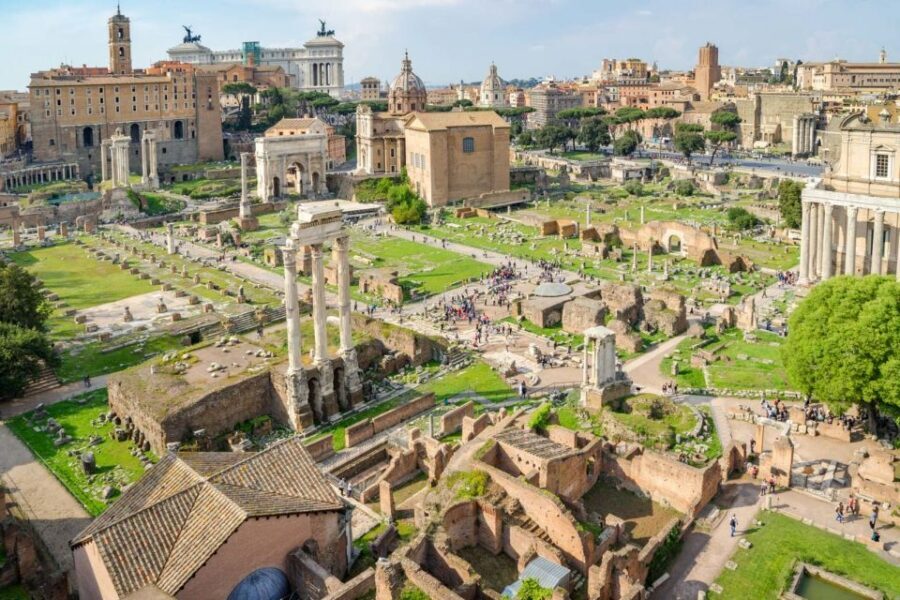
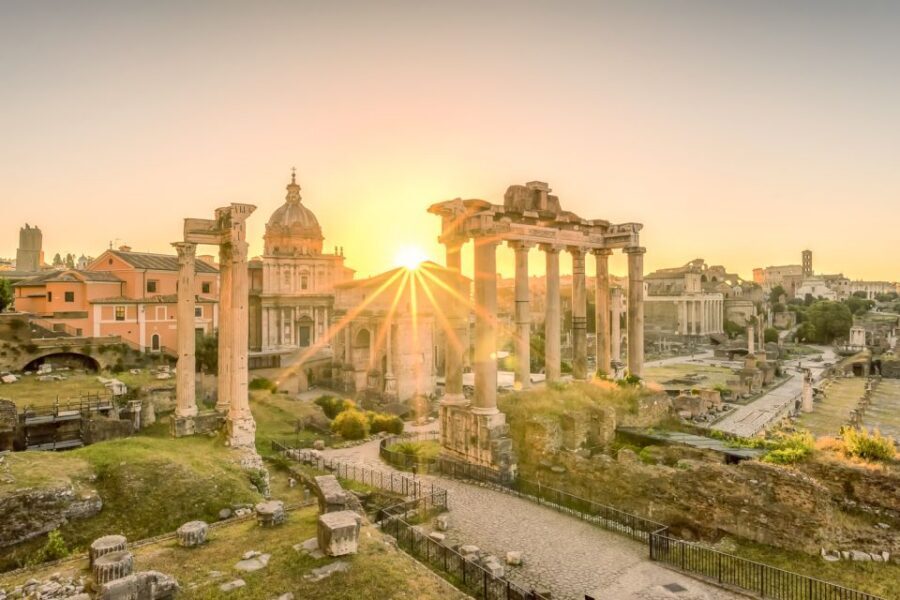
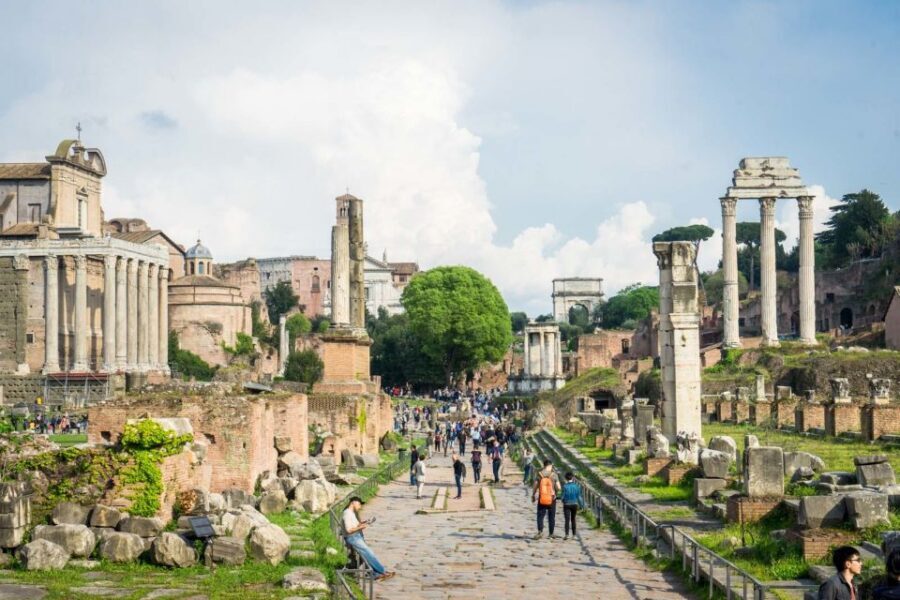
The Roman Forum can be confusing on your own. You see ruins and you try to read them, but it’s easy to miss what mattered most. Here, the Forum stop is designed for short orientation plus key monuments.
You’ll see stops tied to government and elite life, including places like the Curia of the Senate House and major surrounding ruins. The timing is tight, about a half hour of walking and viewing, so your guide’s job is to point out what to look for in a limited window.
A helpful mindset: don’t try to “solve” the Forum like a puzzle. Instead, use the guide’s cues to learn the big ideas: what the Romans built for leadership, ceremony, and public decision-making. Then your own exploring next day (if you choose) becomes much easier.
Palatine Hill: the emperor-viewpoint side of Rome
Palatine Hill is where Rome stops feeling like a museum and starts feeling like a neighborhood for rulers. You ascend the hill to see where Roman emperors lived, and the views make the climb feel worth it.
This stop includes scenic views with the Circus Maximus off to one side and the Roman Forum on the other. That perspective helps you understand why Palatine mattered. It wasn’t just elite living. It was control of sightlines over the civic center below.
The tour also includes time to visit key ruins there, roughly a 30-minute segment dedicated to Palatine Hill viewing and walking.
What to bring, what not to bring, and how to avoid delays
This tour is built around walking. Wear comfortable shoes. If you’re sensitive to heat, plan for it, because stone absorbs warmth fast.
Bring:
- Passport or ID card (Colosseum checks names and ID cards)
- A charged smartphone (especially if you’re using the self audio option)
- Headphones (mobile audio requires them; headphones are not included)
Don’t bring:
- Luggage or large bags
- Selfie sticks
- Backpacks
- Pets
- Sunscreen (yes, it’s listed as not allowed)
If you show up with a bag or item that’s prohibited, it can slow you down at security. And since the tour can’t reschedule if you’re late, it’s better to travel light.
Who should book this Colosseum, Forum, and Palatine Hill tour?
This tour is a strong match if you want:
- The biggest sites in a short window (2.5 to 3 hours for the guided option)
- Clear context so ruins make sense
- A fast-track ticket experience so you don’t burn your day waiting
- A choice between guided narration and self-guided flexibility
It’s not the best match if you:
- Need wheelchair access (it’s listed as not accessible)
- Want a long, slow wander with no structure (this is time-efficient, not lazy)
- Don’t want to deal with security checks and strict entry rules
Should you book this tour?
Yes, if your priority is value + time. The combination of fast-track entry plus a guide (or a well-built audio trail) is exactly how you turn a crowded, complicated site into a readable experience.
Choose the guided option if you like explanations tied to what you’re seeing in real time. Choose the self audio option if you want to roam a bit more and you’re comfortable handling audio on your own device.
If you’re visiting in summer heat, treat the shorter July/August duration as part of the plan, not a surprise. And bring your ID. It’s not optional at the Colosseum.
FAQ
How long does the tour last?
The guided tour option runs about 2.5 to 3 hours. The self audio-guided option’s duration can vary.
Is fast-track entrance included?
Yes. You get a fast-track entrance for the Colosseum, Palatine Hill, and Roman (Imperial) Forum.
What’s included in the guided tour option?
It includes an English-speaking licensed guide, a headset system, the sites tickets with fast-track entrance, and a duration of about 2.5 to 3 hours.
Do I need a guide for the self audio option?
No. With the self-guided option, a tour guide is not included. You use a multilingual audioguide on your smartphone.
Which languages are available?
Languages listed include English, Chinese, French, German, Italian, Spanish, and Portuguese. The self audio option is also listed with multiple languages and includes 44 points of interest.
Where do I meet the group?
Meeting points can vary by option. The start locations listed include Piazza di San Clemente, Clivo Argentario 1, and Via Labicana 96.
What do I need to bring?
Bring passport or ID, comfortable shoes, headphones, and a charged smartphone (especially for the self audio option).
What items are not allowed at the sites?
The listed restrictions include no pets, no luggage or large bags, no selfie sticks, no backpacks, and no sunscreen.
Is the tour wheelchair accessible?
No. It’s listed as not suitable for wheelchair users and not accessible for wheelchairs.
What if I arrive late to the meeting time?
If you arrive late, you may not join the group or reschedule, because tickets cannot be amended or canceled.