REVIEW · CITY TOURS
Rome: Colosseum, Arena & Ancient City Guided Tour
Book on GetYourGuide →Operated by Global Experiences by Carpe Diem Tours Group · Bookable on GetYourGuide
Ancient Rome feels real fast. This guided Colosseum, Arena floor, Roman Forum & Palatine Hill tour turns ruins into scenes, with a licensed guide, live English narration, and headphones so you can actually follow the story. I especially like the arena floor access—it changes your understanding of gladiators and spectacle—and the fact that you get timed entry across multiple sites instead of fighting the worst lines.
One thing to consider: the tour start order can shift. Depending on ticket timing, you’ll either begin at the Colosseum or start with the Roman Forum / Palatine Hill, so your day may feel slightly different than you planned.
In This Review
- Key highlights
- Entering the Colosseum in a way that actually saves your day
- Meeting at the Arch of Constantine (and finding your group quickly)
- The arena floor: where gladiators stop being a story and start being a scene
- Palatine Hill: imperial power, city views, and a sense of where Rome grew
- The Roman Forum: politics, crowds, and everyday life in one long lesson
- How the 1.5–3 hour format works in real life
- Licensed guide narration and headphones: why that matters
- Price and value: what $93 covers (and what you’re really paying for)
- Practical tips before you go (so the day stays fun)
- Who should book this Colosseum, Forum & Palatine Hill tour
- Should you book? My straight answer
- FAQ
- FAQ
- How long is the Rome Colosseum, Arena & Ancient City guided tour?
- What sites are included in the tour?
- Where do we meet for the tour?
- Is the tour guided in English?
- Is the tour inside buildings or mostly outdoors?
- What do I need to bring?
Key highlights
- Arena floor time with a guided walk that connects gladiators, crowd energy, and how the building worked
- Timed entry into three major sites to help you spend more time inside than waiting outside
- Palatine Hill views plus imperial context from the supposed birthplace and power center of Rome
- Roman Forum storytelling that focuses on politics, religion, and daily life (not just stone names)
- Headphones included so the licensed guide’s narration stays clear in loud outdoor spaces
Entering the Colosseum in a way that actually saves your day
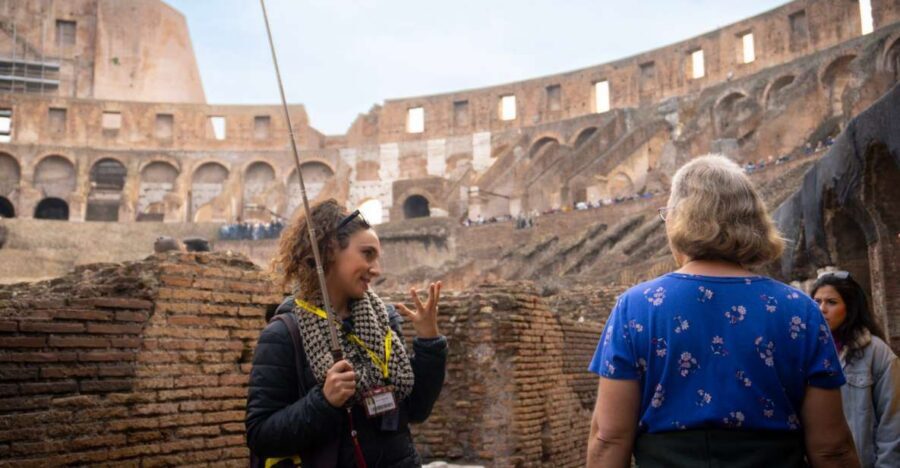
The Colosseum is famous for a reason, but it can also feel like a checklist. What makes this experience better is that you’re not just standing around reading plaques—you’re moving with a guide and getting context as you go. Timed-entry access helps you get inside with less time lost to queues, which matters because the Colosseum area is crowded and slow-moving.
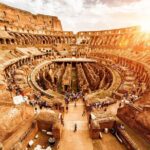
You’ll start with a guided segment on the Colosseum’s arena floor, which is the part many people never get to do. Standing where events happened changes your perspective instantly. You see the venue not as a monument, but as a stage built for spectacle, with architecture that guided how people watched and how you would move through the space.
The tour is also intentionally paced. Each stop gets about an hour of guided time, which is long enough to learn the key ideas without dragging for too long in the heat or cold.
You can also read our reviews of more guided tours in Rome



Meeting at the Arch of Constantine (and finding your group quickly)
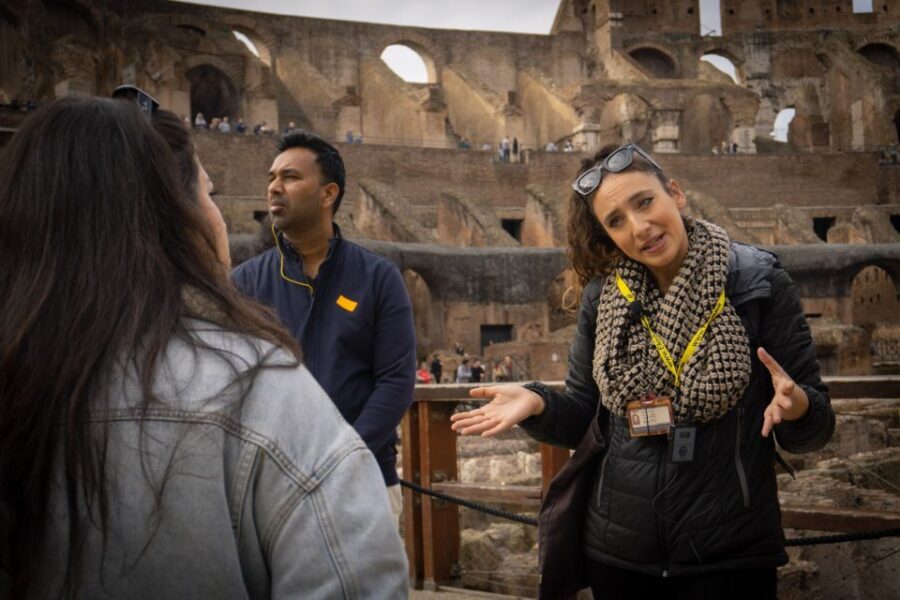
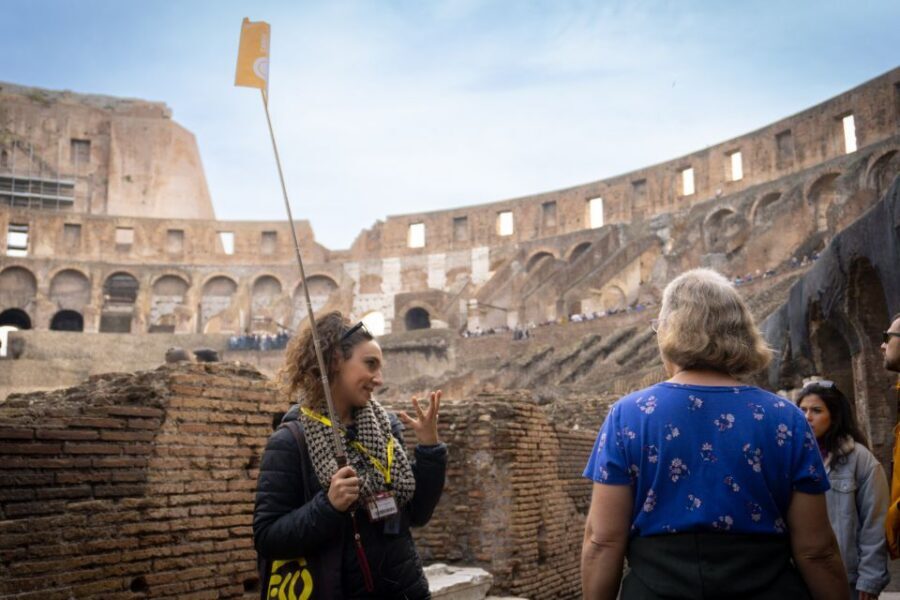
You meet at the Arch of Constantine, and the meeting spot is specific. Look for the side of the arch furthest from the Colosseum, and watch for the guide holding a yellow Carpe Diem Tours flag.
This matters more than you’d think on a big Rome day. Around the Colosseum, directions blur fast, and it’s easy to arrive at the wrong entrance or start-point. If you show up a few minutes early and scan for that yellow flag, you’ll reduce stress right away.
Also, double-check the tour start location when you book. The day may begin at the Colosseum or at the Roman Forum / Palatine Hill, depending on ticket availability. That flexibility is helpful when you’re traveling with limited time, but it does mean the order of scenes might not be the one you pictured.
The arena floor: where gladiators stop being a story and start being a scene
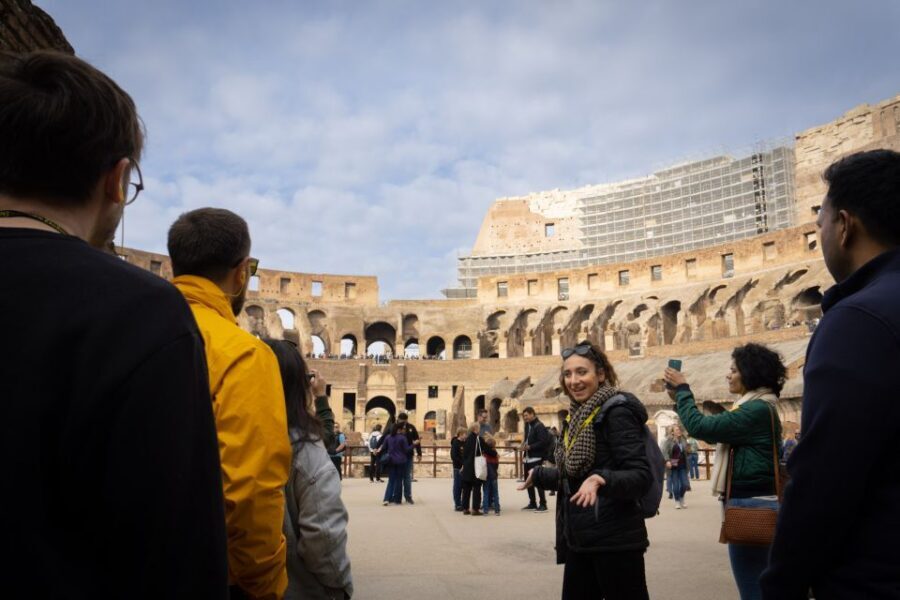
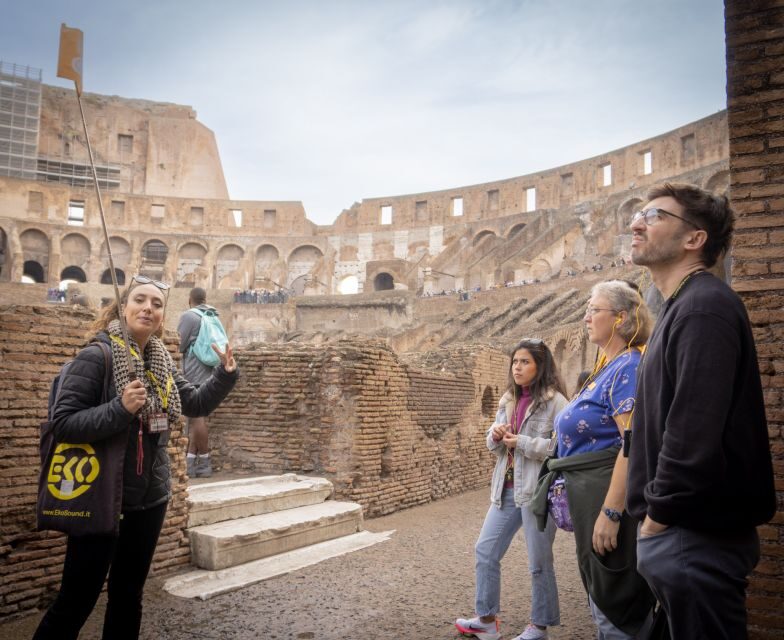
The heart of this tour is the guided walk on the Colosseum arena floor for about an hour. From here, gladiators stop being vague figures in a textbook. You can see the layout and understand why the arena was designed for crowd impact and dramatic movement.
Your guide explains battles and gladiators in a way that connects to the physical space. Even if you’ve read general facts about Roman entertainment, being on the arena floor helps you make sense of how people experienced events. You’re not only looking at stone; you’re standing inside the perspective of the spectacle.
This is also where the licensed guide style really shows. A good explanation can take a big, intimidating ruin and turn it into clear mental images. In the reviews, guides like Catarina (described as an archaeologist) and Barbara (praised for being organized and informative) come up as standout examples of how strong narration can make the time fly.
Tip for your photos: if you care about images, plan to take them while you’re on the arena floor segment. After that, you’ll be climbing and moving through other zones where the best angles differ.
Palatine Hill: imperial power, city views, and a sense of where Rome grew
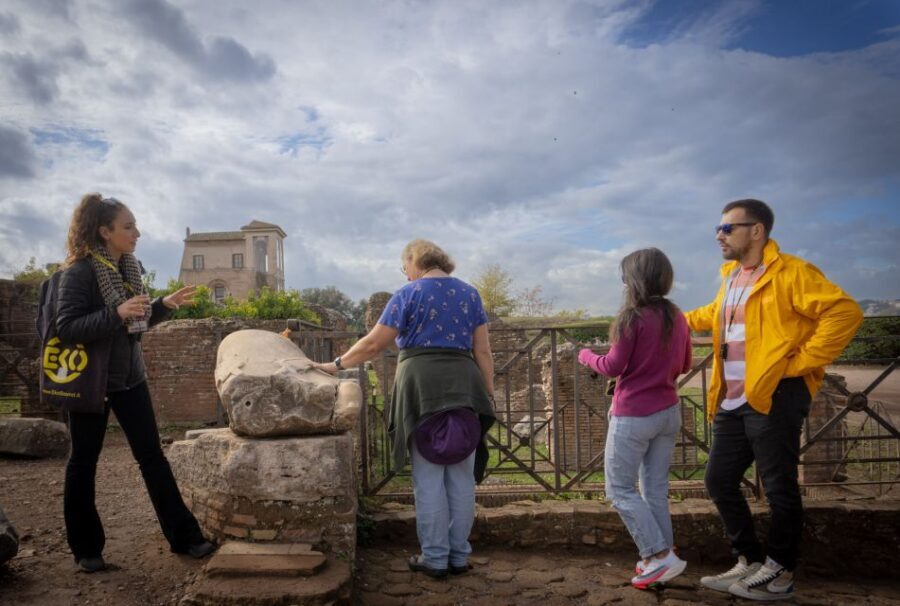
After the Colosseum, you head to Palatine Hill for about an hour of guided time. This part is special because you’re combining a physical viewpoint with a big political one. Palatine Hill is tied to the mythical birthplace of Rome and also served as the home of emperors—so the hill works as both story and landscape.
One of the biggest practical perks is the city views. You get a sense of how the ancient center sits within modern Rome. That makes it easier to understand why this area mattered. It wasn’t just pretty scenery; it was elevated space that signaled status.
Your guide connects Palatine’s imperial residences to the bigger Roman idea of power and image. The main value here is not memorizing architecture details—it’s learning what this hill represents. Once you understand the Palatine Hill role, you’ll read the ruins differently on your own later.
Where this stop can feel a bit intense: because it’s outdoors and involves walking up, you’ll want comfortable shoes and steady pacing. If you’re sensitive to stairs or uneven ground, go slow and take short breaks when the group pauses for explanations.
The Roman Forum: politics, crowds, and everyday life in one long lesson
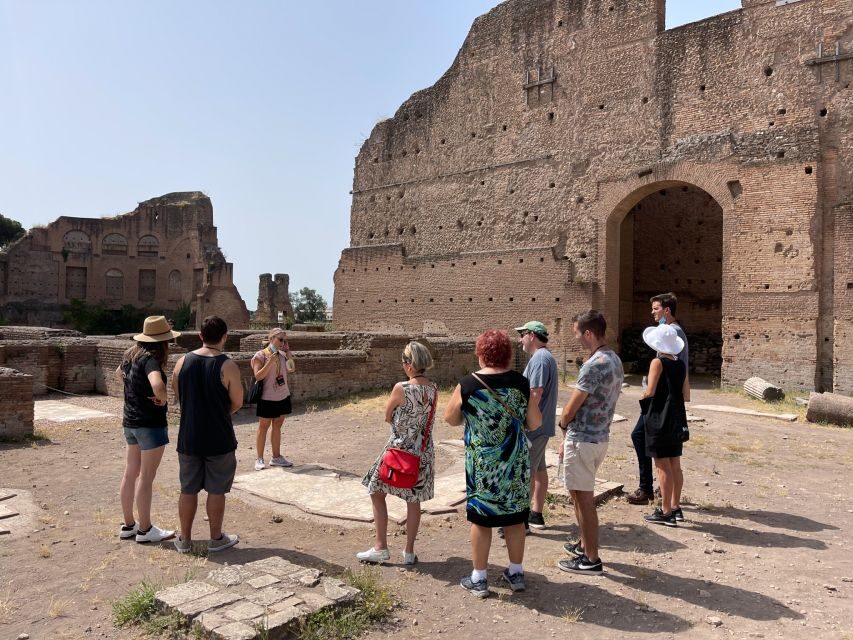
Next comes the Roman Forum for about an hour. This is one of Rome’s best teaching environments because it’s layered: politics, religion, commerce, public gatherings, and daily life all overlap in the same region.
The guide’s job here is crucial. Without context, the Forum can feel like a jumble of columns and broken walls. With storytelling, you start to see patterns—who came here, why they came, and how public space shaped Roman life. The tour emphasizes the Forum as a hub of debate, religious ritual, and daily drama, which is exactly what you want if you’re trying to understand how Romans actually lived, not just what they built.
The earlier you arrive at the Forum, the more you benefit from the contrast. You’ll have already seen the Colosseum’s spectacle, then shifted to Palatine’s power, and now you’ll land in the Forum’s political and social engine room. The order can make a difference in how the day clicks.
One note: since the tour start can vary, sometimes you may feel like you spent more or less time on a specific site than you expected. If your top priority is the Colosseum first, keep that flexibility in mind when planning the rest of your itinerary that day.
You can also read our reviews of more city tours in Rome



How the 1.5–3 hour format works in real life
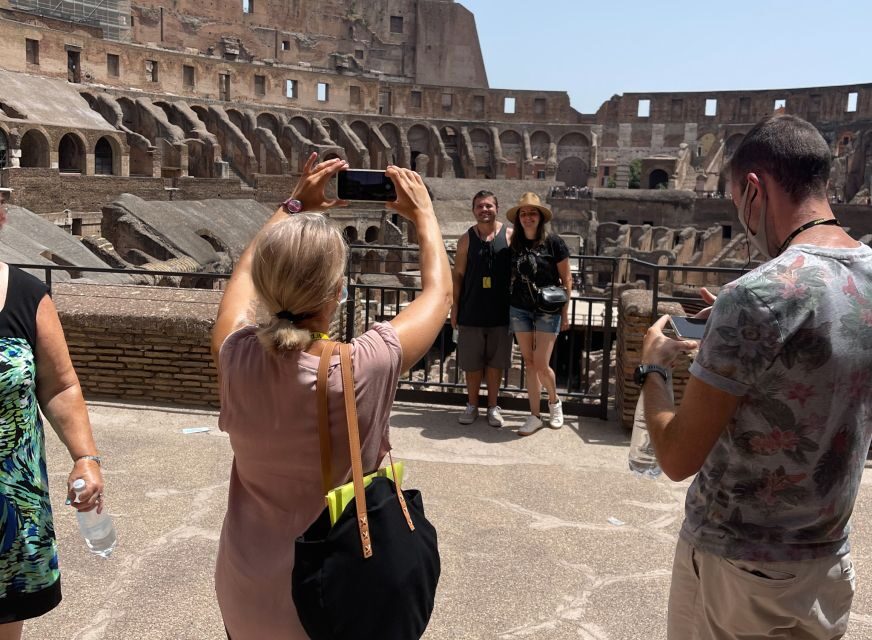
The tour is listed at 1.5 to 3 hours depending on starting times. In practice, that means you get a fast, focused run through three locations with guided attention at each stop. It’s not designed for long independent wandering, and that’s a good thing if your goal is learning quickly and avoiding decision fatigue.
Because it’s outdoors, timing and pacing matter. You’ll spend enough time at each site to absorb the main themes, but you should expect movement—walking, stairs, and shifting between areas with different ground conditions.
This format is a strong choice for:
- A first or second day in Rome when you want your bearings fast
- People who hate standing in lines and prefer guided structure
- Travelers who want the story tied to the geography, not just photos of landmarks
Licensed guide narration and headphones: why that matters
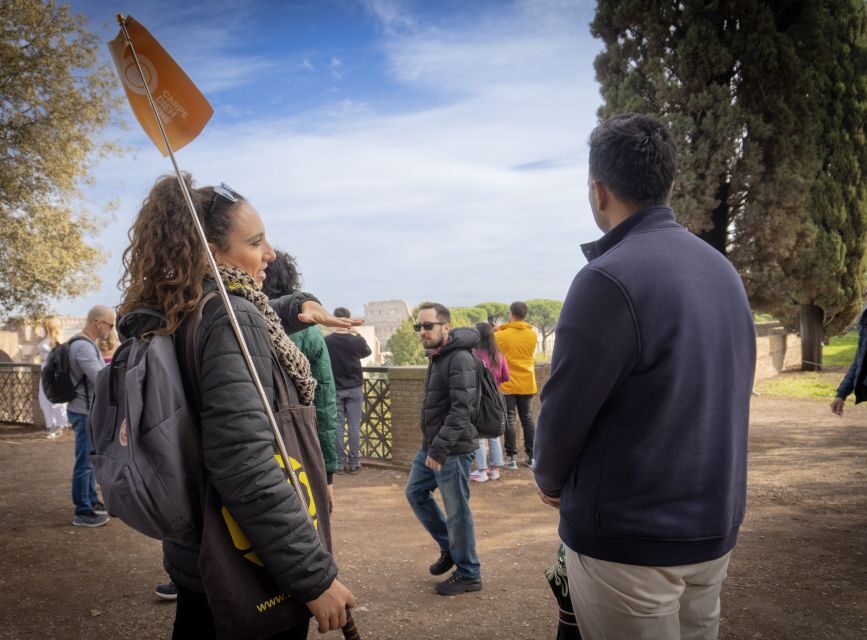
Headphones are included, and that’s a huge quality-of-life upgrade. On busy Roman streets and inside echoing stone spaces, it’s easy to miss what your guide says. With headphones, you can concentrate on the explanation instead of constantly leaning in or trying to hear over other groups.
The guide is also described as licensed, and that matters here because the best Colosseum and Forum tours teach you how the past functions. You don’t want a script that just recites facts. You want someone who can connect what you see to why it mattered—crowds, politics, spectacle, and how Rome organized public life.
In the reviews, the tour’s storytelling and organization come through clearly. Names like Catarina and Barbara show up with praise for knowledge, structure, and being able to keep the group moving without losing the thread.
Price and value: what $93 covers (and what you’re really paying for)
At $93 per person, this isn’t the cheapest way to see the Colosseum and Roman Forum area—but it’s also not paying for nothing. You’re paying for timed-entry access, a licensed guide, headphones, and arena floor time included with the program.
If you’re only visiting one site, paying for a guided tour can feel “nice but optional.” With three iconic stops bundled together, the value calculation changes. Timed access reduces wasted time, and the guide ties the sites together so you leave with a coherent understanding of how Rome worked.
There’s also a practical value: you’re not figuring out the best route through multiple zones while managing crowds. For many first-time visitors, that alone makes a guided format worth it.
One more cost-related detail to know: Colosseum admission is free on the first Sunday of the month, and tours are discounted on those days. If you’re traveling around that schedule, it can make the same experience feel even better on a budget.
Practical tips before you go (so the day stays fun)
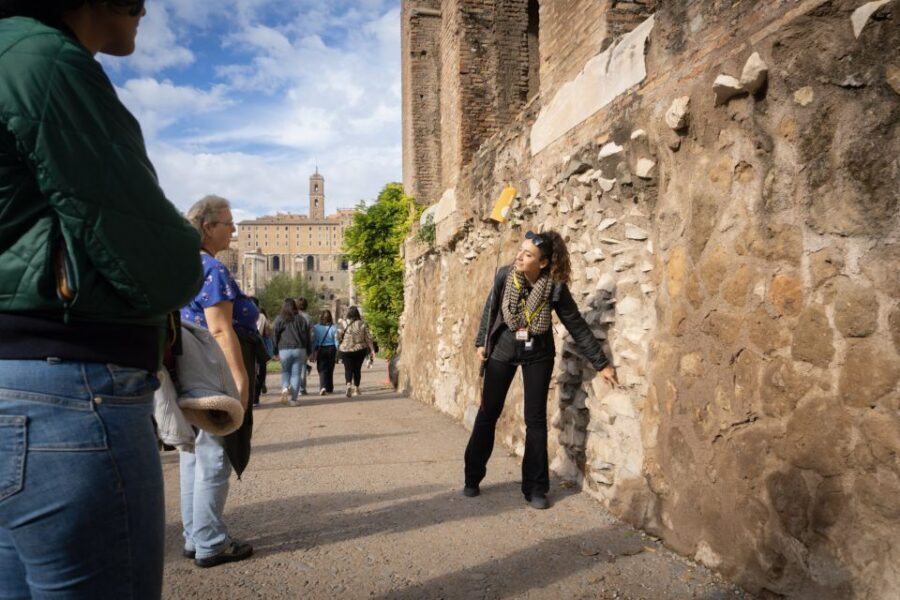
This tour is entirely outdoors, so treat it like a walking day. Wear comfortable shoes and expect uneven surfaces. Bring a valid ID—passport or ID card. This is especially important for minors in the group.
If you’re the kind of traveler who likes to plan ahead, do it on the quiet details too:
- When booking, provide full names of all travelers in your group, including yourself and co-travelers
- Decide what you want most from the day, but remember the tour can start at either the Colosseum or the Forum / Palatine Hill depending on ticket availability
- Keep water in mind. You’ll be outside for multiple segments, and Rome walking adds up fast
Also, consider your energy level. This is a guided overview of major sites. It’s perfect if you want clear context, but if you like slow museum-style browsing for hours, you might want a separate plan for that after the tour.
Who should book this Colosseum, Forum & Palatine Hill tour
I’d book this if you want:
- Arena floor access and a guided explanation rather than casual sightseeing
- A structured order across three big Roman locations
- Clear narration in English with headphones
It’s also a great fit if you’re traveling with limited time and want to maximize learning, not just photos. The group setup is described as intimate and small-group, which usually means you’re more likely to get attention and keep the tour from feeling chaotic.
If you’re a total architecture purist who wants to sit and study every detail for hours, this may feel like a quick hit. But if you want to understand how the Colosseum, the imperial hill, and the Forum connect, it’s a very sensible way to do it.
Should you book? My straight answer
Book it if you care about story and context, and especially if arena floor access is on your Rome wishlist. The timed-entry setup, headphones, and licensed guide turn three famous sites into one connected lesson instead of a rushed stamp-through.
Skip or consider alternatives if you’re extremely sensitive to tour order. Since the start can vary between the Colosseum and the Forum / Palatine Hill depending on tickets, you might feel the day isn’t arranged exactly how you hoped.
FAQ
FAQ
How long is the Rome Colosseum, Arena & Ancient City guided tour?
It runs for about 1.5 to 3 hours, depending on the available starting times.
What sites are included in the tour?
You’ll visit the Colosseum (including the arena floor), Palatine Hill, and the Roman Forum.
Where do we meet for the tour?
Meet at the side of the Arch of Constantine furthest from the Colosseum. The guide will be holding a yellow Carpe Diem Tours flag.
Is the tour guided in English?
Yes. The live tour guide language is English.
Is the tour inside buildings or mostly outdoors?
The tour is entirely outdoors, so wear comfortable walking shoes.
What do I need to bring?
Bring a passport or ID card. You should also have valid ID for minors accompanying you.