REVIEW · COLOSSEUM TOURS
Rome: Circus Maximus Virtual Reality Game near the Colosseum
Book on Viator →Operated by ANCIENT AND RECENT · Bookable on Viator
A chariot race starts on a city street. This Circus Maximus virtual reality experience near the Colosseum turns Rome’s ancient spectacle into an interactive walk-through and then a seat-in-the-stadium moment. I especially like the combination of hands-on VR (headset, audio, assistant help) and the chance to see famous imperial landmarks like the Arch of Titus and the Septizodium fountain in moving scenes. The one drawback to keep in mind is that you’ll need to buy the entrance ticket to the Archaeological Area of Circus Maximus separately, and there are bag limits inside.
You also get real staff support. A dedicated VR assistant helps you in English or Italian, and the experience includes an integrated audio guide (English or Italian), plus eye protection with a headset cover and hand sanitizing gel before you put anything on your face. It’s a nice setup when you want history that you can physically “do,” not just read about.
One more practical consideration: double-check the language you’re choosing. The full experience runs in Italian, English, and Spanish, but the assistant support and audio guide are described as English and Italian. If you’re counting on another language, confirm before you go—one mismatched-language experience can turn great tech into a lot of confusion.
In This Review
- Key highlights worth caring about
- Circus Maximus VR Near the Colosseum: What You Actually Do
- Walking Imperial Rome Before the Headsets Go On
- The Chariot Race Inside the Stadium-Scale Reconstruction
- Guide Support, Languages, and Comfort Tips That Matter
- Price, Tickets, and Timing: Is It Worth $35.89?
- Where You Start: Meeting Point and What to Do Right Before
- Who This VR Circus Maximus Experience Is For
- Should You Book This VR Rome Experience?
- FAQ
- What is the duration of the Circus Maximus VR experience?
- Where is the meeting point?
- Is the Archaeological Area entrance ticket included?
- What languages are available?
- What is included with the ticket price?
- What should I bring or wear?
- How far in advance should I book?
- Can I cancel for free?
Key highlights worth caring about

- Imperial Rome on the move: You follow reconstructions through the streets, not just one static video scene.
- Chariot racing with choices: Pick a faction and aim to win the Emperor’s favor.
- Stadium-scale moment: The VR recreates the structure that held up to 385,000 spectators.
- Staff help is part of the product: You get a VR assistant in English/Italian to keep you on track.
- Family-friendly format: Clear, hands-on participation works well for kids who get bored fast.
- Small group feel: Maximum group size is 25, which helps with questions and headset timing.
Circus Maximus VR Near the Colosseum: What You Actually Do
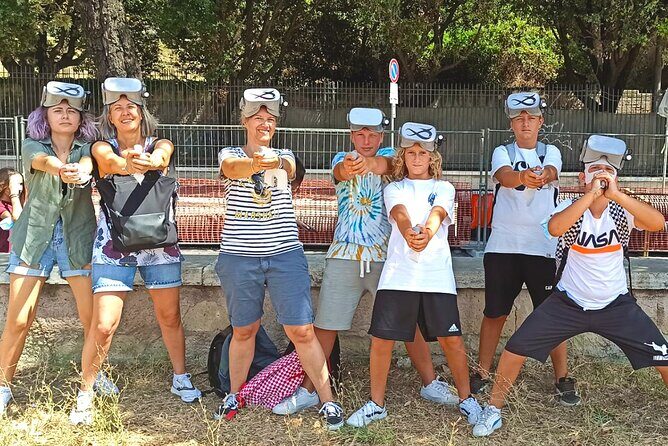
This is a 2-hour virtual reality experience focused entirely on the Circus Maximus—Rome’s legendary chariot-racing arena. You’re not stuck watching from the sidelines. Instead, you’re guided through scenes that connect imperial landmarks and stadium life, then you step into a VR version of the actual venue.
The format matters because it turns “ancient Rome” from a distant idea into something your body understands. You move in real time through the reconstructions, you’re surrounded by soldiers and citizens in the story, and then you switch into a viewpoint inside the stadium itself. If you like learning with your hands and eyes doing something, this style tends to work better than a standard museum talk.
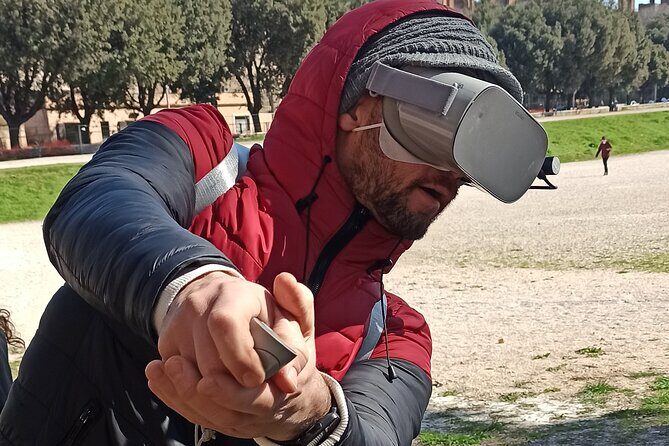
And yes, the tech side is real tech: you get the headsets and audio setup, plus basic hygiene support like sanitizing gel and an eye-mask cover. That’s a lot of what makes these experiences comfortable—especially when you’re traveling with family and nobody wants to waste time arguing with batteries or cables.
You can also read our reviews of more tours and experiences in Rome.



Walking Imperial Rome Before the Headsets Go On
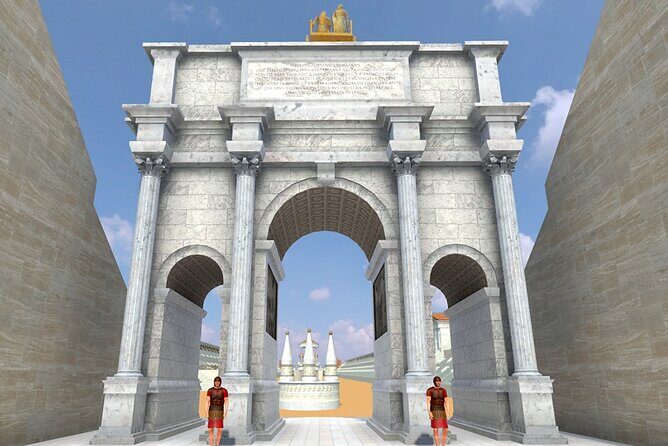
The first stop is Circo Massimo, and the tour is designed as a build-up. You start in the Circus Maximus area and then you move into the story, where the reconstructions place you in the middle of ancient street life. The experience highlights Rome’s imperial heyday and shows you how the complex changed over time.
In practice, this is where you get the most “oh wow” effect, because you’re seeing iconic places in context. Two specific references you’ll recognize from your Rome sightseeing are the Arch of Titus and the Septizodium fountain. Seeing them appear inside a timeline-driven experience makes them easier to remember later when you’re standing in the real city.
There’s also a social benefit to this step. Because you’re part of a small group (up to 25), you’re not always waiting for one person to finish a headset adjustment. The VR assistant keeps the flow moving and helps you make sense of what’s happening next—especially useful if you don’t live inside VR at home.
If you’re traveling with kids, this “street first, stadium second” rhythm is often a win. Kids can track the story better when it starts with movement and familiar city-scale views, instead of jumping straight to a high-tech scene.
The Chariot Race Inside the Stadium-Scale Reconstruction
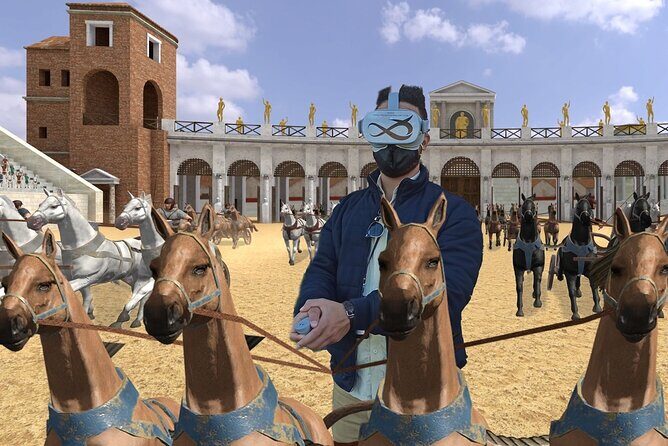
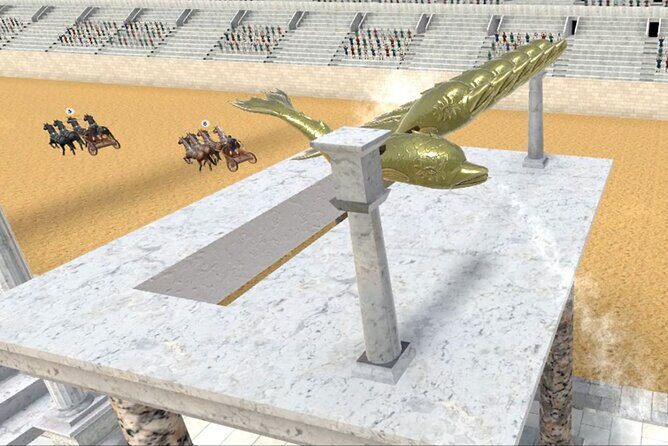
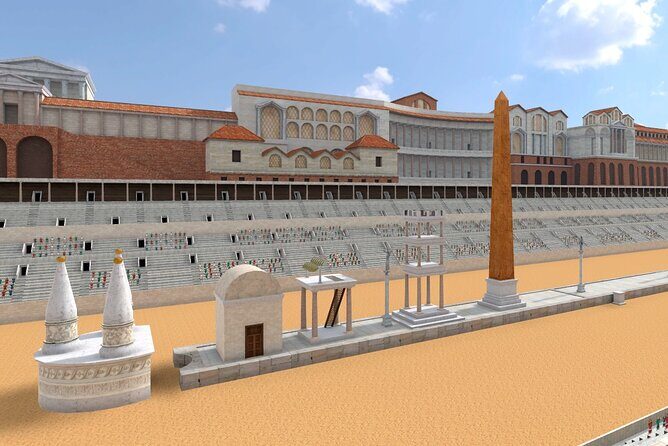
After the street scenes, you reach the main moment: you put on the VR headset and find yourself inside the Circus Maximus structure. The arena scale is part of the pitch for a reason. You’re entering a reconstruction of a place that could hold up to 385,000 spectators, which is hard to picture until you experience it from within.
Then comes the part that makes this more than a history lesson: the experience pushes you toward action. You can choose your faction, line up for a chariot race, and try to earn the Emperor’s favor. That’s a clear goal. It also keeps the story from being only visual—your choices and participation drive what you do inside the headset.
What I like about this approach is that it turns the big, scary question—how do I make ancient Rome feel real?—into something simple. You don’t have to memorize names at the start. You learn by doing, then the details start sticking because you associate them with an event.
One caution: if you or your group are sensitive to VR, motion cues, or headset time, go in with realistic expectations. The experience is short, but it still uses a headset for a meaningful portion of the tour.
Guide Support, Languages, and Comfort Tips That Matter
The VR assistant support is a major plus. You’re not just dropped in front of equipment. The assistant is there in English and Italian, and they help you through the VR experience so you don’t lose your place in the story.
Language gets a little complicated, so here’s the clean way to think about it:
- The experience is described as available in Italian, English, and Spanish.
- The assistant support is listed as English and Italian.
- The integrated audio guide is listed as English and Italian.
So if Spanish is your priority, confirm how that will be handled for your specific session before you arrive. One mismatch can make it feel like you’re watching the wrong movie, even if the tech itself is working fine.
Comfort planning is simple but worth doing:
- Wear comfortable shoes. Even though you’re in VR, you’ll still be moving around in the real meetup area.
- Arrive 15 minutes early so you’re not rushing a headset check.
- Bring what you need, but note that large suitcases and bags aren’t allowed inside the attraction. Traveling light avoids a whole headache.
The equipment setup also feels thoughtful for hygiene and usability: you’ll have sanitizing gel and an eye mask cover, and your headset isn’t a shared mystery item that nobody knows how to adjust.
Price, Tickets, and Timing: Is It Worth $35.89?
At $35.89 per person for about 2 hours, this isn’t priced like a museum-only visit. It’s priced like an experience that mixes tech, staff help, and a focused ancient setting.
Here’s where value really comes from for your money:
- All VR gear is provided (headsets, audio components, hygiene items).
- You get a dedicated VR assistant rather than just a self-guided app.
- The content is specific: not generic Rome VR, but Circus Maximus and chariot racing.
But there’s one cost item you must plan for. Entrance tickets to the Archaeological Area of Circus Maximus are not included. That separate ticket is the main place where your total cost can grow. If you budget only the base price, you can end up surprised at the gate.
On timing: you’ll be moving with the group and following a sequence (street scenes then stadium VR). With small-group limits and a set session length, it’s a good fit if you want a structured “activity block” near major sights rather than a long wandering day.
Booking rhythm also looks decent. On average it’s booked about 21 days in advance, which suggests these slots can fill in popular seasons. If you’re traveling at peak times, booking ahead is usually the safer move.



Where You Start: Meeting Point and What to Do Right Before

You meet at Via di S. Gregorio, 58, 00186 Roma RM, Italy. The tour ends back at the same meeting point, so you can plan your other sightseeing around that loop.
It’s described as near public transportation, which matters in Rome where “close by” often means “a ten-minute walk that feels like an hour.” Still, plan to get there on foot with some flexibility, especially with kids or luggage.
Also remember the practical rules:
- Children under 18 must be accompanied by an adult and bring a valid ID.
- Large bags aren’t allowed inside the attractions.
Right before you go, the best prep you can do is simple: charge your phone if you want photos after, but don’t plan on using it during the VR portion. Focus on comfort and a smooth arrival instead of trying to multitask.
Who This VR Circus Maximus Experience Is For
This experience is a strong match if you’re juggling two kinds of interests: Roman history and modern tech. It’s also a good fit if your group includes kids or teens, because the activity is interactive and structured rather than passive.
I’d especially recommend it if:
- You want a high-energy way to learn about Circus Maximus beyond seeing ruins.
- You like guided support while doing something technical.
- You’re traveling with family and want everyone to stay engaged for roughly two hours.
It may be less ideal if:
- You strongly prefer audio-guided walking tours with no headsets.
- Your group needs lots of time for breaks or avoiding VR altogether.
- You’re relying on a specific language that doesn’t match the assistant/audio setup for your session.
Should You Book This VR Rome Experience?
Yes, if you want a fun, active way to experience Circus Maximus near the Colosseum—especially when you can’t find a way to make ancient spectacle feel real for your group. The best part is the combination of staff guidance and story-driven VR: street scenes first, then a chariot-race moment in a stadium-scale reconstruction.
I’d book it with one clear condition: plan for the separately purchased archaeological entrance ticket and keep your language expectations aligned with the assistant and audio options (English/Italian support, with the experience offered in Italian, English, and Spanish).
If you like your Rome days to include one “wow” activity that’s not just another line or another museum room, this fits that bill.
FAQ
What is the duration of the Circus Maximus VR experience?
It’s listed as approximately 2 hours.
Where is the meeting point?
The start point is Via di S. Gregorio, 58, 00186 Roma RM, Italy, and the activity ends back there.
Is the Archaeological Area entrance ticket included?
No. The entrance ticket to the Archaeological Area of Circus Maximus is not included and must be purchased separately.
What languages are available?
The experience is offered in English, Italian, and Spanish. The VR assistant support is listed as English and Italian, and the integrated audio guide is also listed as English and Italian.
What is included with the ticket price?
You get a VR assistant (English and Italian), VR headsets, an integrated audio guide, an eye mask cover for the headset, hand sanitizing gel, and RC insurance.
What should I bring or wear?
Wear comfortable shoes. Bring ID if you’re traveling with children under 18 (they must be accompanied by an adult). Large suitcases and bags aren’t allowed inside.
How far in advance should I book?
On average, it’s booked about 21 days in advance, so booking ahead is a good idea if your dates are flexible.
Can I cancel for free?
Yes. You can cancel for a full refund up to 24 hours before the experience start time.